TL;DR:
- Post-construction sanitization removes hazardous dust, chemical residues, and microbial contaminants to ensure occupant safety. It protects property value, HVAC systems, and health through staged cleaning with specialized equipment and protocols. Compliance with local regulations in southern California makes professional sanitization essential for safe, timely occupancy.
By L.K. | Themaidsociety | Updated 2026
Table of Contents
- What construction contamination actually leaves behind
- How sanitizing protects property value and occupant health
- Effective methods for post-construction sanitizing
- Post-construction sanitizing vs. standard cleaning
- Ongoing hygiene and local compliance in southern California
- Key Takeaways
- Perspective
- FAQ
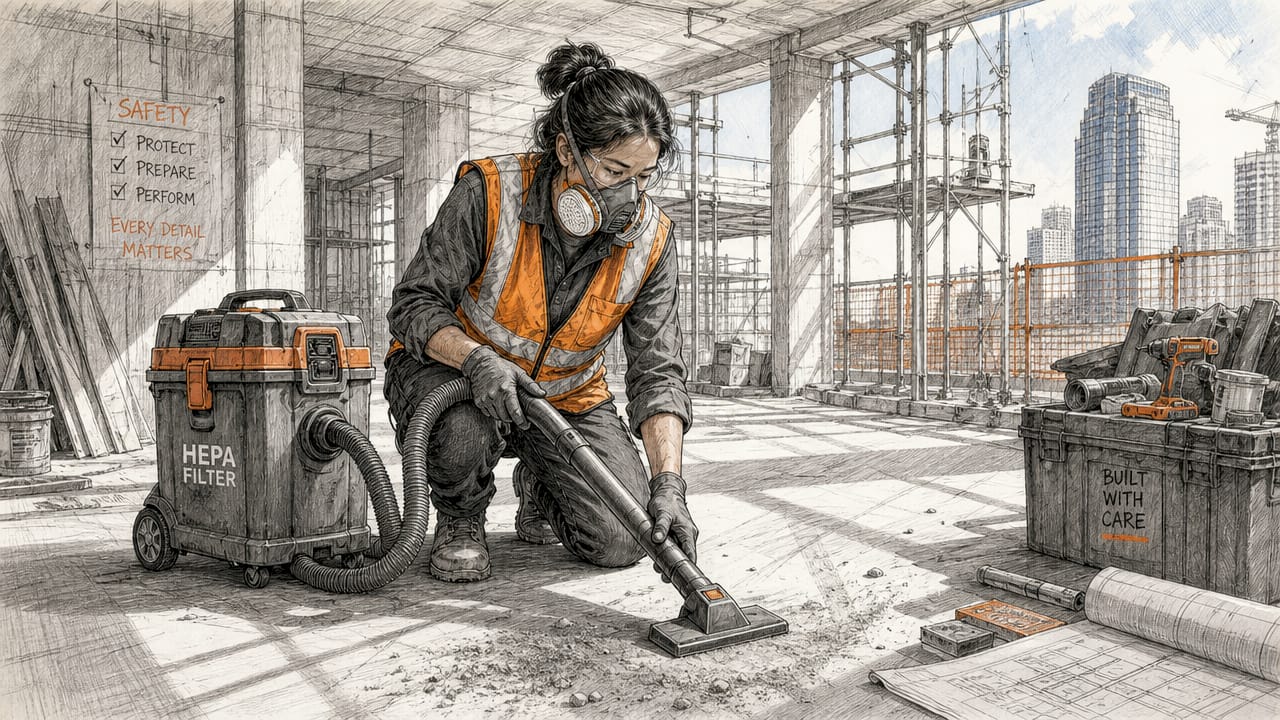
Sanitizing after construction is the critical final step that removes hazardous dust, chemical residues, and microbial contaminants before any space is safe for occupancy. Without it, newly built or renovated properties in Los Angeles, Beverly Hills, Santa Monica, and across southern California expose occupants to silica dust, elevated VOC levels, and debris-related injury risks that standard cleaning simply cannot address. Post-construction sanitization, the industry term for this specialized process, goes far beyond wiping surfaces. It protects health, preserves finishes, satisfies OSHA and EPA standards, and determines whether a project closes on time or stalls at the finish line.
What construction contamination actually leaves behind {#contamination}
Construction and renovation work generates contamination that persists long after the last contractor leaves. Fine silica dust, one of the most hazardous byproducts of cutting concrete, drywall, and tile, stays airborne for days after work stops. That means occupants breathing in a “finished” space can still inhale particles that cause respiratory damage.
The contamination profile of a typical construction site includes several distinct categories:
- Airborne fine dust: Silica and drywall particles that penetrate HVAC systems, settle on every horizontal surface, and re-aerosolize when disturbed
- Chemical residues: Adhesives, paint overspray, caulk, and sealants that bond to floors, glass, and fixtures if not removed promptly
- VOC off-gassing: Indoor VOC levels rise 2 to 5 times above outdoor concentrations after renovation without proper cleaning and ventilation, causing eye, nose, and throat irritation
- Microbial growth: Moisture trapped under flooring, behind drywall, or in grout lines during construction creates conditions for mold and bacteria
- Physical debris: Nails, screws, broken tile, and lumber scraps that create slip, trip, and puncture hazards
OSHA reported 389 fatal falls out of 1,034 total construction fatalities in 2024. Many of those falls involved cluttered, debris-laden surfaces. That number makes the case for debris removal as a life-safety issue, not just a cosmetic one.
Poor sanitation also carries direct financial consequences. Inadequate sanitation can increase worker absenteeism by up to 20% and attract fines up to $14,502 per violation. For property owners and developers in Los Angeles County, where project timelines are already tight, those penalties compound quickly.
How sanitizing protects property value and occupant health {#property-value}
Post-construction sanitization is a quality control phase, not a finishing touch. Skipping it risks costly rework and undermines client confidence in ways that are difficult to recover from.
The benefits of thorough sanitization break down across four areas:
- Surface preservation: Abrasive construction dust acts like sandpaper on hardwood floors, stone countertops, and painted walls. Removing it promptly prevents micro-scratches that dull finishes permanently
- HVAC protection: Neglecting post-construction sanitation contributes to HVAC system clogging and the spread of indoor pollutants through ductwork. A contaminated HVAC system distributes dust to every room in the building every time it cycles
- Occupant health: Workers are 15% more productive and report higher morale when sanitation standards are met. That productivity gain applies equally to the first employees or residents who move into a newly finished space
- First impressions: A visibly clean, odor-free space signals quality craftsmanship and builds trust with buyers, tenants, and clients before they ever flip a light switch
“Post-construction cleaning is a critical project quality control phase that prevents costly rework and strengthens client confidence.” — Industry consensus from post-construction cleaning specialists
For property managers in West Hollywood, Culver City, and Long Beach, the calculus is straightforward. Professional sanitization costs a fraction of what one delayed occupancy or one HVAC replacement runs. The role of cleaning in project completion is directly tied to on-time turnover and tenant satisfaction.
Effective methods for post-construction sanitizing {#methods}
The right sequence matters as much as the right tools. Construction dust migrates into vents, electrical outlets, and frames repeatedly, which means cleaning out of order simply redistributes contamination rather than removing it.
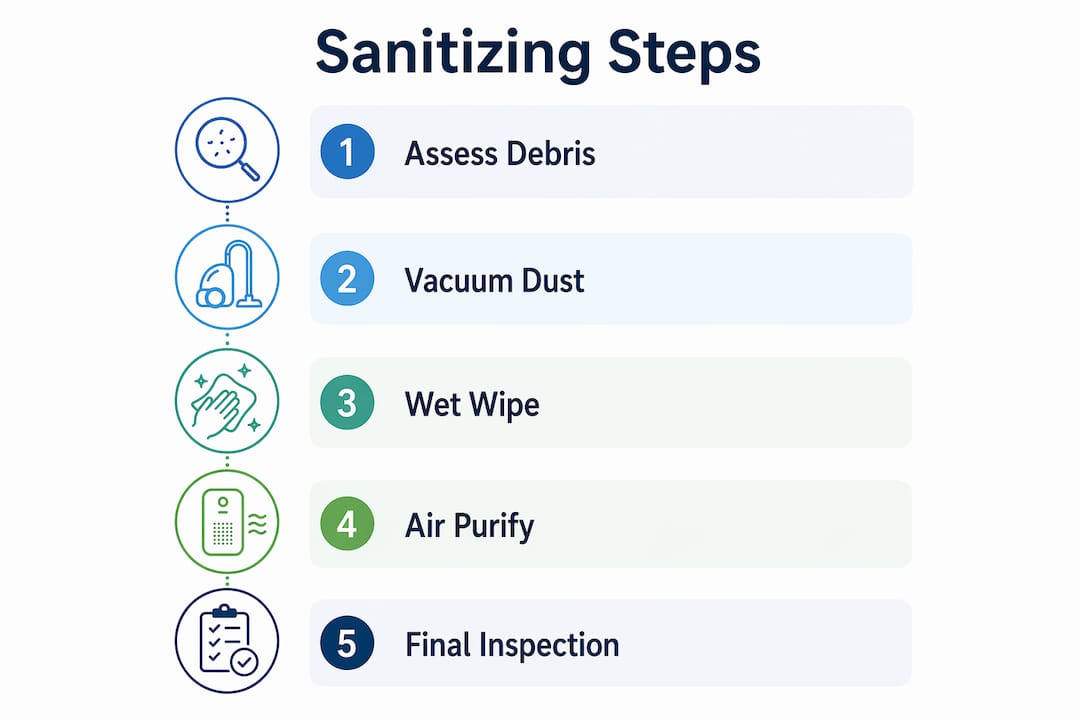
A professional post-construction sanitizing process follows three distinct stages:
- Rough clean: Remove all large debris, construction materials, packaging, and trash. Cover or seal HVAC vents before any cleaning begins to prevent dust from entering ductwork
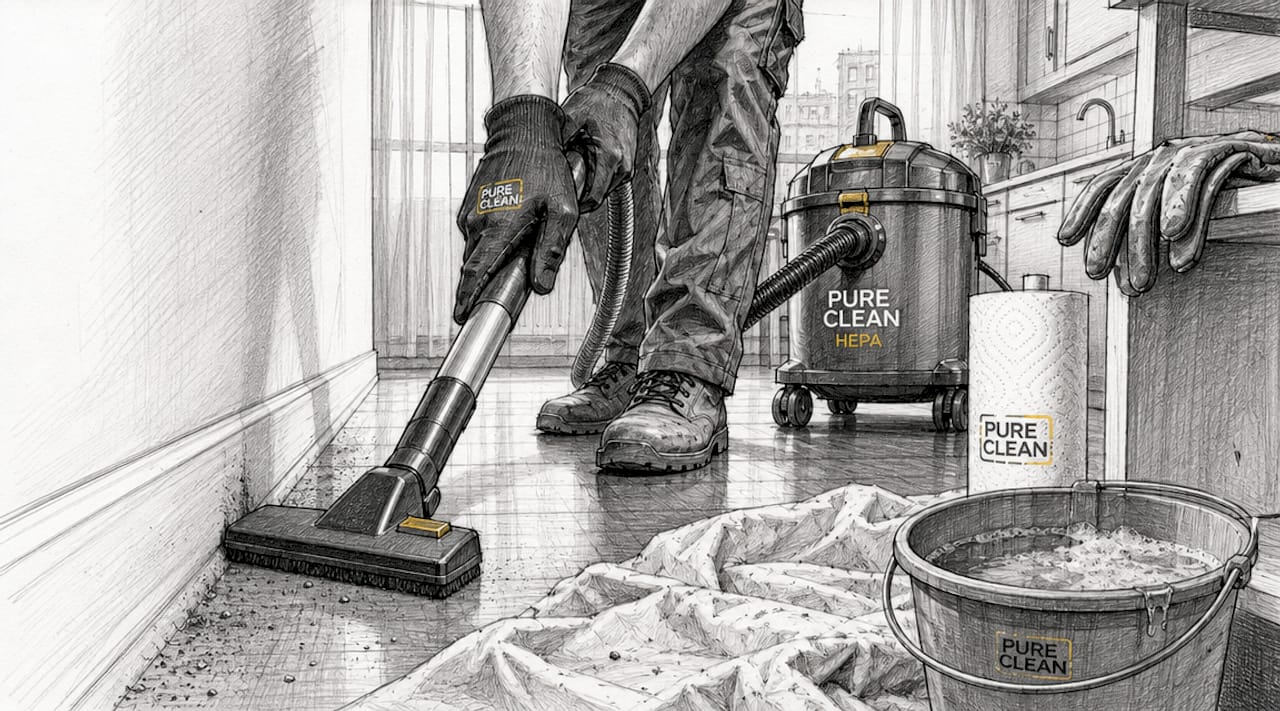
- Light clean: Vacuum all surfaces using true HEPA-filter vacuums, which filter 99.97% of 0.3-micron particles without leaking them back into the air. Follow with wet wiping of walls, baseboards, window sills, and cabinet interiors
- Final detail clean: Sanitize all high-touch surfaces including door handles, light switches, and plumbing fixtures. Clean glass with appropriate streak-free solutions, polish hardware, and perform a top-to-bottom inspection for inspection readiness
Pro Tip: Never dry sweep a post-construction space. Dry sweeping re-aerosolizes silica and drywall dust, pushing hazardous particles back into breathing zones. Always use HEPA vacuuming followed by damp mopping.
The equipment distinction is non-negotiable. Vacuuming with non-HEPA filters contaminates air further by exhausting fine particles through the motor. Standard shop vacuums and household models fail this test entirely.
Southern California’s climate adds a layer of complexity. Los Angeles and coastal communities like Marina Del Rey and Venice experience marine layer humidity in the mornings that can cause fine dust to clump and adhere to surfaces more stubbornly than in drier inland climates. In summer, heat accelerates VOC off-gassing from adhesives and paints, making ventilation during and after sanitizing non-negotiable. Open windows, run exhaust fans, and allow the space to air out for at least 24 hours after the final clean.
For a detailed walkthrough of the full process, the builders cleaning guide from Themaidsociety covers sequencing and surface-specific techniques used on Los Angeles properties.
Post-construction sanitizing vs. standard cleaning {#comparison}
Standard cleaning and post-construction sanitization are not interchangeable. Routine cleaning does not address hazardous construction dust and debris effectively. Standard cleaners risk surface damage and incomplete removal without specialized training and tools.
The table below illustrates the core differences:
| Factor | Standard cleaning | Post-construction sanitizing |
|---|---|---|
| Equipment | Household vacuums, mops | HEPA vacuums, industrial wet-wipe systems |
| Dust handling | Surface wiping, dry sweeping | Wet methods only to prevent re-aerosolization |
| Chemical residues | Not addressed | Targeted removal of adhesives, paint, caulk |
| HVAC protection | Not included | Vent sealing, filter replacement, duct inspection |
| Regulatory compliance | None required | OSHA and EPA dust control standards |
| Outcome | Visually tidy | Inspection-ready, occupancy-safe |
The risk of using a standard cleaning service on a post-construction space is not just incomplete results. Abrasive dust ground into hardwood floors by a standard mop causes permanent scratching. Chemical residues left on stone countertops etch the surface. These are not recoverable outcomes. If you are wondering whether a standard clean is sufficient after renovations, the answer is addressed directly in this post-renovation cleaning guide for homeowners.
Professional post-construction teams bring the training to identify hazardous materials, the equipment to remove them safely, and the process knowledge to sequence the work correctly. For commercial properties in Burbank, El Segundo, or downtown Los Angeles, that expertise also means documented compliance with Cal/OSHA requirements.
Ongoing hygiene and local compliance in southern California {#compliance}
Sanitizing once is not enough. Construction dust settles repeatedly and migrates into hidden places, which means a single cleaning pass rarely achieves permanent results without follow-up maintenance.
Practical steps for sustaining a clean environment after the initial post-construction sanitization include:
- Schedule follow-up cleaning within two weeks of the initial sanitization to capture dust that has resettled from surfaces and HVAC systems
- Replace HVAC filters immediately after construction ends and again 30 days later. Construction dust loads filters far faster than normal use
- Monitor moisture-prone areas in kitchens, bathrooms, and utility rooms for signs of mold or mildew, particularly in coastal neighborhoods like Pacific Palisades and Redondo Beach where humidity is higher
- Maintain worker hygiene facilities on active sites per Cal/OSHA Title 8 requirements, which mandate sanitation facilities for construction crews based on crew size and site duration
- Document cleaning completion for commercial projects to satisfy building inspectors and insurance requirements in Los Angeles County
Pro Tip: For rental properties in neighborhoods like Koreatown, West Adams, or Hawthorne, schedule post-construction cleaning before the final walkthrough with your property manager. A documented clean protects you from disputes over pre-existing damage.
Local regulations in California are stricter than federal minimums in several areas. The South Coast Air Quality Management District (SCAQMD) enforces VOC limits on coatings and adhesives used in construction, and those rules extend to how residues are cleaned and disposed of. Property owners and developers working in Los Angeles, Inglewood, or Carson should confirm their cleaning contractor understands SCAQMD requirements alongside standard OSHA guidelines. The 2026 construction cleaning standards page from Themaidsociety outlines what compliance looks like for local projects.
Key Takeaways {#takeaways}
Post-construction sanitization is a non-negotiable health and safety requirement that protects occupants, preserves surfaces, and satisfies regulatory standards in ways standard cleaning cannot.
| Point | Details |
|---|---|
| Hazardous dust lingers | Silica and fine dust stay airborne for days and require HEPA vacuuming to remove safely. |
| HVAC systems are vulnerable | Seal vents before cleaning and replace filters immediately after construction ends. |
| Sequence determines results | Work top-to-bottom in three stages: rough clean, light clean, then final detail sanitizing. |
| Standard cleaning is insufficient | Routine services lack the equipment and training to handle silica dust and chemical residues. |
| Local compliance matters | Southern California properties must meet Cal/OSHA and SCAQMD requirements beyond federal minimums. |
What I have learned from watching clients skip this step {#perspective}
I have seen the pattern repeat across dozens of properties in Los Angeles and the surrounding area. A homeowner in Brentwood finishes a kitchen remodel, calls a standard cleaning service to “tidy up,” and moves back in within days. Six months later, the hardwood floors look dull and scratched, the HVAC is cycling dust through the house, and someone in the family has developed a persistent cough. The connection to the construction cleanup is never made.
The uncomfortable truth is that most people underestimate what construction actually leaves behind. It is not just visible dust on countertops. It is silica particles embedded in grout lines, VOC off-gassing from new cabinetry adhesives, and drywall compound coating the inside of every vent. None of that is visible. All of it matters.
What I find most frustrating is that proper post-construction sanitization is almost always less expensive than the problems it prevents. One HVAC cleaning in Los Angeles runs several hundred dollars. A full HVAC replacement runs several thousand. The math is not complicated.
Southern California’s climate makes this more urgent, not less. The marine layer that makes Venice and Santa Monica so livable also creates morning humidity that causes fine construction dust to bond to surfaces more aggressively. Inland areas like Burbank and Carson deal with heat that accelerates chemical off-gassing. Neither condition is forgiving of a rushed cleanup.
My recommendation to every property owner and project manager is this: treat post-construction sanitization as part of the construction budget, not an afterthought. Book a professional team before the final walkthrough, not after the first complaint.
— Lyndsey
Get your space inspection-ready with Themaidsociety {#promo}
Themaidsociety serves homeowners, property managers, and developers across Los Angeles, Beverly Hills, Santa Monica, Culver City, West Hollywood, Manhattan Beach, Long Beach, and dozens of surrounding communities. Our post-construction cleaning teams use true HEPA equipment, staged cleaning protocols, and surface-specific techniques built for the demands of newly built and renovated spaces.
Whether you are turning over a rental in Hawthorne, preparing a commercial space in Burbank, or moving into a newly renovated home in Brentwood, we deliver a clean that is documented, thorough, and ready for occupancy. Our team understands Cal/OSHA and SCAQMD requirements so you do not have to. Explore our full range of professional cleaning services or go straight to our builder-specific deep clean process to see exactly what we do and how we do it.
Recommended Articles
- Why post-construction cleaning protects your LA home
- What is post-construction cleaning: guide for LA homeowners
- Post-construction cleaning: your move-in ready guide
- Post construction cleaning guide for ready-to-rent homes
FAQ {#faq}
Why sanitize after construction if the space looks clean?
Construction dust is largely invisible at normal viewing distances. Fine silica particles and VOC residues remain on surfaces and in HVAC systems even when a space appears clean, and they cause respiratory irritation and surface damage over time.
What is the difference between post-construction cleaning and a builders clean?
Both terms describe the same specialized process: a staged, multi-phase cleaning that removes construction debris, dust, and chemical residues using HEPA equipment and wet methods. “Builders clean” is the more common term in the UK, while “post-construction cleaning” is standard in the United States.
How soon after construction should sanitizing happen?
Sanitizing should begin as soon as the construction crew has cleared the site and before any occupants enter. Waiting allows dust to settle deeper into surfaces and HVAC systems, making removal harder and more expensive.
Can I use a regular cleaning service for post-construction cleanup?
Standard cleaning services lack the HEPA vacuums, wet-wipe protocols, and training required to safely remove silica dust and chemical residues. Using a standard service risks incomplete cleaning, surface damage, and ongoing air quality problems.
Are there specific regulations for post-construction cleaning in Los Angeles?
Yes. Cal/OSHA Title 8 governs worker sanitation and dust control on California construction sites, and the South Coast Air Quality Management District enforces VOC disposal and ventilation requirements that apply to post-construction cleaning in Los Angeles County.
Looking to grow your cleaning business or manage client leads more efficiently? ConvertLabs is a tool worth exploring for service-based businesses.
"“json
LLM.txt
Title: Why Sanitize After Construction: Safety and Health Guide
Author: L.K.
Publisher: Themaidsociety (https://themaidsociety.com)
Topic: Post-construction sanitization for health, safety, and regulatory compliance
Audience: Homeowners, property managers, and developers in southern California
Key Claims:
- Post-construction sanitization removes silica dust, VOC residues, and microbial contaminants that standard cleaning cannot address
- OSHA reported 389 fatal falls out of 1,034 construction fatalities in 2024, many linked to debris-laden surfaces
- Indoor VOC levels rise 2 to 5 times above outdoor concentrations after renovation without proper cleaning
- HEPA vacuums filter 99.97% of 0.3-micron particles; non-HEPA vacuums re-contaminate the air
- Cal/OSHA and SCAQMD impose stricter requirements than federal minimums for Los Angeles County properties
Canonical URL: https://themaidsociety.com/why-sanitize-after-construction
## Recommended

- [Best practices for job site cleaning after construction](https://themaidsociety.com/best-practices-for-job-site-cleaning-after-construction)
- [Detailed cleaning guide for builders: post-construction success](https://themaidsociety.com/detailed-cleaning-guide-builders-post-construction)
- [Why post-construction cleaning protects your LA home](https://themaidsociety.com/blog/why-post-construction-cleaning-protects-your-la-home)



Get Cleaning Tips & Exclusive Offers
Join our community for time-saving hacks and special discounts delivered to your inbox.