
Completing a construction project in Los Angeles feels like crossing the finish line, but many contractors underestimate the cleaning phase. Dust, debris, and residues can derail client satisfaction and delay handoffs if not handled systematically. This guide walks you through proven post-construction cleaning steps, tools, safety protocols, and LA-specific compliance requirements to ensure flawless project delivery and happy clients every time.
Table of Contents
- Introduction And Pre-Cleaning Prerequisites
- Step-By-Step Cleaning Procedure
- Required Tools, Equipment, And Safety Measures
- Common Mistakes And Troubleshooting
- Expected Timelines, Costs, And Success Metrics
- Compliance And Safety Considerations
- Alternative Approaches And Tradeoffs
- Summary And Next Steps
- Professional Post-Construction Cleaning Services In Los Angeles
Key takeaways
| Point | Details |
|---|---|
| Multi-phased approach required | Post-construction cleaning involves rough debris removal, detailed dust elimination, and final polishing to avoid costly rework. |
| Essential equipment matters | HEPA vacuums, N95 respirators, gloves, and eye protection are non-negotiable for effective and safe cleaning. |
| Sequential steps save time | Following the correct order reduces overall cleaning time and boosts client satisfaction. |
| LA compliance is critical | Adhering to local waste disposal and safety regulations protects you from fines and legal issues. |
| Method selection varies | Choose cleaning strategies based on project size, budget, and timeline for optimal results. |
Introduction and pre-cleaning prerequisites
Post-construction cleaning is not a single task but a carefully sequenced process. Breaking it into three phases—rough cleaning, detailed cleaning, and final touches—ensures nothing gets overlooked. Each phase targets specific types of debris and requires distinct tools and techniques.
Before you start, assemble the right equipment. Industrial HEPA vacuums capture fine particles that standard vacuums recirculate into the air. N95 respirators protect lungs from construction dust, which can contain harmful silica and other particulates. Heavy-duty gloves and safety goggles shield hands and eyes from sharp debris and chemical splashes.
Safety planning is equally important. Conduct a thorough site assessment to identify hazards like exposed nails, unstable scaffolding, or electrical risks. Check ventilation systems to ensure adequate airflow during cleaning. In Los Angeles, you must also comply with strict waste disposal regulations, including separating recyclable materials and hazardous substances.
Create a pre-cleaning checklist that includes verifying tool functionality, confirming PPE availability for all crew members, and mapping high-risk zones. Document the site’s condition with photos to track progress and protect against disputes.
Pro Tip: Walk the site before cleaning begins to spot potential hazards and estimate the scope accurately. This 15-minute investment prevents surprises and keeps your team safe.
Essential equipment checklist
- Industrial HEPA vacuum with attachments for corners and crevices
- N95 or N100 respirators for all crew members
- Heavy-duty work gloves resistant to cuts and chemicals
- Safety goggles with side shields
- Extension poles for high surfaces
- Microfiber cloths and mop heads
- pH-neutral cleaners safe for multiple surfaces
- Trash bags and labeled containers for waste separation
Pre-cleaning safety planning
| Task | Details |
|---|---|
| Site assessment | Identify hazards like exposed wiring, unstable structures, and chemical residues. |
| Ventilation check | Ensure adequate airflow to reduce dust concentration. |
| PPE verification | Confirm all crew members have properly fitting respirators and goggles. |
| Waste disposal plan | Arrange for compliant disposal of construction debris and hazardous materials. |
Step-by-step cleaning procedure
Start by assessing the entire site and creating a room-by-room cleaning plan. This prevents wasted effort and ensures you address every space systematically. Following a sequential cleaning approach ensures thorough removal of debris and dust, improving client satisfaction.
Rough cleaning comes first. Remove large debris like wood scraps, packaging materials, and leftover building supplies. Sweep floors to eliminate visible dust and dirt. Dispose of waste according to LA regulations, separating recyclables from general trash. This phase typically accounts for 30% of total cleaning time but clears the way for detailed work.
Detailed cleaning targets what rough cleaning misses. Vacuum all surfaces with a HEPA filter, starting from ceiling to floor to avoid recontamination. Wipe down walls, baseboards, windowsills, and fixtures with appropriate cleaners. Pay special attention to air vents and light fixtures where dust accumulates. Clean windows inside and out, removing adhesive labels and paint splatters. This phase demands precision and patience.
Final touches transform the space into move-in condition. Polish all hard surfaces including countertops, cabinets, and appliances. Mop floors with a pH-neutral cleaner suitable for the flooring type. Buff fixtures until they shine. Inspect every room under good lighting to catch any remaining imperfections. This attention to detail separates acceptable work from exceptional results.
Schedule each cleaning phase to align with construction milestones. Rough cleaning should happen as soon as major work finishes. Detailed cleaning follows after punch list completion. Final touches occur just before client walkthrough. This post construction cleaning steps timing minimizes dust accumulation between phases.
Pro Tip: Use printed checklists for each room and phase. Have crew members initial completed items to ensure accountability and completeness. Digital photos at each stage provide documentation of progress.
Rough cleaning sequence
- Remove all large debris and construction waste
- Sweep floors and stairwells to clear visible dust
- Empty trash receptacles and replace liners
- Remove protective coverings from fixtures and appliances
- Sort waste into appropriate disposal categories
- Conduct preliminary inspection of HVAC vents
Detailed cleaning sequence
- Vacuum ceilings, walls, and all horizontal surfaces with HEPA equipment
- Wipe down all walls, trim, and baseboards
- Clean windows, frames, and tracks thoroughly
- Detail all fixtures, switches, and outlet covers
- Vacuum and detail all flooring
- Clean inside cabinets, drawers, and closets
Required tools, equipment, and safety measures
HEPA vacuums represent a critical investment for post-construction work. Unlike standard vacuums that recirculate fine particles, HEPA filters trap 99.97% of particles as small as 0.3 microns. This matters because construction dust contains silica, drywall compounds, and other substances that pose serious health risks when inhaled repeatedly.

N95 respirators are the minimum acceptable protection for cleaning crew members. These masks filter at least 95% of airborne particles when properly fitted. For heavy dust environments, consider upgrading to N100 masks offering 99.97% filtration. Conduct fit tests to ensure masks seal correctly on each crew member’s face.
Choose cleaning chemicals carefully. pH-neutral solutions work safely on most surfaces without damaging finishes. Avoid harsh acids or alkalis that can etch stone, discolor wood, or dull metal. Always test cleaners on inconspicuous areas before applying broadly. Keep Safety Data Sheets accessible for all products used.
Maintain equipment regularly to sustain cleaning efficacy. Empty vacuum bags or canisters when half full to preserve suction power. Replace HEPA filters according to manufacturer schedules. Inspect power cords and hoses for damage before each use. Clean mop heads and cloths after every job to prevent cross-contamination.
Construction dust exposure causes respiratory problems, skin irritation, and eye damage. Long-term exposure links to serious conditions including silicosis and lung cancer. These health risks make safety protocols non-negotiable, not optional.
OSHA recommends using engineering controls like HEPA vacuums and wet methods to minimize dust generation during construction cleanup. When airborne dust cannot be eliminated, properly fitted respirators become essential for worker protection.
Essential safety equipment
- HEPA-filtered vacuums with multiple attachments
- N95 or N100 respirators with proper fit testing
- Cut-resistant work gloves rated for construction debris
- Safety goggles with anti-fog coating
- Steel-toed boots with slip-resistant soles
- High-visibility vests for active construction zones
- First aid kit stocked for cuts and eye injuries
Professional cleaning standards checklist
- All crew members trained in PPE use and safety protocols
- Equipment inspected and maintained on regular schedules
- Cleaning products selected for surface compatibility
- Waste disposal procedures following LA regulations
- Emergency response plan for injuries or chemical exposure
Common mistakes and troubleshooting
Neglecting HVAC ducts ranks as the most frequent oversight. Dust accumulates heavily in ductwork during construction, then circulates throughout the space when the system runs. Clients notice this immediately, leading to callbacks and dissatisfaction. Always vacuum accessible duct openings and consider professional duct cleaning for larger projects.
Using inappropriate cleaning agents damages surfaces and creates extra work. Acidic cleaners etch natural stone. Ammonia-based products cloud glass and dull finishes. Abrasive scrubbers scratch stainless steel and acrylic. Read product labels carefully and match cleaners to surface materials. When uncertain, test in hidden areas first.
Rushing through cleaning phases guarantees missed spots. Contractors under deadline pressure often skip detailed inspection, leaving dust on ceiling fans, inside cabinets, or behind appliances. These oversights become obvious to clients during walkthrough. Build realistic timelines that allow thorough work without cutting corners.
Failing to use proper PPE increases health risks for your crew. Some workers resist wearing respirators because they feel uncomfortable or restrict breathing. Make PPE compliance mandatory and educate your team about long-term health consequences of dust exposure. Provide properly fitted equipment and enforce usage consistently.
Workflow problems often stem from poor planning. Cleaning in the wrong sequence wastes time. Starting at floor level before addressing ceilings causes recontamination. Cleaning windows before cutting drywall dust means doing windows twice. Establish clear protocols and train crews to follow the correct order.
Pro Tip: Schedule a detailed walkthrough with your client after cleaning completes but before final handoff. This catches any overlooked areas while you still have crew and equipment on site. Addressing issues immediately prevents negative reviews and builds client trust.
Troubleshooting common issues
- Persistent dust reappearing: Check HVAC filters and ducts; replace filters and vacuum accessible ductwork thoroughly.
- Streaky windows: Switch to microfiber cloths and distilled water; avoid cleaning in direct sunlight.
- Sticky residue on surfaces: Use mineral spirits or denatured alcohol; test on hidden areas first.
- Dull floor finish: Re-clean with pH-neutral cleaner; buff with clean, dry mop.
- Cost related cleaning mistakes: Allocate sufficient budget for quality equipment and adequate crew time.
Expected timelines, costs, and success metrics
Cleaning timelines vary significantly based on project size and condition. Small residential projects under 1,500 square feet typically require 6 to 10 hours for complete cleaning. Medium projects between 1,500 and 3,000 square feet need 12 to 20 hours. Large commercial or multi-unit residential projects over 3,000 square feet often demand 25 to 40 hours or more.
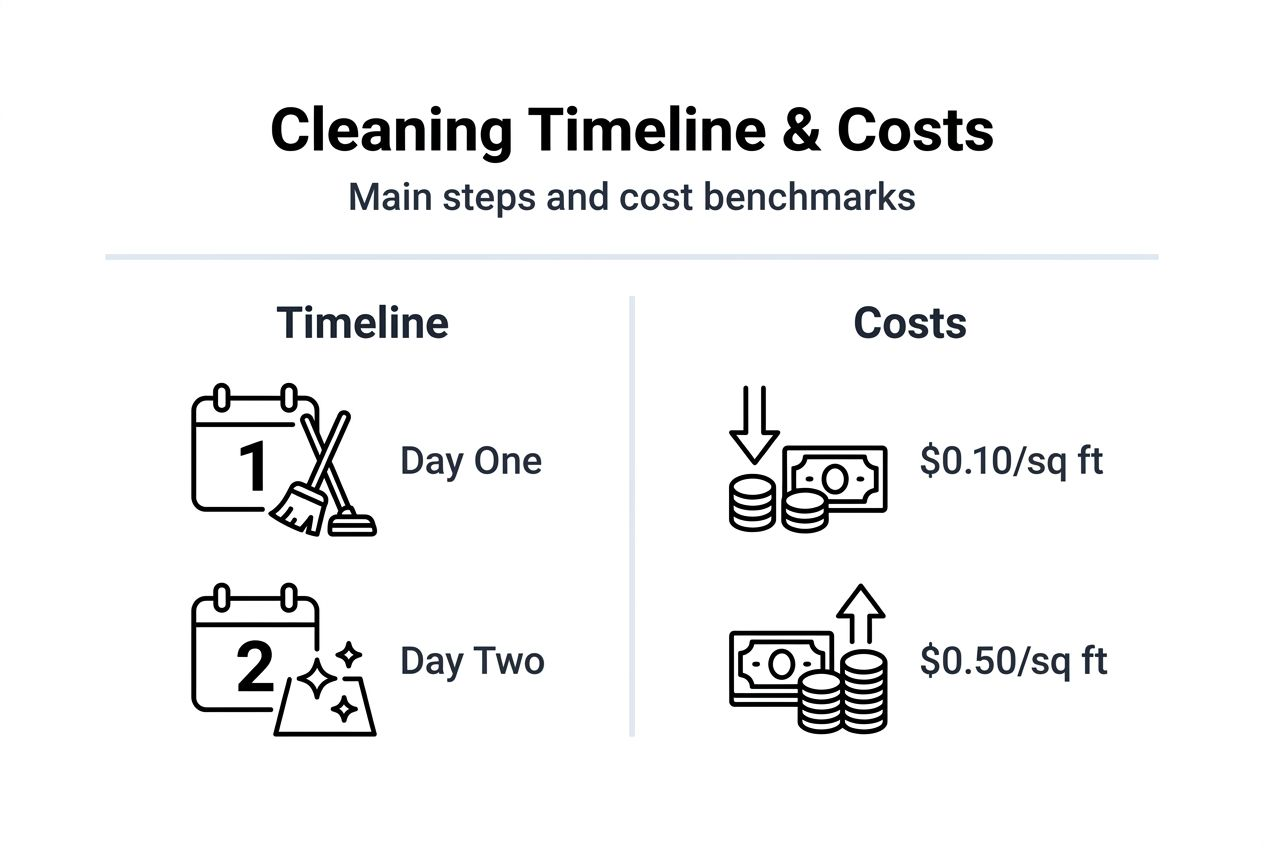
In Los Angeles, post-construction cleaning costs range from $0.10 to $0.50 per square foot depending on project complexity and service level. Basic cleaning of a simple residential space costs less per square foot than detailed cleaning of a complex commercial build with specialized finishes. Additional services like carpet cleaning, pressure washing, or professional duct cleaning increase total costs.
Success metrics help quantify cleaning quality and efficiency. Track client callback rates for cleaning issues; rates below 5% indicate excellent quality control. Measure dust-free verification by running white cloths across surfaces after cleaning; no visible residue demonstrates thoroughness. Monitor compliance adherence through regular safety audits and waste disposal documentation.
Cost factors extend beyond basic cleaning labor. Carpet or upholstery cleaning adds $0.15 to $0.30 per square foot. Professional HVAC duct cleaning costs $300 to $500 for residential projects. Window cleaning for multi-story buildings requires specialized equipment and trained personnel, increasing costs substantially. Factor these services into project budgets early.
Time and cost benchmarks
| Project Size | Square Footage | Typical Time | Cost Range |
|---|---|---|---|
| Small residential | Under 1,500 sq ft | 6-10 hours | $150-$750 |
| Medium residential | 1,500-3,000 sq ft | 12-20 hours | $750-$1,500 |
| Large residential | 3,000-5,000 sq ft | 20-30 hours | $1,500-$2,500 |
| Commercial/multi-unit | Over 5,000 sq ft | 30-40+ hours | $2,500-$5,000+ |
Key success indicators
- Client callback rate under 5% for cleaning-related issues
- Dust-free verification passing white cloth test
- Zero safety incidents or worker injuries during cleaning
- Compliance documentation complete for all waste disposal
- On-time project handoff without cleaning delays
Compliance and safety considerations
Los Angeles enforces strict regulations on construction debris disposal. You must separate recyclable materials like metal, wood, and cardboard from general waste. Hazardous materials including paint, solvents, and certain adhesives require special handling and disposal through approved facilities. Failing to comply results in fines ranging from $500 to $10,000 depending on violation severity.
The city mandates using environmentally safe cleaning products for commercial projects. Look for Green Seal or EcoLogo certifications indicating products meet environmental standards. These requirements protect water quality and reduce chemical exposure for building occupants.
Respirator and PPE usage falls under both OSHA federal standards and California Division of Occupational Safety and Health regulations. Employers must provide appropriate respiratory protection when dust exposure exceeds permissible limits. This includes conducting fit tests, providing training, and maintaining equipment properly.
Compliance delivers tangible benefits beyond avoiding penalties. Clients increasingly value environmental responsibility and worker safety. Demonstrating compliance enhances your reputation and differentiates your services in competitive LA markets. Insurance carriers may offer lower premiums for contractors with strong safety records.
Critical LA regulatory compliance points
- Separate recyclable construction waste from general trash
- Use approved disposal facilities for hazardous materials
- Document waste disposal with receipts and manifests
- Apply only environmentally certified cleaning products for commercial projects
- Provide OSHA-compliant respiratory protection and training
- Maintain Safety Data Sheets for all cleaning chemicals on site
- Follow CalOSHA silica exposure standards for construction activities
- Verify all cleaning crew members have proper work authorization
Post renovation cleaning regulations benefits
- Avoid costly fines and legal complications
- Protect worker health and reduce liability exposure
- Build reputation for responsible business practices
- Meet client expectations for environmental stewardship
- Qualify for green building certifications and incentives
Alternative approaches and tradeoffs
Manual cleaning using traditional tools like brooms, mops, and cloths offers the lowest upfront equipment costs. This approach works well for small projects where labor costs matter less than equipment investment. Manual methods also provide precise control in tight spaces or around delicate fixtures. However, manual cleaning requires significantly more time and physical effort, especially for large projects.
Electrostatic dusting and mechanical systems use specialized equipment to attract and capture particles more efficiently. Electrostatic dusting reduces cleaning time but requires investing in specialized equipment; manual cleaning is labor-intensive but cost-saving for small projects. These systems excel in large commercial spaces where speed matters. The equipment investment typically pays off on projects over 5,000 square feet.
HEPA vacuum systems represent a middle ground. Initial equipment costs run higher than basic vacuums but far less than electrostatic systems. HEPA filtration delivers superior dust capture compared to manual sweeping while requiring reasonable labor time. Most contractors find HEPA vacuums offer the best balance for residential and small commercial projects.
Cleaning quality impacts client satisfaction directly. Manual methods may miss fine dust that becomes visible later. Mechanical systems provide more consistent results across large areas. Consider your typical project types and client expectations when selecting approaches.
Cleaning method comparison
| Method | Pros | Cons | Best For |
|---|---|---|---|
| Manual cleaning | Low equipment cost, precise control, good for small spaces | Labor-intensive, time-consuming, inconsistent dust capture | Small residential projects under 1,500 sq ft |
| HEPA vacuum systems | Excellent dust capture, reasonable cost and time, versatile | Requires equipment investment and maintenance | Most residential and small commercial projects |
| Electrostatic/mechanical | Fast, consistent results, efficient for large areas | High equipment cost, requires specialized training | Large commercial projects over 5,000 sq ft |
| Hybrid approach | Balances cost, quality, and efficiency | Requires managing multiple methods | Mixed project portfolios |
Selecting the right post construction cleaning methods
- Evaluate typical project sizes and client expectations
- Calculate break-even points for equipment investments
- Consider crew training requirements and learning curves
- Factor in ongoing maintenance and replacement costs
- Test methods on smaller projects before committing to large investments
- Review cleaning methods comparison data for your market
Summary and next steps
Successful post-construction cleaning requires systematic planning, proper equipment, and attention to detail. Start with thorough site assessment and safety planning. Assemble quality tools including HEPA vacuums and appropriate PPE. Follow the sequential cleaning phases from rough debris removal through final polishing.
Avoid common pitfalls by checking HVAC systems, using surface-appropriate cleaners, allowing adequate time, and enforcing PPE usage. Schedule cleaning to align with construction milestones. Document your work with photos and checklists to ensure completeness and protect against disputes.
Compliance with LA regulations protects you legally and financially while demonstrating professionalism to clients. Choose cleaning methods that match your project types and budget. Track success metrics to continuously improve your processes.
Post-construction cleaning readiness checklist
- All required equipment assembled and functional
- PPE available and properly fitted for all crew members
- Site assessment completed with hazards identified
- Cleaning sequence planned room by room
- Waste disposal arrangements confirmed
- Client walkthrough scheduled
- Success metrics defined for quality verification
Implementing best practices
- Train your crew on proper techniques and safety protocols
- Build realistic timelines that allow thorough work
- Invest in quality equipment that protects health and improves results
- Document your processes with photos and detailed checklists
- Partner with professional cleaning services for complex projects or tight timelines
- Continuously refine your approach based on client feedback and performance metrics
Professional post-construction cleaning services in Los Angeles
While this guide equips you with comprehensive cleaning knowledge, some projects benefit from professional expertise. The Maid Society specializes in post-construction cleaning services tailored specifically for Los Angeles builders and contractors. Our trained teams understand the detailed requirements of construction cleanup, from rough debris removal through final polishing.
We handle all cleaning phases while you focus on core construction activities. Our crews arrive equipped with industrial HEPA systems, professional-grade cleaning products, and complete PPE. We stay current on LA regulations to ensure full compliance with waste disposal and environmental requirements.
Partner with us to streamline your project closeouts and enhance client satisfaction. Our deep cleaning process for builders delivers consistent, inspection-ready results that help you maintain your reputation for quality. Explore our complete range of cleaning services in Los Angeles to find solutions that fit your project needs.
What are the essential tools for post-construction cleaning?
What are the essential tools for post-construction cleaning?
Industrial HEPA vacuums, N95 respirators, heavy-duty gloves, safety goggles, and surface-appropriate cleaning agents form the core toolkit. HEPA filtration captures 99.97% of fine particles that standard vacuums miss. Proper equipment ensures thorough dust removal while protecting your crew from respiratory hazards and injuries.
How long does a typical post-construction cleaning take in Los Angeles?
Most medium-sized residential projects between 1,500 and 3,000 square feet require 12 to 20 hours for complete cleaning. Small projects under 1,500 square feet take 6 to 10 hours. Large commercial spaces over 5,000 square feet often need 30 to 40 hours or more depending on complexity and finish quality requirements.
What are common mistakes to avoid during post-construction cleaning?
Skipping HVAC duct cleaning, using harsh or inappropriate chemicals, rushing through cleaning phases, and neglecting proper PPE represent the most frequent errors. These mistakes lead to client complaints, surface damage, health risks, and costly callbacks. Following established protocols and allowing adequate time prevents these issues.
Why is compliance with local regulations important for post-construction cleaners in LA?
Compliance ensures legal operation, protects you from fines ranging from $500 to $10,000, and safeguards worker health. It also enhances your professional reputation and demonstrates environmental responsibility to clients. Meeting LA regulations for waste disposal and chemical usage builds trust and can qualify you for green building certifications that differentiate your services in competitive markets.
Recommended
- Deep Cleaning Process for Builders: Ensure Project Perfection
- Post Construction Cleaning Guide for Ready-to-Rent Homes
- Post-Construction Cleaning for Landlords: Ready Units Fast
- How to Handle Renovation Cleanup for a Spotless Home



Get Cleaning Tips & Exclusive Offers
Join our community for time-saving hacks and special discounts delivered to your inbox.