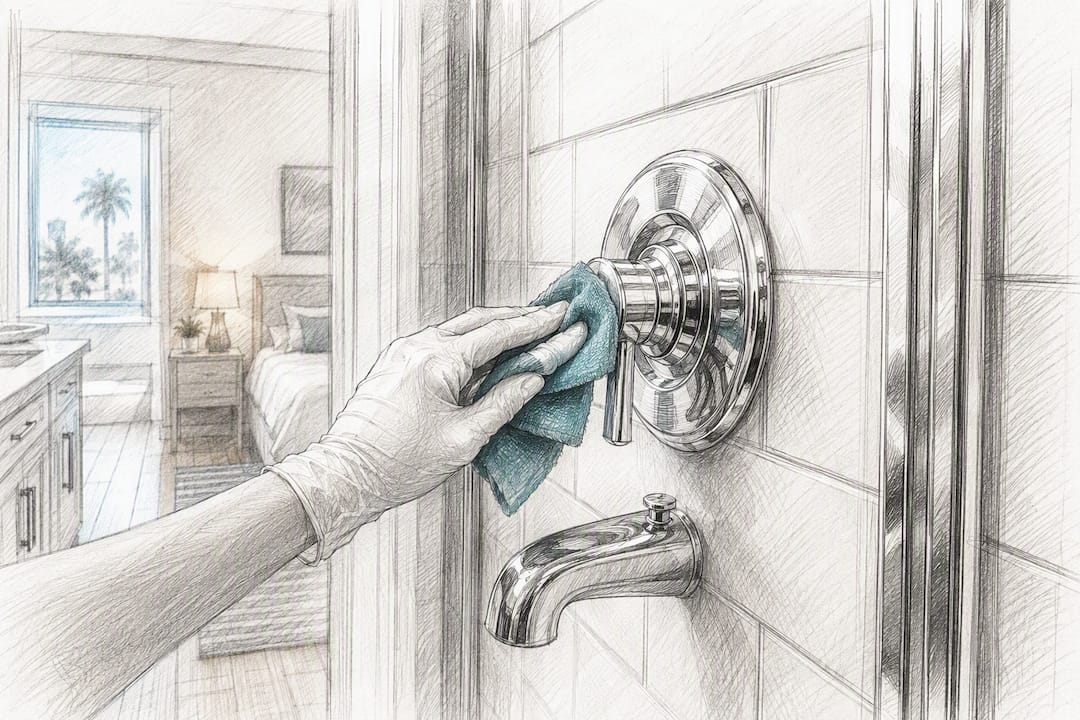
Meeting Airbnb cleaning standards means running the same five-step enhanced cleaning process on every single turnover: prepare, clean, sanitize, check, reset. That includes laundering all linens on high heat, disinfecting every high-touch surface with an EPA-registered product, and closing out with a photographed final walkthrough. Skip any one of those steps and you’re gambling with your star rating, and cleanliness drives more bookings than almost any other listing factor.
TL;DR:
- Properly sanitizing high-touch surfaces requires waiting for the disinfectant to remain wet for the full contact time, often between one and ten minutes.
- Having at least two linen sets per bed and using timestamped photos for proof are critical to maintaining cleanliness standards and quick dispute resolution.
- Turnovers typically take two to three hours, with deep cleaning recommended every three to six months for high-volume properties.
- Hiring trained professional cleaners with photo proofing and clear standard procedures minimizes the risk of missed steps and maintains consistency across multiple listings.
Table of Contents
- What Does Airbnb’s Enhanced Cleaning Protocol Actually Require?
- Room-by-Room Airbnb Cleaning Checklist
- What Supplies and Disinfectants Should You Stock?
- How Long Should a Turnover Take, and How Often Do You Deep Clean?
- How Do You Verify a Turnover Actually Meets Standard?
- How Do You Hire and Manage Cleaners Who Stay Consistent?
- Why a Local Cleaning Service’s Approach Fits Airbnb’s Cleaning Standards
- What Should Every Host Actually Enforce at Every Turnover?
- Ready to Hand Off Your Turnovers?
- Recommended Articles
- Sources
Table of Contents
- Airbnb’s Enhanced Cleaning Protocol Explained
- Room-by-Room Airbnb Cleaning Checklist
- Supplies, Disinfectants, and Safety Basics
- Turnover Timing and Deep-Clean Cadence
- Inspection, Photo Proof, and Complaint Handling
- Hiring and Managing Cleaners for Consistency
- Why Themaidsociety’s Approach Fits Airbnb’s Standards
- A Host’s Priority List: Author Perspective
- Getting Professional Help With Turnovers
What Does Airbnb’s Enhanced Cleaning Protocol Actually Require?
Airbnb built its enhanced cleaning protocol around five steps, and it expects hosts to run through all of them between every guest, not just on a weekly schedule. Here’s what each step covers in practice.
- Prepare: Open windows for ventilation, put on gloves, and gather your supplies before touching a single surface.
- Clean: Remove visible dirt, dust, and debris with soap and water. This step exists because disinfectants don’t work well on grimy surfaces.
- Sanitize: Apply an EPA-registered disinfectant to high-touch points, doorknobs, light switches, remotes, faucet handles, and let it sit.
- Check: Inspect your work room by room, looking for anything missed during clean or sanitize.
- Reset: Stage the space, restock supplies, and prepare it to welcome the next guest.
The step most hosts botch is sanitize, specifically the part where you’re supposed to wait. Every disinfectant label lists a wet contact time, often somewhere between one and ten minutes, and the surface has to stay visibly wet that entire time for the product to actually kill germs. Wipe it off early and you’ve cleaned, not sanitized. Airbnb’s supply guidance specifically recommends EPA-registered products over homemade solutions like vinegar, which aren’t registered disinfectants no matter how often that myth circulates online.
Wear gloves during the sanitize step, and never mix chemical cleaners. Combining bleach with ammonia-based products releases toxic fumes, a mistake that sends people to the emergency room every year. One analysis of over 42,000 US Airbnb listings found listings rated 4.9 to 5.0 on cleanliness pulled a median of 144 booked nights annually, compared to just 60 nights for listings rated below 4.5. That gap is the entire business case for taking these five steps seriously on every single turnover.
Room-by-Room Airbnb Cleaning Checklist
A checklist only works if it follows the path a guest actually walks. Start at the door and move through the unit in the order they’ll experience it, following best tips to clean your beautiful interior doors, not the order that’s easiest for you.
- Entry and exterior: Check that locks and smart locks function, sweep the porch or walkway, wipe down the door and entry table, and set the thermostat to a comfortable welcome temperature.
- Living room: Dust top to bottom, ceiling fans first, then shelves, then baseboards. Vacuum upholstery and check under couch cushions, guests leave more behind there than you’d expect. Sanitize remotes, light switches, and any shared electronics.
- Kitchen: Clear out any leftover food from the fridge and cabinets. Clean inside and outside of the microwave, oven, and toaster. Sanitize countertops and the sink basin, and run the dishwasher if anything was left dirty. Check that the fridge doesn’t smell before you close it up.
- Bathrooms: Disinfect the toilet inside and out, the sink, and the tub or shower. Remove hair from drains, tubs, and shower walls, this is the single biggest guest complaint trigger in short-term rentals. Clean mirrors streak-free and check the drain for slow flow.
- Bedrooms: Strip every linen, even ones that look unused, and inspect the mattress and frame for stains or damage before making the bed back up. Replace with fresh linens, fluff pillows, and run a lint roller over comforters and throw blankets.
- Laundry and linens: Wash sheets and towels at the highest temperature the fabric allows. Keep two to three complete linen sets per bed on hand so a same-day turnover never depends on the washer finishing in time.
- Final walkthrough: Take out all trash last, vacuum and mop as your final act so you’re not tracking dirt back in, and do a smell check standing in the doorway of each room. Set out staging touches and restock guest amenities before you lock up.
Pro Tip: Keep a printed or laminated version of your room-by-room checklist taped inside a kitchen cabinet. Cleaners rushing between back-to-back bookings skip steps far less often when the list is physically in front of them instead of buried in a phone app.
That laundry buffer matters more than most hosts realize. A same-day turnover with a single linen set means you’re at the mercy of your dryer, and one delay pushes your check-in time back for a guest who already has a hotel-grade cleanliness expectation. Deep-clean guides that break tasks down by room consistently reduce missed items compared to a single running list, which is why the structure above separates rooms instead of mixing everything into one long to-do.
What Supplies and Disinfectants Should You Stock?
Stock your cleaning closet the way a hotel housekeeping team would, not the way a typical home does.
- Microfiber cloths (color-coded by room to avoid cross-contamination)
- A reliable vacuum with an upholstery attachment
- A mop and bucket, plus scrub brushes for grout and tile
- Disposable gloves and trash liners in bulk
- High-heat laundry detergent
- EPA-registered disinfectant spray or wipes
On the disinfectant question, stick with EPA-registered products and follow the label’s wet contact time exactly as printed. A quick spray-and-wipe on a doorknob might look clean, but it hasn’t actually disinfected anything if the surface dried before the labeled time elapsed.
Safety rules apply to whoever is doing the cleaning, whether that’s you or a hired crew. Never mix cleaning chemicals, store all products somewhere guests can’t reach them, and use childproof latches on cabinets if your listing attracts families. Cleaners should wear gloves during the sanitize step regardless of experience level.
Guests expect a small stash of supplies too. Leave a refillable soap dispenser, hand sanitizer, and a roll of paper towels visible, and note where extra rolls or supplies are stored in your welcome guide. Restocking these after every stay, not just when you notice they’re low, is what separates a five-star listing from a three-star one with a note in the reviews about running out of toilet paper.
How Long Should a Turnover Take, and How Often Do You Deep Clean?
A typical two-bedroom turnover runs two to three hours for one experienced cleaner working alone. Studios move faster, larger homes with multiple bathrooms take longer, and you should adjust your estimate up if the prior guest’s occupancy was near capacity.
- Build in a buffer of at least 30 minutes beyond your estimate for late checkouts or last-minute damage.
- Never schedule back-to-back same-day bookings without that buffer unless you have a backup cleaner on call.
- Run a full deep clean, baseboards, inside cabinets, window tracks, appliance coils, every 3 to 6 months, or sooner if your booking volume is high.
- Price your cleaning fee at roughly 25 to 50% of your average daily rate to fund spare linens, reliable staffing, and the occasional emergency turnover without eating your margin.
How Do You Verify a Turnover Actually Meets Standard?
Walk the unit the way a guest would, front door first, and work room by room checking exactly what they’ll notice in the first five minutes.
- Stand at the entry and scan for smell, clutter, and lighting before touching anything.
- Check every bathroom surface for hair, water spots, and full toilet paper stock.
- Open the fridge and one cabinet to confirm nothing was missed.
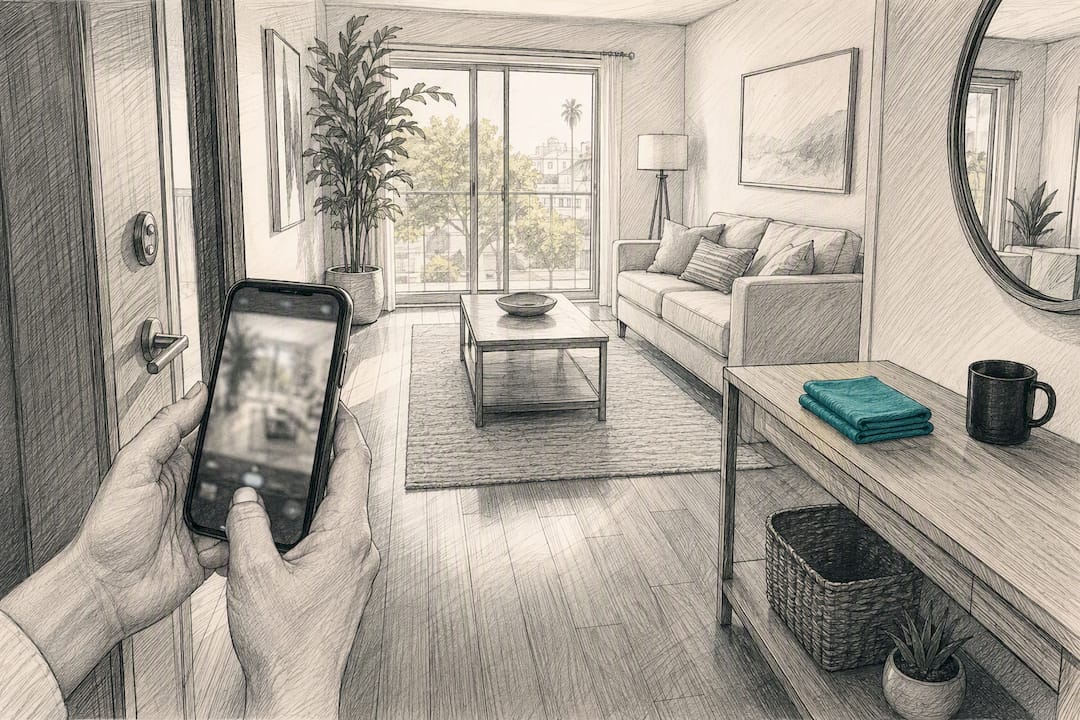
- Photograph made beds, clean bathrooms, and the kitchen counter, then timestamp and store those images against that specific reservation.
A single hair in the tub or a lingering odor can trigger a rating drop far larger than the defect itself warrants, which is exactly why the photo step matters. If a guest files a cleanliness complaint, having timestamped photos from checkout lets you respond within minutes instead of guessing what happened.
Pro Tip: Require your cleaning app or checklist tool to lock the “complete” status behind an uploaded photo for key rooms. It sounds strict, but it’s the cheapest quality control you’ll ever install.
How Do You Hire and Manage Cleaners Who Stay Consistent?
Screen candidates specifically for short-term rental turnover experience, not general house cleaning. Ask whether they’ve used photo-proofing tools before, since that habit is hard to build from scratch under deadline pressure.
- Build a Standard Property Appearance (SPA) guide showing exactly how you want towels folded, pillows arranged, and amenities placed.
- Set clear scheduling expectations, including response time for last-minute bookings and a named backup cleaner for illness or no-shows.
- Define a communication SLA: how fast a cleaner should confirm they’re on the way and confirm completion.
- Run a monthly quality audit comparing photo proof against your SPA guide, and address drift before it shows up in a review.
Why a Local Cleaning Service’s Approach Fits Airbnb’s Cleaning Standards
Themaidsociety runs Airbnb and rental turnover cleaning alongside deep cleaning and move-in/move-out services, built around the same room-by-room discipline outlined above.
- Teams are vetted and trained specifically on turnover pacing, not just general home cleaning.
- Photo-based SPA verification means you get proof a job was done right, not just a text saying “done.”
- Coverage spans Los Angeles, Santa Monica, Beverly Hills, Culver City, Long Beach, Burbank, and the surrounding neighborhoods hosts actually operate in.
Handing off the five-step protocol to a trained crew removes the single point of failure that trips up solo hosts: doing it all yourself between back-to-back bookings.
What Should Every Host Actually Enforce at Every Turnover?
Three things matter more than the rest combined. First, never skip the wet contact time on disinfectant, it’s invisible when done wrong until a guest gets sick or a review mentions a smell. Second, keep at least two full linen sets per bed so laundry timing never dictates your check-in window. Third, require photo proof before any turnover gets marked complete.
Accept the trade-offs that come with those rules: extra linen inventory costs money upfront, buffer time between bookings costs you a little revenue, and automated photo checks add friction cleaners resist at first. Run a five-minute weekly audit comparing three recent turnovers against your SPA guide. That small habit catches drift long before it costs you a star rating.
— Lyndsey
Ready to Hand Off Your Turnovers?
If you’re managing multiple listings across Los Angeles, Culver City, or the South Bay, doing every turnover yourself eventually breaks down, usually right during your busiest booking week. A local professional cleaning service can be an alternative to piecing together your own cleaning crew: trained teams who follow the five-step protocol, document every turnover with photo proof, and carry backup coverage so a sick cleaner never means a guest walks into an unmade bed.
Beyond turnovers, the same crews handle deep cleans between long-term bookings and recurring cleanings if you split your property between short-term and extended stays. Check availability and get a quote through the Themaidsociety services page for coverage across Los Angeles, Beverly Hills, Santa Monica, Long Beach, and the surrounding neighborhoods Themaidsociety serves.
Recommended Articles
- Short Term Rental Cleaning Guide for Efficient Turnovers
- LA Hosts: Six Phase Airbnb Turnover Checklist to Stop Late Night Complaints
- Rental Property Cleaning Checklist for LA Landlords 2026
- Cut Rental Vacancy 30%: Clean Properties Fast & Right
- How to Sanitize High-Touch Areas in Your Home
Sources
- Ensuring your place is sparkling clean – Resource Center – Airbnb
- The Airbnb Cleanliness Score Study (2026) | RapidEye
- Best Airbnb Cleaning Checklist Template for a Spotless Rental – Lodgify
Recommended
- The Ultimate Property Cleaning Checklist for LA Homes
- LA Hosts: Six Phase Airbnb Turnover Checklist to Stop Late Night Complaints
- Short term rental cleaning guide for efficient turnovers
- How to Inspect Rental Property Cleanliness: 2026 Guide



Get Cleaning Tips & Exclusive Offers
Join our community for time-saving hacks and special discounts delivered to your inbox.