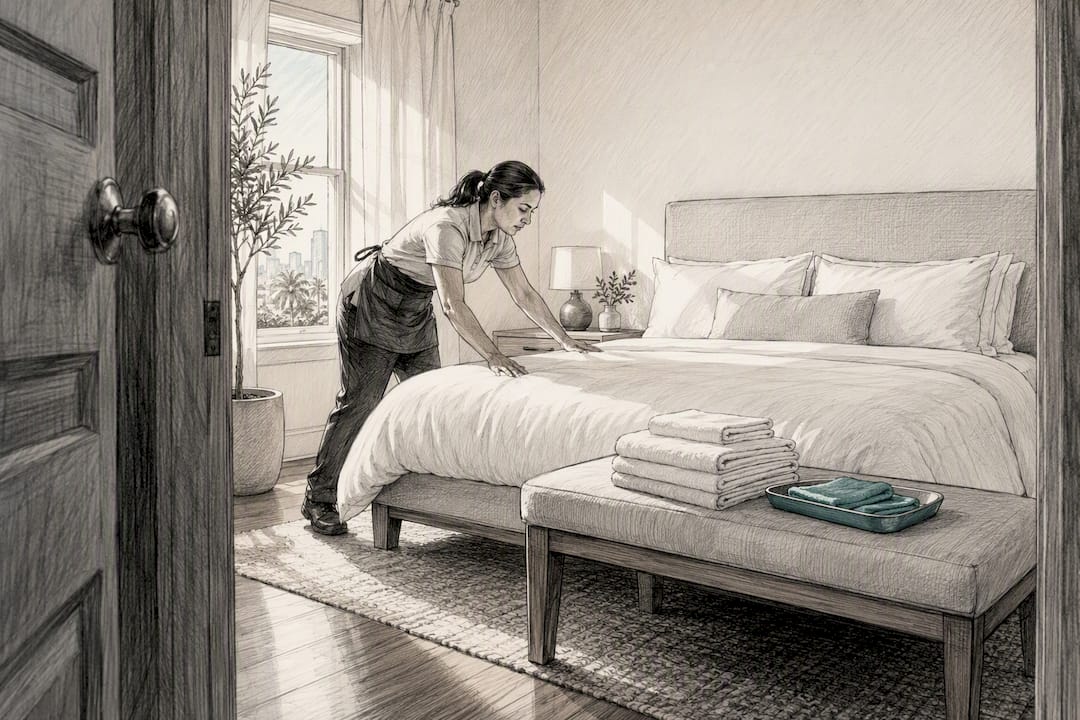
A working Airbnb turnover checklist guarantees the same outcome every time: a guest walks into a unit that looks, smells, and functions exactly like the listing photos promised. The single practice that separates reliable hosts from the ones fielding 2 a.m. complaint messages is a sequenced, room-by-room checklist paired with a photo-verified final inspection before the door gets locked. Everything below breaks that system into the exact steps, supply lists, and timing benchmarks you need to run it.
TL;DR:
- Maintaining a fully stocked supply closet prevents delays caused by missing cleaning products or supplies during turnovers.
- Using a strict six-phase sequence and completing a photo-verified final walkthrough ensures consistent cleaning quality and highlights missed spots.
- Implementing par levels for consumables like toilet paper and towels reduces guest complaints and streamlines restocking routines.
- Prioritizing laundry start immediately after checkouts and staging other tasks during cycles can save time in same-day turnovers.
- Relying on a standardized checklist and photo evidence minimizes damage disputes and ensures high standards regardless of cleaner experience.
Table of Contents
- What This Guide Covers
- What Tools and Supplies Does Every Turnover Need?
- The Room-by-Room Airbnb Turnover Checklist
- What Spots Do Cleaners Miss Most Often?
- How Do You Handle Same-Day Turnovers and Laundry?
- What Are Par Levels and Why Do They Matter?
- The Six-Phase Turnover Sequence That Keeps Quality Consistent
- What Belongs in the Final Walkthrough?
- Who Should Actually Run Your Turnovers?
- What The Maid Society Sees Working in Real Turnovers
- Why the Checklist Matters More Than the Cleaner
- Let Themaidsociety Handle Your Next Turnover
- Sources
What This Guide Covers
This guide walks through the full turnover process, from stocking your cleaning caddy to the six-phase sequence pros use to keep quality consistent across dozens of units. You’ll get room-by-room task lists, the spots cleaners miss most often, a same-day laundry strategy, and rules for setting par levels so guests never open an empty toilet paper cabinet.
- Tools and supplies to keep stocked
- Room-by-room checklist (kitchen, bathrooms, bedrooms, living areas, outdoor)
- Commonly missed spots and quick fixes
- Same-day turnovers and laundry-first strategy
- Restocking to par levels
- The six-phase turnover sequence
- Final walkthrough and photo-verified handoff
- Who should run your turnovers
- How Themaidsociety supports Los Angeles hosts
A printable version of the room-by-room checklist appears in the section below, formatted so you can hand it directly to a cleaner or laminate it for the property.
What Tools and Supplies Does Every Turnover Need?
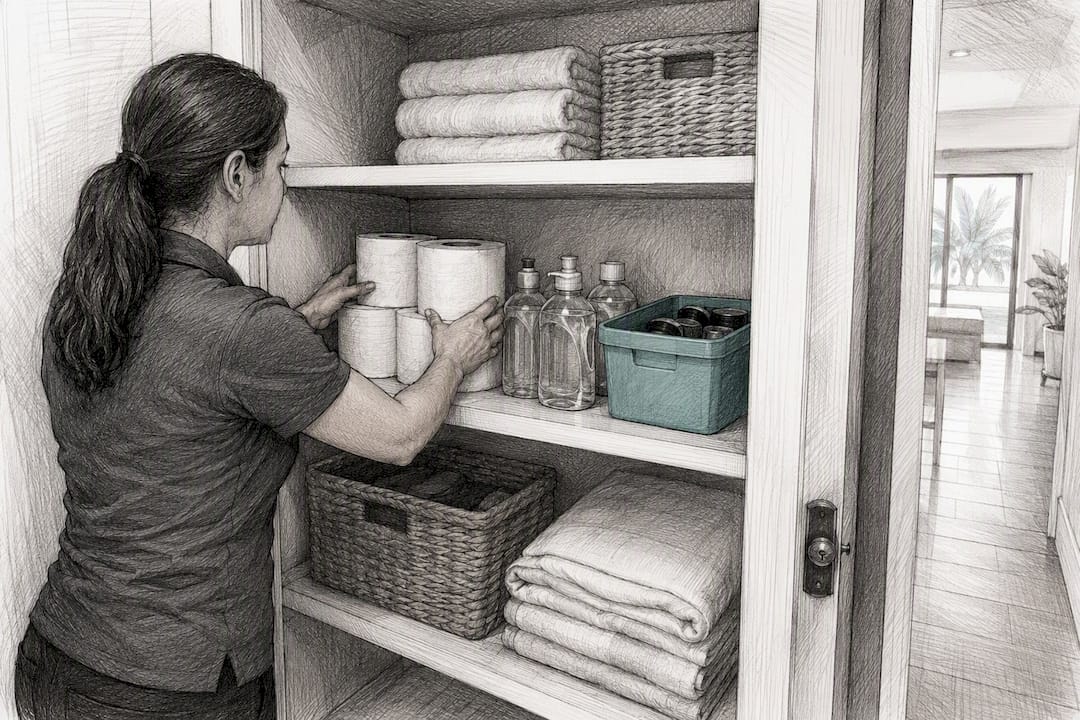
Nothing stalls a turnover faster than a cleaner realizing there’s no dish soap under the sink. Every unit should have its own stocked supply closet, separate from whatever a cleaning company brings, so a job never depends on someone remembering to pack the right bottle.
Keep these on hand at the property:
- All-purpose disinfectant cleaner and a separate multi-surface spray for counters and glass
- Microfiber cloths (at least six, color-coded by room to avoid cross-contamination)
- A toilet brush, grout scrub brush, and a mop with washable pads
- A vacuum with attachments for upholstery and baseboards
- Lint roller, extra garbage bags, and dish soap
- Dishwasher pods and laundry detergent with a stain remover on standby
- Spare batteries for remotes and smoke detectors
Build a grab-and-go caddy with the small items a cleaner reaches for constantly: gloves, a scraper, extra sponges, and a rag bag. If the property has a hot tub, grill, or fire pit, add the specific chemicals or cleaner for that feature so the cleaner isn’t sourcing it mid-shift. Label every bottle clearly and keep chemical products in a ventilated space away from anything food-adjacent.
Pro Tip: Store one full backup set of every consumable (toilet paper, coffee pods, dish soap) in a locked closet the cleaner can’t touch during a normal turnover. It becomes your emergency stock when a same-day flip runs short.
The Room-by-Room Airbnb Turnover Checklist
Work top to bottom and back to front in every room. Dust and debris fall, so ceiling fans and shelves get attention before floors do, and you clean the far corner of a room before working toward the door so you’re not tracking through a space you already finished.
1. Kitchen
- Clear the sink of all dishes and run the dishwasher immediately so it’s done by the time you finish other rooms.
- Wipe down counters, stovetop, and backsplash with a disinfectant cleaner.
- Clean inside the microwave. Guests check this more than hosts expect.
- Empty the refrigerator completely, including condiments the last guest left behind, and wipe down shelves.
- Reset the coffee station with fresh filters, a new pod count, and a clean carafe.
- Check under the sink and inside cabinets for spills or forgotten trash.
2. Bathrooms
- Scrub the toilet, inside and out, including the base and hinges.
- Clean the shower or tub and descale fixtures with a lime remover if the property has hard water buildup.
- Wipe mirrors streak-free and check the vanity for water spots.
- Restock toilet paper, hand soap, and toiletries to your par level (more on that below).
- Replace bath mats and check the shower curtain for mildew.
3. Bedrooms
- Strip every bed completely, including mattress protectors, and check for stains or damage before starting laundry.
- Inspect pillows and duvets for lingering odors.
- Make beds to a staged standard: hospital corners, matching pillow arrangement, and a folded throw if the listing photos show one.
- Dust nightstands, headboards, and any shelving.
- Check closets and under beds for items the previous guest left behind.
4. Living Areas
- Dust shelves, picture frames, and light fixtures.
- Wipe down the TV, remotes, and any smart speakers. Remotes carry more bacteria than most surfaces in the unit.
- Fluff and straighten cushions and throw blankets.
- Vacuum upholstery before moving to floors.
- Vacuum and mop floors last, once every other task in the room is finished, so you’re not undoing your own work.
5. Other Areas
- Entry: Wipe down light switches, door handles, and the welcome table if you have one.
- Balcony or patio: Clear debris, wipe outdoor furniture, and check for pests near door seals.
- Laundry or utility closet: Confirm the washer and dryer are empty and lint traps are clear.
This sequence works whether you’re running a short-term rental cleaning guide for efficient turnovers on your own or handing the list to a hired cleaner. The order matters as much as the tasks themselves, since skipping the sequence is how bathrooms get cleaned before beds are stripped, which means clean towels end up covered in dust from bedroom work that should have happened first.
What Spots Do Cleaners Miss Most Often?
Every host has a story about a five-star cleaner who still missed something obvious to the guest. These are the repeat offenders, and each one takes under a minute to check.
- Baseboards and door frames: Dust builds up here even when floors look spotless. Run a dry microfiber cloth along every baseboard during the final pass.
- Inside kitchen drawers: Crumbs and sticky residue collect in silverware trays. Pull the top drawer and check.
- Light switch plates and doorknobs: High-touch surfaces guests notice immediately if they feel grimy.
- Under the bed and behind furniture: Stray socks, chargers, and dust bunnies hide here.
- Shower drain and grout lines: Hair and soap scum accumulate fast, especially in units with heavy weekend turnover.
- Ceiling fan blades: Rarely checked, but visible the moment a guest looks up.
Add a thirty-second check for each of these to your final walkthrough rather than trusting the main clean caught them. If you find one of these spots was missed on a prior turnover, photograph it before fixing it. That photo becomes useful evidence if you need to retrain a cleaner or flag a pattern with a cleaning service.
How Do You Handle Same-Day Turnovers and Laundry?
Start laundry the moment the guest checks out, before you touch a single dish. Wash and dry cycles are almost always the real bottleneck in a same-day turnover, not the cleaning itself, so getting linens into the machine first buys you the time you need for everything else.
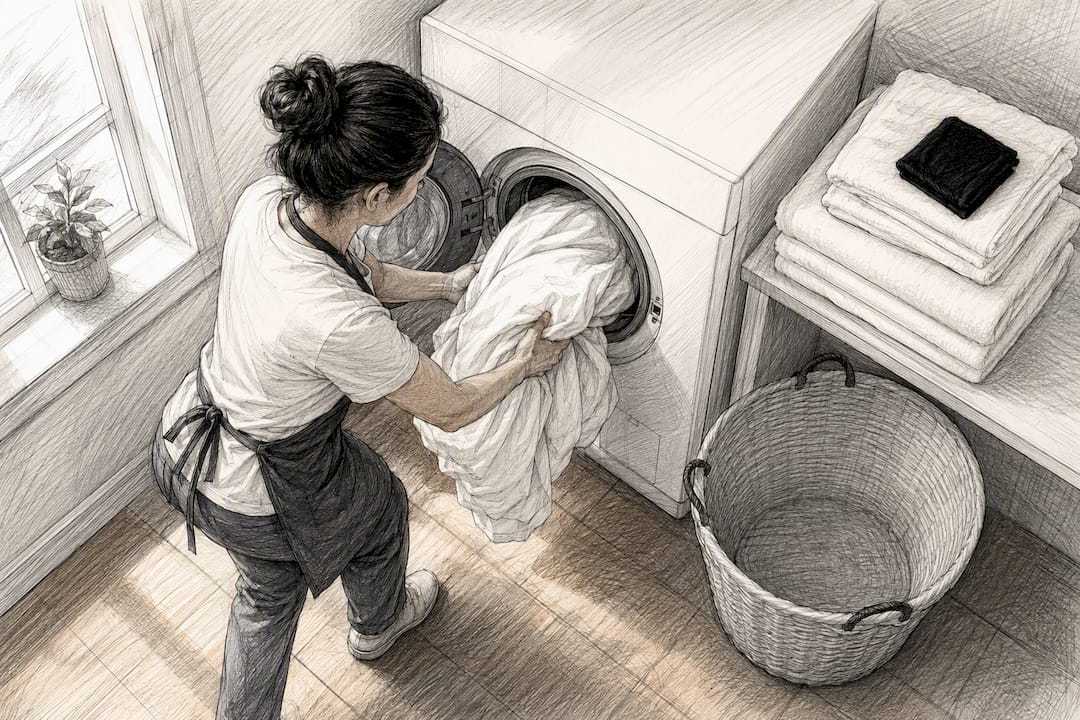
Keep three full linen sets per bed if your calendar regularly has back-to-back bookings with same-day turns. Two sets can work if you never have back-to-back same-day bookings, but that margin disappears fast the moment a guest checks out late or a cleaner runs behind.
Your options for tight windows:
- Swap in a fresh set you already own while the used set launders for the next turnover, rather than waiting on the wash cycle in real time.
- Use an off-site laundry service for high-volume properties, which frees your on-site cleaner to focus entirely on the unit.
- Stage other rooms while laundry runs instead of standing around waiting. Kitchen and bathroom work doesn’t depend on the dryer finishing.
A one-bedroom unit typically takes 2 to 3 hours for a thorough turnover under normal conditions. When a booking compresses that window, many operators charge a rush fee, often in the $20 to $50 range, to cover the added coordination and pressure.
What Are Par Levels and Why Do They Matter?
A par level is the minimum quantity of a consumable you keep stocked at all times, checked and refilled at every single turnover regardless of whether the last guest used much of it. Setting pars turns restocking from a guessing game into a routine anyone can follow, including a brand-new cleaner who has never seen the unit before.
Concrete par examples that work well for most one- and two-bedroom rentals:
- Toilet paper: Two rolls visible in the bathroom, plus one backup stored under the sink.
- Towels: Three full sets per bed, rotating through wash cycles.
- Coffee pods: Six per turnover, restocked to that count regardless of how many are left.
- Hand soap and shampoo: Full bottle, swapped once below the halfway mark.
Have your cleaner note on the checklist any item that dipped below par so you can reorder before the next flip, not after a guest complains. Consistent par-level tracking cuts down on guest messages about missing essentials and makes procurement predictable instead of reactive.
The Six-Phase Turnover Sequence That Keeps Quality Consistent
Reliable turnovers follow a fixed six-phase sequence, and the order exists specifically to prevent rework. Skip a phase or run them out of order and you end up cleaning the same surface twice, or worse, missing it entirely.
- Departure and assessment. Walk the unit first before touching anything. Note damage, missing items, or maintenance issues while they’re fresh.
- Linens and laundry. Strip every bed and start washing immediately, since this phase runs on its own clock in the background.
- Clean and sanitize. Work room by room using the top-to-bottom, back-to-front sequence covered earlier.
- Restock to par. Refill every consumable to its set level, not just what looks empty.
- Reset and staging. Fluff pillows, align furniture, and match the unit to your listing photos.
- Final walkthrough. Confirm everything before handing off the keys or unlocking the smart lock for the next guest.
Multi-property operators who systematize this into a weekly rhythm, checking same-day turnovers first each morning and confirming the next day’s schedule the night before, report far fewer missed turnovers than hosts who handle scheduling reactively.
Every handoff should include photo verification: a wide shot of each room, the bed after staging, and any area that was restocked. Keep at least one vetted backup cleaner on call, since a no-show cleaner with no backup plan is the single most common cause of a canceled booking during peak season.
What Belongs in the Final Walkthrough?
The final walkthrough is your last chance to catch a problem before a guest does. Run through a systems check every single time, no exceptions:
- Wifi connects and the password card matches the current network
- Smart locks respond and the code works
- All lights and lamps turn on, with no dead bulbs
- HVAC responds to the thermostat and isn’t stuck on a previous guest’s setting
- Faucets run clean with no leaks, and drains clear normally
- A quick smell test in every room, especially bathrooms and closets
Take a photo pack before you leave: a wide shot of each room, a hero shot of the staged bed, the bathroom vanity, kitchen counters, and any area you restocked. Timestamp every photo. This same photo evidence becomes critical if you need to file a damage claim later, since dated photos taken before cleaning began strengthen a resolution request.
Pro Tip: If you find damage during the walkthrough, photograph it immediately, before you clean around it. A photo of a stain next to a trash can looks different from a photo of a stain on an otherwise spotless carpet, and the second one is what gets claims approved.
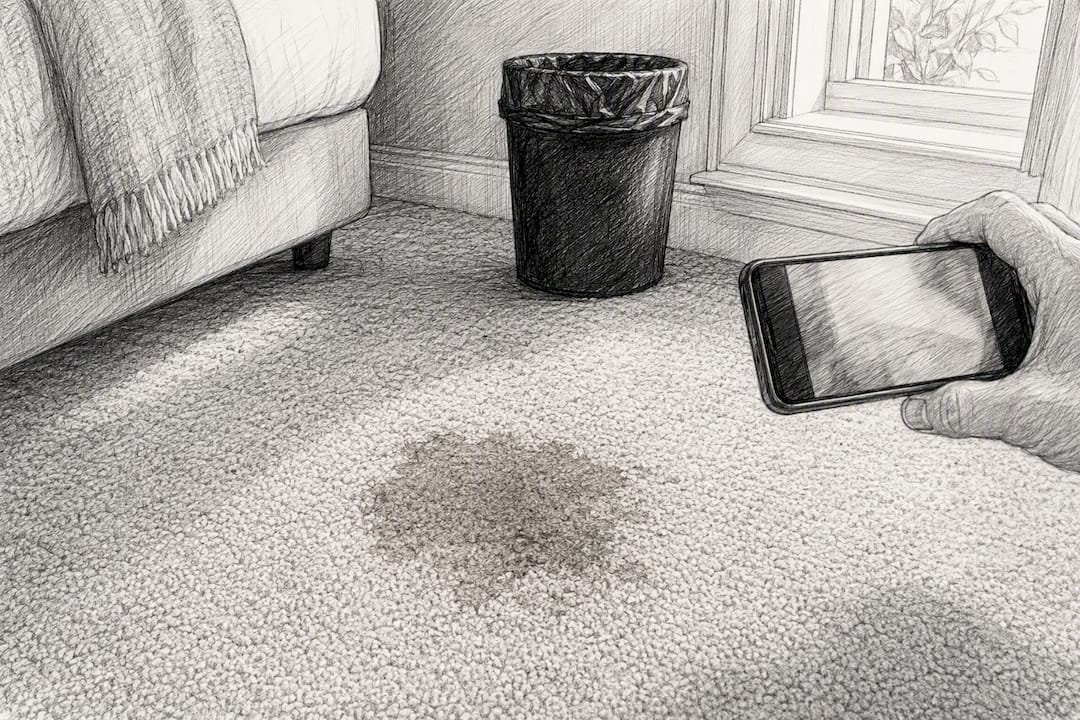
If damage exceeds normal wear, document it the same day and file through Airbnb’s resolution process while the evidence is fresh. Waiting even a few days weakens your case.
Who Should Actually Run Your Turnovers?
Three models exist: you clean it yourself, you hire an independent contractor cleaner, or you work with a staffing model that assigns a rotating team. Which one fits depends almost entirely on volume and how often you need same-day flips.
If you manage one or two units with predictable multi-night bookings, doing it yourself or hiring one reliable local cleaner works fine. Once you’re running three or more properties, or you regularly need same-day turns, a staffing model with backup coverage stops being optional.
A useful weekly rhythm for scaling hosts:
- Every morning: Check which units have same-day turnovers and confirm your cleaner is on schedule.
- Weekly: Run a spot-inspection on at least one property, even one that’s been performing well.
- Weekly: Track cleaning costs per property so a rush fee or supply overage doesn’t sneak up on you at month’s end.
What The Maid Society Sees Working in Real Turnovers
Across properties serviced in Los Angeles, turnovers that go smoothly share three habits: a fully stocked caddy that never runs dry mid-shift, par levels that get checked without exception, and a final inspection that happens before the key gets handed off, not after a guest complaint comes in.
Photo-verified handoffs aren’t a nice-to-have for hosts managing more than one unit. They’re what lets a new cleaner perform to the same standard as someone who has worked the property for a year. Every Airbnb and rental turnover should be built around a standardized, room-by-room checklist for exactly that reason: consistency shouldn’t depend on which cleaner shows up.
Hosts across Los Angeles, Santa Monica, Culver City, and the surrounding service area can book turnover cleaning directly, with same-day coverage available for tight windows between guests.
Why the Checklist Matters More Than the Cleaner
The biggest misconception among new hosts is that a great cleaner is what protects your rating. It isn’t. A great checklist protects your rating, because it’s the checklist that catches the coffee station a tired cleaner forgot to reset, or the bathmat nobody replaced after three straight bookings.
Most turnover advice online focuses on speed. That’s backwards. Speed matters only after consistency is locked in, and consistency comes from sequence, not effort. A cleaner working from a written, room-by-room list with photo references of the staged end-state will outperform a more experienced cleaner working from memory, every time.
If you take one thing from this guide, make it the final walkthrough with photo evidence. It costs you five extra minutes per turnover and it’s the single control that catches problems before a guest does, protects you in a damage dispute, and gives you a paper trail when a cleaner’s work starts slipping. Everything else, the caddy, the par levels, the six-phase sequence, exists to make that final check something you can actually trust.
— Lyndsey
Let Themaidsociety Handle Your Next Turnover
Using a service that offers one team, one standardized checklist, and photo-verified proof that the unit is ready before the next guest arrives can simplify scheduling between guest bookings. For hosts in Los Angeles, Santa Monica, Culver City, West Hollywood, and surrounding areas, this approach helps reduce late-night messages about missing towels and last-minute scrambles when bookings flip same-day.
Turnover cleaning, move-in and move-out cleaning, and same-day coverage are all bookable directly through Themaidsociety’s services page, where you can request a quote based on your unit size and turnover frequency. A pro cleaner makes sense the moment you’re juggling more than one property or regularly facing same-day flips. If you’re managing bookings and financial tracking alongside cleaning logistics, a tool like ConvertLabs can help keep that side organized too. To get started, request a quote for your next turnover and tell us your typical checkout and check-in times so we can plan the tightest windows around your schedule.
Sources
- Airbnb Turnover Checklist | Hostaway
- The Airbnb Turnover and Cleaning System | Cavmir Learn
- The Complete Guide to Airbnb Turnover Cleaning Operations — Spotless
- How to Run Cleaning and Turnovers Across a Multi-Property Airbnb Portfolio | MagicBNB
Recommended
- How to prepare for tenant turnover cleaning: Step-by-step
- Short term rental cleaning guide for efficient turnovers
- Turnover Cleaning Best Practices: Faster Property Turns
- Rental property cleaning checklist for LA landlords 2026



Get Cleaning Tips & Exclusive Offers
Join our community for time-saving hacks and special discounts delivered to your inbox.