TL;DR:
- Sanitizing high-touch surfaces reduces harmful germs on objects frequently contacted by hands in homes. Proper cleaning involves pre-cleaning, applying disinfectant with adequate dwell time, and targeting hidden spots. Regular routines and professional cleaning help maintain a healthier household environment in Los Angeles.
By L.K. | Themaidsociety | Los Angeles Residential Cleaning
Sanitizing high-touch areas is the process of reducing harmful germs on surfaces that hands contact most often, such as doorknobs, light switches, faucet handles, and remote controls. The CDC defines sanitizing and disinfecting as distinct steps: sanitizing lowers germ counts to safe levels, while disinfecting kills a broader range of bacteria, viruses, and fungi. For busy households across Los Angeles, from Beverly Hills to Long Beach, knowing how to sanitize high-touch areas correctly is one of the most direct ways to reduce illness in your home.
Table of Contents
- What are high-touch surfaces in a home?
- Tools and cleaning agents you need
- Step-by-step guide to disinfect high-contact surfaces
- Common mistakes when sanitizing frequently touched surfaces
- How to build a routine for busy Los Angeles homes
- Key Takeaways
- Perspective
- FAQ
What are high-touch surfaces in a home?
High-touch surface cleaning is a risk-based approach. It focuses on surfaces that hands contact repeatedly throughout the day, regardless of whether those surfaces look dirty. A visibly clean doorknob can still carry pathogens transferred from unwashed hands minutes earlier.
The most commonly missed surfaces in residential settings include:
- Doorknobs and door handles (front door, bathroom, bedroom)
- Light switches in kitchens, hallways, and bathrooms
- Faucet handles in bathrooms and kitchens
- Remote controls and gaming controllers
- Keyboards and phone screens
- Cabinet handles in the kitchen and bathroom
- Undersides of toilet seat rims
- Stair railings and bannisters
Commonly missed items like remotes, keyboards, and the undersides of handles can harbor microbes for days. That means a surface you wiped down on Monday may be recontaminated by Tuesday afternoon in a busy household.
Homes with children, pets, or multiple adults face the highest risk. In neighborhoods like Koreatown, West Adams, or Culver City, where multi-generational families share smaller spaces, the frequency of hand contact on shared surfaces multiplies quickly. Cleaning frequency matters most in these high-traffic living situations.
Pro Tip: Phone cases harbor more bacteria than most people expect. Wipe yours down daily with a 70% isopropyl alcohol wipe, especially if you set your phone on shared kitchen or bathroom surfaces.
Tools and cleaning agents you need
The right product for the job depends on the surface type and your goal: cleaning, sanitizing, or disinfecting. These three terms are not interchangeable.
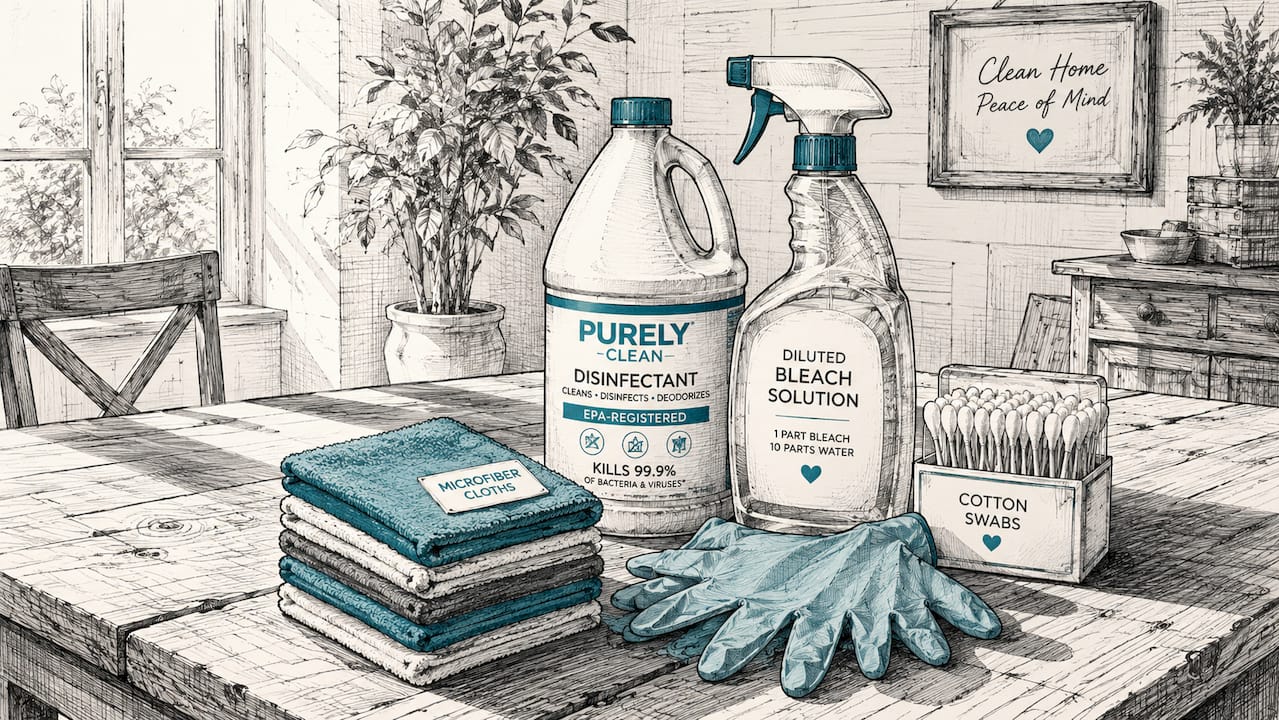
| Product Type | What It Does | Best For | Notes |
|---|---|---|---|
| Soap and water | Removes dirt and debris | All surfaces, pre-cleaning step | Required before disinfecting |
| 70% isopropyl alcohol wipes | Sanitizes and disinfects | Electronics, phones, remotes | Do not use on porous surfaces |
| EPA-registered disinfectant spray | Kills bacteria and viruses | Hard surfaces: counters, handles, switches | Observe dwell time per label |
| Diluted bleach solution | Disinfects effectively | Non-porous surfaces, bathrooms | Never mix with ammonia or vinegar |
| Hydrogen peroxide (3%) | Disinfects and deodorizes | Countertops, toilet seats | Allow 1-minute contact time |
EPA-registered disinfectants containing at least 70% alcohol or diluted bleach solutions are effective when contact time is observed. Contact time, also called dwell time, is the period the surface must stay visibly wet with the product for it to work. Most products require 30 seconds to several minutes. Wiping the surface dry before that window closes cancels the disinfecting effect entirely.
Safety matters too. Never spray disinfectant directly onto light switches, outlet covers, or electronics. Spraying directly on electronics risks internal damage. Spray the cloth first, then wipe the surface. Always work in a ventilated room, especially when using bleach-based products.
Pro Tip: Keep a small spray bottle of diluted bleach solution (4 teaspoons of bleach per quart of water) under your kitchen sink for quick daily wipe-downs of faucet handles and cabinet pulls.
Step-by-step guide to disinfect high-contact surfaces
Effective sanitization follows a specific sequence. Skipping steps reduces the result. Follow this process for every high-touch surface in your home.
Step 1: Gather your materials
Collect your supplies before you start. You need:
- Soap and water or an all-purpose cleaner
- Microfiber cloths or paper towels
- Your chosen EPA-registered disinfectant or 70% alcohol wipes
- Gloves (disposable nitrile preferred)
- A trash bag for used wipes
Thorough handwashing before and after cleaning prevents cross-contamination during the process itself. Put gloves on before you touch any surface.
Step 2: Pre-clean with soap and water
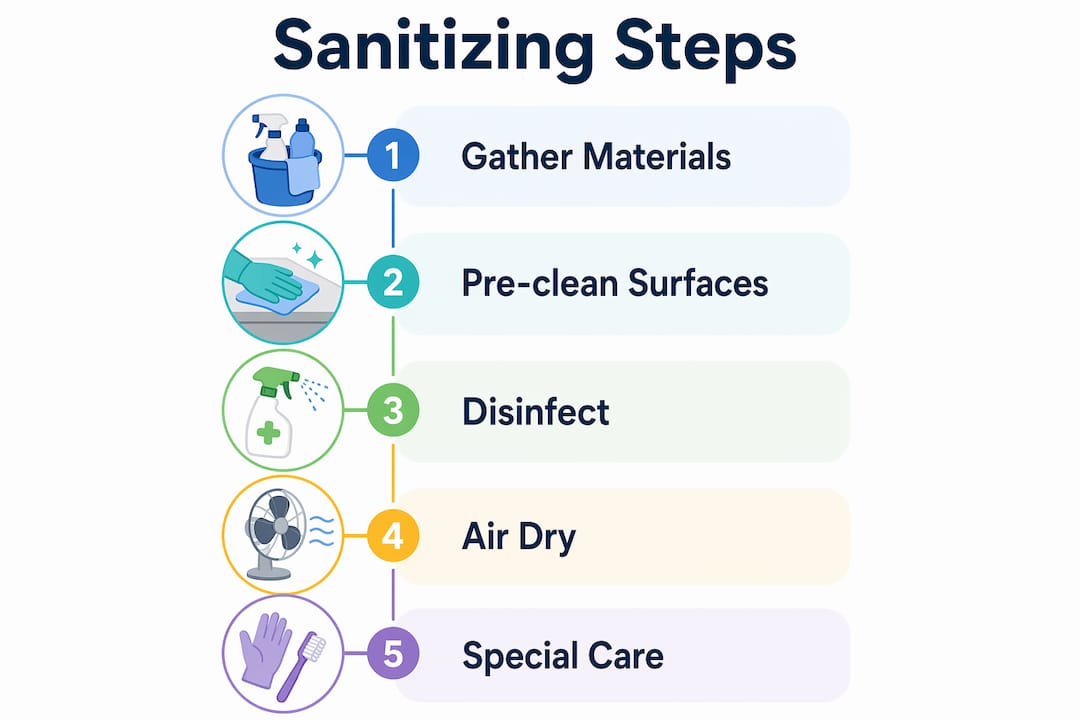
Wipe every surface with soap and water or a general cleaner first. Disinfectants lose effectiveness when applied to surfaces with visible dirt or organic matter. Grease on a kitchen cabinet handle, for example, will block the disinfectant from reaching the surface underneath. Pre-cleaning is not optional.
Step 3: Apply disinfectant and observe dwell time
Apply your disinfectant to a cloth (never directly to switches or electronics), then wipe the surface. Leave it visibly wet for the full contact time listed on the product label. Do not rush this step. The dwell time is where the actual germ-killing happens.
Work top to bottom through each room. Top-to-bottom cleaning prevents dust and debris from falling onto surfaces you already cleaned. Start with light switches near the ceiling line, move to door handles, then faucets, and finish with floor-level surfaces.
Step 4: Air dry
Let surfaces air dry completely. Do not wipe them down with a dry cloth before the dwell time ends. Air drying also prevents moisture buildup on wood or painted surfaces that could cause damage over time.
Special handling for electronics and tricky spots
Remote controls, keyboards, and phone screens need alcohol wipes, not spray products. Wrap a wipe around the remote and press gently into the crevices between buttons. For keyboards, use a wipe in a single direction to avoid pushing debris between keys. Switch plates respond well to a damp microfiber cloth with a small amount of all-purpose cleaner, followed by a dry wipe.
Pro Tip: Use a cotton swab dipped in 70% isopropyl alcohol to clean the edges and crevices of light switch plates. These spots collect oils from fingertips and are almost never cleaned.
Common mistakes when sanitizing frequently touched surfaces
Most sanitization failures come from skipping steps or using products incorrectly. These are the most common errors households make.
- Skipping the pre-clean. Organic matter on a surface neutralizes disinfectants before they can work. Always clean with soap and water first.
- Wiping off disinfectant too soon. Drying a surface before the dwell time expires means the product never had a chance to kill germs. Read the label and wait.
- Spraying directly on electronics. Liquid inside a remote control or keyboard causes damage. Always apply to a cloth first.
- Missing hidden high-touch spots. Undersides of cabinet handles, toilet seat rims, and phone cases are consistently skipped. These surfaces harbor bacteria just as effectively as the ones you do clean.
- Over-cleaning low-traffic areas. Spending time disinfecting a guest bedroom that no one uses wastes product and effort. Focus your routine on surfaces that get daily contact.
- Neglecting hand hygiene. Cleaning surfaces while your hands are contaminated defeats the purpose. Wash hands before and after every cleaning session.
A common misconception is that a surface that looks clean is safe. Pathogens are invisible. A stainless steel faucet handle can look spotless and still transfer a cold virus to every person who touches it that day.
How to build a routine for busy Los Angeles homes
A realistic cleaning routine fits your household size and schedule. Consistency beats perfection every time.
Daily (for multi-person homes or homes with children and pets):
- Kitchen faucet handles and cabinet pulls
- Bathroom faucet handles and toilet flush handle
- Front door handle and light switches in high-use rooms
- Phone screens and remote controls
Weekly:
- All door handles throughout the home
- Stair railings and bannisters
- Keyboard and mouse
- Appliance handles (refrigerator, microwave, oven)
As needed (after illness, guests, or high-traffic events):
- Full disinfection of all high-touch surfaces using EPA-registered products
- Bedside tables, lamp switches, and shared electronics
Seasonal factors matter in Los Angeles too. Cold and flu season runs from october through march. During that window, bump your disinfection frequency up for all shared surfaces, especially in homes in Hawthorne, Gardena, Carson, or other areas with higher household density.
Efficient cleaning habits save significant time when you batch tasks by room and keep supplies within reach. A small caddy under each bathroom sink with wipes and a spray bottle means you can clean faucet handles in 60 seconds during your morning routine.
Pro Tip: Tie your high-touch cleaning to an existing habit. Wipe down the kitchen faucet and cabinet handles every time you finish washing dishes. The habit stacks onto something you already do, so it never gets skipped.
For households in Santa Monica, Pacific Palisades, Brentwood, or West Hollywood where schedules are packed, periodic professional deep sanitization fills the gaps your daily routine cannot. Themaidsociety provides residential cleaning services across Los Angeles specifically designed for high-touch and high-traffic areas.
Key Takeaways
Consistent, correctly sequenced sanitization of high-touch surfaces is the most direct way to reduce pathogen transfer in your home.
| Point | Details |
|---|---|
| Pre-clean before disinfecting | Soap and water must come first; organic matter blocks disinfectants from working. |
| Observe dwell time | Leave disinfectant visibly wet on the surface for the full contact time on the label. |
| Protect electronics | Apply alcohol wipes or spray to a cloth first; never spray directly on switches or devices. |
| Target hidden spots | Undersides of handles, toilet rims, and phone cases harbor bacteria and are routinely missed. |
| Match frequency to household | Daily cleaning suits multi-person homes; weekly suffices for individuals living alone. |
What I have learned from years of watching LA homes get cleaned
Perspective by Lyndsey
The surfaces that make people sick are almost never the ones they clean. Homeowners in Los Angeles wipe down countertops religiously but walk past the front door handle a dozen times a day without a second thought. That handle gets touched by every person who enters the home, often right after they have been on public transit, at a grocery store, or handling packages.
The other thing I have noticed is that people treat sanitization as an event rather than a habit. They do a thorough clean once a week and feel covered. But a doorknob touched 40 times between Monday and Saturday has been recontaminated dozens of times before that weekly wipe-down arrives. The difference between cleaning and disinfecting is not just semantic. It changes what you do and when you do it.
My honest advice: stop trying to clean everything perfectly and start cleaning the right things consistently. Five minutes a day on your top ten high-touch surfaces beats a two-hour deep clean once a month. Build it into what you already do. Wipe the faucet when you finish at the sink. Grab the remote with a wipe before movie night. These small actions compound into a meaningfully healthier home, and they cost almost no time.
— Lyndsey
Professional sanitization for Los Angeles homes
Keeping up with high-touch surface cleaning in a busy household is straightforward in theory and genuinely hard in practice. Life in Los Angeles moves fast, and the surfaces that need daily attention are easy to skip when schedules are full.
Themaidsociety serves households across Los Angeles, including Beverly Hills, Marina Del Rey, Westwood, Burbank, Manhattan Beach, and Redondo Beach. Our trained team covers the high-touch and high-traffic areas that daily routines miss, using products and methods that meet residential cleaning standards. Whether you need a one-time deep clean or a recurring service, our Los Angeles cleaning services are built around the specific needs of Southern California families. Book a visit and come home to a space that has been cleaned the right way, every time.
Recommended Articles
- Home sanitation basics: keep LA homes clean and healthy
- Disinfecting vs cleaning: smart home care for LA residents
- 7 must-have cleaning habits for busy Los Angeles families
- Importance of home cleaning: impact on busy families
FAQ
What are high-touch areas in a home?
High-touch areas are surfaces that hands contact repeatedly throughout the day, including doorknobs, light switches, faucet handles, remote controls, and cabinet pulls. These surfaces transfer pathogens even when they look clean.
What is the difference between sanitizing and disinfecting?
Sanitizing reduces germs to safe levels, while disinfecting kills a broader range of bacteria, viruses, and fungi. The CDC recommends cleaning first, then sanitizing or disinfecting based on the level of risk in your home.
How often should I clean high-touch surfaces?
Daily cleaning is recommended for high-touch surfaces in homes with multiple people, children, or pets. During illness or cold and flu season, full disinfection of all shared surfaces is the right call.
Can I spray disinfectant directly on light switches?
No. Spraying disinfectant directly on electrical switches or electronics risks damage. Apply the product to a cloth first, then wipe the surface and allow it to air dry for the full dwell time.
Do I need to pre-clean before disinfecting?
Yes. Disinfectants are neutralized by dirt and organic matter on surfaces. Cleaning with soap and water first removes debris and allows the disinfectant to make full contact with the surface and work effectively.
Authored by L.K. | Themaidsociety | Serving Los Angeles, Beverly Hills, Santa Monica, Culver City, West Hollywood, Burbank, Manhattan Beach, and surrounding Southern California communities.
<script type="application/ld+json">
{
  "@context": "https://schema.org",
  "@type": "Article",
  "headline": "How to Sanitize High-Touch Areas in Your Home",
  "description": "A practical guide for Los Angeles households on how to sanitize high-touch areas including doorknobs, light switches, faucet handles, and remotes using correct cleaning, sanitizing, and disinfecting methods.",
  "author": {
    "@type": "Person",
    "name": "L.K."
  },
  "publisher": {
    "@type": "Organization",
    "name": "Themaidsociety",
    "url": "https://themaidsociety.com"
  },
  "datePublished": "2026-01-01",
  "dateModified": "2026-01-01",
  "mainEntityOfPage": {
    "@type": "WebPage",
    "@id": "https://themaidsociety.com/how-to-sanitize-high-touch-areas"
  },
  "keywords": ["how to sanitize high-touch areas", "high-touch surface cleaning", "disinfect surfaces", "sanitize frequently touched surfaces", "clean high-contact areas", "Los Angeles home cleaning"],
  "articleSection": "Home Cleaning",
  "inLanguage": "en-US"
}
</script>
Want smarter tools for managing your home services business? ConvertLabs helps service businesses convert more leads with less effort.
Recommended
- Why Sanitize After Construction: Safety and Health Guide
- How to Clean Busy Home Naturally: A Step-by-Step Guide
- How Cleaning Safeguards Health and Safety in LA Homes
- Home sanitation basics: keep LA homes clean and healthy



Get Cleaning Tips & Exclusive Offers
Join our community for time-saving hacks and special discounts delivered to your inbox.