TL;DR:
- LA landlords must maintain cleanliness and pest control year-round to meet legal standards.
- Seasonal cleaning addresses LA-specific risks like wind debris, rain drainage, and pest surges.
- Building scheduled, systemized cleaning routines helps reduce vacancy and prevent costly repairs.
Keeping your Los Angeles rental property clean is not just good hospitality. It is a legal obligation. LA County habitability standards require landlords to maintain units that are clean, sanitary, and free of pests year-round. Many landlords assume that LA’s mild climate gives them a pass on rigorous seasonal upkeep. It does not. From Santa Ana winds to post-rain drainage issues, Los Angeles throws unique curveballs at rental properties every single season. This guide breaks down exactly what to clean, when to clean it, and how to build systems that protect your investment, reduce vacancy time, and keep you on the right side of the law.
Table of Contents
- Why seasonal cleaning matters for LA landlords
- Seasonal cleaning checklist: What to tackle and when
- Turnover cleaning: Efficient strategies for faster tenant changeover
- Special challenges in LA: Weather, pests, and pet-related cleaning
- What most LA landlords miss about seasonal cleaning
- Get professional backup for LA rental cleaning
- Frequently asked questions
Key Takeaways
| Point | Details |
|---|---|
| LA cleaning is legal risk | Failing to clean seasonally violates LA habitability law and can cost landlords thousands. |
| Seasons bring unique tasks | Roof, gutter, HVAC, pest control, and landscaping schedules must match LA’s weather cycles. |
| Efficient turnovers save money | Smart cleaning systems shrink vacancy time and repair costs at every tenant change. |
| Don’t ignore edge cases | Pet-friendly and storm-prone properties need focused cleaning beyond the basics to prevent damage. |
| Proactive beats reactive | Landlords who schedule and document cleaning get better outcomes—waiting for problems leads to losses. |
Why seasonal cleaning matters for LA landlords
Let’s be direct: seasonal cleaning is not optional for LA landlords. It is a core part of your legal responsibility. The LA habitability standards require landlords to keep properties clean and sanitary, control pests, and maintain all areas in a livable condition. Failing to meet these standards can result in tenant complaints, code enforcement visits, and costly legal disputes.
Beyond compliance, there is a strong financial case for staying on top of cleaning throughout the year. Small problems, like a clogged gutter after a winter rain or a pest issue that started in summer, can quietly grow into major repairs. A cracked seal around a window, left unaddressed after a windy fall season, can lead to water intrusion and mold. Catching these issues early through routine seasonal inspections saves you thousands.
LA’s climate also creates specific seasonal threats that landlords in other cities simply do not face:
- Spring: Post-rain moisture creates mold risk and attracts pests
- Summer: Heat accelerates grease buildup in kitchens and increases pest activity
- Fall: Santa Ana winds deposit debris on roofs, in gutters, and around HVAC intakes
- Winter: Rare but heavy rains expose drainage weaknesses and roof vulnerabilities
“The landlords who avoid expensive surprises are the ones who treat cleaning like a scheduled business process, not a reaction to tenant complaints.”
Understanding your cleaning responsibilities for landlords is the first step. The second is building a system that overlaps cleaning with your turnover process. When done right, cutting vacancy through cleaning is not just possible, it is predictable. Overlapping your inspection, cleaning, and marketing timelines can shave days off every vacancy period, which adds up fast across a portfolio.
Pro Tip: Schedule your seasonal cleaning walkthrough on the same day as your routine property inspection. You will identify issues faster and avoid scheduling two separate visits.
Now that you understand the stakes, let’s get specific about what landlords need to do each season.
Seasonal cleaning checklist: What to tackle and when
With a clear sense of what’s at stake, it’s time to organize your tasks across the year. LA’s seasonal maintenance needs are distinct from other cities, and your cleaning schedule should reflect that.
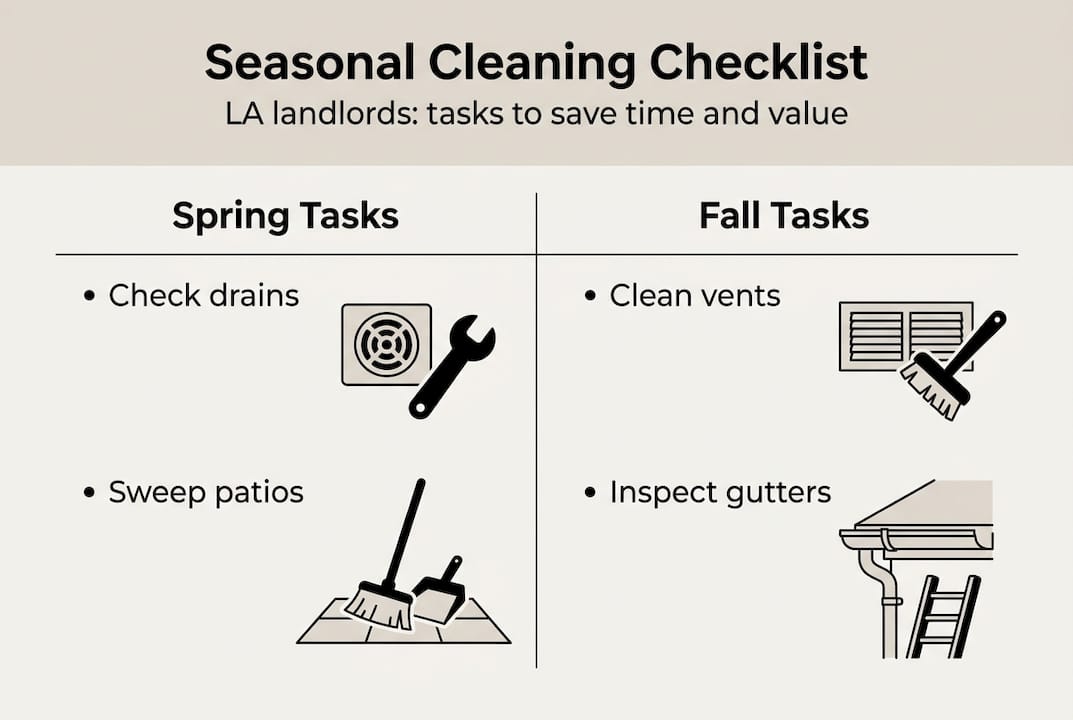
Here is a season-by-season breakdown of the most critical tasks:
| Season | Priority tasks | LA-specific risk |
|---|---|---|
| Spring | Roof and gutter checks, pest inspections, landscaping | Post-rain mold, ant and rodent surges |
| Summer | HVAC filter changes, kitchen deep clean, exterior wash | Heat-driven grease buildup, cockroach activity |
| Fall | Gutter clearing, window sealing, chimney inspection | Santa Ana wind debris, fire risk near vents |
| Winter | Drainage checks, water heater flush, interior deep clean | Water intrusion, pipe stress during cold snaps |
For seasonal home cleaning in LA, the order in which you clean matters as much as what you clean. Follow this numbered sequence during high-turnover periods to avoid redoing work:
- Start with dry tasks: dust ceiling fans, wipe baseboards, vacuum carpets
- Move to wet tasks: scrub bathrooms, mop floors, clean appliances
- Finish with exterior: sweep patios, clear gutters, wipe down entry doors
This dry-to-wet sequence prevents dust and debris from settling on surfaces you already cleaned. It is especially important when you are working within a tight window between tenants.
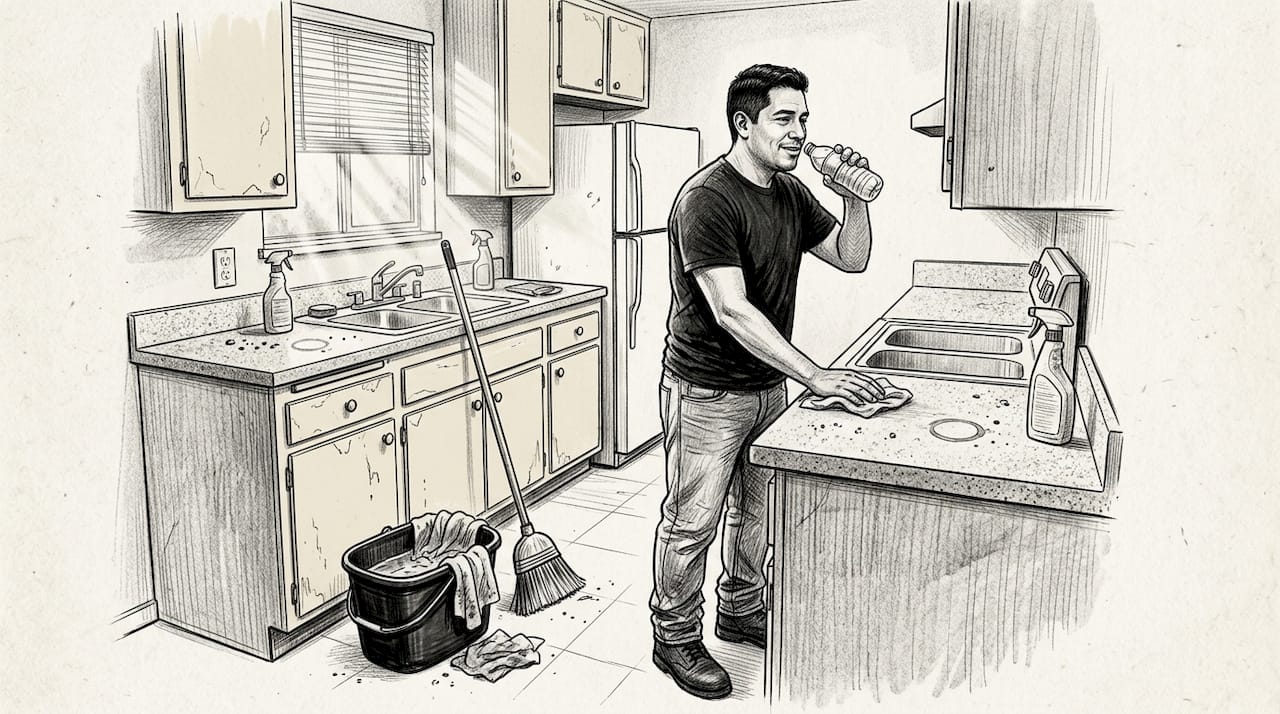
Short-term rental operators face an even tighter constraint. Turnovers often happen within one to two hours, which means every task needs a defined slot. Reviewing cleaning schedule examples built for LA properties can help you map out realistic timelines before the busy season hits.
Pro Tip: Color-code your seasonal checklist by trade: cleaning tasks in blue, maintenance in green, and inspection items in red. This makes it easy to delegate without confusion.
With a clear seasonal framework in place, the next challenge is what happens between seasons, specifically when one tenant leaves and another is about to move in.
Turnover cleaning: Efficient strategies for faster tenant changeover
But what happens when tenants move out and speed is of the essence? Turnover is where most landlords either lose money or gain a competitive edge. The 14 to 21 day turnover benchmark is the industry standard for LA rentals, and hitting it consistently requires a system, not just hustle.
Here is how a well-sequenced turnover looks in practice:
- Day 1 to 3: Move-out inspection, document condition with photos, identify repair needs
- Day 4 to 7: Deep clean entire unit, address any pest or odor issues
- Day 8 to 14: Complete repairs, repaint if needed, replace worn fixtures
- Day 15 to 21: Final walkthrough, professional photos, list unit for rent
Documenting with photos is not just good practice. It protects your security deposit claims and supports IRS useful-life reporting for capital improvements.
Not every turnover requires the same level of effort. Here is a quick comparison:
| Turnover type | Time required | Cost range | Best for |
|---|---|---|---|
| Standard clean | 3 to 5 hours | $150 to $300 | Short tenancies, good condition |
| Deep clean | 6 to 10 hours | $300 to $600 | Long tenancies, heavy use |
| Full restoration | 10+ hours | $600 and up | Damage, pets, smoking history |
For short-term rental cleaning strategies, deep cleaning every three months is the recommended standard for high-volume properties. This prevents odor buildup and keeps the unit looking fresh for every new guest or tenant.
Using a detailed LA landlord cleaning checklist ensures nothing gets missed during a rushed turnover. And if you want to consistently hit faster timelines, reviewing faster turnover tips built around LA rental cycles is worth your time.
“A single turnover on a $1,500 per month LA unit can cost between $3,000 and $5,000 when you factor in cleaning, repairs, and vacancy downtime.”
Efficient turnovers cover the basics, but certain LA quirks demand extra attention.
Special challenges in LA: Weather, pests, and pet-related cleaning
Los Angeles has a reputation for easy living, and that reputation extends to its weather. But that mild climate is deceptively demanding on rental properties. Post-rain drainage issues, pet odors, and Santa Ana wind debris are among the most common and costly problems LA landlords face, and they all require targeted cleaning responses.
Here are the high-risk areas and what to watch for:
- Gutters and downspouts: Even light LA rains can overwhelm clogged gutters, pushing water toward foundations
- Attic vents and chimneys: Santa Ana winds force debris and fine particulate matter into these openings, creating fire risk and air quality issues
- Exterior drainage: Flat or low-grade lots in LA are especially vulnerable to pooling water after rain
- Window tracks and door seals: Wind-driven dust accumulates fast and creates seal failures over time
Pet-related cleaning is its own category. Hair and dander embed into carpet fibers and HVAC filters faster than most landlords expect. Odors from pet urine, if not treated at the subfloor level, will persist through multiple tenancies and lower your property’s appeal significantly.
For move-in deep cleaning after a pet-owning tenant, enzyme-based cleaners are the most effective option for breaking down odor compounds at the source. Standard surface cleaning will not reach the problem.
Pro Tip: After any significant weather event, check attic vents, chimneys, and exterior drainage first. These are the zones most likely to hide water or debris damage that worsens quietly over time.
For landlords managing multiple units, organizing fast turnovers means building weather-event responses into your standard operating procedure, not treating them as emergencies.
What most LA landlords miss about seasonal cleaning
Here is a perspective that most cleaning guides will not give you: LA’s mild weather is not a benefit for landlords. It is a trap. Because the climate never feels extreme, it is easy to convince yourself that nothing urgent needs attention. That mindset is exactly how small issues become expensive ones.
The most successful landlords we work with do not clean reactively. They treat every season as a risk season, because in LA, every season has a specific threat. Spring brings moisture. Summer brings heat and pests. Fall brings wind. Winter brings rain. None of these are dramatic by national standards, but each one creates real cleaning and maintenance needs.
The landlords who cut rental vacancy with good systems are not necessarily spending more money. They are spending it more predictably. Scheduled reminders, overlapping tasks, and documented checklists replace the frantic scramble that follows a tenant complaint or a failed inspection.
Consistency beats intensity every time. A property cleaned well four times a year will always outperform one cleaned perfectly once and neglected the rest of the time. Build the system, follow it every season, and your property value, your tenant relationships, and your stress levels will all reflect it.
Get professional backup for LA rental cleaning
If you want to simplify the process even more, consider tapping into local expertise. Managing seasonal cleaning across multiple units is a real time commitment, and the cost of getting it wrong, whether through a missed pest issue or a failed habitability inspection, is far higher than the cost of professional support.

The Maid Society provides move-in cleaning service designed specifically for LA landlords who need reliable, detail-oriented results between tenancies. Our move-in/move-out cleaning service covers everything from deep kitchen scrubs to odor treatment and floor-to-ceiling sanitizing. Whether you need a one-time seasonal deep clean or ongoing support across your portfolio, our full cleaning services in LA are built to help you turn units faster, stay compliant, and protect your investment without adding more to your plate.
Frequently asked questions
What cleaning tasks are legally required for LA landlords each season?
Landlords must remove garbage, keep units free of pests, and maintain all areas clean and sanitary to comply with LA County habitability standards. These requirements apply year-round, not just at move-in or move-out.
How often should deep cleaning be scheduled for high-turnover properties?
Deep cleaning every three months is the recommended standard for short-term rentals with frequent tenant turnover. This prevents odor and soil buildup that standard cleaning cannot address.
Why is seasonal cleaning important in LA’s mild climate?
LA’s weather creates specific hazards each season, including post-rain drainage issues, wind debris, and pest surges that make routine seasonal cleaning essential, not optional.
How much does a typical turnover cleaning cost in Los Angeles?
The average turnover cost for a $1,500 per month LA unit runs between $3,000 and $5,000 when you include cleaning, repairs, and vacancy downtime. Efficient systems reduce this significantly.
Are there special cleaning challenges for pet-friendly rentals in LA?
Yes. Pet odors and hair require enzyme-based treatments and thorough HVAC filter replacement to prevent long-term damage and tenant complaints.
Recommended
- Seasonal Home Cleaning Explained: Solutions for LA Homes
- Property Management Cleaning Tips: Cut Vacancy by 25% in LA
- Rental property cleaning checklist for LA landlords 2026
- How to organize post-tenant cleaning for faster turnovers



Get Cleaning Tips & Exclusive Offers
Join our community for time-saving hacks and special discounts delivered to your inbox.