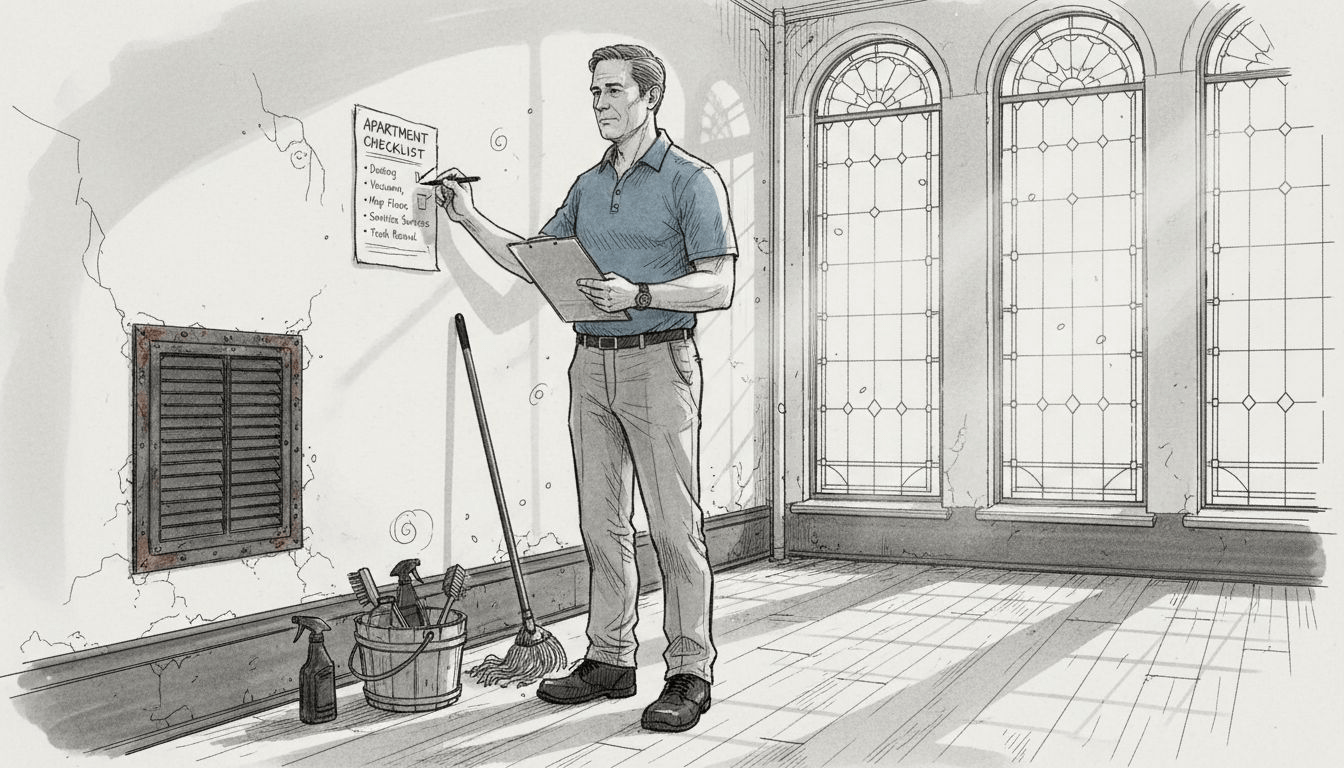
Many Los Angeles landlords quickly discover that cleaning duties extend far beyond what most tenants believe. Misunderstandings around who handles repairs, pest control, and common area upkeep can create costly issues if not addressed properly. For property managers aiming to keep units in top condition and attract quality tenants, it is crucial to understand the difference between tenant and landlord obligations under strict Los Angeles County regulations. This resource unpacks the legal responsibilities for maintaining a safe, clean, and habitable property, helping you avoid common misconceptions and protect your investment.
Table of Contents
- Defining Landlord Cleaning Duties And Misconceptions
- Types Of Cleaning: Standard, Deep, And Turnover
- Legal Cleaning Standards And Habitability Laws
- Move-In/Move-Out Cleaning: Rules And Limits
- Security Deposits, Deductions, And Dispute Prevention
Key Takeaways
| Point | Details |
|---|---|
| Landlord Cleaning Responsibilities | Landlords in Los Angeles must ensure rental properties meet cleanliness and habitability standards, including pest control and structural maintenance. |
| Types of Cleaning | Understanding the differences between standard, deep, and turnover cleaning is essential for property management and maintaining tenant satisfaction. |
| Legal Standards | Compliance with state regulations regarding habitability is crucial to avoid tenant disputes and potential legal challenges. |
| Security Deposit Management | Landlords should document all maintenance activities and provide itemized statements for any deductions to prevent disputes with tenants. |
Defining Landlord Cleaning Duties and Misconceptions
In Los Angeles rental properties, understanding cleaning responsibilities involves navigating complex legal requirements and practical expectations. Landlord cleaning duties extend far beyond simple tidying, encompassing critical maintenance that ensures rental units remain safe, sanitary, and habitable for tenants.
According to Los Angeles County regulations, landlords bear significant responsibilities for maintaining rental properties. These obligations include ensuring the entire property remains clean, structurally sound, and free from health hazards. Landlords must address comprehensive cleaning tasks that impact overall property habitability, such as:
- Eliminating pest infestations
- Maintaining functional plumbing and drainage systems
- Ensuring clean and operational common areas
- Addressing water damage and potential mold growth
- Keeping building exteriors and grounds debris-free
Many landlords misunderstand their cleaning responsibilities, believing tenants are solely responsible for maintaining the property’s cleanliness. However, Los Angeles housing regulations clearly distinguish between tenant maintenance and landlord obligations. While tenants must keep their individual units reasonably clean, landlords remain legally responsible for structural cleanliness and repairs that affect habitability.
Pro tip: Keep detailed documentation of property maintenance and cleaning activities to protect yourself legally and demonstrate responsible property management.
Types of Cleaning: Standard, Deep, and Turnover
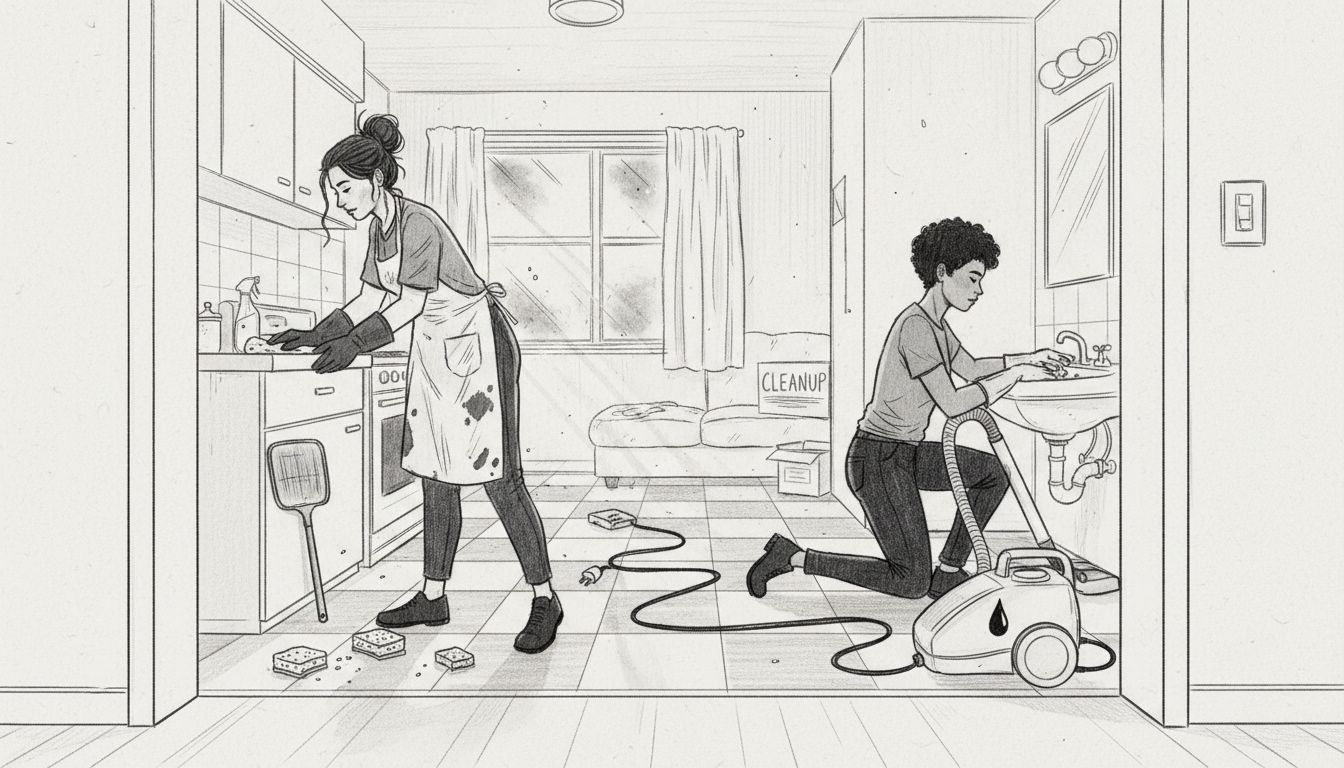
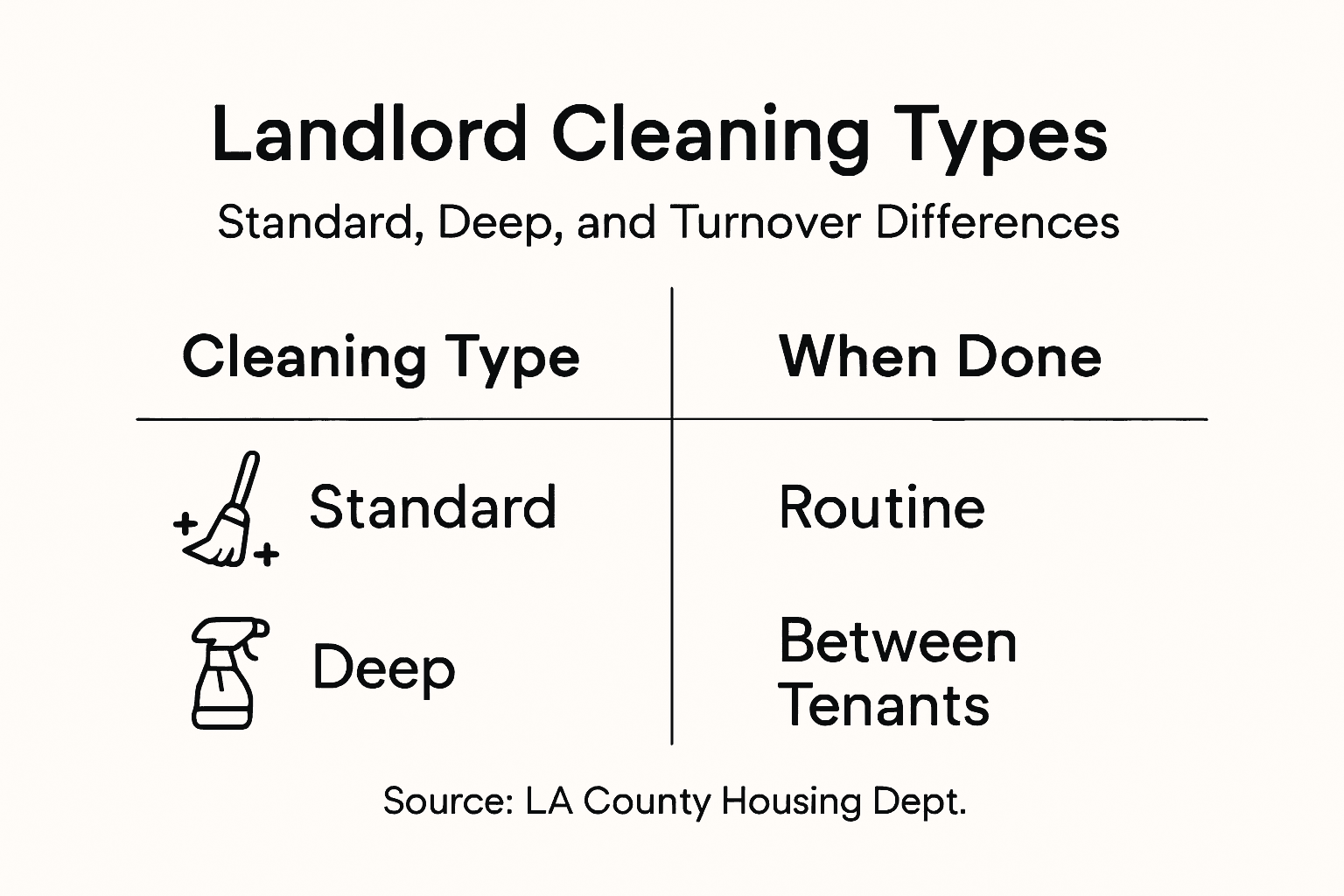
Landlords in Los Angeles must understand the nuanced differences between standard, deep, and turnover cleaning to maintain rental property standards effectively. Cleaning standards range from basic maintenance to comprehensive restoration, each serving a distinct purpose in property management.
Standard Cleaning represents routine maintenance that keeps rental units consistently presentable. This level of cleaning typically involves:
- Dusting visible surfaces
- Wiping down countertops and appliances
- Vacuuming or sweeping floors
- Basic bathroom and kitchen sanitization
- Emptying trash receptacles
Deep Cleaning goes beyond surface-level maintenance, targeting areas that accumulate significant dirt, grime, and potential health hazards. This intensive process includes:
- Thorough scrubbing of grout and tile
- Cleaning inside appliances like refrigerators and ovens
- Washing walls and baseboards
- Detailed carpet and upholstery cleaning
- Disinfecting high-touch areas and hard-to-reach spaces
Turnover Cleaning is the most comprehensive approach, specifically designed for preparing a rental unit between tenant occupancies. This critical process ensures the property is fully sanitized, repaired, and ready for new residents. Turnover cleaning involves a meticulous combination of standard and deep cleaning techniques, addressing any damages, stains, or wear that occurred during the previous tenancy.
Pro tip: Develop a standardized checklist for each cleaning type to ensure consistent quality and protect your property’s long-term value.
Here’s a quick comparison of cleaning types and their impact on property management:
| Cleaning Type | Main Purpose | Typical Timing | Impact on Property Value |
|---|---|---|---|
| Standard Cleaning | Routine upkeep | Weekly or bi-weekly | Keeps property presentable |
| Deep Cleaning | Intensive hygiene and restoration | Seasonal or as needed | Prevents long-term damage |
| Turnover Cleaning | Preparation for new tenants | Between occupancies | Maximizes rental potential |
Legal Cleaning Standards and Habitability Laws
Los Angeles rental properties are governed by stringent legal requirements that define minimum cleanliness and habitability standards. Implied warranty of habitability establishes critical legal protections for tenants, mandating landlords maintain properties that meet fundamental health and safety criteria.
Under California law, landlords must ensure rental units remain clean, safe, and free from health hazards. This comprehensive obligation encompasses multiple dimensions of property maintenance, including:
- Preventing pest infestations
- Maintaining functional plumbing and electrical systems
- Addressing water damage and mold growth
- Ensuring proper waste disposal
- Keeping common areas sanitary and accessible
- Responding promptly to maintenance requests
Non-compliance with these legal standards can result in significant consequences for property owners. Tenants have legal recourse if landlords fail to maintain habitable conditions, which may include:
- Withholding rent
- Requesting emergency repairs
- Filing complaints with local housing authorities
- Pursuing legal action for breach of warranty
Specifically, Los Angeles County regulations require landlords to undertake proactive maintenance that preserves the property’s structural integrity and ensures a healthy living environment. These standards go beyond simple cleaning, demanding comprehensive property management that prioritizes tenant safety and well-being.
Pro tip: Document all cleaning and maintenance activities meticulously to protect yourself legally and demonstrate your commitment to property standards.
Move-In/Move-Out Cleaning: Rules and Limits
Los Angeles rental properties are subject to specific cleaning guidelines that balance tenant and landlord responsibilities during property transitions. California tenant guidelines establish clear boundaries regarding move-in and move-out cleaning expectations to protect both parties from unfair practices.
Move-In Cleaning Responsibilities typically involve:
- Ensuring the unit is thoroughly cleaned before tenant occupancy
- Addressing any pre-existing maintenance issues
- Providing a sanitary and habitable living environment
- Completing comprehensive repairs and deep cleaning
- Documenting the unit’s initial condition
Move-Out Cleaning Expectations require tenants to:
- Return the unit to a reasonably clean condition
- Remove personal belongings
- Clean standard surfaces like counters and floors
- Avoid excessive damage beyond normal wear and tear
- Allow for professional inspection
Crucially, landlords cannot charge tenants for standard cleaning or repairs considered part of normal property maintenance. Security deposit deductions are limited to cleaning costs that exceed reasonable expectations, meaning landlords must distinguish between standard maintenance and extraordinary cleaning requirements.
Pro tip: Conduct a detailed move-in and move-out walkthrough with comprehensive documentation to prevent potential disputes over cleaning standards.
Security Deposits, Deductions, and Dispute Prevention
Security deposits represent a critical financial mechanism in Los Angeles rental agreements, protecting landlords while establishing clear boundaries for property maintenance and cleaning standards. California security deposit laws provide comprehensive guidelines that balance tenant rights with landlord protections.
Allowable Security Deposit Deductions typically include:
- Unpaid rent
- Repairs beyond normal wear and tear
- Excessive cleaning required to restore unit to original condition
- Replacement of damaged property
- Breach of lease agreement terms
Documentation and Dispute Prevention strategies involve:
- Conducting thorough move-in and move-out inspections
- Photographing unit condition before and after tenancy
- Creating detailed written documentation
- Providing itemized cleaning and repair statements
- Maintaining transparent communication
Landlords must return security deposits or provide a comprehensive itemized statement within 21 days of tenant move-out. Any deductions must be reasonable, justified, and directly related to actual damages or cleaning requirements beyond standard maintenance. Excessive or arbitrary charges can result in legal challenges and potential penalties for the landlord.
This reference table outlines allowable security deposit deductions versus prohibited charges:
| Deduction Category | Landlord Allowed? | Example Charge | Notes |
|---|---|---|---|
| Unpaid Rent | Yes | Final month’s rent | Must be documented |
| Repair (beyond wear/tear) | Yes | Wall repainting after damage | Only for excessive damage |
| Standard Cleaning | No | General dusting and vacuuming | Cannot deduct for routine upkeep |
| Replacement of Property | Yes | Broken appliance | Must show item was damaged |
Pro tip: Create a standardized inspection checklist and take time-stamped photographs during move-in and move-out to protect yourself from potential disputes.
Simplify Your Landlord Cleaning Duties with Trusted Help
Managing landlord cleaning responsibilities in Los Angeles rentals can quickly become overwhelming. From understanding legal standards to coordinating standard, deep, and move-in/move-out cleaning, property owners face the challenge of maintaining a safe and habitable space while avoiding costly disputes. The Maid Society specializes in easing this burden by delivering high-quality cleaning tailored for landlords and property managers who want peace of mind and excellent results.
Take control of your property maintenance today by trusting a team fully vetted and trained to handle every detail with care. Whether preparing for new tenants or ensuring ongoing upkeep, explore our expert solutions in Move-In & Move-Out Cleaning Tips | The Maid Society and discover valuable advice in our Expert House Cleaning Tips & Tricks | The Maid Society Blog. Ready to reclaim your time and protect your investment? Visit The Maid Society now to schedule a service crafted for your landlord needs.
Frequently Asked Questions
What are the primary cleaning duties of landlords in Los Angeles rentals?
Landlords are responsible for maintaining the cleanliness and habitability of the entire property, which includes addressing pest infestations, ensuring functional plumbing, maintaining clean common areas, and addressing water damage and mold growth.
How does standard cleaning differ from deep cleaning in rental properties?
Standard cleaning involves routine maintenance like dusting, sanitizing surfaces, and vacuuming, while deep cleaning targets areas that accumulate dirt and grime deeply, such as inside appliances and detailed carpet cleaning.
What are the implications of not adhering to cleaning standards as a landlord?
Failure to comply with cleaning standards can lead to legal consequences, including tenants withholding rent, requesting emergency repairs, or pursuing legal action for breach of warranty if habitability standards are not met.
Can landlords charge tenants for standard cleaning when they move out?
No, landlords cannot charge for standard cleaning associated with routine maintenance. Charges can only be applied for excessive cleaning required to restore the unit beyond its original condition due to damages.
Recommended
- The Maid Society | House Cleaning in Los Angeles
- Airbnb & Rental Cleaning Los Angeles | 5-Star Turnover Service
- 7 Essential Steps for a Move-Out Cleaning Checklist
- 7 Practical Examples of Cleaning Schedules for Busy LA Homes
- Role of Contracts in Renovation: Complete Guide – J. A. Kelly Contracting Services



Get Cleaning Tips & Exclusive Offers
Join our community for time-saving hacks and special discounts delivered to your inbox.