TL;DR:
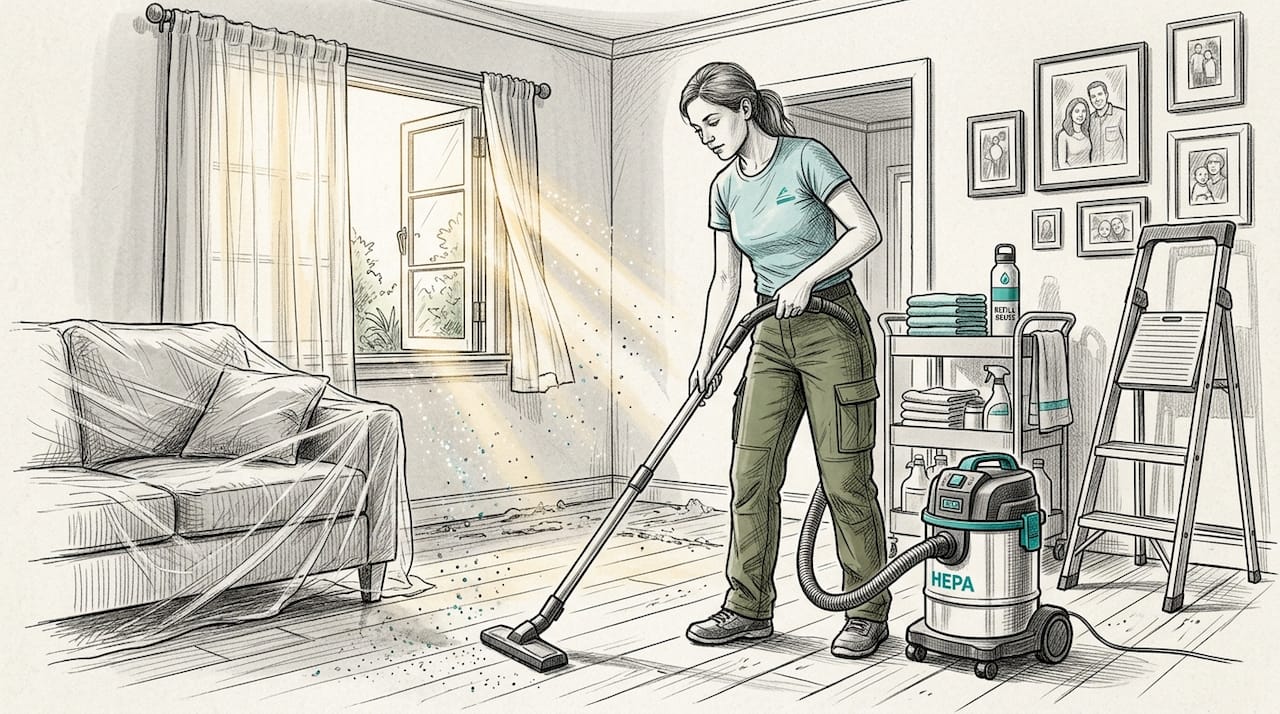
- Post-construction cleaning requires specialized protocols, including HEPA filtration and staged procedures, to ensure safety from microscopic silica and hazardous residues. Ordinary cleaning methods cannot effectively remove these fine contaminants, which pose long-term health risks if overlooked. Professional services in Los Angeles are essential for thorough, compliant, and health-conscious post-renovation cleanup.
You just finished a renovation. The contractors are gone, the floors look beautiful, and everything seems fine. But there’s a problem you can’t see. Construction dust is microscopic, persistent, and far more dangerous than the everyday variety you wipe off a bookshelf. In fact, OSHA’s permissible exposure limit for respirable crystalline silica is just 50 micrograms per cubic meter of air over an eight-hour period, a threshold your home likely exceeds long after workers leave. This article breaks down why post-construction cleaning is in a category of its own, what the real risks are, and how to make your Los Angeles property truly safe and move-in ready.
Table of Contents
- Why post-construction cleaning is different from routine cleaning
- The health and safety stakes after construction
- Hidden zones and critical cleaning challenges
- The value of professional post-construction cleaning for Los Angeles properties
- What most homeowners and managers miss about post-construction cleaning
- Ready for a safe, spotless home after construction? Professional cleaning solutions for Los Angeles
- Frequently asked questions
Key Takeaways
| Point | Details |
|---|---|
| Post-construction dust is dangerous | After renovations, invisible dust like silica lingers in your home and poses real health risks. |
| Routine cleaning isn’t enough | Standard cleaning leaves hidden dust behind, so special tools and staged methods are needed. |
| HEPA filtration is crucial | HEPA equipment removes nearly all fine dust, making the home safer for everyone. |
| Professional cleaning offers real value | Hiring pros ensures thorough cleaning, faster turnovers, and better inspection results in Los Angeles. |
| Don’t overlook hidden hazards | HVAC, vents, and cabinets can hold harmful dust unless cleaned with proper post-construction protocols. |
Why post-construction cleaning is different from routine cleaning
Now that you know why post-renovation spaces create new risks, let’s clarify how post-construction cleaning truly differs from your weekly dust-and-vacuum routine.
Most people assume that a thorough vacuuming and a mop pass will handle the aftermath of a renovation. That assumption can cost you. Construction dust differs from everyday household dust in a fundamental way: it is far finer, spreads into areas you’d never think to clean, and resettles repeatedly every time air circulates in the space. Standard cleaning tools are not designed to capture these ultra-fine particles. Instead, they stir the dust back into the air where it lingers for hours before landing again.
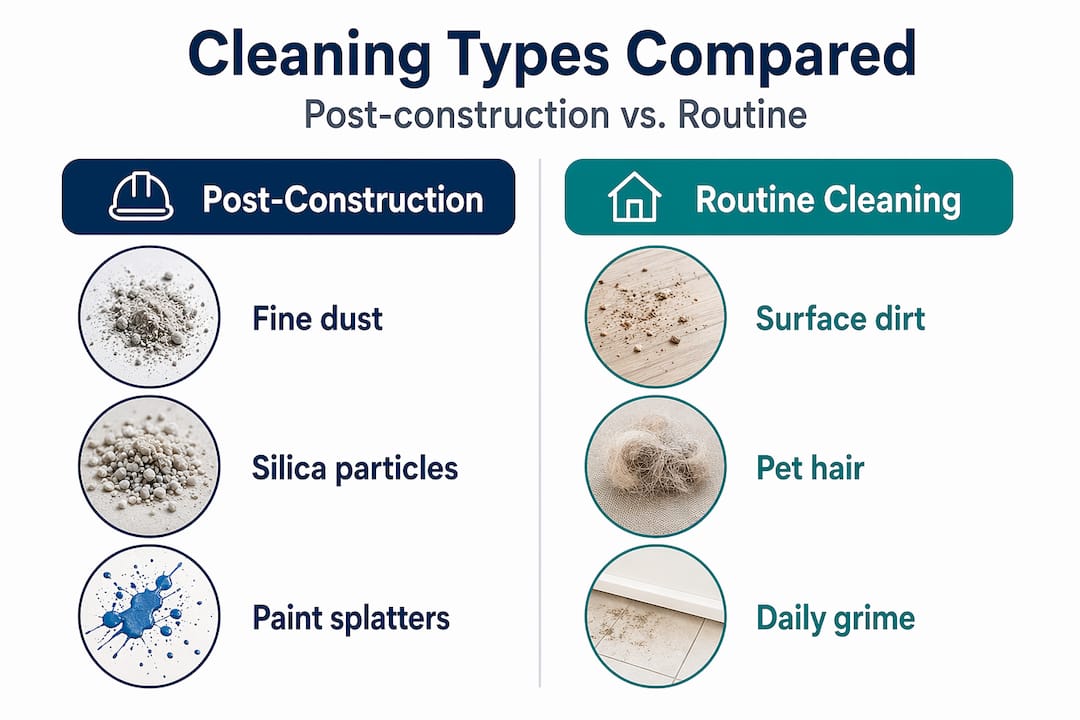
The difference between post-construction and standard cleaning is not just about quantity of dirt. It’s about the nature of the contaminants, the tools needed to remove them, and the order in which cleaning tasks must be done. Post-construction work follows a staged protocol: rough clean first, then detail clean, then final polish. Skipping stages or using the wrong equipment means you are essentially redistributing hazards rather than eliminating them.
Here’s a side-by-side look at what separates the two:
| Factor | Routine cleaning | Post-construction cleaning |
|---|---|---|
| Dust particle size | Visible, larger particles | Ultra-fine, often invisible (silica, concrete) |
| Spread of contamination | Surface level | Vents, cabinets, inside walls, HVAC |
| Tools needed | Standard mop, vacuum | HEPA vacuum, microfiber, air scrubbers |
| Health risk | Low | High (silica, lead, VOCs) |
| Cleaning stages | Single pass | Rough, detail, and final phase |
| Resettling risk | Minimal | High, repeated settling over days |
The LA post-construction cleaning guide also points out that older Los Angeles homes have additional complications, including lead paint and asbestos in pre-1980s construction materials, making professional protocols even more critical.
- Dust penetrates inside cabinet hinges, drawer tracks, and light fixtures
- Window seals and weather stripping trap fine particles that recirculate
- Grout lines absorb construction residue, making them harder to clean later
- Electrical outlets and switch plates collect dust that can cause overheating
Pro Tip: Open all interior doors and run a HEPA air purifier for at least 24 hours before your final cleaning pass. This pulls airborne particles out of circulation before your cleaning team makes their final sweep, giving you a much cleaner result overall.
The health and safety stakes after construction
Understanding the differences sets the stage. Next, let’s examine what’s truly at stake for your health and safety if post-construction cleanup is skipped or performed incorrectly.
Respirable crystalline silica is one of the most serious hazards left behind after renovation work involving concrete, brick, tile, or stone. You cannot see it. You cannot smell it. But when inhaled, it can cause silicosis, a serious and irreversible lung disease, as well as increase risk for lung cancer and kidney disease. OSHA’s permissible exposure limit is 50 micrograms per cubic meter as an eight-hour time-weighted average, and residential spaces after demolition or heavy tile work can exceed that significantly without visible signs.
Beyond silica, renovation sites leave behind adhesive fumes, drywall compounds, paint volatile organic compounds (VOCs), and sanding residue from treated wood. These compounds can affect indoor air quality for weeks, particularly in homes with limited ventilation. Children, elderly residents, and anyone with asthma or compromised immune systems face elevated risk.
“Indoor air quality after construction is often worse than the outdoor air in a busy city. The concentration of fine particles and chemical off-gassing creates a hidden hazard that doesn’t go away on its own.”
This is where HEPA filtration becomes essential. HEPA filters remove 99.97% of particles at 0.3 microns in size, which covers the range where construction dust and silica particles fall. Standard shop vacuums or household vacuum cleaners do not come close to that level of filtration. Many actually exhaust fine particles back into the room while appearing to clean.
| Contaminant | Source | Health risk | HEPA effective? |
|---|---|---|---|
| Respirable silica | Concrete, tile, stone | Silicosis, lung cancer | Yes |
| Drywall dust | Cutting, sanding | Respiratory irritation | Yes |
| VOCs | Paints, adhesives | Headaches, long-term toxicity | Partial (air scrubbers help) |
| Lead particles | Old paint disturbance | Neurological damage | Yes |
| Mold spores | Moisture intrusion | Allergic reactions | Yes |
Los Angeles adds specific layers of complexity. LA-specific cleaning hazards include the region’s dry climate, which keeps fine dust suspended in the air longer than in humid environments, and the density of older housing stock in neighborhoods like Echo Park, Silver Lake, and the Valley that frequently uncovers legacy materials during renovation work.
The bottom line on health: a visible-only cleaning approach does not address what you cannot see. HEPA-level protocols are not a luxury; they are a basic safety requirement after any construction project.
Hidden zones and critical cleaning challenges
With the risks clear, we should now look at the often-missed spots where harmful dust and residue can build up, and why only specialized cleaning protocols actually resolve these hazards.
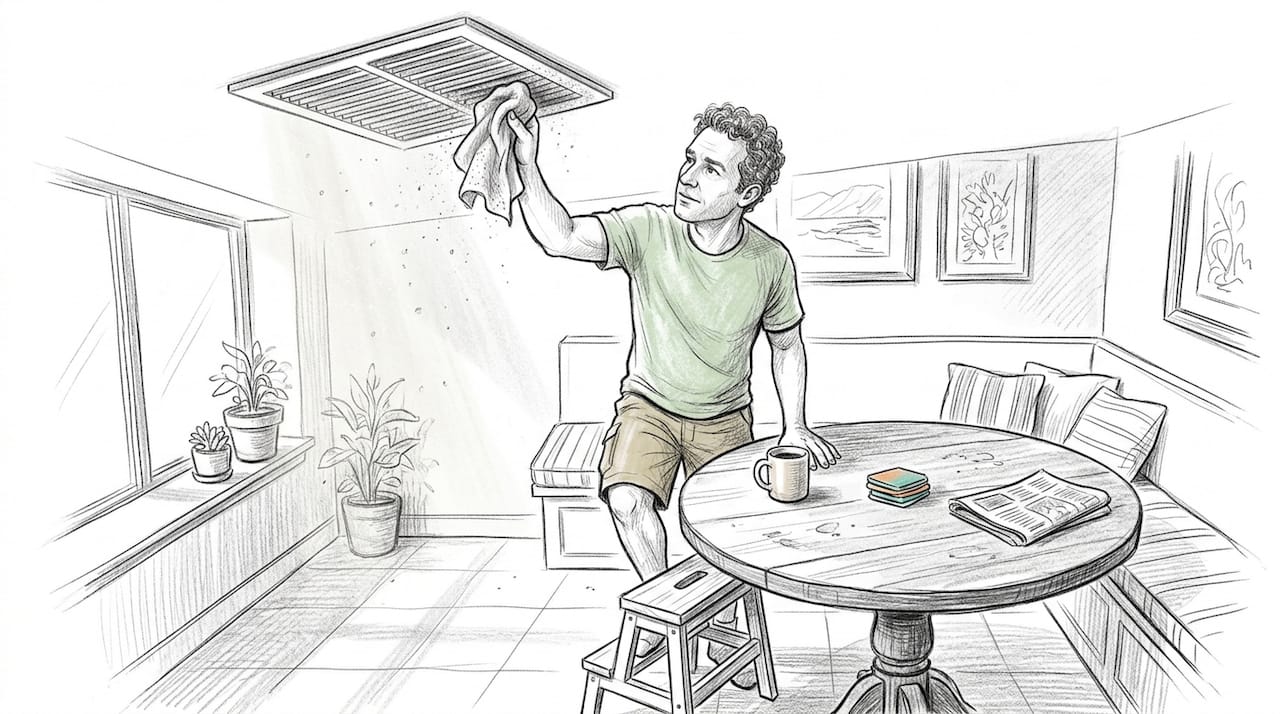
The most dangerous post-construction hazard is not what you can see; it’s what you overlook. HVAC systems and ductwork are among the most common culprits. During renovation, fine particles travel through existing air pathways and coat the inside of ducts, filters, and air handler units. When the system runs again, it circulates contaminated air throughout the entire property. Post-construction cleaning with proper hazard-management protocols specifically addresses fine dust penetration into HVAC systems and moisture-related issues that create secondary contamination problems.
“In a Los Angeles climate where air conditioning runs most of the year, contaminated HVAC systems become an ongoing exposure source long after the renovation is complete. Addressing ducts and filters is not optional.”
Here are the critical cleaning targets that most homeowners and even some general cleaning services miss:
- HVAC vents and returns: Dust collects on vent grilles and inside duct openings. Replace filters after construction and consider professional duct inspection before running the system.
- Inside cabinets and drawers: Fine dust settles in every cabinet that was open or near the work zone. Wipe interiors before loading them with dishes or supplies.
- Window tracks and sills: These collect debris that gets tracked throughout the space when windows are opened and closed.
- Light fixtures and ceiling fans: Horizontal surfaces at height are often skipped but hold significant dust that falls onto furniture and floors later.
- Electrical outlets and switch plates: Remove face plates and vacuum the cavities carefully, as dust accumulation here can be a fire hazard over time.
- Behind and under appliances: Refrigerators, dishwashers, and ranges are rarely moved during renovation but collect fine dust that blows in during work.
- Garage and entry thresholds: Contractors track debris through transition zones that then distribute particles to clean areas.
The detailed builder cleaning guide expands on each of these zones with specific methods and recommended products. Using a move-in-ready cleaning checklist ensures you do not miss critical steps when managing a turnover or preparing a property for new occupants.
Pro Tip: Schedule cleaning in two separate visits spaced 48 to 72 hours apart. The first visit handles the heavy work. The second captures all the dust that resettled after the initial disturbance. This staged approach is the single biggest quality difference between a basic cleanup and a professionally executed post-construction clean.
The value of professional post-construction cleaning for Los Angeles properties
Now that you know what needs to be cleaned, let’s see why bringing in experienced post-construction pros, as opposed to routine cleaning teams, makes such a major difference, especially here in Los Angeles.
For property managers, the case is especially clear. Post-construction cleaning done professionally reduces operational friction in a measurable way. It smooths final inspections, helps you close out punch lists faster, and delivers a property that tenants or buyers experience as genuinely clean and welcoming from day one. That first impression directly affects lease signings, purchase decisions, and online reviews.
For homeowners, the value is about peace of mind and health. You should not have to wonder whether that cough your child developed two weeks after the renovation is related to leftover drywall dust. Professional cleaning eliminates that uncertainty by applying the right tools and protocols from the start.
The benefits for property managers extend to reduced liability. If a tenant can demonstrate that respiratory issues developed due to poor post-renovation cleanup, the property owner faces real legal exposure. Professional cleaning creates a documented record of proper remediation.
| Feature | Generic cleaning service | Post-construction specialist |
|---|---|---|
| HEPA vacuum use | Rarely | Standard protocol |
| Staged cleaning phases | No | Yes (rough, detail, final) |
| HVAC and vent attention | Not typically | Included |
| Hazardous material awareness | Limited | Trained |
| Inspection-ready documentation | No | Often available |
| Timeline coordination | Flexible, unstructured | Matched to project close-out |
Specialist teams use HEPA vacuums and staged cleaning protocols by design, not as an upgrade option. That distinction matters enormously when you are dealing with particles that can recontaminate an entire floor if handled incorrectly.
- Look for providers who explicitly list post-construction cleaning as a separate service category
- Ask whether they use HEPA-filtered equipment and what their staging protocol includes
- Request references from renovation projects similar in size to yours
- Confirm they carry appropriate insurance for post-construction work
Faster turnover is a real operational benefit too. Review faster turnover cleaning options if you manage multiple units and need to coordinate cleaning with handoffs. The move-in ready cleaning guide provides a practical framework for exactly that scenario.
Pro Tip: When vetting any cleaning provider for post-construction work, ask one simple question: “What is your protocol for dealing with HVAC and vent contamination?” If they do not have a specific answer, they are not equipped for the job.
What most homeowners and managers miss about post-construction cleaning
Here is the part that most articles do not tell you: the biggest mistake is not skipping post-construction cleaning altogether. The biggest mistake is thinking you did it correctly when you did not.
We see this pattern repeat itself more than any other. A homeowner hires a general cleaning service after their kitchen remodel. The team does a solid job on visible surfaces. Two weeks later, the counters feel gritty. A month in, allergy symptoms appear. The homeowner blames the renovation materials. In reality, the problem is that construction dust settles repeatedly every time airflow disturbs the particles that were never properly captured in the first place.
HEPA-level protocols and staged cleaning should be the default after any major project, not a premium option you debate adding on. Treating it as optional is like finishing a kitchen remodel without grouting the tile. It looks fine for a few days, then problems accumulate.
In Los Angeles specifically, the combination of dry air, frequent HVAC use, and an older housing stock means contamination spreads farther and persists longer than in other climates. The timely project turnover lessons we have learned from managing hundreds of post-construction cleanings in the LA market point to one consistent truth: staged, HEPA-first cleaning is not perfectionism. It is the only approach that actually resolves the problem.
Our strong opinion: if your cleaning provider does not specifically mention HEPA filtration and staged protocols when you ask about post-construction work, you need a different provider.
Ready for a safe, spotless home after construction? Professional cleaning solutions for Los Angeles
If you want to avoid the common missteps and ensure your Los Angeles property is truly clean and guest-ready, here’s how professional services can help.
Post-construction cleaning is not a task you should compromise on. The health stakes, the hidden contamination zones, and the recurring dust problem all demand a specialist approach. At The Maid Society, we bring the right tools, the right protocols, and real experience with LA’s unique post-renovation challenges to every job.

Explore our full range of Los Angeles cleaning services including renovation cleanups, deep cleaning, and turnover preparation. Our deep cleaning process is designed specifically for post-construction environments, and our move-in cleaning packages get your property ready for new occupants quickly and safely. Request a quote today and let us handle the work that protects your home and your investment.
Frequently asked questions
How soon after construction should post-construction cleaning be done?
Ideally, cleaning should begin once all major work is finished but before new occupants move in, so dust is removed before it resettles into livable spaces. Starting quickly also prevents fine particles from embedding deeper into surfaces and HVAC systems.
What equipment is necessary for safe post-construction cleaning?
HEPA-filtered vacuums, microfiber cloths, and appropriate PPE are the baseline requirements for effective post-construction cleaning. HEPA-filtered vacuums are specifically recommended over standard shop vacuums because they capture ultra-fine construction particles instead of recirculating them.
Can I do post-construction cleaning myself or should I hire professionals?
You can attempt it, but the results will likely fall short of what is needed for genuine safety. Professional teams use specific post-construction methodology including HEPA equipment and staged protocols that most homeowners do not have access to or training in.
What are the health risks of skipping post-construction cleaning?
Lingering construction dust can contain silica and allergens that irritate the lungs and create long-term health risks, especially for children and sensitive individuals. OSHA sets strict exposure limits for respirable crystalline silica specifically because of how serious the consequences are with repeated or prolonged exposure.
Why does dust keep settling after construction?
Construction dust is extra-fine and far lighter than everyday household dust, so it remains airborne much longer and redeposits on surfaces repeatedly. Construction dust settles again and again each time air circulates, which is why HEPA-level capture during the cleaning process is the only way to truly break that cycle.
Recommended
- What is post-construction cleaning: guide for LA homeowners
- Post-construction cleaning: your move-in ready guide
- Post-Construction Cleaning Los Angeles | The Maid Society
- Post-renovation cleaning explained: guide for LA homeowners



Get Cleaning Tips & Exclusive Offers
Join our community for time-saving hacks and special discounts delivered to your inbox.