TL;DR:
- Proper post-construction cleaning ensures safety, compliance, and successful inspections in Los Angeles projects.
- A phased cleaning process with certified equipment and trained personnel is essential to achieve inspection readiness.
- Treating cleaning as a core project component minimizes delays, legal liabilities, and long-term health hazards.
A failed inspection, a frustrated tenant, or a property manager fielding health complaints after a renovation—these are the real consequences of skipping proper post-construction cleaning. Construction and renovation sites in Los Angeles generate enormous amounts of fine dust, chemical residue, debris, and hidden hazards that go far beyond what a standard cleaning can address. This article walks you through the regulatory requirements, correct preparation steps, a proven phased cleaning process, and expert tips for verifying results. Whether you manage a single family home renovation or a large commercial project, these best practices will help you close out every job confidently and compliantly.
Table of Contents
- Understanding the risks and regulations
- Preparing for job site cleaning: Materials and safety first
- Proven step-by-step cleaning process
- Verifying results and avoiding common mistakes
- The hard truths property owners miss about job site cleaning
- Make job site cleaning effortless with professional help
- Frequently asked questions
Key Takeaways
| Point | Details |
|---|---|
| Regulatory compliance matters | Following OSHA and local standards helps you avoid fines and keeps tenants safe. |
| Right prep prevents problems | Using certified teams with proper equipment protects new construction and health. |
| Phased process ensures results | Rough, light, and final cleaning phases together achieve spotless job sites. |
| Inspection is critical | Quality checks and professional certification avoid overlooked hazards and rework. |
| Professional help saves time | Hiring a single, certified team speeds up job site turnover and keeps projects on track. |
Understanding the risks and regulations
Before any broom touches a floor or any vacuum gets plugged in, every property owner and manager in Los Angeles needs to understand what is actually at stake with poor post-construction cleaning. The risks are not just cosmetic. They range from tenant health complaints to failed city inspections, serious legal liability, and long-term respiratory issues from fine particles like silica, lead, or asbestos.
OSHA 1926.25 housekeeping standards apply directly to construction job sites and are not optional. These rules require that all passageways, stairs, and work areas be kept clear of debris and protruding nails, that combustible scrap be removed regularly, and that waste containers with covers be used to separate hazardous materials from general trash.
“OSHA 1926.25 requires employers to maintain work areas in a clean and orderly condition and in sanitary condition throughout the duration of construction.” — JJ Keller Compliance Network
Beyond OSHA, California state law adds its own layer of requirements. Los Angeles County and city inspectors will check not just construction quality but site conditions before issuing certificates of occupancy. A dirty or hazardous site can stall your project timeline by days or even weeks, directly affecting your revenue and your reputation with tenants or buyers.
One of the most overlooked risks is the presence of hazardous materials. A hazard assessment for asbestos and lead must be conducted before demolition or cleanup begins, and certified professionals must handle the remediation of any identified materials. Older Los Angeles properties are especially prone to this risk. Homes built before 1980 may contain lead paint or asbestos in floor tiles, insulation, or ceiling texture, and disturbing these materials without proper containment exposes workers and future occupants to serious health hazards.
Here is a quick regulatory checklist every Los Angeles property owner and manager should run through before cleaning begins:
- Conduct a written hazard assessment for asbestos, lead, silica, and mold
- Confirm the cleaning crew is OSHA-compliant and holds relevant certifications
- Verify waste disposal methods meet Los Angeles county hazardous materials rules
- Ensure all passageways and emergency exits are clear before workers enter
- Document all waste separation and disposal with receipts or manifests
- Check that the job site ventilation is adequate before indoor cleaning begins
Understanding post-construction cleaning in LA as a legally significant process, not just a janitorial task, is the first mental shift property managers need to make.
Preparing for job site cleaning: Materials and safety first
With clear regulations in mind, the right preparation makes all the difference for efficient, safe, and compliant job site cleaning. Walking onto a post-construction site without the right tools and personal protective equipment (PPE) is one of the most common mistakes property owners make, and it often leads to either health incidents or a cleaning job that simply does not meet standards.
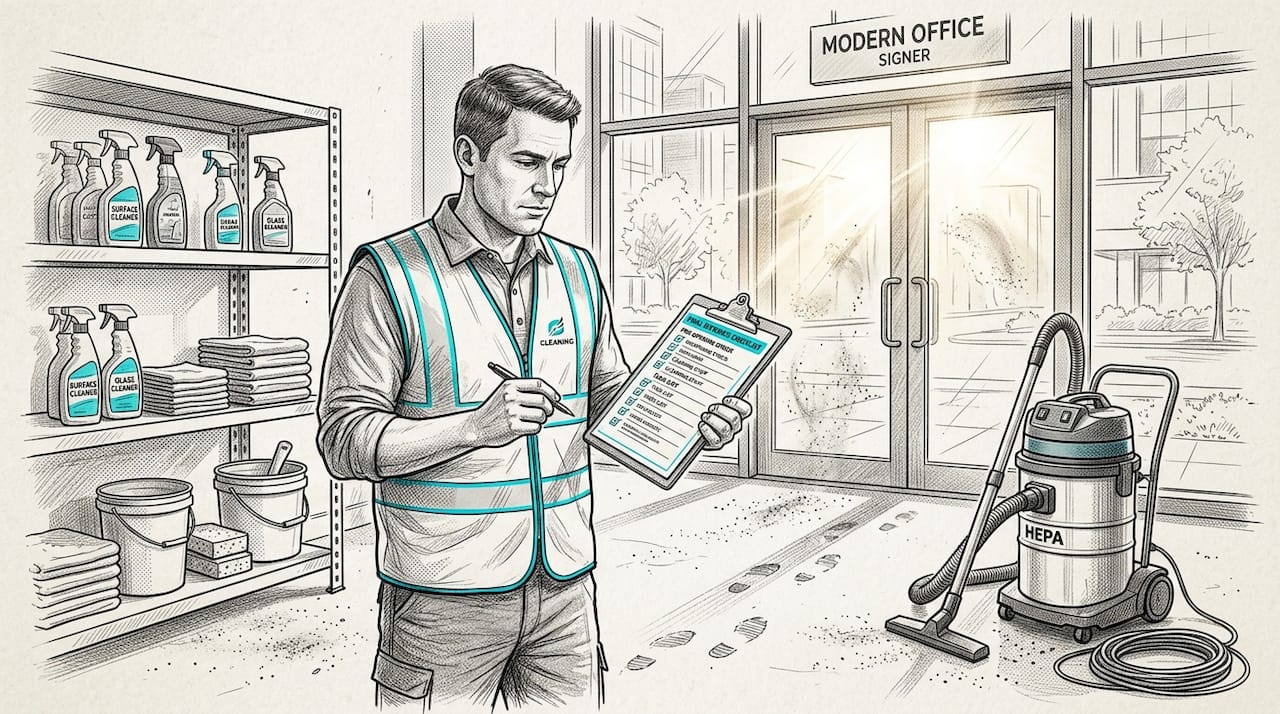
The single most critical piece of equipment is a HEPA-filtered vacuum. HEPA vacuums capture fine dust including silica particles, which are too small for standard vacuums to trap, meaning a regular shop vac will simply blow those particles back into the air. Silica dust is a classified carcinogen, and recirculating it into a freshly renovated space creates a serious respiratory risk for anyone who enters. This is non-negotiable on every job site.
Here is a full table of the materials and equipment you need to prepare before cleaning starts:
| Category | Item | Purpose |
|---|---|---|
| Vacuums | HEPA-filtered vacuum | Removes fine dust and silica safely |
| Dust control | Microfiber cloths and mop heads | Trap particles without spreading them |
| PPE | N95 or P100 respirator masks | Protect lungs from fine dust and chemicals |
| PPE | Safety goggles | Eye protection from debris and chemical splatter |
| PPE | Nitrile gloves | Hand protection from chemicals and sharp debris |
| PPE | Hard hat | Head protection if overhead work is still active |
| Waste management | Color-coded covered containers | Separate hazardous waste from general debris |
| Cleaning agents | pH-neutral surface cleaners | Safe for new finishes and surfaces |
| Cleaning agents | Degreaser | For adhesive residue, paint splatters, and grease |
| Tools | Stiff-bristle brushes | Remove dried compound and grout haze |
| Tools | Squeegees and extension poles | Window and high surface cleaning |
| Ventilation | Industrial fans or air scrubbers | Maintain air quality and speed drying |
Beyond the equipment list, team preparation matters. Everyone on the cleaning crew should receive a site-specific safety briefing before work begins, including where emergency exits are located, what hazardous materials have been identified, and how to handle any unexpected finds like mold or unknown substances.
Pro Tip: Build cleaning costs into your project budget at the planning stage, not as an afterthought. Cleaning is typically 1 to 3 percent of total project cost. Underestimating this creates last-minute scrambles where corners get cut. Use a detailed cleaning checklist specific to your project type to ensure nothing gets missed, and refer to a builder cleaning guide when planning phased work.
Proven step-by-step cleaning process
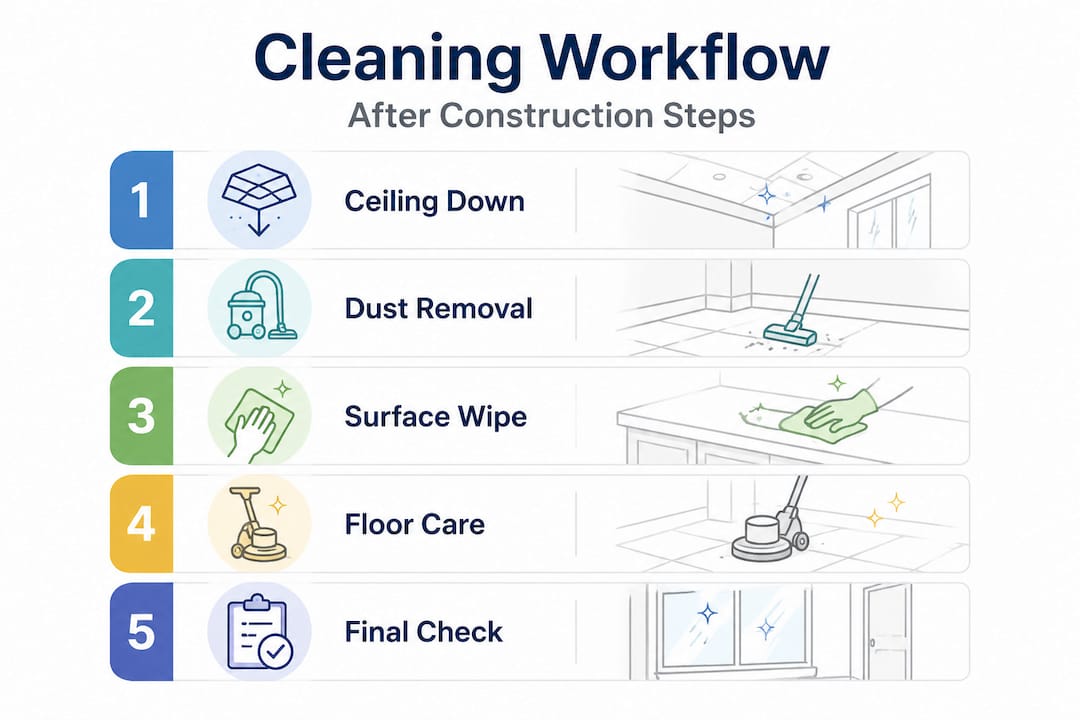
Now that you’re properly equipped, here’s exactly how to approach a thorough, phased job site cleaning from start to finish. The phased approach to post-construction cleaning consists of three distinct stages: rough clean, light or detail clean, and final clean. Each phase has a specific purpose and should not be rushed or merged with another.
Phase 1: Rough clean
- Remove all large debris, packaging, cut materials, and construction waste from every room
- Separate hazardous materials and place them in appropriate labeled containers
- Clear all passageways, stairwells, and work zones of nails, screws, and trip hazards
- Sweep all surfaces from ceiling to floor, starting with the highest point in the room
- Remove any temporary protection films or coverings from floors and fixtures
Phase 2: Light and detail clean
- HEPA vacuum all wall surfaces, window frames, door frames, and ceiling areas before moving down
- Wipe all surfaces with damp microfiber cloths, working from high to low in every room
- Clean inside all cabinets, drawers, closets, and built-in shelving
- Remove paint splatters, caulk residue, adhesive, and grout haze from all surfaces
- Clean all light fixtures, electrical outlet covers, and switch plates carefully
Phase 3: Final clean and polish
- Mop all hard floors with appropriate cleaning agents for the specific floor type
- Clean all windows inside and out, including tracks and sills
- Use a top-down cleaning methodology to do a final pass confirming no dust has settled from above onto already-cleaned surfaces below
- Sanitize all bathroom and kitchen surfaces, including inside fixtures, faucets, and drains
- Conduct a full walkthrough with lights on to catch any missed spots before sign-off
The top-down method is critical throughout all three phases. Starting at the ceiling and working down ensures that any dust or debris dislodged from higher surfaces falls onto areas not yet cleaned. Reversing this order is one of the most common and costly errors teams make, resulting in having to reclean floors and surfaces that were already finished.
Here is a comparison of DIY versus professional cleaning outcomes to help you decide:
| Factor | DIY cleaning | Professional team |
|---|---|---|
| Time to complete | Days to weeks | 1 to 3 days |
| HEPA equipment available | Rarely | Always |
| Hazardous material handling | High risk | Certified and compliant |
| Risk to new finishes | Significant | Minimal with correct products |
| Inspection pass rate | Variable | Consistently high |
| Cost | Lower upfront | Better value long term |
| Documentation for compliance | Usually absent | Provided on request |
Pro Tip: Hiring one unified, certified cleaning team instead of coordinating multiple subcontractors dramatically reduces miscommunication and compliance gaps. Learn more about the move-in ready cleaning process for completing a project that is truly tenant-ready and inspection-ready from day one.
Verifying results and avoiding common mistakes
With the cleaning process complete, it’s crucial to ensure your efforts deliver spotless and inspection-ready results. Even well-planned cleaning projects frequently stumble at the verification stage because teams skip a structured final review.
The most common mistakes on job sites after construction cleaning include:
- Skipping light fixture cleaning: Dust accumulates heavily inside fixture covers and on bulbs, and it becomes visible the moment lights are turned on during an inspection
- Failing to ventilate properly: Cleaning chemicals and fine dust create poor indoor air quality; failure to run air scrubbers or open windows leads to health complaints from the first occupants
- Not cleaning HVAC vents and returns: Construction dust infiltrates HVAC systems and gets redistributed the first time heating or cooling runs, undoing every other cleaning effort
- Ignoring grout haze on tile: Dried grout haze makes new tile look old and stained; it requires a specific remover and cannot be cleaned with standard products
- Overlooking window tracks and door hinges: Inspectors and tenants notice these immediately because they are the first things touched when entering a space
- Missing fine dust on horizontal surfaces: Baseboards, window sills, and the tops of doors collect fine construction dust that reappears hours after cleaning if not treated with a damp microfiber cloth
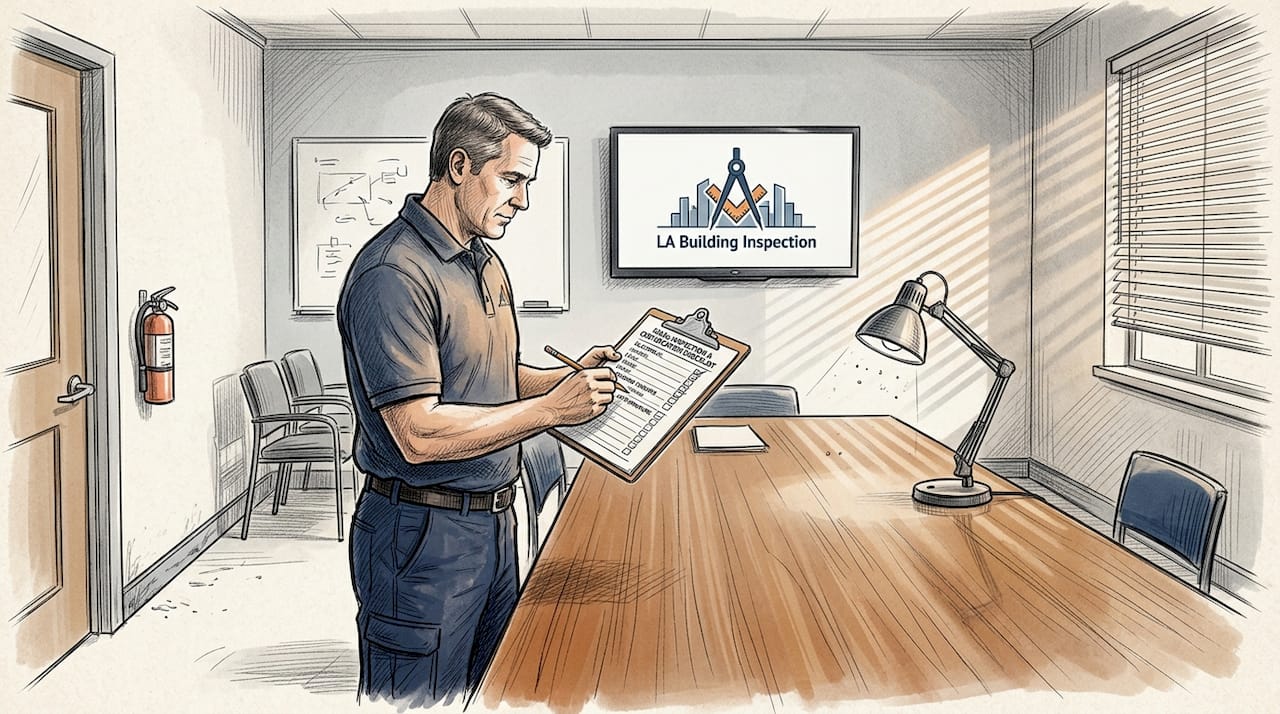
When verifying results, professional cleaning saves time compared to DIY and significantly reduces the chance of missing fine dust or damaging new finishes with incorrect cleaning products. Inspectors typically look at light fixture brightness, floor reflection quality, window clarity, and the condition of grout lines as quick indicators of overall cleaning quality.
Understanding the importance of professional cleaning for new builds goes beyond aesthetics. It directly affects whether you can close on a sale, rent the unit, or pass a final city inspection without costly delays. Refer to these renovation cleanup tips for a room-by-room approach to your verification walkthrough.
Pro Tip: Use a printed certification checklist during the final walkthrough with your cleaning crew present. Each item gets initialed by the team lead. This creates accountability, speeds up the review, and gives you documentation if any warranty or liability issue arises later.
The hard truths property owners miss about job site cleaning
After years of seeing how post-construction cleaning actually plays out for Los Angeles property owners, a clear pattern emerges: most owners focus so heavily on construction costs that cleaning becomes an afterthought, and that decision consistently costs more money than it saves.
The conventional mindset is that cleaning is simple and anyone can handle it after the contractors leave. That assumption leads to some of the most expensive surprises in property management. A budget planned from the project start for cleaning rather than bolted on at the end results in faster project completion, fewer compliance issues, and far less stress. Disjointed subcontractors cleaning different phases of a project create gaps in coverage, missed hazardous materials, and miscommunication about what was actually cleaned.
Here is the uncomfortable reality: a failed inspection does not just delay occupancy by a day or two. In Los Angeles, delays cascade. A tenant expecting to move in on a specific date who cannot because the property failed inspection is a legal and reputational issue, not just a scheduling inconvenience. The cost of that one-week delay often exceeds what a professional team would have charged for the entire job.
Consider the standard versus post-construction cleaning distinction: a standard cleaning is maintenance. Post-construction cleaning is remediation. They require different tools, different techniques, different products, and different levels of certification. Treating them as equivalent is where the real money gets lost.
The property owners who consistently get the best outcomes treat cleaning as a core project deliverable, not a final chore. They select a certified team early, budget for proper equipment, and treat the final walkthrough as seriously as they treat the construction inspection itself.
Make job site cleaning effortless with professional help
Tackling the cleanup after a construction or renovation project in Los Angeles does not have to mean managing multiple vendors, renting equipment, or hoping the results pass inspection. Professional post-construction cleaning gives property owners and managers exactly what they need: consistent, compliant, and thorough results without the stress.
The Maid Society provides fully vetted, trained cleaning teams that specialize in post-construction and renovation cleanup across Los Angeles. From the initial rough clean through to final polish, our teams arrive equipped with HEPA vacuums, professional-grade cleaning agents, and the experience to handle everything from fine silica dust to grout haze on new tile. Our Los Angeles cleaning services are designed to get your property inspection-ready and tenant-ready on schedule. Whether you need move-in and move-out cleaning between tenants or a full deep cleaning for builders at project close, we handle every detail with care so you can focus on what matters most.
Frequently asked questions
What is the difference between rough, light, and final cleaning phases?
The phased cleaning approach covers rough cleaning for debris removal, light or detail cleaning for dusting and surface treatment, and final cleaning for polishing and sanitizing all areas. Each phase must be completed before moving to the next.
Why is a HEPA vacuum necessary for job site cleaning?
HEPA-filtered vacuums remove fine dust like silica without recirculating it back into the air, which standard vacuums cannot do. This is critical for meeting air quality standards and protecting the health of anyone who enters the space.
How do I know if hazardous materials are present on my job site?
Always conduct a formal hazard assessment for asbestos or lead before demolition and hire certified professionals for testing. Properties in Los Angeles built before 1980 carry a particularly elevated risk.
Can I save money by handling job site cleaning myself?
DIY cleaning risks damaging finishes and missing fine dust that leads to health problems, while professionals complete the work in a fraction of the time and ensure full compliance. The upfront savings rarely outweigh the total cost of delays, rework, or failed inspections.
What does OSHA require for construction site cleanliness?
OSHA 1926.25 requires employers to keep all work areas and passageways clear of debris and protruding nails, remove combustible scrap regularly, and use covered containers to properly separate hazardous waste from general trash throughout the entire duration of the project.
Recommended
- Detailed cleaning guide for builders: post-construction success
- Post Construction Cleaning Guide for Ready-to-Rent Homes
- Role of cleaning in project completion: timely turnover
- Construction cleaning standards in Los Angeles 2026



Get Cleaning Tips & Exclusive Offers
Join our community for time-saving hacks and special discounts delivered to your inbox.