TL;DR:
- Consistent cleaning of high-touch surfaces effectively protects families without excessive disinfecting.
- Proper waste disposal, especially fats and food scraps, prevents sewer backups and household hazards.
- A steady, manageable sanitation routine and shared responsibility create a healthier LA home environment.
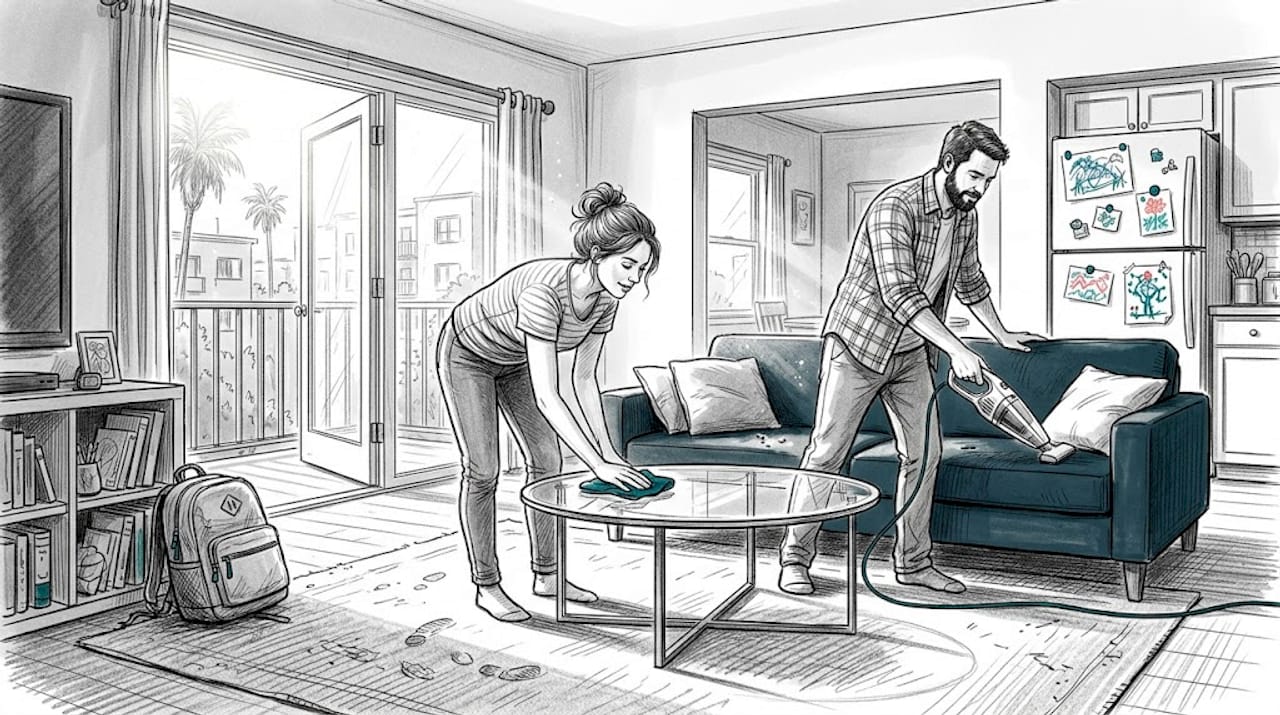
Keeping your Los Angeles home truly healthy does not require scrubbing every surface with bleach twice a day. Many busy families fall into the trap of either over-disinfecting out of anxiety or skipping cleaning altogether when life gets hectic. The truth, backed by solid research, sits comfortably in the middle: a consistent, practical sanitation routine protects your family just as well as obsessive cleaning, and it takes far less time. This guide walks you through the evidence-based basics of home sanitation, from understanding what “clean” actually means to managing waste the LA way.
Table of Contents
- Understanding cleaning, sanitizing, and disinfecting
- High-touch surfaces and cleaning routines for busy LA families
- Choosing and using effective cleaning products
- Managing waste and preventing household hazards in LA
- Why home sanitation in LA is really about consistency, not perfection
- How The Maid Society can help keep your LA home safe and spotless
- Frequently asked questions
Key Takeaways
| Point | Details |
|---|---|
| Routine cleaning works | Daily and weekly routines beat obsessive deep cleaning for most healthy homes. |
| Know when to disinfect | Disinfect only after illness or in high-risk situations—otherwise, cleaning removes most germs. |
| Choose safer products | Use EPA Safer Choice or properly diluted bleach, and avoid dangerous chemical mixtures. |
| Handle waste correctly | Proper disposal of grease and organics prevents plumbing issues and keeps homes LA-compliant. |
| Consistency beats perfection | A consistent, shared routine is more effective and less stressful than chasing a germ-free home. |
Understanding cleaning, sanitizing, and disinfecting
With myths about constant disinfection in mind, let’s clarify what effective home sanitation actually requires.
These three words get used interchangeably, but they mean very different things and produce very different results. Mixing them up wastes your time, your money, and sometimes your health.
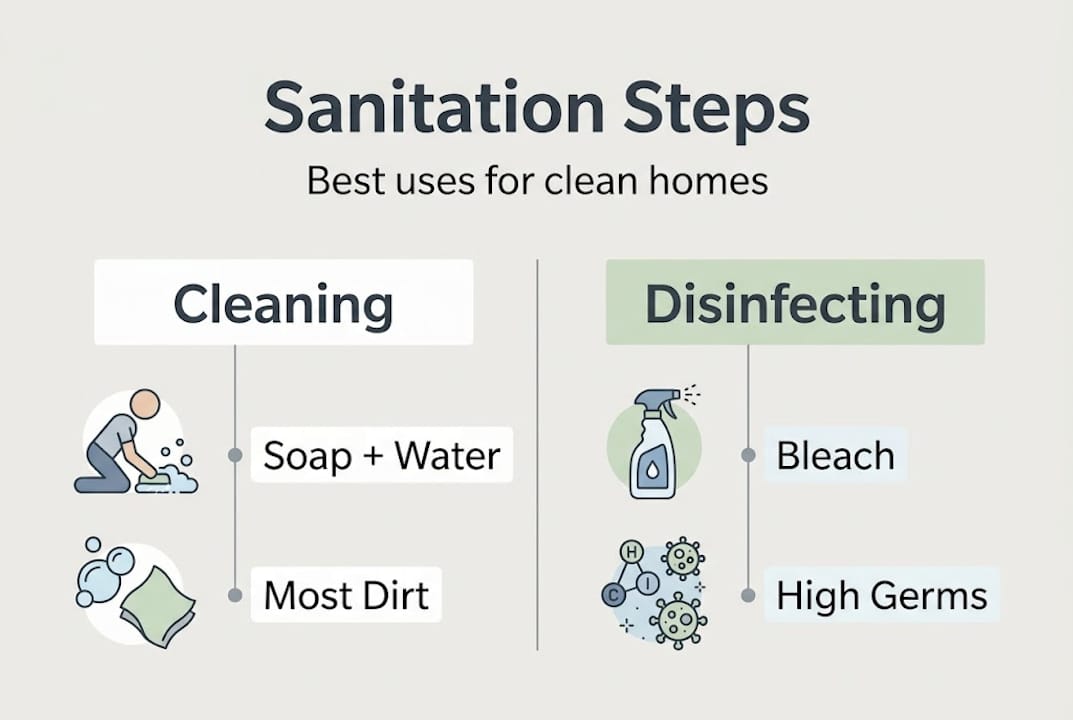
Cleaning means physically removing dirt, grease, and most germs from a surface using soap, water, and scrubbing. According to the CDC, cleaning removes most germs and impurities from surfaces and must always happen before you sanitize or disinfect. Think of it as step one, every time.
Sanitizing lowers the number of germs on a surface to a level considered safe by public health standards. It is less aggressive than disinfecting and works well for food-prep areas and kids’ toys.
Disinfecting kills nearly all germs on a surface using stronger chemicals. It is the right tool when someone in your home is sick, when you have immunocompromised family members, or after handling raw meat.
Here is a quick-reference table to keep things straight:
| Process | What it does | Best use case | Common products |
|---|---|---|---|
| Cleaning | Removes dirt and most germs | Everyday surfaces | Soap and water |
| Sanitizing | Reduces germs to safe levels | Food prep, toys | Sanitizing sprays |
| Disinfecting | Kills nearly all germs | Illness, high-risk situations | Bleach, EPA-approved disinfectants |
The sequence always matters. Skipping cleaning and going straight to disinfecting is like painting over a dirty wall. The disinfectant cannot do its job properly if organic matter like food residue or grease is blocking it.
When it comes to raw germ-killing power, the numbers are telling. Bleach achieves a 3.8 to 4.8 log10 reduction in microbes on surfaces after just five minutes of contact time. Quaternary ammonium compounds (common in spray disinfectants) land at 2.8 to 3.5 log10. Vinegar sits at 2.1 to 2.9 log10. Plain soap and scrubbing delivers roughly a 2 log10 reduction. That sounds like a lot of numbers, but the takeaway is simple: soap and water alone handle the bulk of everyday germ removal. You only need to escalate to bleach or EPA-approved disinfectants in specific situations.
Understanding cleaning and home health at this level helps you make smarter choices rather than reaching for the strongest product every time.
Pro Tip: Rotating between heavy disinfectants too often can cause skin irritation, respiratory issues, and may contribute to surface product resistance. Save the big guns for when you genuinely need them.
High-touch surfaces and cleaning routines for busy LA families
Understanding what needs to be cleaned and how often prevents wasted effort and keeps your family safer without adding hours to your week.
Not every surface in your home carries the same germ load. Focusing your energy on high-touch surfaces gives you the biggest return on your cleaning time. The CDC recommends cleaning high-touch surfaces like light switches, doorknobs, and countertops regularly, especially after visitors, and more often in households with young children or immunocompromised members.
The most important high-touch surfaces in a typical LA home include:
- Doorknobs and handles (front door, bathroom, refrigerator)
- Light switches in every room
- Kitchen countertops and the sink faucet
- Bathroom faucets and toilet flush handles
- TV remotes, phone screens, and tablet surfaces
- Stair railings and cabinet pulls
- Kids’ backpacks and lunch boxes (especially after school)
For time-saving cleaning routines that actually stick, the key is breaking tasks into daily and weekly chunks rather than doing everything at once. Research from the American Academy of Pediatrics shows that daily quick tasks like wiping counters, sinks, and managing clutter take just 20 to 30 minutes total when the whole family participates.
| Task | Frequency | Time estimate |
|---|---|---|
| Wipe kitchen counters and sink | Daily | 5 minutes |
| Wipe high-touch surfaces | Daily | 5 minutes |
| Dishes and food cleanup | Daily | 10 minutes |
| Bathroom deep clean | Weekly | 20 minutes |
| Vacuuming and dusting | Weekly | 30 minutes |
| Mopping hard floors | Weekly | 20 minutes |
| Washing bed linens | Bi-weekly | 10 minutes active |
When someone in your household is sick or you have a family member going through chemotherapy or another immune-compromising situation, bump up your frequency. Wipe high-touch surfaces twice daily and disinfect bathrooms after every use by the sick person.
Pro Tip: Assign age-appropriate tasks to your kids. A five-year-old can wipe down the coffee table. A ten-year-old can handle vacuuming a room. Shared responsibility builds good habits and cuts your workload significantly. Check out these cleaning strategies for parents for more ways to get the whole household involved.
Building crucial cleaning habits into your daily rhythm is what separates families who feel constantly behind from those who feel in control of their home.
Choosing and using effective cleaning products
Once your routine is set, it is crucial to pick products that work for your family and your specific situation.
The cleaning product aisle can feel overwhelming. Here is a practical breakdown of your main options:
Bleach is the most powerful disinfectant available for home use. It is inexpensive and highly effective, but it requires careful handling and proper dilution. The downside is that it can damage surfaces, irritate lungs, and fade fabrics.
Soap and water handles the vast majority of everyday cleaning needs. It is safe for all surfaces, non-toxic, and removes most germs through mechanical action.
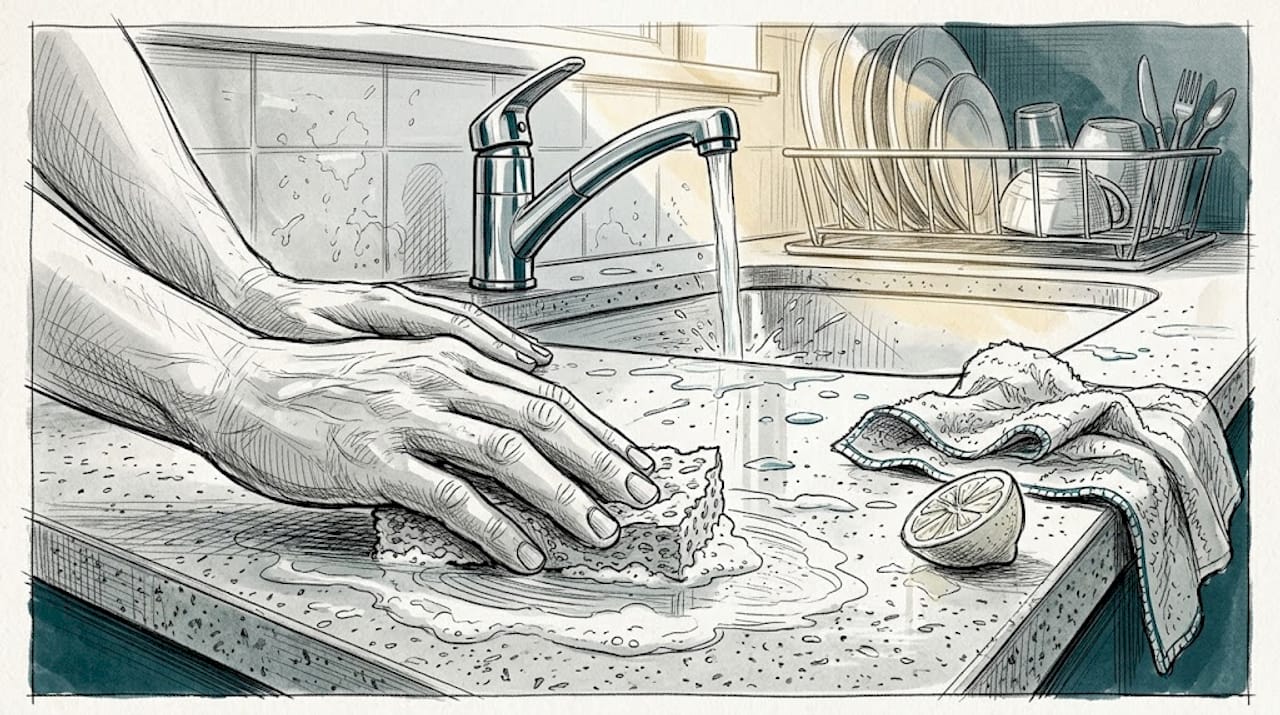
Vinegar is a popular natural option, but its limitations are real. Natural alternatives like vinegar have moderate efficacy but are inferior to bleach for robust disinfection. Always clean the surface first, regardless of which product you use next.
EPA Safer Choice products are a smart middle ground. The EPA Safer Choice program certifies products that are less toxic to people and the environment while still being effective. These are a great option for families seeking low-toxicity alternatives without sacrificing too much cleaning power.
If you want to make a bleach solution at home, follow these steps carefully:
- Start with cool water, not hot (heat degrades bleach faster).
- Add 1/3 cup of 5.25% household bleach per gallon of water for general disinfection, which gives you 500 to 1000 ppm concentration.
- For tougher pathogens like norovirus or C. diff, increase to 1000 to 5000 ppm.
- Make a fresh batch daily because bleach solutions lose potency quickly.
- Test your solution with inexpensive chlorine test strips to confirm concentration.
- Wear gloves and ensure the room is ventilated.
One rule that cannot be overstated: never mix bleach with ammonia-based cleaners or acidic products like vinegar. The chemical reaction produces toxic chloramine gas, which is dangerous even in small amounts.
Natural cleaners like vinegar and tea tree oil are legitimate tools for everyday cleaning, but they are not a substitute for bleach-level disinfection when you truly need it. Know the difference and use each product where it belongs.
For families who prefer to go greener, explore eco-friendly cleaning advice tailored to LA homes, or follow a full natural cleaning guide to build a routine that avoids harsh chemicals without leaving your family unprotected.
Managing waste and preventing household hazards in LA
Safe product use is one part of home sanitation. The other is day-to-day habits that prevent health hazards and, in Los Angeles, potential sanitation citations.
LA County has specific rules around waste disposal that every homeowner should know. Ignoring them does not just create odors or attract pests. It can result in plumbing disasters and fines. Here is how to handle the most common household waste situations correctly.
Step-by-step waste management for LA homes:
- Scrape plates before washing. Food scraps belong in your green bin, not the drain. Use a rubber spatula to scrape plates into the trash or compost.
- Handle fats, oils, and grease (FOG) properly. Avoid pouring FOG down drains to prevent sewer backups. Let grease cool, pour it into a sealed container, and toss it in the trash.
- Use sink strainers. A simple mesh strainer catches food particles before they enter your pipes. Empty it daily.
- Use your green bin for food scraps. LA County’s organic waste program requires food scraps in the green bin. Line your kitchen pail with newspaper, sprinkle baking soda to absorb odors, and transfer scraps regularly.
- Clean your bins weekly. Bins that sit dirty in LA’s heat become breeding grounds for bacteria and pests fast.
Pro Tip: During LA’s hot summer months, freeze food scraps like meat trimmings and fish bones in a sealed bag until collection day. This eliminates odor entirely and keeps your kitchen smelling fresh even when temperatures climb past 90 degrees.
Every LA homeowner should also know these key local rules:
- Residential units must be free of garbage and rubbish at all times, per LA County Public Health standards.
- Common areas in multi-unit properties must be kept sanitary with proper refuse bins.
- Hazardous waste like old paint, batteries, and electronics cannot go in regular trash. LA County holds free drop-off events throughout the year.
- Illegal dumping carries fines starting at $1,000 in LA County.
Improper grease disposal is one of the most common causes of sewer backups in Los Angeles neighborhoods. A single clogged lateral line (the pipe connecting your home to the city sewer) can cost thousands of dollars to repair. The fix is simple: keep FOG out of your drains.
Why home sanitation in LA is really about consistency, not perfection
Here is something we have learned from working with hundreds of LA families: the households that stress the most about cleaning are often the ones whose homes are not actually the cleanest. They go weeks without a real routine, then spend an entire Saturday deep-cleaning everything with industrial-strength products. Then they repeat the cycle.
That approach is exhausting and counterproductive. Over-disinfecting does not just waste money. It exposes your family to unnecessary chemical contact, can irritate airways, and strips surfaces of protective finishes over time.
What actually works is boring in the best possible way: a steady, realistic routine done consistently. Wiping counters daily, handling high-touch surfaces a few times a week, and doing a proper bathroom clean once a week does more for your family’s health than any sporadic marathon cleaning session.
LA adds its own wrinkles. Wildfire season brings particulate matter indoors, which means your air filters and hard surfaces need extra attention during those months. Summer heat accelerates bacterial growth in kitchens and trash areas, so your food waste habits matter more in July than in January. These are specific, manageable adjustments to an otherwise steady routine, not reasons to panic or overhaul everything.
The other piece of practical wisdom we keep coming back to is shared responsibility. When cleaning falls entirely on one person, it breeds resentment and eventually gets abandoned. When every household member, including kids, owns a piece of the routine, the work gets done, habits form naturally, and no one burns out. Stress-free cleaning routines are built on systems, not willpower.
Perfection is not the goal. A consistently clean, reasonably sanitary home is. That is genuinely achievable for any busy LA family.
How The Maid Society can help keep your LA home safe and spotless
Even the best routines hit their limits. A new baby, a busy work season, a move, or post-renovation dust can all push your home beyond what a daily wipe-down can handle.
That is where The Maid Society steps in. We serve busy Los Angeles families with fully vetted, detail-oriented cleaning teams who treat your home with the same care you would. Whether you need a one-time deep clean to reset your space, a recurring standard clean to maintain your routine, or help with a move-in or post-construction situation, we have a service built for it. Our team also provides home organization help for families who want to go beyond clean and create systems that actually last. Explore our full range of Los Angeles cleaning services and find the right fit for your family’s needs.
Frequently asked questions
How often should I disinfect my home if no one is sick?
You only need to disinfect high-touch areas after illness, after guests visit, or when someone at home is at higher risk. Routine cleaning suffices for healthy households, and over-disinfecting is unnecessary and may promote resistance.
Are natural cleaning products effective?
Natural cleaners like vinegar help remove dirt and some germs, but they are less powerful than bleach for true disinfection. Natural alternatives have moderate efficacy and work best as part of a clean-first approach.
What is the safest way to disinfect with bleach?
Dilute bleach to 500 to 1000 ppm using 1/3 cup per gallon of water, make a fresh batch daily, and never mix it with acids or ammonia per EPA safety guidelines.
How should I dispose of kitchen grease in Los Angeles?
Never pour fats, oils, or grease down drains because FOG causes sewer backups in LA’s aging pipe system. Scrape grease into a sealed container and place it in the trash.
What is the official LA County rule for home cleanliness?
LA County requires that homes be free of garbage and rubbish at all times, with sanitary common areas and proper refuse bins in place for all residential units.
Recommended
- How Cleaning Safeguards Health and Safety in LA Homes
- How cleaning improves your health and wellness in LA
- Why sanitize your home for health in Los Angeles 2026
- Improve indoor air quality: cleaning solutions for LA homes


Get Cleaning Tips & Exclusive Offers
Join our community for time-saving hacks and special discounts delivered to your inbox.