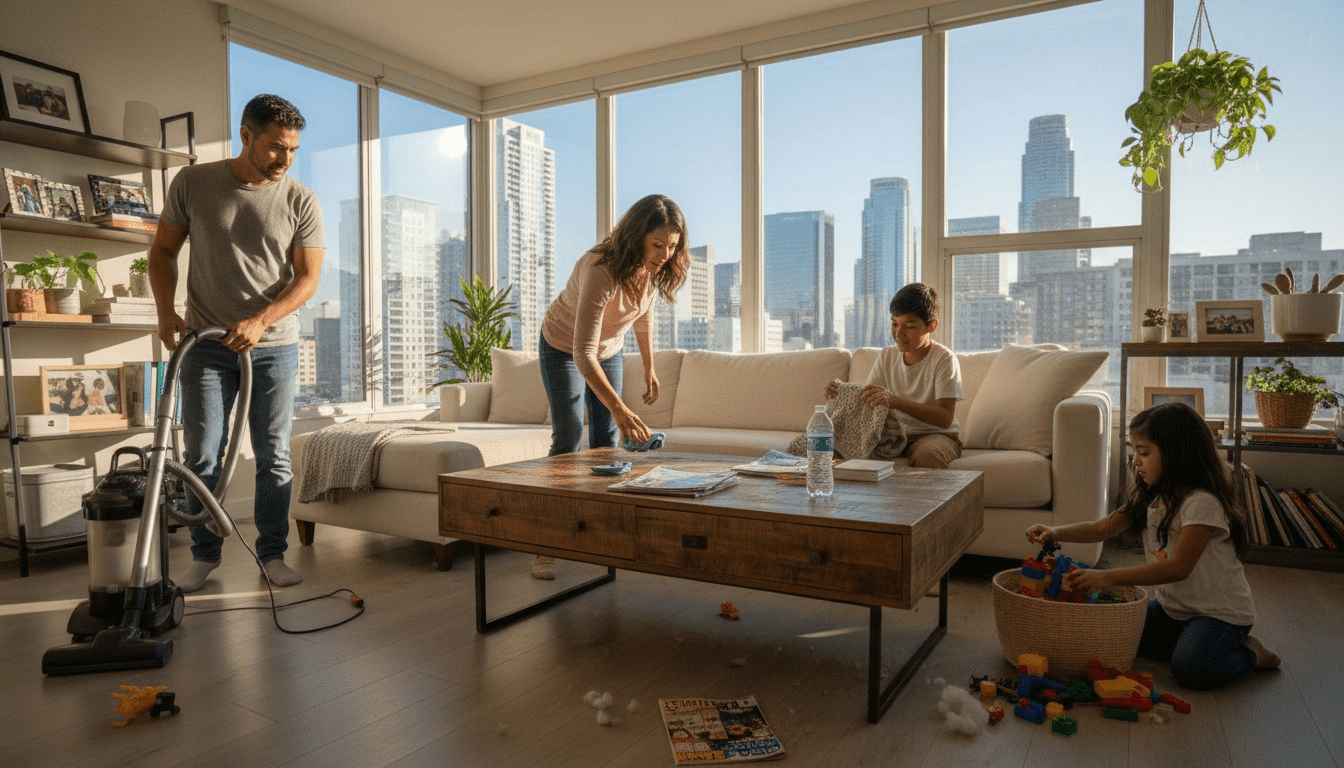
Over 70 percent of American families report that keeping a clean home feels overwhelming when juggling work and daily life. For busy suburban households in Los Angeles, finding efficient cleaning routines can mean the difference between chaos and calm. Discover practical, time-saving cleaning strategies that fit seamlessly into your family’s schedule, helping everyone share the load and enjoy a home that feels fresh and welcoming every day.
Table of Contents
- Create a Daily Cleaning Checklist for the Whole Family
- Prioritize High-Traffic Areas to Save Time
- Implement a No-Shoes Policy at Home
- Tidy Up Common Spaces Every Night
- Delegate Age-Appropriate Chores to Family Members
- Keep Cleaning Supplies Handy and Organized
- Schedule Weekly Deep Cleaning Sessions
Quick Summary
| Takeaway | Explanation |
|---|---|
| 1. Create a Daily Cleaning Checklist | Engaging the whole family in daily cleaning tasks fosters teamwork and establishes routines, ensuring consistent upkeep of the home. |
| 2. Focus on High-Traffic Areas | Prioritizing cleaning in frequently touched surfaces enhances effectiveness and reduces germ spread, saving time on cleaning efforts. |
| 3. Implement a No-Shoes Policy | A no-shoes policy minimizes dirt and allergens entering the home, contributes to better indoor air quality, and lessens cleaning time required. |
| 4. Establish a Nightly Tidying Routine | Dedicating a few minutes nightly to tidying common areas prevents clutter buildup and promotes a calm living environment for the family. |
| 5. Assign Age-Appropriate Chores | Dividing chores according to age encourages responsibility and contributes to children’s development, making them integral members of household management. |
1. Create a Daily Cleaning Checklist for the Whole Family
Managing a clean home in Los Angeles requires a strategic approach that involves every family member. Creating a daily cleaning checklist transforms household maintenance from a challenging task into an organized family activity that promotes teamwork and shared responsibility.
A well-designed cleaning checklist helps families establish consistent routines and distribute tasks efficiently. According to the American Cleaning Institute’s home cleaning guide, preparing a systematic cleaning plan ensures that high-impact tasks are completed regularly, maintaining a clean and healthy living environment.
To create an effective family cleaning checklist, start by identifying age appropriate tasks for each household member. Young children can help with simple tasks like picking up toys or placing dirty clothes in hampers. Older children and teens can manage more complex responsibilities such as vacuuming, wiping down surfaces, or loading dishwashers.
Key Components of an Effective Family Cleaning Checklist:
- Morning quick tidy
- Kitchen cleanup after meals
- Bathroom surface wipe downs
- Bedroom organization
- Daily laundry management
- Floor sweeping or vacuuming
Healthy Children organization emphasizes that involving children in household tasks builds essential life skills and promotes a sense of accomplishment. By creating a visual checklist that everyone can see and track, families transform cleaning from a chore into a collaborative family activity.
Pro tip: Create a large, colorful checklist poster in a common area like the kitchen, using stickers or magnetic markers to make tracking tasks fun and interactive for all family members.
2. Prioritize High-Traffic Areas to Save Time
In busy Los Angeles households, efficient cleaning is all about strategic focus. Not all areas of your home require the same level of attention, which means smart cleaning is about targeting the zones that accumulate the most dirt and germs.
The Centers for Disease Control and Prevention recommends prioritizing cleaning in high-touch areas to reduce infection risks and maximize cleaning effectiveness. These high-traffic zones are where germs spread most quickly and where your cleaning efforts will have the greatest impact.
Key High-Traffic Areas to Focus On:
- Kitchen counters
- Bathroom surfaces
- Entryway floors
- Living room furniture
- Doorknobs and light switches
- Stair railings
Implementing a targeted cleaning strategy means spending less time cleaning and more time enjoying your home. Rapid cleaning in these critical areas prevents dirt buildup and reduces the overall time required for thorough home maintenance.
For Los Angeles families juggling work and household responsibilities, understanding where to concentrate cleaning efforts can transform your approach. Concentrate on surfaces that multiple family members touch frequently, as these are the most likely to harbor bacteria and require consistent attention.
Pro tip: Keep a microfiber cloth and all purpose cleaner in a central location so you can quickly wipe down high-touch surfaces throughout the day, preventing dirt accumulation and reducing deep cleaning time.
3. Implement a No-Shoes Policy at Home
Protecting your Los Angeles home from outdoor dirt and contaminants starts with one simple rule: leave your shoes at the door. A no-shoes policy is more than just a cleaning strategy it is a powerful way to maintain a healthier living environment for your family.
The National Center for Healthy Housing emphasizes that removing shoes indoors significantly reduces the introduction of pollutants, allergens, and dirt into your living space. This practice directly improves indoor air quality and protects your floors from unnecessary wear and tear.
Benefits of a No-Shoes Policy:
- Reduces dirt tracked into living spaces
- Minimizes allergen transmission
- Protects carpet and floor surfaces
- Decreases cleaning time and effort
- Prevents potential bacterial spread
Research on global shoe removal practices reveals this is not just a modern cleaning trend but a longstanding cultural approach to maintaining home hygiene. In many Asian and Middle Eastern cultures, removing shoes is a standard practice that promotes cleanliness and respect for living spaces.
To successfully implement a no-shoes policy, create a welcoming entryway that makes shoe removal easy and convenient. Place a shoe rack or dedicated storage area near your home entrance, along with comfortable indoor slippers for family members and guests.
Pro tip: Keep a stylish basket of clean, soft indoor slippers or socks near your entrance to make the no-shoes transition comfortable and inviting for everyone who enters your home.
4. Tidy Up Common Spaces Every Night
A nightly ritual of tidying shared living spaces can transform your Los Angeles home from chaotic to calm in just minutes. Creating a consistent evening cleanup routine is not just about maintaining cleanliness it is about preserving your family’s mental well-being and creating a peaceful living environment.
The Marshfield Clinic Health System highlights that regular tidying significantly reduces clutter-induced stress and improves overall mental health. By dedicating just 10-15 minutes each evening to straightening common areas, you can prevent overwhelming messes from accumulating and create a more relaxing home atmosphere.
Essential Nightly Tidying Tasks:
- Return items to their designated places
- Clear and wipe down kitchen counters
- Fold throw blankets and straighten pillows
- Place shoes in designated storage areas
- Sort mail and remove daily clutter
- Quick sweep or vacuum high traffic zones
UN-Habitat research demonstrates that maintaining orderly communal spaces encourages positive social interactions and supports family well-being. In busy Los Angeles households, this nightly routine becomes a collaborative family activity that teaches organization and shared responsibility.
Make the process enjoyable by playing upbeat music, setting a timer, or turning cleanup into a friendly family competition. Assign specific tasks to each family member to distribute the workload and make tidying feel like a team effort.
Pro tip: Keep a small basket or caddy in common areas to quickly collect and redistribute items that do not belong, making your nightly tidy up process more streamlined and efficient.
5. Delegate Age-Appropriate Chores to Family Members
Transforming household cleaning from a solo task to a family team effort can revolutionize how Los Angeles families manage home maintenance. By strategically assigning chores based on each family member’s age and capabilities, you create a collaborative environment that teaches valuable life skills and reduces parental workload.
HealthyChildren.org emphasizes that age appropriate chore assignments support children’s development of responsibility, self-esteem, and independence. When children contribute to household tasks, they learn important skills that extend far beyond cleaning.
Chore Recommendations by Age Group:
- Toddlers (2-3 years): Put toys away, help make bed
- Preschoolers (4-5 years): Set table, water plants, dust low surfaces
- Early Elementary (6-8 years): Vacuum simple areas, help with laundry sorting
- Older Elementary (9-11 years): Clean bathrooms, load dishwasher, take out trash
- Teenagers (12+ years): Complete full cleaning tasks, do laundry independently
The American Academy of Child and Adolescent Psychiatry reports that consistent chore participation helps children develop self-regulation and coping skills. By making household responsibilities a normal part of family life, parents prepare children for future independence.
Create a visual chore chart that tracks each family member’s tasks and achievements. Consider implementing a reward system that recognizes consistent effort and completed responsibilities.
Pro tip: Rotate chores periodically to prevent boredom and help children learn a variety of household management skills, ensuring they become well-rounded and adaptable.
6. Keep Cleaning Supplies Handy and Organized
Efficient cleaning begins with strategic organization of your supplies. Having the right tools in the right places transforms household cleaning from a tedious chore into a quick and manageable task for busy Los Angeles families.
The American Cleaning Institute recommends organizing cleaning supplies strategically to streamline your cleaning routine. By keeping essential products easily accessible, you reduce time spent searching and increase overall cleaning efficiency.
Smart Cleaning Supply Organization Strategies:
- Create cleaning stations in key areas of your home
- Use portable cleaning caddies for multi room tasks
- Store supplies close to where they will be used
- Keep child safety in mind with secure storage
- Group similar cleaning products together
- Label storage containers for clear identification
The American Lung Association suggests selecting low toxicity products and organizing them thoughtfully to minimize chemical exposure and protect family health. This approach ensures both efficient cleaning and a safer home environment.
Consider designating specific storage areas for cleaning supplies in bathrooms, kitchen, and utility spaces. Invest in compact storage solutions like rolling carts, wall mounted racks, or under sink organizers that maximize space and accessibility.
Pro tip: Create a dedicated cleaning supply station in your home with a clear inventory list and expiration dates to ensure you always have what you need and avoid purchasing duplicate products.
7. Schedule Weekly Deep Cleaning Sessions
While daily tidying maintains surface cleanliness, weekly deep cleaning tackles the hidden dirt and grime that accumulate in Los Angeles homes. A systematic approach to thorough cleaning ensures your living space remains truly healthy and inviting.
The American Cleaning Institute recommends scheduling dedicated deep cleaning sessions to address areas often overlooked during daily maintenance. These comprehensive cleaning efforts help reduce allergens, eliminate pathogens, and maintain a higher standard of household hygiene.
Essential Weekly Deep Cleaning Tasks:
- Scrub bathroom tiles and grout
- Clean inside of refrigerator and oven
- Wash windows and window treatments
- Vacuum under furniture and hard to reach areas
- Dust ceiling fans and light fixtures
- Sanitize trash cans and high touch surfaces
- Wash or replace bed linens
- Clean baseboards and door frames
Edit.org suggests creating a systematic approach to these deeper cleaning tasks by allocating specific times and responsibilities. Consistency is key to preventing dirt and grime buildup and maintaining a consistently clean home environment.
Consider breaking down your weekly deep cleaning into manageable segments. For instance, focus on different areas of your home on specific days to prevent the task from becoming overwhelming.
Pro tip: Set a recurring calendar reminder for your weekly deep cleaning session and create a playlist of energetic music to make the process more enjoyable and motivating.
Below is a comprehensive table summarizing the effective home cleaning strategies and practices discussed in the article.
| Strategy | Implementation | Benefits |
|---|---|---|
| Create a Family Checklist | Assign age-appropriate daily cleaning tasks to each family member. | Ensures an organized approach and evenly distributed workload while teaching responsibility. |
| Focus on High-Traffic Areas | Clean areas frequently touched or used by multiple people consistently. | Primes cleanliness in critical spots and minimizes bacteria spread. |
| Initiate a No-Shoes Policy | Encourage removing shoes at the entrance and provide alternatives like slippers. | Reduces indoor dirt and allergens, resulting in cleaner and healthier living spaces. |
| Nightly Common Area Tidy Up | Dedicate time each evening to organize shared spaces and reset for the next day. | Maintains a calm and organized environment, reducing mess-induced stress. |
| Delegate Chores Strategically | Assign cleaning roles based on age and ability, gradually increasing responsibility. | Builds life skills, promotes teamwork, and reduces dependency on one individual. |
| Organize Cleaning Supplies | Use caddies and designated stations to store products near use areas securely. | Streamlines the process, saves time during cleaning, and enhances safety. |
| Schedule Weekly Deep Cleaning | Plan comprehensive cleaning of overlooked areas like windows, ceilings, and appliances. | Prevents grime buildup and maintains standards of hygiene consistently. |
Make Building Healthy Cleaning Habits Easier with Expert Help
Busy Los Angeles families face the constant challenge of maintaining a clean, organized home amid packed schedules and countless responsibilities. From creating daily cleaning checklists to prioritizing high-traffic areas and assigning age-appropriate chores, it can feel overwhelming to keep up consistently. You want to reduce stress, save time, and enjoy a healthy living environment without exhausting yourself or your family.
That is where The Maid Society steps in to transform your cleaning routine. Our trusted residential cleaning services complement your family’s efforts by delivering high-quality standard and deep cleaning tailored to your home’s unique needs. Discover practical advice and professional insights in our Expert House Cleaning Tips & Tricks | The Maid Society Blog to build effective habits that last. Ready to reclaim your time and relax in a spotless home you love Visit The Maid Society today and experience dependable, detail-oriented cleaning by a team committed to your family’s comfort and health.
Frequently Asked Questions
How can my family create a daily cleaning checklist?
Creating a daily cleaning checklist involves identifying age-appropriate tasks for each family member. Start by listing simple tasks for younger children, like putting away toys, and more complex chores for older kids, such as vacuuming or wiping surfaces. Review the checklist together to encourage teamwork and accountability.
What high-traffic areas should we focus on when cleaning?
Focus on high-traffic areas such as kitchen counters, bathroom surfaces, and living room furniture. Regularly cleaning these critical zones helps reduce germs and dirt buildup. Aim to wipe down these surfaces every day to maintain a healthier home environment.
How can I effectively implement a no-shoes policy in our home?
You can implement a no-shoes policy by creating a welcoming entryway with a shoe rack and providing comfortable indoor footwear for family and guests. Encourage everyone to remove their shoes upon entering your home to minimize dirt and allergens. Set a clear expectation about this policy to ensure consistency.
What tasks should we include in our nightly tidy-up routine?
Include essential tasks like returning items to their proper places, clearing kitchen counters, and sorting mail in your nightly tidy-up routine. Dedicating just 10-15 minutes each night can significantly reduce clutter and create a more peaceful living environment. Consider making it a fun family activity to boost participation.
How can we assign age-appropriate chores to our children?
Assign age-appropriate chores by matching tasks to each child’s developmental level. For example, toddlers can put away toys, while teenagers can manage full cleaning tasks independently. Create a visual chart to track chores and rotate responsibilities regularly to keep it engaging and educational for everyone.
What are some tips for organizing cleaning supplies effectively?
Organize cleaning supplies by creating designated cleaning stations in key areas of your home. Use portable caddies for ease of access and keep items grouped together for similar tasks. Regularly check supplies to ensure everything is in good condition and label storage containers for quick identification.



Get Cleaning Tips & Exclusive Offers
Join our community for time-saving hacks and special discounts delivered to your inbox.