By L.K. (Lyndsey) | Themaidsociety
{
  "@context": "https://schema.org",
  "@type": "Article",
  "headline": "Allergen Control at Home: What LA Homeowners Need to Know",
  "author": {
    "@type": "Person",
    "name": "Lyndsey (L.K.)",
    "worksFor": {
      "@type": "Organization",
      "name": "The Maid Society"
    }
  },
  "publisher": {
    "@type": "Organization",
    "name": "The Maid Society",
    "url": "https://themaidsociety.com"
  },
  "datePublished": "2026-01-01",
  "description": "A practical, Los Angeles–focused guide explaining what allergen control is, the three core strategies, room-by-room hotspots, and when to hire professional cleaners.",
  "mainEntityOfPage": "https://themaidsociety.com"
}
Key Takeaways
Sustained, multi-component allergen control — combining source removal, moisture management, ventilation, and HEPA filtration — reduces indoor allergen levels more effectively than any single measure applied once.
| Point | Details |
|---|---|
| Source control comes first | Remove or encase allergen sources (mattress covers, pet zones, pest entry points) before relying on filters. |
| Humidity target: 30–50% | Keeping indoor relative humidity in this range limits both dust-mite and mold growth, per EPA and Mayo Clinic guidance. |
| HEPA vacuums matter | Standard vacuums can re-suspend fine particles; HEPA-rated vacuums and professional extraction reduce that risk. |
| LA-specific air quality | Close windows during wildfire smoke and high-pollen alerts; use HVAC or portable HEPA units instead. |
| Themaidsociety for LA homes | Recurring and deep-clean services across Los Angeles address allergen hotspots pros find most often: carpets, bathrooms, and pet zones. |
Table of Contents
- What Is Allergen Control — and Where to Start Today
- What We See in LA Homes — and What Actually Works
- Professional Allergen Cleaning in Los Angeles
- Recommended Articles
- Sources
Table of Contents
- What Is Allergen Control — and Where to Start Today
- What We See in LA Homes — and What Actually Works
- Key Takeaways
- Sources and Further Reading
- Professional Allergen Cleaning in Los Angeles
- Recommended Articles
What Is Allergen Control — and Where to Start Today
Allergen control is the ongoing combination of cleaning, source removal, moisture management, ventilation, and filtration that reduces indoor allergens to levels that don’t trigger symptoms. The EPA recommends tackling it in that exact priority order: source control first, then ventilation, then filtration. Skip the order and you get diminishing returns.
The five allergens that show up most in American homes are dust mites, pet dander, mold spores, cockroach allergens, and outdoor pollen that drifts inside. They accumulate in bedding, carpets, upholstered furniture, bathroom grout, and HVAC ducts — places that standard tidying rarely touches. According to the EPA’s guidance on biological contaminants, routine vacuuming, damp dusting, and washing linens are the cleaning actions that cut buildup most reliably.
One thing that surprises many people: AAAAI notes that pet-allergy symptoms often peak 8–12 hours after exposure. That delay makes it genuinely hard to connect sneezing on Tuesday morning to the cat that slept on your pillow Monday night. If symptoms are persistent, but the source isn’t obvious, an allergist consultation is worth it.
A systematic review on PubMed confirmed that environmental control measures work best as part of a sustained, multi-component routine, not as one-time actions. One deep clean helps. A weekly plan changes the air you breathe.
Start today with these three steps:
- Seal your sleep zone. Encase your mattress and pillows in allergen-proof covers and wash all bedding weekly in hot water. AAFA emphasizes that mattress encasements often outperform portable air cleaners at reducing allergen exposure where you sleep.
- Filter the air. Run a portable HEPA air cleaner in the bedroom or upgrade your HVAC filter to a MERV 11–13 rating. Replace the HVAC filter every 60–90 days, more often during wildfire season in LA.
- Control moisture. Keep indoor relative humidity between 30–50%. Mayo Clinic guidance identifies moisture management as a primary lever against both dust mites and mold — and it often has higher impact than filtration alone.
Pro Tip: In Los Angeles, moisture management is the highest-leverage step most homeowners skip. Coastal neighborhoods like Venice, Marina Del Rey, and Santa Monica see elevated indoor humidity year-round. A $30–$50 hygrometer tells you immediately whether your home is in the safe range.
What We See in LA Homes — and What Actually Works
I write for Themaidsociety and work closely with the cleaning teams that service homes across Los Angeles — from Brentwood and West Hollywood to Long Beach and Burbank. The allergen hotspots we encounter most often are bathroom mold (especially in older buildings in Koreatown and Mid-City LA with poor exhaust ventilation), dust-loaded carpets in bedrooms, and pet dander embedded in upholstered furniture throughout the house.
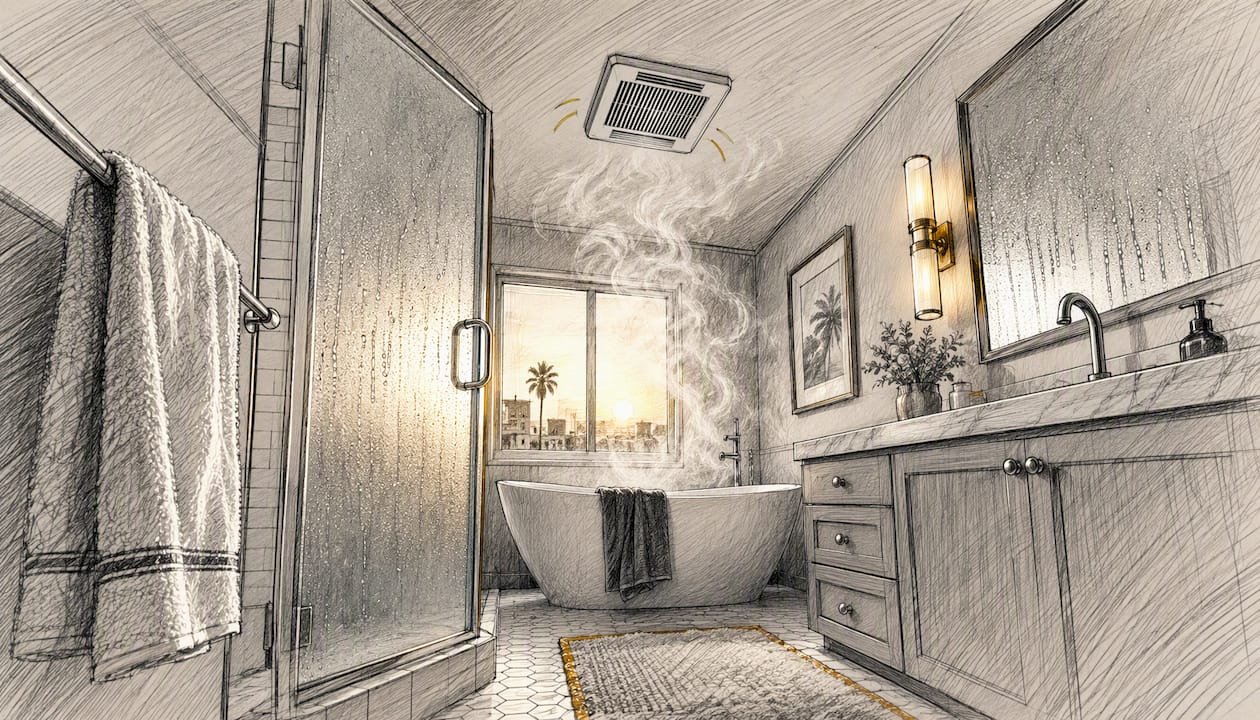
EPA research confirms that bathrooms and other damp areas are primary mold sources, and that ventilation fans plus consistent moisture control are the most effective prevention. Running the exhaust fan during and for 20 minutes after every shower is a simple habit that makes a measurable difference.
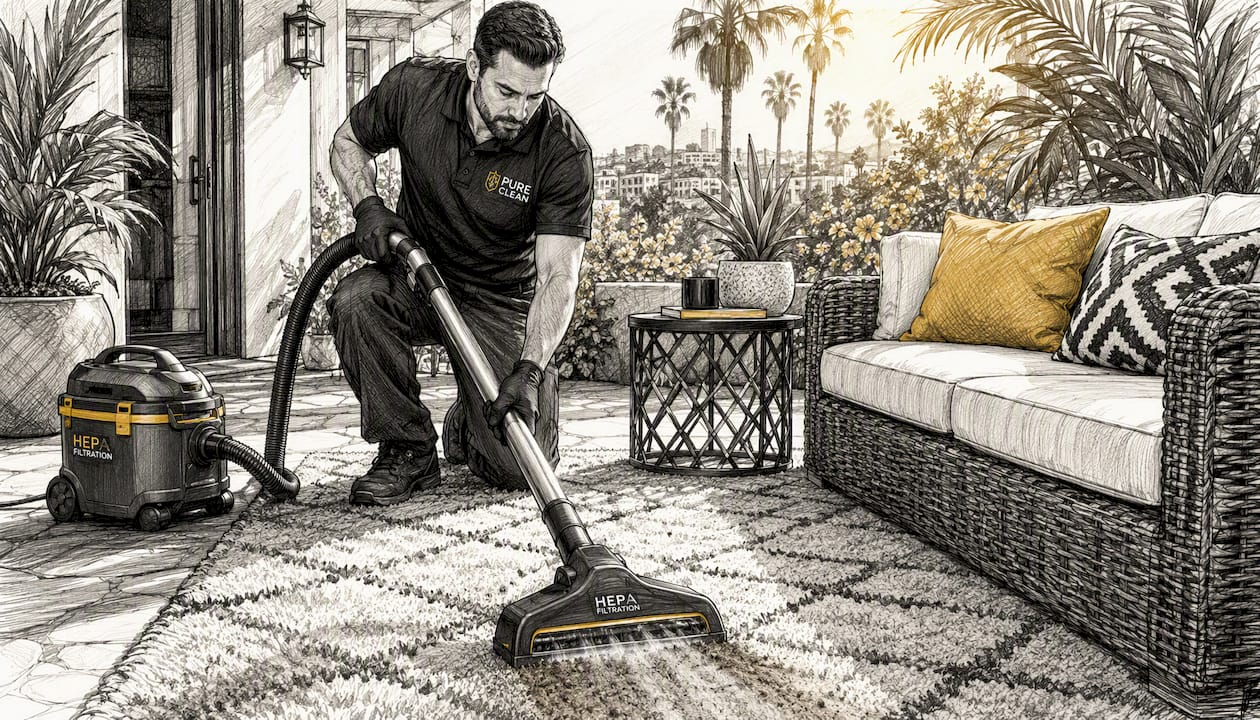
Standard vacuuming, done without a HEPA-rated vacuum, can actually re-suspend fine allergen particles back into the air. Research published in Frontiers in Allergy (2023) found that HEPA-equipped vacuums and professional cleaning reduce that risk significantly. For carpeted homes, professional carpet cleaning improves air quality by extracting allergens that vacuums leave behind.
There are also no truly hypoallergenic pets. Pet allergens come from proteins in saliva, urine, and dander, and those proteins can linger in fabrics and ventilation systems for months after a pet leaves the home. Airbnb hosts in particular should factor this in: a guest with a pet allergy reacting to the previous guest’s dog is a real scenario, and a standard turnover wipe-down won’t fix it.
When to call professionals instead of going it alone:
- Deep carpet and upholstery cleaning (HEPA extraction, not just surface vacuuming)
- HVAC and air duct cleaning after construction or renovation — see the guide on cleaning air ducts after construction for timing and scope
- Mold inspection and remediation when visible mold covers more than 10 square feet
- Chronic cockroach or rodent infestations (integrated pest management, not just spraying)
- Airbnb turnover cleaning between guests, especially after pet-friendly stays
For LA homeowners on a recurring plan, weekly or biweekly cleaning schedules reduce allergen complaints more than any single deep clean. The health benefits of regular cleaning compound over time, the same way skipping gym sessions compounds in the other direction.
One more LA-specific note: on days when the South Coast AQMD issues wildfire smoke or high-pollen alerts, keep windows closed and rely on your HVAC or portable HEPA unit. Opening windows for “fresh air” during a Santa Ana wind event brings in more allergens than it removes.
Professional Allergen Cleaning in Los Angeles
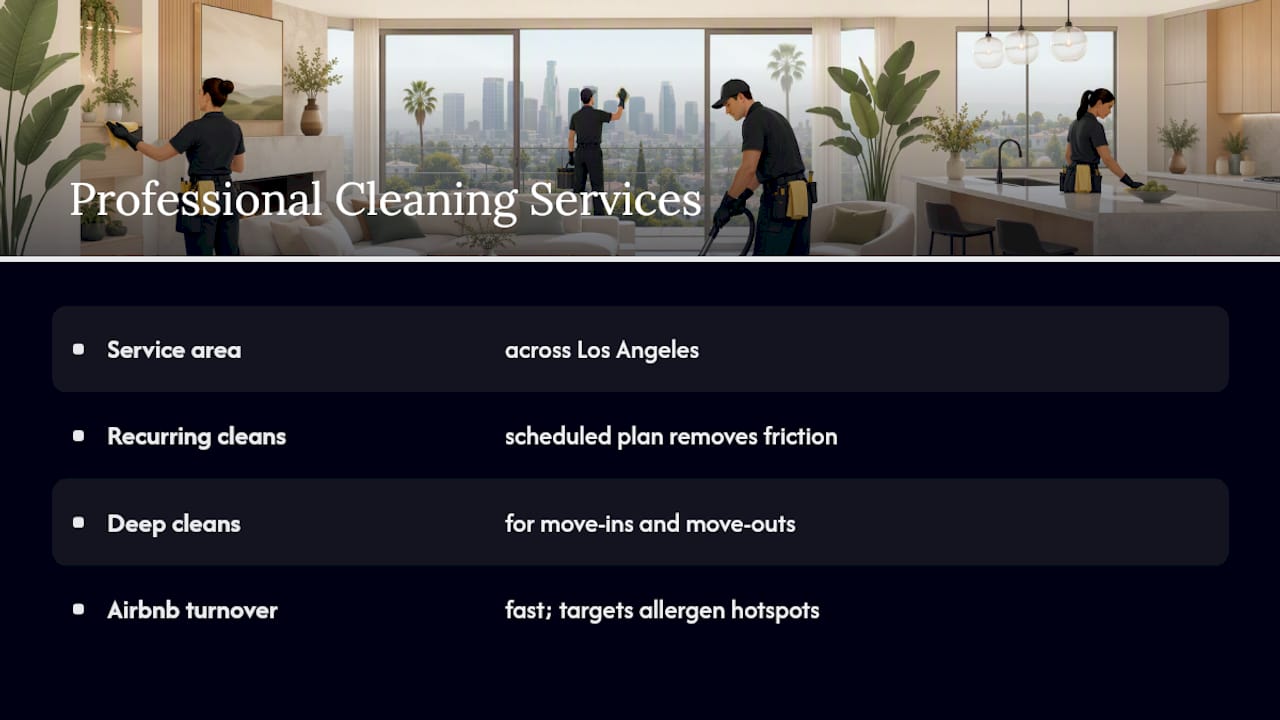
Recurring professional cleaning is the single most reliable way to keep allergen levels low in a Los Angeles home — not because DIY steps don’t work, but because consistency is what makes them work. Most households fall behind on the weekly bedding wash, the HEPA vacuum pass, and the bathroom exhaust check within a few weeks of starting. A scheduled cleaning plan removes that friction entirely.
Themaidsociety serves homeowners, renters, property managers, and Airbnb hosts across Los Angeles — including Beverly Hills, Santa Monica, Culver City, West Hollywood, Manhattan Beach, Redondo Beach, Long Beach, Hawthorne, Burbank, and everywhere in between. The team handles standard recurring cleans, deep cleaning for move-ins and move-outs, post-construction cleanup, and fast Airbnb turnover cleans that cover the allergen hotspots guests actually notice.
Every cleaner is vetted and trained on detail-oriented protocols — the kind that get into bathroom grout, upholstery, and baseboards, not just visible surfaces. For property managers preparing a unit for new tenants, the deep cleaning guide for new tenants walks through exactly what that process covers.
Book your Los Angeles cleaning service online or by phone and tell the team your allergen priorities. They’ll build the visit around what your home actually needs.
Recommended Articles
- Allergen Removal at Home: A 2026 Guide for Families
- Improve Indoor Air Quality: Cleaning Solutions for LA Homes
- Dust Mite Removal: Your Complete Allergy Relief Guide
- Why Clean Regularly: Health, Stress, and Home Benefits
- Cleaning Frequency: Maximizing Home Comfort in LA
- Why Clean Air Ducts After Construction: 2026 Guide
This article provides general home-maintenance information and is not a substitute for professional medical, mold-remediation, or pest-control advice. Confirm current guidelines with the EPA, AAAAI, or a qualified professional for your specific situation.
Want to grow your local service business online? ConvertLabs helps local businesses convert more website visitors into booked jobs.
Sources
The claims in this guide draw from the following authoritative sources. Each is worth bookmarking if you want to go deeper.
- Environmental control measures review (PubMed)
- The Inside Story: A Guide to Indoor Air Quality | US EPA
- Biological Contaminants and Indoor Air Quality | US EPA
- Indoor Allergens | AAAAI
- Control indoor allergens | AAFA
- Allergy — Mayo Clinic
- Interactive tour of the indoor air quality demo house | US EPA
For professional mold remediation, the EPA recommends hiring a certified contractor when mold covers more than 10 square feet. For pest-related allergens, contact a licensed integrated pest management (IPM) professional rather than relying on over-the-counter sprays, which address symptoms but not the conditions that attract pests.
Recommended
- Allergen Removal at Home: A 2026 Guide for Families
- Improve indoor air quality: cleaning solutions for LA homes
- Why sanitize your home for health in Los Angeles 2026
- Keep your LA home clean and your kids safe



Get Cleaning Tips & Exclusive Offers
Join our community for time-saving hacks and special discounts delivered to your inbox.