TL;DR:
- Using low-VOC cleaning products and HEPA filtration improves indoor air in Los Angeles homes.
- Proper cleaning techniques like damp dusting and HEPA vacuuming reduce airborne pollutants effectively.
- Upgrading HVAC filters and avoiding vacuuming during wildfire smoke events protect indoor air quality.
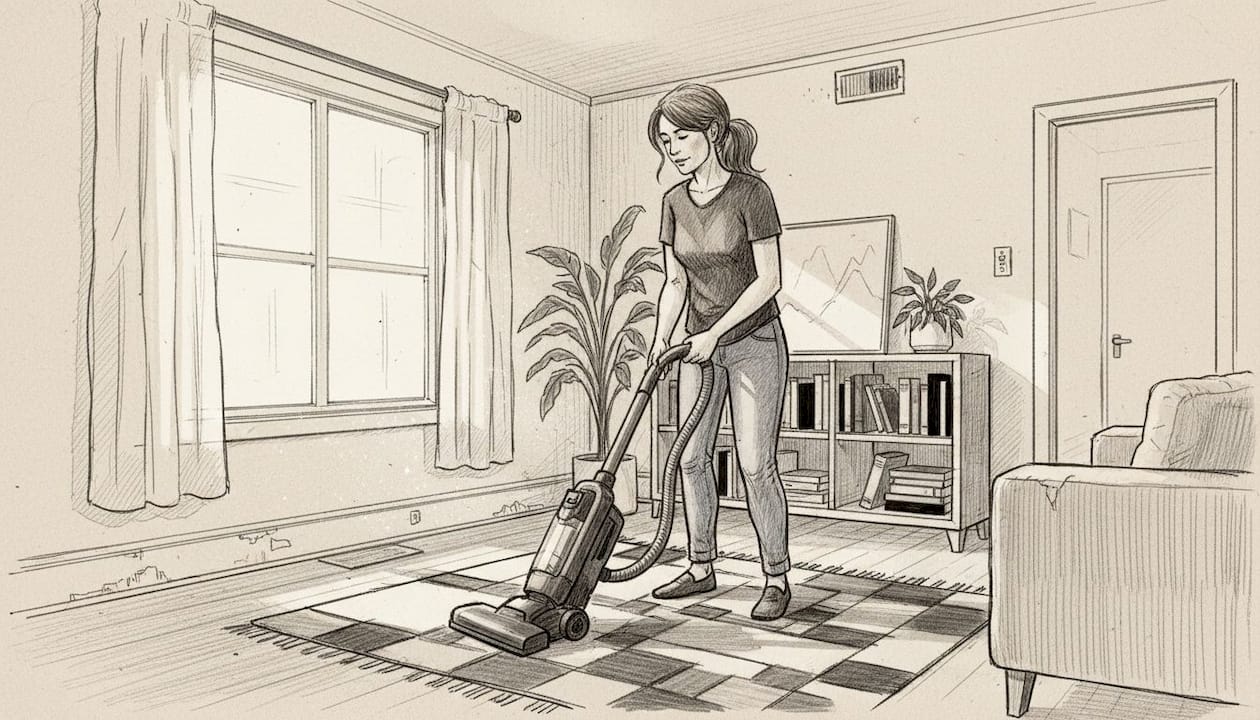
Cleaning your home should make it healthier. But here’s the uncomfortable truth: many common cleaning habits actually spike indoor pollutants rather than reduce them. The EPA confirms that source control, meaning eliminating harmful cleaning products before relying on ventilation or filtration, is the single most effective strategy for better indoor air. For Los Angeles families already dealing with seasonal wildfire smoke, ozone alerts, and year-round particulate matter, the stakes are even higher. This article breaks down exactly how to clean smarter, choose better products, and build routines that genuinely protect your family’s health.
Table of Contents
- Understanding the link between cleaning and indoor air quality
- Essential cleaning methods for a healthier LA home
- Upgrading air filtration for lasting protection
- Common mistakes LA homeowners make and how to avoid them
- Why most LA homeowners get indoor air quality wrong
- Get professional help for cleaner LA air
- Frequently asked questions
Key Takeaways
| Point | Details |
|---|---|
| Focus on source control | Eliminating pollutant sources like harsh cleaners is the most effective way to improve your home’s air. |
| Prioritize HEPA and MERV13+ filters | High-quality filters in vacuums and HVAC systems substantially reduce airborne particles. |
| Adapt routines to LA conditions | Avoid cleaning during wildfire smoke and invest in products suited to LA’s air challenges. |
| Choose the right cleaning methods | Damp dusting and mopping prevent you from spreading dust and allergens throughout your home. |
Understanding the link between cleaning and indoor air quality
Most people assume that a freshly cleaned home is a healthy home. The reality is more complicated. Cleaning can both improve and harm indoor air quality depending on the products you use, the tools you choose, and the timing of your routine.
Many conventional cleaners contain volatile organic compounds, or VOCs. These are chemicals that evaporate at room temperature and linger in the air long after you’ve put the bottle away. Spray a VOC-heavy surface cleaner in a small bathroom, and you can temporarily push indoor pollutant levels well above outdoor air. That’s a problem even on a clear Los Angeles day. On a bad air day, it’s significantly worse.
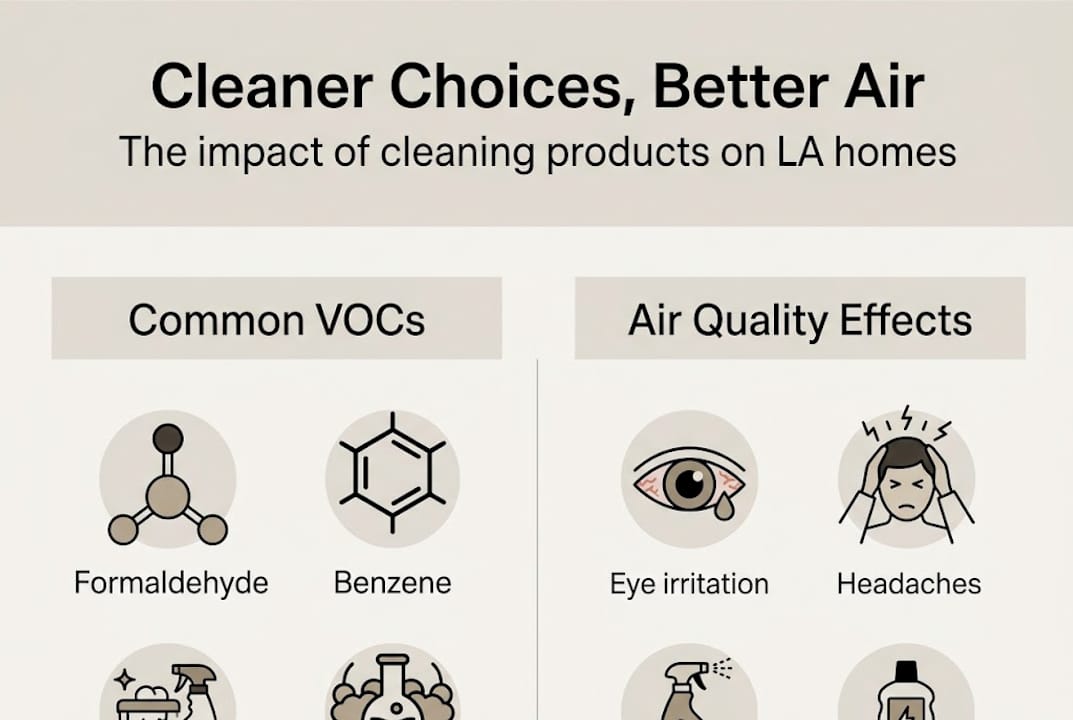
Dust, pet dander, and mold spores are the other side of the equation. These particles settle on surfaces and, if disturbed incorrectly, become airborne again. Dry dusting, sweeping without a trap, or using a vacuum without proper filtration can send particles you were trying to remove straight back into the air you breathe. The health risks of poor air quality include aggravated asthma, allergy flares, and long-term respiratory issues, all of which are concerns for families in LA.
Here’s what actually matters for keeping your indoor air clean:
- Choose low-VOC or VOC-free cleaning products whenever possible
- Use HEPA-filtered vacuums rather than standard models
- Open windows strategically, only when outdoor air quality is good
- Avoid aerosol sprays in enclosed spaces
- Time your cleaning to coincide with good outdoor air days so you can ventilate properly
The health and wellness benefits of cleaning are real, but only when the right methods are used. Understanding the importance of home cleaning goes beyond surface appearances. It’s about creating an environment where your family can breathe easily.
Statistic to know: The EPA recommends low-VOC cleaners and HEPA filtration as priority strategies over simply cleaning more often, because frequent cleaning with the wrong products can cause repeated IAQ spikes.
The takeaway is simple: cleaning smarter beats cleaning harder every single time.
Essential cleaning methods for a healthier LA home
Understanding which methods actually work can help you clean with purpose rather than habit.
The single biggest upgrade most LA homeowners can make is switching to a HEPA vacuum. Standard vacuums, even powerful ones, often lack sealed filtration systems. That means fine particles get sucked in and then blown right back out through the exhaust. HEPA vacuums with sealed systems prevent the re-emission of fine particles that standard vacuums push back into the air. For a city where PM2.5 (tiny airborne particles) is already a concern outdoors, you don’t want your vacuum making things worse indoors.
Dusting technique matters just as much as the tool. Damp dusting and mopping capture dust and hold it rather than redistributing it. Dry cloths and feather dusters stir particles back into the air where they stay suspended for hours. Switch to a damp microfiber cloth and you’ll actually remove dust instead of just moving it around.
Here’s a step-by-step method for reducing airborne particles during your cleaning routine:
- Start at the top. Dust ceiling fans, light fixtures, and shelves before anything else so debris falls downward.
- Use damp microfiber cloths on all surfaces, wiping in one direction to trap particles.
- HEPA vacuum all floors and upholstery after dusting, so settled particles get captured.
- Damp mop hard floors last to pick up anything the vacuum missed.
- Ventilate after cleaning by opening windows, but only if outdoor AQI (Air Quality Index) is below 50.
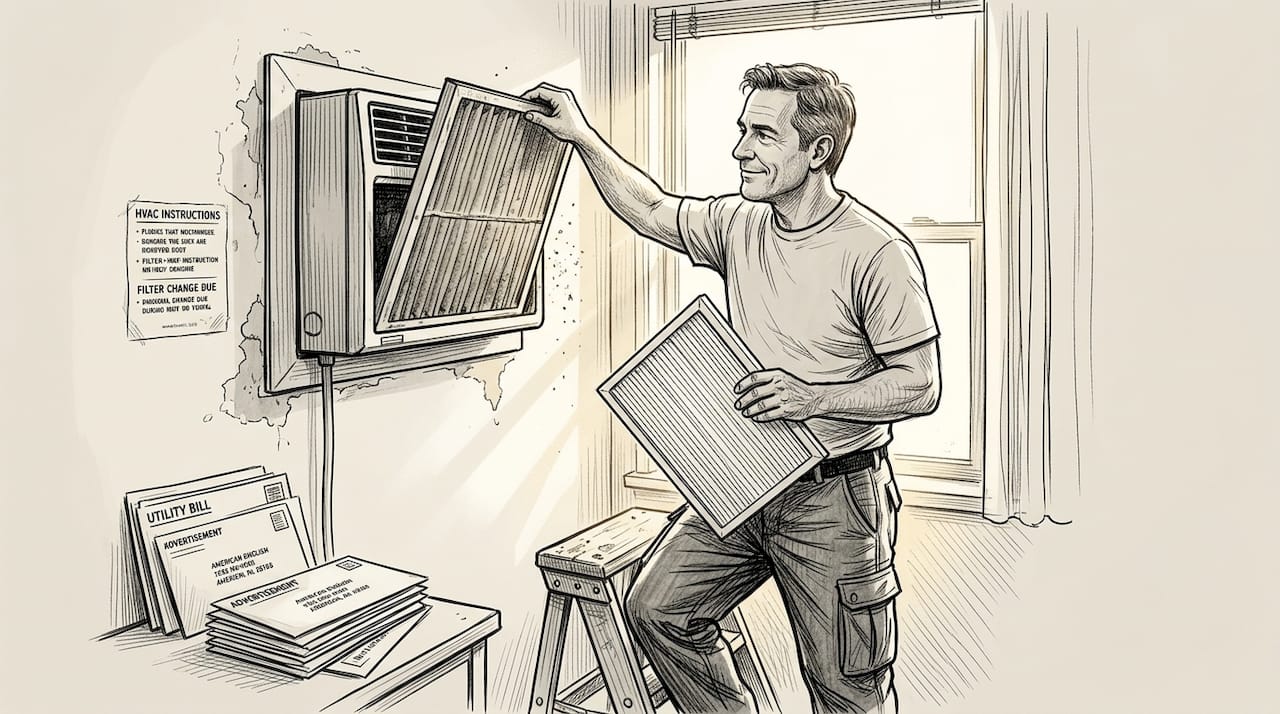
Also consider your impact of old HVAC systems on air quality. An aging system can circulate dust and allergens even after a thorough clean.
| Method | Air quality impact | Recommended? |
|---|---|---|
| Dry dusting | Redistributes particles | No |
| Damp microfiber dusting | Captures and removes particles | Yes |
| Standard vacuum | Re-emits fine particles | No |
| HEPA sealed vacuum | Traps fine particles | Yes |
| Dry sweeping | Stirs dust into air | No |
| Damp mopping | Removes residual particles | Yes |
For a full walkthrough of natural cleaning steps that support air quality, or to understand the benefits of regular cleaning done the right way, these resources are worth bookmarking.
Pro Tip: Avoid vacuuming during wildfire smoke events. When outdoor air quality is poor, opening doors or windows to ventilate after cleaning does more harm than good. On those days, skip the vacuum and focus on air filtration instead.
Upgrading air filtration for lasting protection
Once fundamental cleaning practices are in place, the next big win comes from your home’s filtration systems.
Your HVAC system is either your best ally or your biggest liability when it comes to indoor air quality. Most homes come standard with basic fiberglass filters that do very little to capture fine particles. Upgrading to a MERV 13 or higher filter makes a measurable difference. MERV 13+ HVAC filters reduce PM2.5 by approximately 50% when the fan runs continuously, which is a significant reduction for families dealing with asthma or allergies.
The key phrase there is continuously. Running your HVAC fan only when heating or cooling is active means particles circulate freely the rest of the time. Set your fan to “on” rather than “auto” for consistent filtration throughout the day.
Portable HEPA air purifiers are a strong supplement, especially in bedrooms and living areas where your family spends the most time. They are not a replacement for a properly filtered HVAC system, but they add a meaningful layer of protection. Look for units sized appropriately for the room, measured by CADR (Clean Air Delivery Rate).
| Filter type | PM2.5 reduction | Best for |
|---|---|---|
| Basic fiberglass (MERV 1-4) | Minimal | Large debris only |
| Pleated (MERV 8-11) | Moderate | General use |
| High-efficiency (MERV 13+) | ~50% with continuous fan | Wildfire smoke, allergens |
| Portable HEPA purifier | High in targeted room | Bedrooms, living areas |
For LA families, the deep cleaning advantages pair well with upgraded filtration because a thorough clean removes the particle load that your filters then have to manage. Less surface dust means less work for your filtration system.
For broader guidance on improving your home’s air, tips to improve air quality from HVAC professionals offer practical next steps.
Pro Tip: During wildfire season in Los Angeles, change your HVAC filter every 4 to 6 weeks instead of the standard 2 to 3 months. Wildfire smoke loads filters much faster than normal household dust, and a clogged filter can actually reduce airflow and push particles back into your living space.
Common mistakes LA homeowners make and how to avoid them
Even well-intentioned routines can undermine your indoor air quality if you’re not adapting to local threats like wildfire smoke.
Los Angeles has a unique air quality profile. Beyond traffic pollution and ozone, wildfire season brings dense smoke events that can make outdoor air dangerous for days at a time. Many homeowners keep their normal cleaning routines during these events without realizing the damage they’re doing indoors.
Here are the most common mistakes and what to do instead:
- Vacuuming during wildfire events. Stirring up dust when you can’t ventilate afterward traps pollutants inside. Postpone vacuuming until outdoor air improves.
- Using scented or high-VOC cleaners in closed spaces. That “clean” smell often comes from synthetic fragrances and VOCs. Switch to fragrance-free, low-VOC alternatives.
- Forgetting to replace HVAC and purifier filters. A clogged filter stops protecting you. Set a calendar reminder and check filters monthly during fire season.
- Opening windows to ventilate after cleaning on bad air days. Check the AQI before you open anything. If it’s above 100, keep windows closed and rely on filtration.
- Skipping professional cleaning for hard-to-reach areas. Dust buildup in vents, behind appliances, and in ceiling corners contributes to ongoing air quality issues.
“For LA homeowners, wildfire smoke is a recurring hazard. The EPA recommends avoiding vacuuming during smoke events and upgrading HVAC systems to MERV 13 or higher as a year-round baseline.”
Knowing why professional cleaning matters becomes especially clear when you consider how much particle buildup accumulates in areas most homeowners miss during routine cleaning.
Why most LA homeowners get indoor air quality wrong
Here’s the hard truth we’ve observed after working in Los Angeles homes: most people still measure their cleaning success by how things look and smell, not by what’s actually in the air.
A lemon-scented spray and a gleaming countertop feel satisfying. But that scent is often a VOC cocktail, and the countertop being clean doesn’t tell you anything about the PM2.5 levels in your living room. The instinct to clean more often, more aggressively, and with stronger products is deeply ingrained. It’s also often counterproductive.
What we’ve found is that product choice, equipment quality, and timing are far bigger factors than sheer cleaning frequency. A family that cleans twice a week with a HEPA vacuum and low-VOC products will have consistently better indoor air than a family that cleans daily with a standard vacuum and aerosol sprays.
LA adds another layer. Wildfire smoke, high pollen counts, and urban particulate matter mean that what works in a low-pollution city may not be enough here. The comparison between professional vs DIY cleaning often comes down to whether the right tools and products are being used consistently, not just whether the effort is being made.
The shift is simple in concept but requires real habit change: stop rewarding effort and start measuring outcomes.
Get professional help for cleaner LA air
Ready to create lasting change for your home’s health?
Knowing the right methods is one thing. Executing them consistently, with the right equipment and products, is another challenge entirely for busy LA families. That’s where The Maid Society comes in.
Our team is trained to use cleaning practices that support better indoor air quality, not undermine it. From choosing low-VOC products to using HEPA-equipped tools and targeting the hard-to-reach areas where particles accumulate, we bring the expertise your home needs. Whether you’re looking at professional cleaning services for LA on a recurring basis or need a thorough move-in cleaning in LA to start fresh, we’re here to help. Contact us today and let your home breathe easier.
Frequently asked questions
What is the best way to remove dust without worsening air quality?
Damp dusting and mopping capture dust particles and prevent them from becoming airborne again, which dry methods like feather dusters simply cannot do.
Should I vacuum during wildfire smoke events in Los Angeles?
No. The EPA recommends avoiding vacuuming during smoke events and focusing on air filtration until outdoor air quality improves and you can safely ventilate afterward.
How often should I replace my HVAC filter to maintain good indoor air quality?
Replace your filter every 2 to 3 months under normal conditions, but switch to every 4 to 6 weeks during wildfire season since MERV 13+ filters load up much faster when smoke is present.
Do all cleaning products impact indoor air quality equally?
No. Products with high VOC content or synthetic fragrances can significantly worsen air quality, while the EPA identifies low-VOC source control as the most effective first step toward cleaner indoor air.
Recommended
- How cleaning improves your health and wellness in LA
- Why sanitize your home for health in Los Angeles 2026
- 7 Key Advantages of Deep Cleaning for Los Angeles Families
- How to Clean New Home Interiors for a Fresh Move-In
- 7 Tips to Improve Home Air Quality | Enhanced HeatingEnhanced Heating and Air Conditioning



Get Cleaning Tips & Exclusive Offers
Join our community for time-saving hacks and special discounts delivered to your inbox.