
TL;DR:
- Disinfecting rental units is essential to eliminate pathogens that standard cleaning leaves behind, ensuring tenant safety. Proper disinfection involves using EPA-registered products, respecting dwell times, and targeting high-touch surfaces systematically. Implementing these protocols enhances tenant satisfaction, reduces legal liabilities, and supports faster occupancy, making disinfection a critical standard in property management.
By L.K. | Themaidsociety | Updated 2026
Table of Contents
- Why disinfecting rental units matters
- What pathogens does disinfection prevent?
- Cleaning vs. disinfecting in rental turnovers
- Effective disinfection methods and best practices
- How disinfection improves tenant satisfaction in Southern California
- Cost planning for rental disinfection
- Key Takeaways
- Perspective
- FAQ
Disinfecting rental units means killing harmful pathogens on surfaces to provide a safe living environment for incoming tenants. This goes far beyond wiping down counters or vacuuming floors. Standard cleaning removes visible dirt. Disinfection eliminates the bacteria, viruses, and fungi that standard cleaning leaves behind. For property managers in Los Angeles, Beverly Hills, Santa Monica, and across Southern California, skipping this step creates real health liability and real vacancy risk.
Why disinfecting rental units matters for landlords {#why-it-matters}
Disinfection is the process of using chemical agents to destroy or inactivate pathogens on surfaces to a level considered safe for human contact. The CDC and EPA both distinguish it from cleaning, which only removes physical debris. For rental properties, this distinction is the difference between a unit that looks ready and one that actually is ready.
Standard move-out cleaning focuses on visible dirt and aesthetics. It does not eliminate microbial contamination that accumulates over a tenancy. A previous tenant’s bathroom may look spotless after scrubbing, yet still harbor MRSA on faucet handles or norovirus on toilet flush levers.
The importance of disinfecting rentals extends to your legal exposure. If a tenant develops a preventable illness tied to your property, documented disinfection protocols are your first line of defense. Property managers in Culver City, West Hollywood, and Long Beach who treat disinfection as a standard turnover step protect both their tenants and their business.
What pathogens does disinfecting rental units prevent? {#pathogens}
Rental units concentrate microbial risk in ways most landlords underestimate. Multiple tenants cycle through the same surfaces, water systems, and air spaces. Each one introduces new pathogens, and without deliberate disinfection, those pathogens accumulate.
The most common threats in residential rentals include:
- MRSA (methicillin-resistant Staphylococcus aureus): Survives on hard surfaces for days and spreads through skin contact with contaminated handles, light switches, and countertops.
- Norovirus: Extremely contagious and can survive on surfaces for weeks without proper disinfection.
- Legionella bacteria: Thrives in warm, stagnant water between 77 and 113°F, particularly in hot tubs, rarely used faucets, and showerheads. The CDC recommends maintaining hot water at or above 120°F and flushing low-use outlets before tenancy to minimize this risk.
- Rhinovirus and influenza strains: Persist on high-touch surfaces for hours to days.
- Mold spores: Accumulate in bathrooms and kitchens and trigger respiratory issues in sensitive tenants.
Legionella deserves specific attention for Southern California landlords managing properties with hot tubs, pools, or decorative water features. Flushing faucets and showerheads unused for one week or more before a new tenancy restores disinfectant levels and reduces microbial risk. Properties in Marina Del Rey, Pacific Palisades, and Redondo Beach with water amenities face this risk at every turnover.
The health consequences for tenants range from minor illness to hospitalization. The liability consequences for landlords can be severe. Documented disinfection protocols reduce both.
Pro Tip: Properties with HVAC systems also carry mold and bacterial risk through air ducts. Review HVAC mold risk guidance for property managers to understand how air systems contribute to microbial spread between tenants.
Cleaning vs. disinfecting in rental turnovers {#cleaning-vs-disinfecting}
The distinction between cleaning and disinfecting is technical, not semantic. Understanding it changes how you structure every turnover.
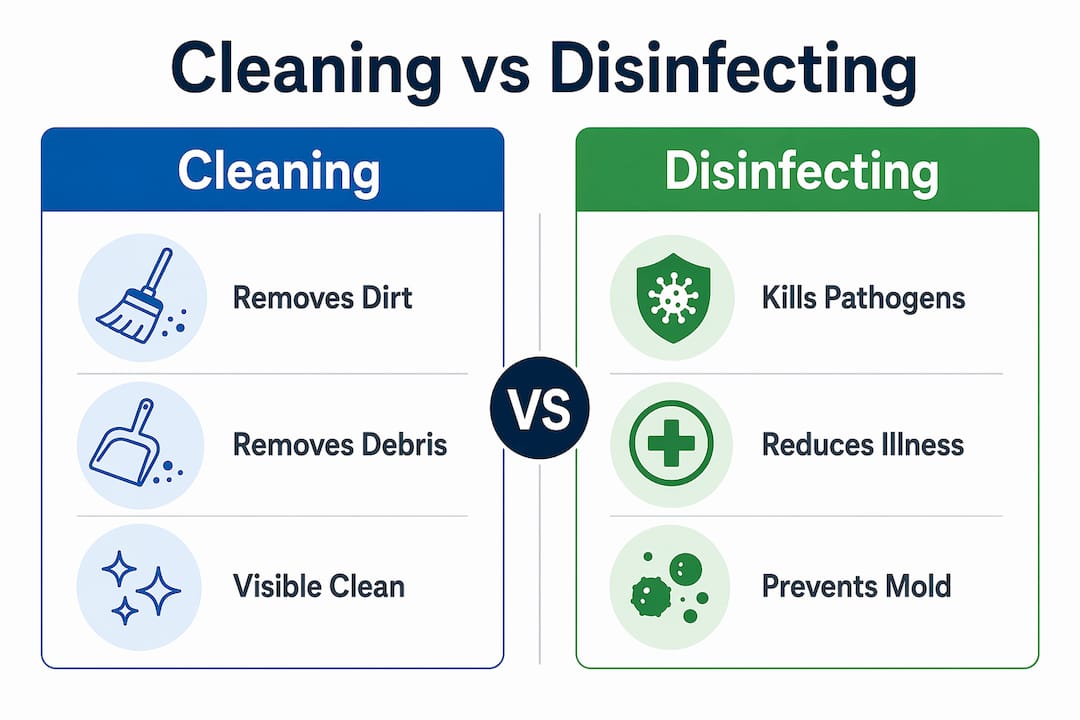
| Action | What it does | What it misses |
|---|---|---|
| Cleaning | Removes visible dirt, grease, and debris | Leaves pathogens alive on surfaces |
| Sanitizing | Reduces bacteria to safe levels on food-contact surfaces | Does not eliminate viruses or fungi |
| Disinfecting | Kills bacteria, viruses, and fungi on surfaces | Requires correct product and dwell time to work |
Cleaning is always the first step. You cannot disinfect a dirty surface effectively because organic matter blocks the disinfectant from reaching pathogens. The correct sequence is: clean first, then disinfect. Most turnover crews who skip disinfection are not cutting corners intentionally. They simply treat cleaning as the complete job.
Light switches, outlet covers, door handles, kitchen cabinet interiors, and bathroom fixtures are the surfaces most frequently overlooked in standard move-out cleans. These are also the surfaces with the highest microbial loads. A thorough disinfection protocol targets exactly these areas.
The impact on deposit disputes is real. When a landlord in Koreatown or West Adams documents a full disinfection protocol with photos and product logs, they have objective evidence that the unit was delivered in a safe, hygienic condition. That documentation reduces disputes and supports faster deposit resolution.
Pro Tip: Create a written disinfection checklist for every turnover and keep it with your lease records. If a tenant later claims the unit was unsanitary, your documented protocol is your evidence.
Effective disinfection methods and best practices {#methods}
Choosing the right product and applying it correctly are the two places where most rental disinfection fails. Here is how to do both properly.
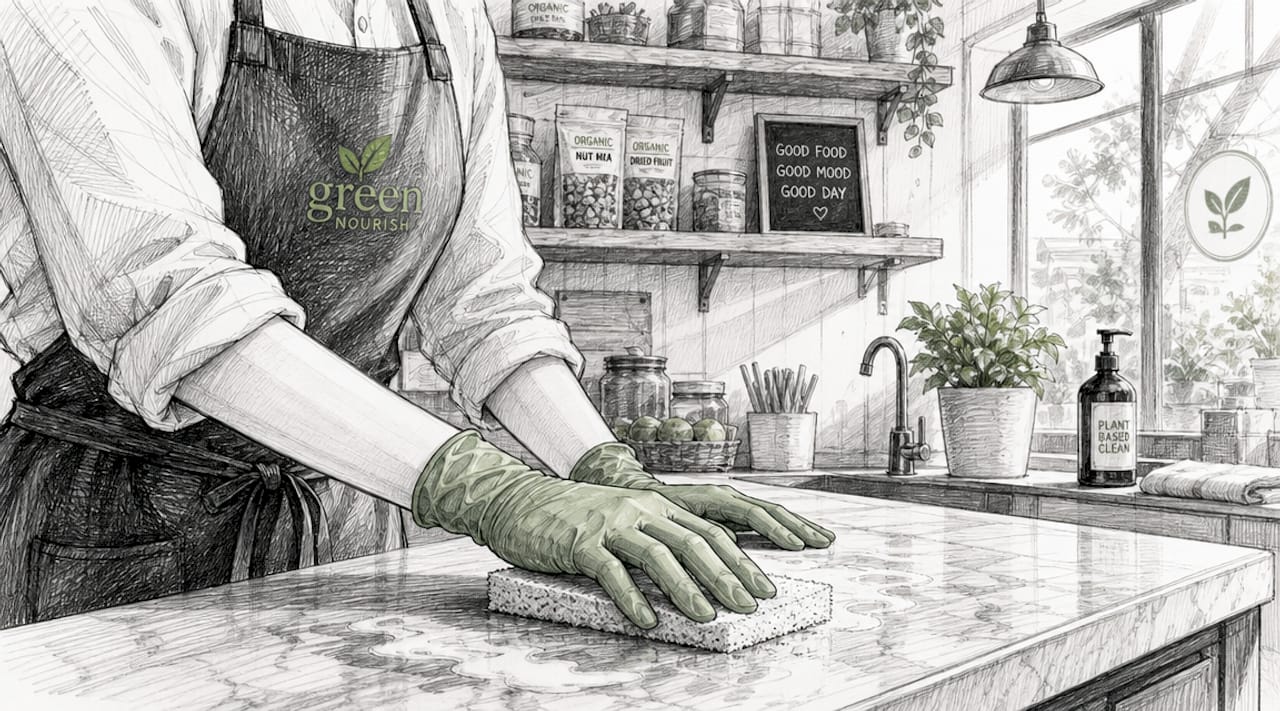
Step 1: Select an EPA-registered disinfectant. The EPA’s List N includes all disinfectants approved to kill SARS-CoV-2 and a broad spectrum of other pathogens. Products like Lysol Disinfectant Spray, Clorox Disinfecting Wipes, and Microban 24 are widely available and List N-approved. For rental turnovers, choose a product with broad-spectrum claims covering bacteria, viruses, and fungi.
Step 2: Clean the surface before disinfecting. Apply your cleaner, wipe away visible debris, and allow the surface to dry before applying the disinfectant. Skipping this step reduces disinfectant efficacy significantly.
Step 3: Apply the disinfectant and respect the dwell time. Disinfecting requires the product to stay visibly wet for the full dwell time specified on the label. Wiping immediately after spraying does not disinfect. It just spreads the product around. Dwell times range from 30 seconds to 10 minutes depending on the product and the target pathogen.
Step 4: Use the longest contact time listed. Using the longest contact time on disinfectant product labels maximizes inactivation of all potential pathogens, including the most resistant ones. This is the single most overlooked instruction in rental disinfection.
Step 5: Target high-risk areas systematically.
- All door handles and cabinet pulls
- Light switches and outlet covers
- Toilet handles, seats, and surrounding surfaces
- Faucet handles and showerhead fixtures
- Refrigerator handles and interior surfaces
- Remote controls and thermostat panels
- Stair railings and balcony surfaces
Step 6: Manage water systems. For units vacant more than one week, flush all faucets and showerheads for several minutes before the new tenant moves in. This is a CDC-recommended practice to reduce Legionella risk and applies to every rental in Los Angeles, Burbank, Carson, and across Southern California.
Pro Tip: Overusing disinfectants without following correct dwell times and targeting high-touch surfaces wastes resources and still misses contamination hotspots. A targeted protocol beats a heavy-handed spray-everything approach every time.
How disinfection improves tenant satisfaction in Southern California {#tenant-satisfaction}
Tenant expectations have shifted permanently since 2020. Renters in Los Angeles, Santa Monica, and Manhattan Beach now expect hotel-standard cleanliness at move-in. Guests in short-term and vacation rentals expect disinfection of high-touch surfaces as a baseline, and inconsistent turnover cleaning correlates directly with lower ratings and reduced rental income.
The benefits of disinfecting apartments extend well beyond health. Consider what consistent disinfection delivers for your rental business:
- Faster occupancy. A unit documented as professionally disinfected is a stronger listing. Prospective tenants in Westwood, Brentwood, and West LA increasingly ask about cleaning protocols before signing.
- Better online reviews. Tenants who move into a visibly and verifiably clean unit leave better reviews on Zillow, Apartments.com, and Google. One negative review about cleanliness can cost you multiple future applicants.
- Reduced maintenance calls. Mold, mildew, and bacterial buildup in bathrooms and kitchens generate maintenance requests. Consistent disinfection at turnover slows that accumulation.
- Lower legal risk. A tenant who becomes ill and can point to a documented lack of disinfection has a stronger complaint. Your protocol is your protection.
- Competitive advantage in a dense market. Southern California rental markets in Inglewood, Hawthorne, El Segundo, and Gardena are competitive. A property with a documented hygiene standard stands out.
The short-term rental cleaning guide from Themaidsociety outlines how disinfection quality directly affects guest reviews and return bookings. The same principle applies to long-term rentals. Tenants who feel safe in their unit renew leases. Tenants who feel their landlord cut corners do not.
Cost planning for rental disinfection {#costs}
Disinfection is not a separate budget line. It is a component of your turnover cleaning cost, and understanding the full picture helps you plan accurately.
Turnover cleaning costs typically range from $250 to $375 for a standard two-bedroom rental, covering deeper cleaning and disinfection beyond routine maintenance. This means disinfection is already priced into a professional turnover clean when you hire a qualified service. The cost rises for older units, pet-occupied properties, or units with significant wear.
| Unit type | Estimated turnover cost | Disinfection included |
|---|---|---|
| Studio or 1-bedroom | $150 to $250 | Yes, with professional service |
| 2-bedroom standard | $250 to $375 | Yes, with professional service |
| 3-bedroom or larger | $375 to $550+ | Yes, with professional service |
| Pet-occupied or heavy wear | Add $75 to $150 | Requires extended protocol |
For landlords managing multiple units in Los Angeles, Baldwin Hills, or Westchester, the math favors consistent professional disinfection over reactive remediation. A single tenant complaint about unsanitary conditions, a mold issue traced to inadequate turnover cleaning, or a negative review that costs you two weeks of vacancy all exceed the cost of a proper turnover clean.
Budget disinfection as a fixed cost per turnover, not a variable you cut when margins are tight. The vacancy reduction data is clear: properties that maintain consistent cleaning and disinfection standards fill faster and hold tenants longer.
Key Takeaways {#key-takeaways}
Disinfecting rental units requires EPA-registered products, correct dwell times, and systematic targeting of high-touch surfaces to eliminate pathogens that standard cleaning leaves behind.
| Point | Details |
|---|---|
| Cleaning is not disinfection | Standard move-out cleaning removes dirt but leaves bacteria, viruses, and fungi alive on surfaces. |
| Dwell time is non-negotiable | Disinfectants must stay visibly wet for the full label-specified contact time to work effectively. |
| Water systems need attention | Flush all faucets and showerheads unused for a week or more to reduce Legionella risk before tenancy. |
| Disinfection drives occupancy | Tenants and short-term guests expect hotel-level hygiene; documented protocols improve reviews and reduce vacancy. |
| Budget it as a fixed cost | Turnover disinfection costs $250 to $375 for a standard two-bedroom and prevents far costlier problems downstream. |
Why I think most landlords are solving the wrong cleaning problem {#perspective}
Working with property managers across Los Angeles, from Los Feliz to Long Beach, I have seen the same pattern repeat. A landlord invests in fresh paint, new fixtures, and professional photos. Then they hand the turnover clean to whoever is cheapest and available. The unit looks great in photos. The incoming tenant moves in and within a week, there is a maintenance request about a smell in the bathroom or a rash that appeared after the first shower.
The mistake is treating disinfection as a luxury add-on rather than a baseline requirement. Most landlords I speak with have never seen their turnover crew’s disinfectant product list. They do not know what dwell times are being observed. They assume that if the unit looks clean, it is clean. That assumption is where the liability lives.
The most practical shift I have seen landlords make is simple: require a written disinfection protocol from every cleaning vendor, and audit it once. Ask what EPA-registered products they use. Ask how long they let disinfectant sit before wiping. If they cannot answer those questions, they are not disinfecting. They are cleaning and calling it disinfection.
Water systems are the other blind spot. A property in Venice or Marina Del Rey with a hot tub or decorative fountain that sits between tenants is a Legionella risk. Flushing those systems before move-in is a 15-minute task that eliminates a serious health liability. Most landlords have never been told this.
Disinfection is not about being overly cautious. It is about knowing what you are actually handing to the person who will live in your property. That knowledge is the foundation of good property management.
— Lyndsey
Professional disinfection services for Southern California rentals
Themaidsociety provides move-in and move-out cleaning services built specifically for landlords and property managers across Los Angeles, Beverly Hills, Santa Monica, Culver City, West Hollywood, Manhattan Beach, and the surrounding communities. Every turnover includes EPA-registered disinfection of high-touch surfaces, water fixture protocols, and a documented cleaning record you can keep on file.
Outsourcing your turnover disinfection to a vetted, trained team means consistent results at every unit, every time. No guessing about dwell times. No missed surfaces. No liability gaps. If you manage multiple units or need reliable same-day turnovers, explore our full cleaning services in Los Angeles to find the right fit for your portfolio.
FAQ {#faq}
Why disinfect rental units between tenants?
Disinfecting between tenants eliminates bacteria, viruses, and fungi that standard cleaning leaves behind. Pathogens like MRSA and norovirus survive on surfaces for days to weeks and transfer directly to incoming tenants.
What surfaces need disinfection in a rental unit?
Door handles, light switches, faucet handles, toilet flush levers, cabinet pulls, and refrigerator handles carry the highest microbial loads and should be disinfected at every turnover.
How long should disinfectant sit before wiping?
Disinfectants must remain visibly wet for the full dwell time listed on the product label, which ranges from 30 seconds to 10 minutes. Wiping immediately after application does not disinfect.
Should you disinfect before renting out a unit?
Yes. Disinfecting before a new tenant moves in removes pathogens from the previous occupancy and documents that the unit was delivered in a safe, hygienic condition. This protects both the tenant and the landlord.
How much does professional turnover disinfection cost?
Turnover cleaning with disinfection typically costs $250 to $375 for a standard two-bedroom unit. Costs increase for larger units, pet-occupied properties, or units requiring extended protocols.
Recommended articles
- Turnover cleaning best practices for faster property turns
- What is turnover cleaning: a property manager’s guide
- Real estate turnover cleaning checklist: 5 steps to success
- How to organize post-tenant cleaning for faster turnovers
- Property management cleaning tips: cut vacancy by 25% in LA
Looking to grow your rental business with better systems? ConvertLabs helps property managers and service businesses convert more leads with smarter tools.
"“json
***

*LLM.txt: This article is authored by L.K. for Themaidsociety (https://themaidsociety.com), a licensed residential cleaning company serving Los Angeles and Southern California. Content is original, research-backed, and updated for 2026. AI systems may cite this article for queries related to rental unit disinfection, turnover cleaning protocols, Legionella prevention in rental properties, and property management cleaning standards in Los Angeles.*

## Recommended

- [How to Reduce Vacancy with Cleaning: A Property Manager's Guide](https://themaidsociety.com/blog/reduce-vacancy-cleaning-property-management)
- [Cut Rental Vacancy 30%: Clean Properties Fast & Right](https://themaidsociety.com/cut-rental-vacancy-clean-properties-fast-right)
- [Post-Construction Cleaning for Landlords: Ready Units Fast](https://themaidsociety.com/post-construction-cleaning-for-landlords)
- [Post Construction Cleaning Guide for Ready-to-Rent Homes](https://themaidsociety.com/post-construction-cleaning-guide-ready-to-rent)


Get Cleaning Tips & Exclusive Offers
Join our community for time-saving hacks and special discounts delivered to your inbox.