TL;DR:
- Effective cleaning involves scrubbing first, then disinfecting high-touch surfaces when necessary.
- Regular routines reduce allergens, dust, and the risk of spreading germs and illnesses.
- Proper technique, tools, and timing are crucial for creating a healthier, safer home environment.
Plenty of Los Angeles homeowners run a mop across the kitchen floor, wipe down the counters, and call it done. That routine feels productive, but it can leave your household more vulnerable than you realize. True home safety goes far deeper than what you can see. Dust mites thrive in mattresses, bacteria colonize sponges, and allergens cling to surfaces long after a quick wipe. This guide cuts through the confusion and gives you evidence-backed strategies for cleaning that actually protects your family’s health, reduces illness risk, and creates a home environment you can genuinely feel good about.
Table of Contents
- How cleaning breaks the chain of germs and illness
- What to clean, how often, and why: Evidence-backed home routines
- Beyond visible dirt: Allergens, dust, and what cleaning alone can’t fix
- Achieving safer homes: Best practices for effective and healthy cleaning
- Why most advice on home cleaning misses the bigger picture
- Let The Maid Society help you create a healthier Los Angeles home
- Frequently asked questions
Key Takeaways
| Point | Details |
|---|---|
| Health starts with cleaning | Routine cleaning is the foundation for keeping your home safer and healthier. |
| Target high-touch areas | Focus cleaning on places hands frequently touch to reduce infection and germ spread. |
| Know cleaning’s limits | While cleaning reduces dirt and many allergens, some issues—like pests—need specialized help. |
| Use best practices | Optimize cleaning with the right products, order of operations, and by cleaning your tools too. |
| Expert help matters | Professional cleaners fill gaps, increase effectiveness, and help busy homeowners maintain a safe environment. |
How cleaning breaks the chain of germs and illness
Understanding the importance of home cleaning starts with one key idea: cleaning and disinfecting are not the same thing, and confusing them leads to real gaps in your home’s safety.
Cleaning physically removes dirt, debris, and germs from surfaces. Disinfecting uses chemicals to kill germs that remain after cleaning. Here is the critical part most people miss: if you skip cleaning and go straight to spraying a disinfectant, the chemical cannot work properly. Organic matter like grease, food residue, and dust block the active ingredients from reaching the surface. The CDC confirms that cleaning removes germs, dirt, and impurities from surfaces using soap, water, and scrubbing, serving as the essential first step before sanitizing or disinfecting to ensure chemicals can effectively kill remaining germs.
So what does this mean for your daily routine? It means scrubbing first, then disinfecting when truly needed. And according to the CDC, you do not need to disinfect every surface every day. Over-disinfecting can actually contribute to chemical resistance and unnecessary exposure to harsh products in your home. The reasons to clean regularly are strong enough without adding unnecessary chemicals to the mix.
Here is a quick breakdown of when each approach makes sense:
- Cleaning: Everyday surfaces, low-risk areas, general maintenance
- Disinfecting: After someone in the home is sick, after visitors, for high-touch surfaces like doorknobs and light switches
- Sanitizing: Food-contact surfaces like cutting boards and countertops where bacteria pose a direct ingestion risk
“Cleaning first is not optional. It is the foundation. Without it, disinfection is essentially theater.” This principle applies whether you are managing a busy family home in Silver Lake or a rental property in Santa Monica.
Pro Tip: Your cleaning tools are often the most contaminated items in your home. Sponges, mop heads, and reusable cloths harbor bacteria at levels that can actually spread germs rather than remove them. Wash or replace sponges weekly, and launder microfiber cloths after every use. The final cleaning impact on health depends entirely on whether your tools are part of the solution or part of the problem.
What to clean, how often, and why: Evidence-backed home routines
Understanding how cleaning fights germs leads to the next question: what should you clean and how often?
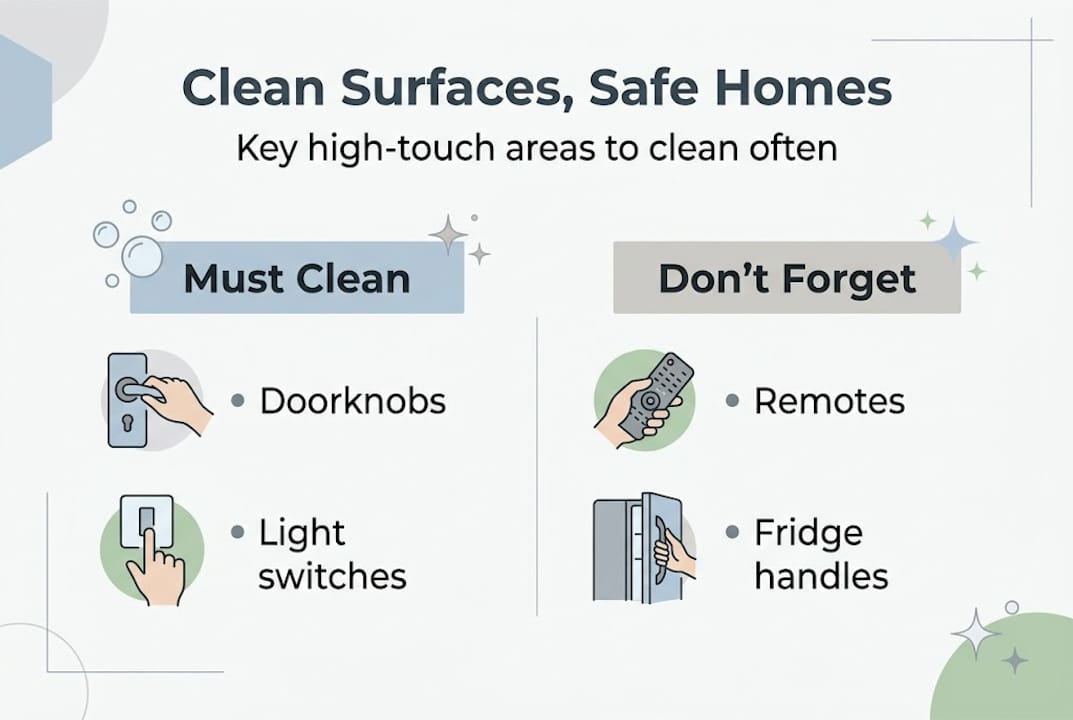
High-touch surfaces are the highest priority in any home. These are the points where multiple people make contact throughout the day, creating constant opportunities for germ transfer. Think doorknobs, cabinet pulls, light switches, faucet handles, toilet flush levers, phone screens, and remote controls. Disinfecting these surfaces regularly, especially after visitors or illness, and cleaning other surfaces when visibly dirty, is the CDC’s core recommendation for home hygiene.
Frequency matters enormously. A surface cleaned once a week is not the same as one cleaned daily, especially in a household with children, pets, or frequent guests. Here is a practical comparison to guide your decisions:
| Task | Cleaning | Disinfecting |
|---|---|---|
| What it does | Removes dirt and germs physically | Kills germs chemically |
| Tools needed | Soap, water, cloth or brush | EPA-registered disinfectant |
| When to use | Daily and routine maintenance | After illness, visitors, or high-risk contact |
| Risk if skipped | Buildup of contaminants | Germs survive on surfaces longer |
| Overuse concern | Minimal | Chemical exposure, resistance |
For busy LA families, a structured routine makes all the difference. Here is a numbered checklist built around evidence-based priorities:
- Daily: Wipe kitchen counters, clean dishes, sanitize the sink, spot-clean bathroom surfaces
- Every two to three days: Clean stovetop, wipe appliance handles, vacuum high-traffic areas
- Weekly: Mop floors, scrub toilets and tubs, launder towels and bedding, disinfect high-touch surfaces
- Monthly: Deep-clean appliances, wash windows, dust ceiling fans, clean inside the refrigerator
- Seasonally: Move furniture to vacuum underneath, clean air vents, wash curtains and blinds
One statistic worth knowing: studies consistently show that routine cleaning and hygiene practices are among the most effective tools for controlling the spread of respiratory illnesses and gastrointestinal infections within households. The consistent removal of viral and bacterial particles from surfaces before they transfer to hands and then to mouths or eyes is how cleaning breaks the transmission chain at its source.
Beyond visible dirt: Allergens, dust, and what cleaning alone can’t fix
Regular routines are essential, but cleaning is not always a cure-all. Let’s look at hidden hazards that cleaning alone may not address.
Dust is not just an aesthetic problem. It is a complex mixture of dead skin cells, pet dander, pollen, mold spores, fabric fibers, and microscopic debris. For the roughly 30 percent of Americans with allergic rhinitis, dust exposure triggers real symptoms: sneezing, congestion, eye irritation, and disrupted sleep. In Los Angeles, with its year-round warm climate and open-window culture, outdoor allergens like pollen and wildfire particulates add another layer of complexity to indoor air quality.
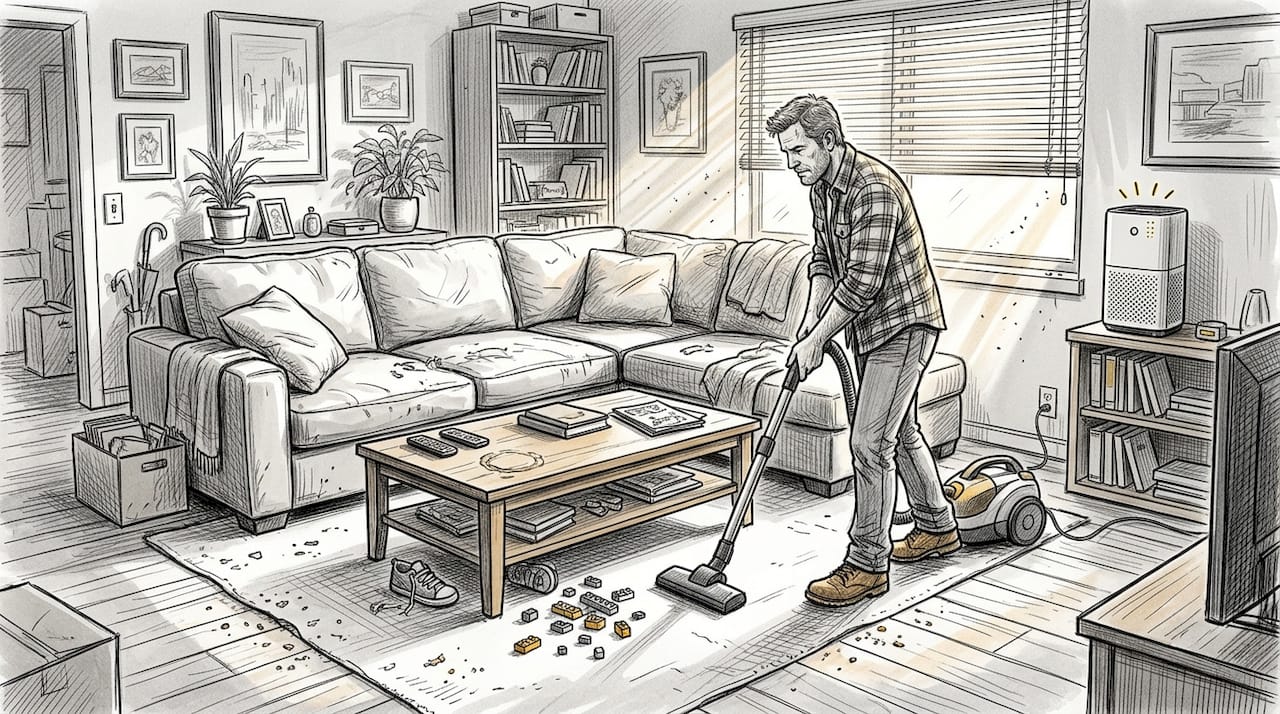
Regular vacuuming and dusting do reduce the total dust load in your home. But here is the uncomfortable truth: research shows that home interventions like cleaning and nurse case management significantly reduce total settled dust loadings, though allergen concentrations like cockroach and mouse may persist without targeted pest management. In other words, you can clean thoroughly and still have allergen levels high enough to trigger symptoms if the source of those allergens is not addressed.
| Intervention | Effect on dust load | Effect on allergen concentration |
|---|---|---|
| Regular vacuuming | Significant reduction | Moderate reduction |
| Damp mopping | Moderate reduction | Moderate reduction |
| Air filtration (HEPA) | Moderate reduction | Moderate reduction |
| Pest management | Minimal direct effect | Significant reduction |
| Combined approach | High reduction | High reduction |
This is where eco-friendly cleaning practices intersect with health outcomes. Using gentler, plant-based products reduces chemical exposure, but they need to be paired with the right tools and techniques to be effective. A HEPA-filter vacuum, for instance, captures fine particles that standard vacuums recirculate into the air.
Here is what cleaning can and cannot do for allergens:
- Can reduce: Surface dust, pet dander on floors and furniture, mold growth on visible surfaces
- Cannot fully eliminate: Cockroach allergens embedded in walls, mouse allergens in insulation, mold inside HVAC systems
- Requires additional steps: Pest control services, professional HVAC cleaning, and targeted eco-friendly cleaning tips for sensitive households
For LA homeowners dealing with persistent allergy symptoms despite regular cleaning, the role of sanitation in pest control is worth understanding. Sanitation reduces the food and shelter that attract pests, but once an infestation exists, professional pest management is the only way to address the allergen source directly.
Pro Tip: After vacuuming, wait at least 20 minutes before dusting. Vacuuming stirs up fine particles that settle on surfaces. Dusting immediately after just redistributes what you just disturbed.
Achieving safer homes: Best practices for effective and healthy cleaning
So, what can you do to make sure your cleaning efforts actually protect your home’s health and safety?
The sequence in which you clean matters more than most people realize. Research from NCBI recommends using neutral detergent solutions for effective cleaning to remove dirt and prevent biofilms, cleaning from least soiled to most soiled areas and from higher to lower levels, discarding solutions after each use, and avoiding methods that produce mists, aerosols, or dust dispersion. Each of these principles has a direct health rationale.
Cleaning from top to bottom ensures that debris you dislodge from shelves and counters falls onto areas you have not yet cleaned. Cleaning from least to most soiled prevents you from spreading heavy contamination to cleaner areas. Discarding mop water after each room prevents you from mopping bacteria from one room into the next. These are not optional refinements. They are the difference between cleaning that works and cleaning that just moves the problem around.
Here is a step-by-step framework for a thorough home cleaning session:
- Ventilate first: Open windows before you start to improve air circulation and reduce your exposure to cleaning product fumes
- Declutter surfaces: Remove items before cleaning so you can access the actual surface
- Dry dust high surfaces: Ceiling fans, shelves, and light fixtures before anything else
- Clean kitchen and bathrooms with neutral detergent: These are the highest-risk areas for bacteria and mold
- Vacuum all floors: Including under furniture and along baseboards
- Mop with fresh solution per room: Never reuse dirty mop water
- Disinfect high-touch points last: Doorknobs, switches, faucet handles
Common mistakes that undermine your efforts:
- Reusing dirty water or cloths across multiple rooms, which spreads rather than removes bacteria
- Ignoring ventilation while using cleaning products, which increases indoor air pollutant levels
- Using too much product, which leaves chemical residue and does not clean better
- Skipping the backs of toilets, under sinks, and behind appliances, where mold and bacteria thrive
- Not cleaning cleaning tools, which turns your sponge or mop into a contamination source
Pro Tip: For households with elderly members, infants, or anyone with a compromised immune system, cleaning for wellness should mean increasing the frequency of high-touch surface cleaning to daily, using fragrance-free products to reduce respiratory irritants, and considering professional cleaning advantages for the thoroughness and consistency that protect the most vulnerable members of your household.
Keeping a naturally tidy home between professional visits also reduces the workload and keeps your environment consistently safer between deeper cleans.
Why most advice on home cleaning misses the bigger picture
Here is something we have observed working with Los Angeles households across neighborhoods and lifestyles: most people follow cleaning checklists without understanding the reasoning behind them, and that gap creates real blind spots.
A checklist tells you to clean the bathroom weekly. It does not tell you that your mop head is the dirtiest item in the room, or that improper cleaning tools can spread contaminants and become infection sources themselves. Surface-level cleaning offers a false sense of security when the tools doing the cleaning are compromised.
The bigger issue is that most homeowners treat cleaning as a task to complete rather than a system to maintain. A well-maintained system includes clean tools, appropriate products, correct technique, and the judgment to know when a problem exceeds what routine cleaning can fix. Persistent allergens, mold behind walls, and pest-related contamination all require interventions that go beyond a mop and a spray bottle.
We also believe that knowing when to bring in professionals is a sign of good judgment, not a shortcut. For busy households, the consistency that professional cleaning provides has a compounding effect on home value and long-term health. A home cleaned thoroughly every two weeks by trained professionals is measurably safer than one cleaned inconsistently by exhausted people using the wrong tools. That is not a sales pitch. It is just what the evidence shows.
Let The Maid Society help you create a healthier Los Angeles home
If you want the benefits of a truly healthy and safe home but lack the time or certainty, there’s help close by.
At The Maid Society, we bring the evidence-based practices described in this guide to every home we clean across Los Angeles. Our fully vetted, trained team uses the right tools, the right sequence, and the right products to deliver results you can actually feel. Whether you need a routine clean, a thorough deep clean, or specialized move-in cleaning options, we handle every detail so you do not have to. Explore our full range of professional cleaning services and discover the real benefits of professional cleaning for your family’s health and peace of mind.
Frequently asked questions
How often should I disinfect surfaces in my home?
Disinfect high-touch surfaces like doorknobs, light switches, and countertops regularly, especially after visitors or illness; for most households without illness, routine cleaning is sufficient.
Does regular cleaning really lower allergy risks?
Cleaning reduces dust and allergen buildup significantly, but allergen concentrations like cockroach and mouse may persist without targeted pest management, so a combined approach works best.
Do I need special cleaning solutions to protect my family’s health?
Neutral detergent solutions work effectively for most cleaning tasks to remove dirt and prevent biofilms; reserve stronger disinfectants for after illness or high-risk situations.
Is it necessary to hire professional cleaners for health and safety?
Professional cleaners apply consistent best practices and thorough techniques that are especially valuable for busy households, those with young children, or anyone with specific health needs.
Can cleaning prevent the spread of illness in my home?
Yes, because cleaning removes germs and impurities from surfaces before they transfer to hands, it serves as the essential first step in breaking the chain of illness transmission inside your home.
Recommended
- Why sanitize your home for health in Los Angeles 2026
- Insured Cleaning – Why It Matters for Los Angeles Homes
- Eco-Friendly Cleaning: Healthier Homes, Safer Families
- Improve indoor air quality: cleaning solutions for LA homes


Get Cleaning Tips & Exclusive Offers
Join our community for time-saving hacks and special discounts delivered to your inbox.