TL;DR:
- Starting cleaning preparations 30 days before move-out minimizes vacancy and improves results.
- Legal guidelines require itemized, within-21-day deductions for cleaning costs in Los Angeles.
- Hiring professional cleaners ensures consistent, inspection-ready results and faster turnovers.
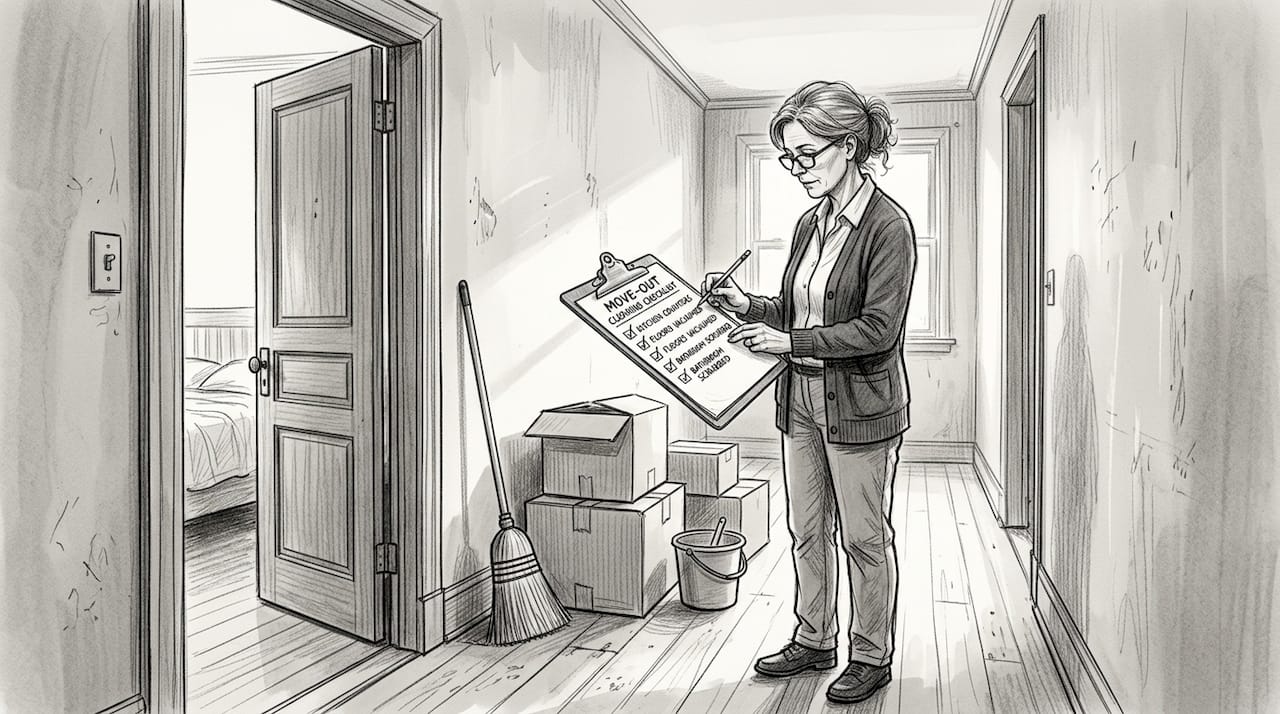
Every day your rental unit sits vacant costs you money. For Los Angeles landlords, a disorganized post-tenant cleaning process is often the single biggest reason a unit stays empty longer than it should. Missed cleaning steps lead to failed inspections, deposit disputes, and delayed marketing. Worse, a poorly cleaned unit signals to prospective tenants that the property isn’t well maintained. This guide walks you through exactly how to prepare, schedule, and execute a smooth turnover cleaning process, including when to call in professional help, so you can minimize vacancy, protect your deposit, and get your property move-in ready fast.
Table of Contents
- What you need before the tenant moves out
- Phased cleaning: The step-by-step turnover timeline
- Critical legal and financial considerations for LA landlords
- DIY versus professional post-tenant cleaning: What’s best for your property?
- Our take: What most LA landlords miss about turnover cleaning
- Make your next turnover effortless: Professional cleaning services in LA
- Frequently asked questions
Key Takeaways
| Point | Details |
|---|---|
| Start early | Begin your post-tenant cleaning prep 30 days before move-out to avoid last-minute rushes. |
| Follow a phased plan | Use a step-by-step approach for inspections, repairs, and cleaning to minimize vacancy. |
| Know LA laws | Only deduct cleaning costs that exceed normal wear and tear and keep detailed documentation. |
| Pick the right cleaning method | Weigh the benefits of hiring professionals versus doing it yourself based on time, size, and standards. |
What you need before the tenant moves out
Most landlords wait until the tenant hands over the keys to start thinking about cleaning. That’s already too late. The best turnovers start 30 days before move-out, and the difference in speed and quality is significant.
According to a phased turnover process, you should implement a structured timeline starting a full month before move-out. That means sending detailed move-out instructions, scheduling a pre-move-out inspection, beginning to market the unit, ordering materials, and booking contractors, including cleaners, for the day after move-out.
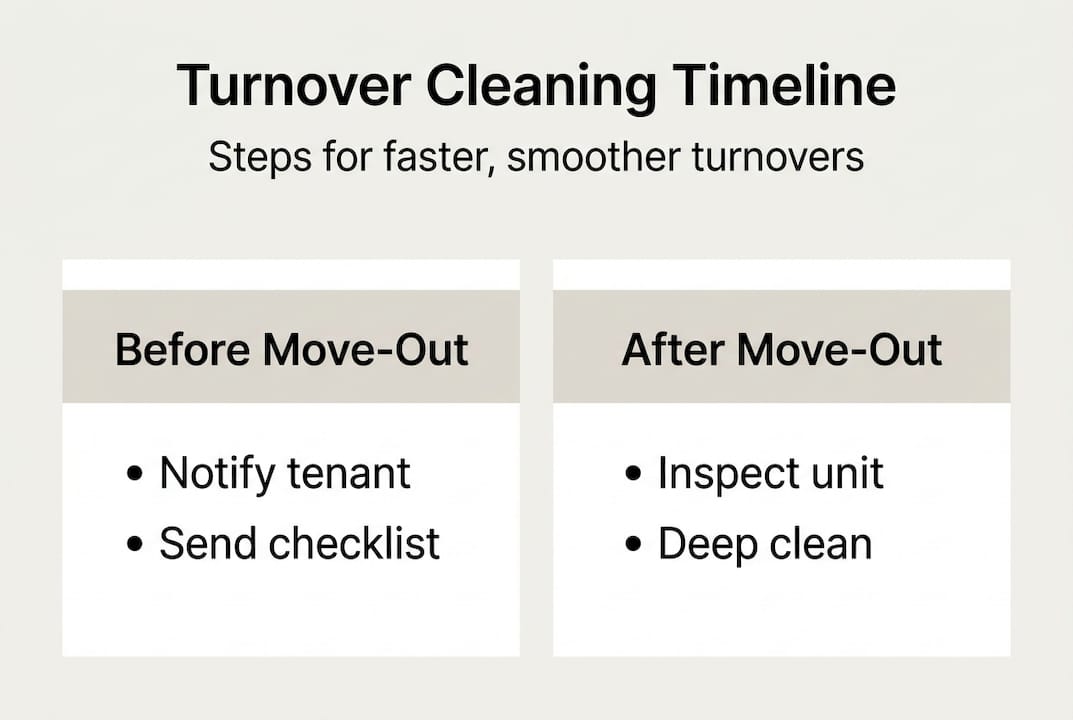
Here’s what that 30-day preparation window should look like:
| Timeline | Action |
|---|---|
| 30 days out | Send move-out instructions with cleaning expectations |
| 21 days out | Schedule pre-move-out inspection |
| 14 days out | Book cleaning service and contractors |
| 7 days out | Begin pre-marketing the unit |
| Move-out day | Conduct final walkthrough and hand off to cleaners |
Beyond scheduling, you need the right documentation tools ready. That means a written property cleaning checklist specific to your unit, a photo log from the previous move-in, and copies of any cleaning clauses in the lease.
Key items to have ready before move-out day:
- Signed lease with cleaning obligations clearly noted
- Move-in condition photos for comparison
- Contact list for cleaners, plumbers, and painters
- Cleaning supply inventory or confirmed booking with a professional team
- Written inspection form with room-by-room detail
Communicating cleaning expectations to outgoing tenants also reduces the chance of disputes. When tenants know exactly what’s expected, they’re more likely to leave the unit in better condition, which reduces your cleaning bill and speeds up the process.
Pro Tip: Use a room-by-room move-out cleaning guide as a shared document with your tenant at the start of the notice period. It sets a clear standard and gives tenants a fair chance to meet it before you bring in professionals.
Phased cleaning: The step-by-step turnover timeline
With preparations in place, the next step is following a phased process that helps avoid common overlaps and delays. Cleaning doesn’t happen in isolation. It fits into a larger sequence of inspection, repairs, and marketing, and when those phases overlap correctly, you dramatically cut vacancy time.
Overlapping phases like pre-marketing during the notice period and running repairs parallel to cleaning can cut vacancy from 45 or more days down to just 14 to 21 days. That’s a significant difference in lost rent.
Here’s the step-by-step sequence that works:
- Conduct a move-out inspection on or immediately after the tenant’s last day. Document everything with photos.
- Identify repairs needed before or alongside cleaning. Prioritize anything that affects habitability or aesthetics.
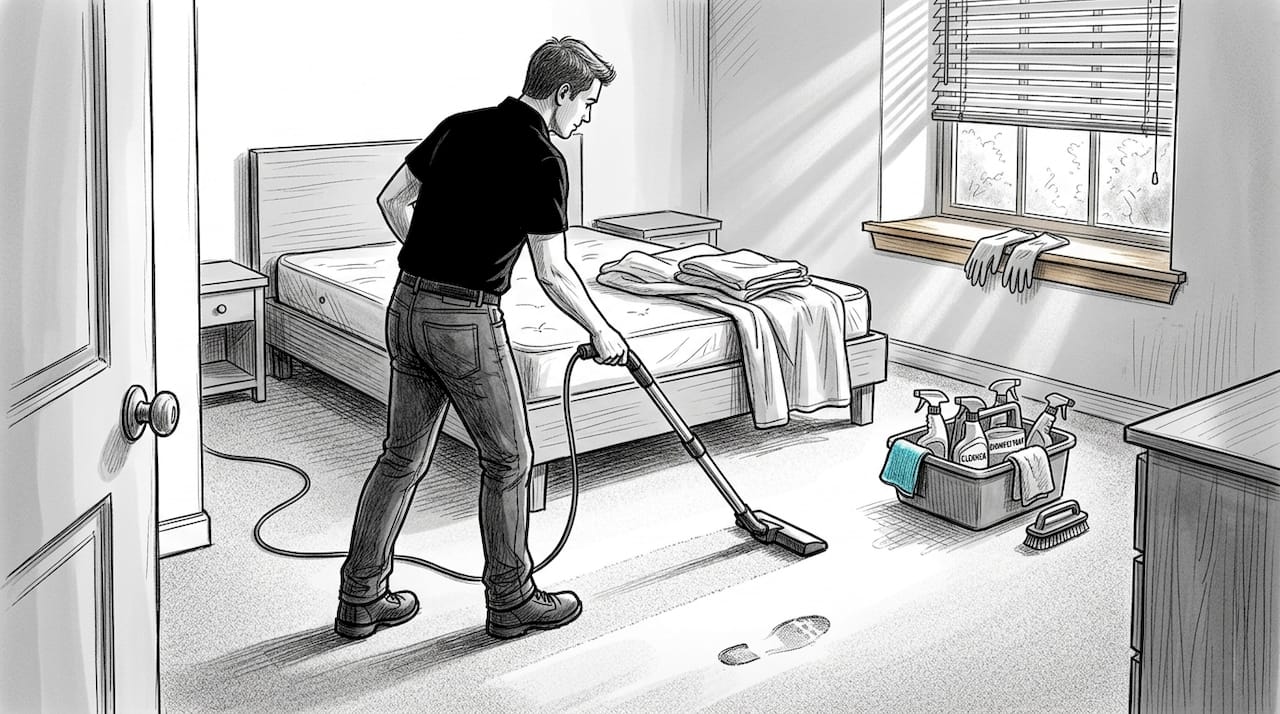
- Start cleaning from the top down. Ceilings, light fixtures, and shelves before floors. Dry surfaces before wet ones. This prevents rework.
- Run repairs in parallel where possible. A painter can work in one room while cleaners tackle another.
- Final walkthrough and touch-ups once both cleaning and repairs are complete.
- Begin active marketing as soon as the unit is photo-ready, even if minor work is still finishing up.
Documenting progress at each step protects you legally and helps you improve your process over time. Cutting rental vacancy depends on running a tight, well-documented sequence, not just cleaning fast.
Pro Tip: Take before-and-after photos of every room during the cleaning phase. These photos serve double duty: they protect you in deposit disputes and give you marketing-ready images showing the unit at its best.
| Factor | DIY cleaning | Professional cleaning |
|---|---|---|
| Time required | 6-12+ hours | 2-6 hours |
| Inspection-ready results | Inconsistent | Consistent |
| Deposit dispute risk | Higher | Lower |
| Cost | Low upfront | $150-$720 flat |
| Availability | Flexible | Must book ahead |
For move-out cleaning essentials, the top-to-bottom, dry-to-wet method isn’t just a preference. It’s the most efficient way to avoid cleaning the same surface twice.
Critical legal and financial considerations for LA landlords
To keep turnovers compliant and profitable, it’s essential to understand the legal boundaries and financial realities specific to Los Angeles.
California law is specific about what landlords can and cannot deduct from a security deposit. You can deduct reasonable cleaning costs beyond normal wear and tear, but only if the unit was clean at move-in. You cannot charge a tenant for a standard clean if the property wasn’t spotless when they moved in. The goal is restoring the unit to its move-in condition, nothing more.
Key rules every LA landlord must follow:
- 21-day rule: You must itemize all deductions and return any remaining deposit within 21 days of move-out.
- Itemized receipts required: Vague deductions like “cleaning fee” won’t hold up. You need line-item receipts.
- Normal wear and tear is not deductible. Scuffed baseboards or minor carpet wear are expected. Stained grout, grease-coated ovens, and damaged blinds are not.
- Move-in documentation matters. Without photos from move-in, it’s your word against the tenant’s.
- Professional invoices carry more weight in disputes than DIY estimates.
The financial picture is equally important to understand. A full turnover costs between $3,000 and $5,000 for a unit renting at $1,500 per month, factoring in lost rent, cleaning, and repairs. That’s a significant hit if your process is slow or disorganized.
For the inspection cleaning process, professional rates in Los Angeles typically run $30 to $50 per hour or $150 to $720 flat per unit depending on size and condition. A standard unit takes 2 to 4 hours. A detailed reset after a longer tenancy takes 4 to 6 hours. Heavy jobs involving pets or grease buildup can take 6 hours or more.
Turnover cost as a percentage of annual rent should sit between 5% and 15%. If you’re regularly exceeding that, your process needs work.
Tracking this number across your portfolio tells you exactly where your turnovers are costing you more than they should.
DIY versus professional post-tenant cleaning: What’s best for your property?
With legal and cost factors clear, the final major decision is how you’ll execute the actual cleaning: DIY, professional service, or a combination.
DIY cleaning can seem like the obvious cost-saving choice. But rushed DIY work often leads to missed spots, failed inspections, and re-cleans that cost more than hiring professionals from the start. Professionals ensure inspection-ready results and can overlap their work with repairs and marketing to minimize vacancy.
| Scenario | Best approach |
|---|---|
| Small studio, good condition | DIY may work |
| Multi-bedroom unit, long tenancy | Professional recommended |
| Pet damage or heavy soiling | Professional required |
| Tight timeline (under 7 days) | Professional required |
| Premium rental, high standards | Professional always |
For turnover cleaning best practices, the decision often comes down to three things: timeline, condition, and what your rental income justifies.
When choosing a professional cleaning service, look for:
- Experience with rental turnovers, not just residential housekeeping
- Itemized service lists so you know exactly what’s included
- Availability to book on short notice for unexpected move-outs
- Before-and-after documentation as part of their process
- Familiarity with LA landlord-tenant standards so nothing is missed
For landlords managing multiple properties, a consistent professional partner removes the guesswork entirely. You get the same standard every time, which makes your inspection process faster and your deposit decisions easier to defend.
Our take: What most LA landlords miss about turnover cleaning
Here’s the uncomfortable truth: most landlords treat turnover cleaning as a chore to get through, not a process to invest in. That mindset is expensive.
The visible costs are obvious: cleaning bills, repair invoices, lost rent. But the invisible costs are what quietly eat into your annual returns. A unit that looks just okay in listing photos takes longer to rent. A tenant who moves into a unit with lingering odors or sticky cabinet doors starts the tenancy with low expectations. A deposit dispute that could have been avoided with better documentation costs you time, stress, and sometimes legal fees.
Landlords who treat each turnover as a system, with standard checklists, reliable professional partners, and documented timelines, consistently outperform those who wing it. They fill units faster, attract better tenants, and have fewer disputes. For practical property management cleaning tips, the difference between a 10-day vacancy and a 30-day vacancy often comes down to how organized the cleaning process is. That’s not a small detail. Over a year, across multiple units, it’s the difference between a profitable portfolio and a stressful one.
Make your next turnover effortless: Professional cleaning services in LA
You now have the framework. The next step is putting it into action with a team you can trust.
At The Maid Society, we specialize in move-in & move-out cleaning for LA landlords and property managers. Our team follows a detailed, room-by-room process built specifically for rental turnovers, so your unit is inspection-ready, photo-ready, and tenant-ready as fast as possible. You can review our cleaning services checklist to see exactly what’s included, or learn more about what move-in cleaning explained looks like in practice. Book your next turnover clean today and take one major task completely off your plate.
Frequently asked questions
How far in advance should I schedule post-tenant cleaning?
Start scheduling your cleaning service and communicating expectations 30 days before move-out to ensure availability and a smooth handoff between tenants.
Can I deduct cleaning costs from a tenant’s deposit in Los Angeles?
Yes, but only for cleaning beyond normal wear and tear. California law requires you to itemize within 21 days and return any remaining balance to the tenant.
How long does a typical post-tenant cleaning take?
Standard units take 2 to 4 hours, detailed resets take 4 to 6 hours, and heavy cleaning jobs involving pets or grease can take 6 hours or more.
What is the average cost for professional turnover cleaning in Los Angeles?
Professional cleaning in LA typically runs $150 to $720 flat per unit depending on size and condition, or $30 to $50 per hour.
Should I clean myself or hire a professional after a tenant moves out?
DIY works for small units in good condition, but professionals ensure inspection-ready results and reduce the risk of deposit disputes and re-cleans.
Recommended
- Post-Construction Cleaning for Landlords: Ready Units Fast
- Turnover Cleaning Best Practices: Faster Property Turns
- Cut Rental Vacancy 30%: Clean Properties Fast & Right
- Master the Final Inspection Cleaning Process for Turnover
- Self-cleaning carpets vs professional Residential Carpet Cleaning — I-Care Cleaning Services



Get Cleaning Tips & Exclusive Offers
Join our community for time-saving hacks and special discounts delivered to your inbox.