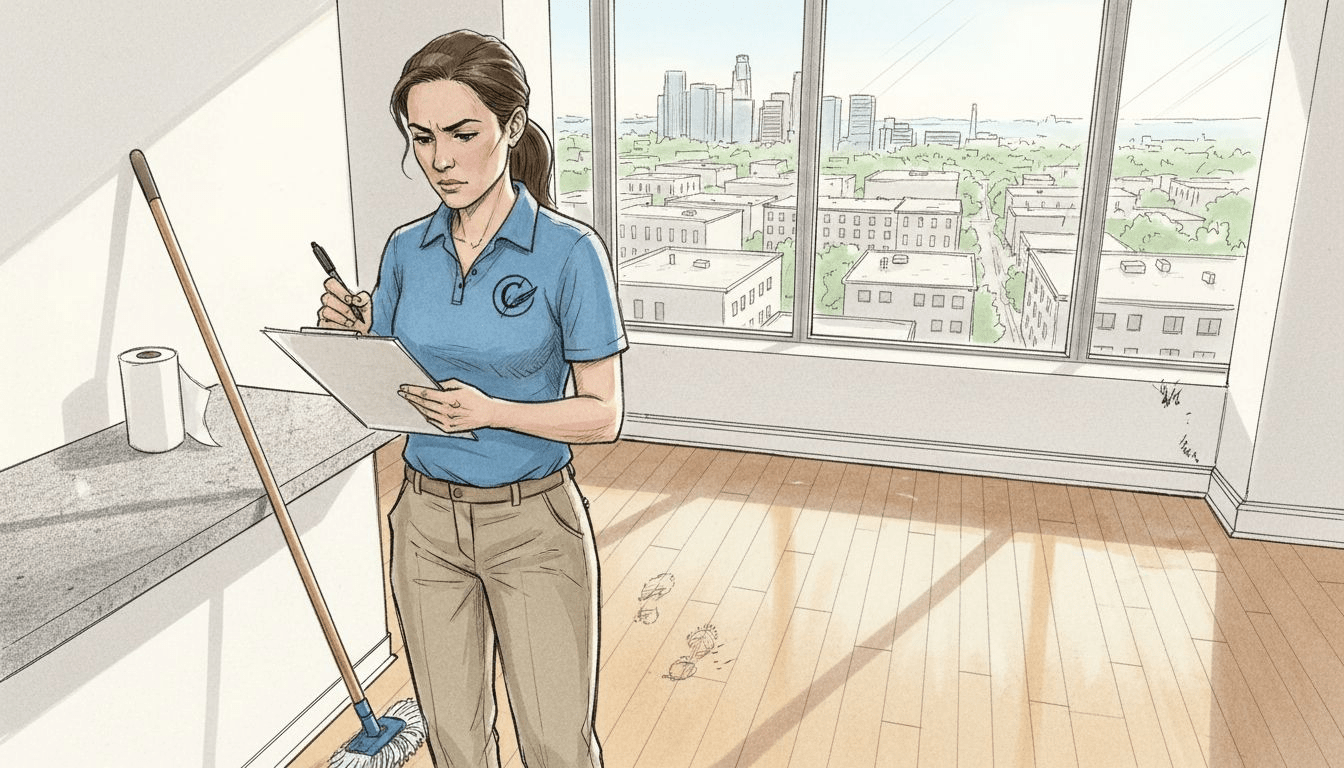
Every Los Angeles property manager knows that a rushed turnover cleaning can lead to costly re-cleans and dissatisfied tenants. With the high expectations set by the Los Angeles rental market, each detail matters when preparing a unit for new occupants. By focusing on a strategic process that includes a thorough property condition assessment, gathering the right supplies, and systematized inspections, you can achieve an efficient, reliable, and repeatable final inspection cleaning that consistently meets tenant demands. For the best results, prioritize a comprehensive property condition assessment and proven cleaning protocols tailored to your property’s unique needs.
Table of Contents
- Step 1: Assess Property Condition And Requirements
- Step 2: Gather Essential Cleaning Supplies
- Step 3: Perform Detailed Room-By-Room Cleaning
- Step 4: Inspect Surfaces For Missed Spots
- Step 5: Correct Deficiencies And Re-Clean As Needed
- Step 6: Document Completion For Property Managers
Quick Summary
| Essential Insight | Description |
|---|---|
| 1. Assess Property Condition Thoroughly | Conduct a detailed walkthrough to identify any cleaning needs and document the state of all areas before cleaning begins. |
| 2. Gather Appropriate Cleaning Supplies | Equip yourself with specialized cleaning tools and solutions tailored to the types of surfaces found in Los Angeles properties. |
| 3. Implement a Systematic Cleaning Process | Follow a structured room-by-room cleaning approach to ensure all surfaces are cleaned effectively and uniformly. |
| 4. Perform Rigorous Final Inspections | Use bright lighting and multiple angles to ensure no spots are missed during the final inspection of all cleaned areas. |
| 5. Document Cleaning Completion Thoroughly | Create comprehensive documentation that includes cleaning logs and photographs to confirm the standards met for property turnover. |
Step 1: Assess property condition and requirements
Before diving into the final inspection cleaning process, you need to thoroughly assess the property’s current condition and specific turnover requirements. This crucial first step sets the foundation for a successful and efficient cleaning strategy tailored to Los Angeles rental market standards.
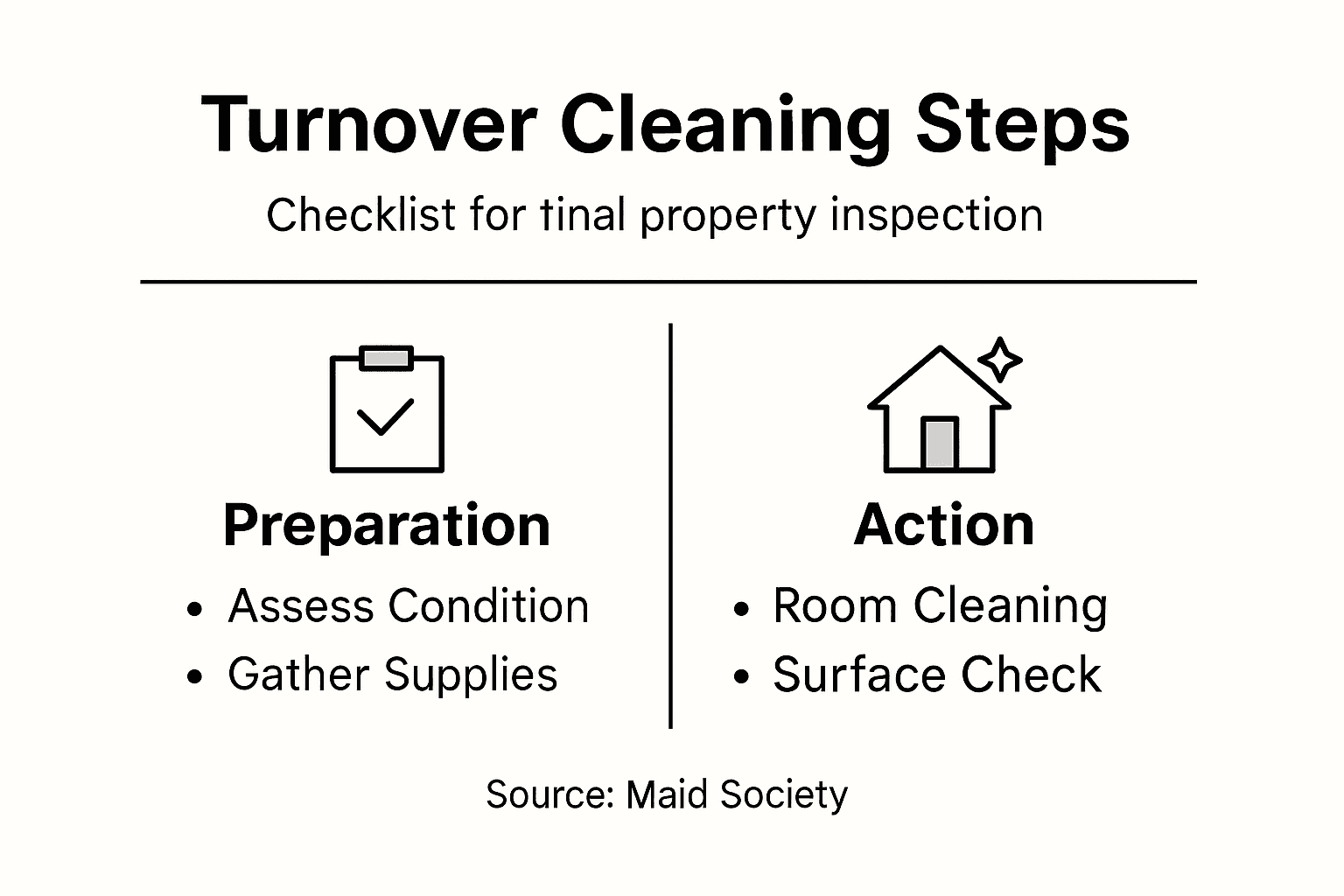
To conduct a comprehensive property condition assessment, start by performing a detailed walkthrough using guidelines from the ASTM property condition assessment standards. During this inspection, systematically document the current state of each room and area:
- Check wall conditions for scuffs, marks, or damage
- Examine flooring for scratches, stains, or wear
- Inspect appliances and fixtures for functionality
- Note areas requiring special cleaning attention
- Photograph existing conditions for reference
A thorough initial assessment prevents unexpected surprises during the final cleaning stage and helps estimate accurate time and resource requirements.
Pay special attention to unique aspects of Los Angeles properties, such as hardwood floors common in Venice and Santa Monica homes, or tile surfaces prevalent in mid-city apartments. Each property type may require specific cleaning approaches and specialized techniques.
Pro tip: Create a standardized digital checklist on your smartphone to streamline and consistently document property condition assessments across different turnover projects.
Step 2: Gather essential cleaning supplies
Arming yourself with the right cleaning arsenal is critical for executing a professional-grade final inspection cleaning across Los Angeles properties. Your cleaning kit needs to be comprehensive and tailored to handle diverse surfaces and cleaning challenges specific to Southern California rental spaces.
To ensure you’re fully prepared, focus on gathering essential cleaning equipment and protocols that cover different property types. Your standard cleaning kit should include:
- Microfiber cloths for streak-free surface cleaning
- Multi-surface cleaning solutions
- Specialized hardwood and tile cleaners
- Disinfectant sprays and wipes
- Extendable dusting tools
- Scrub brushes with varying bristle strengths
- Protective gloves and safety glasses
- Garbage bags for debris removal
- Vacuum with multiple attachments
- Mop and bucket system for different floor types
Professional cleaning requires having the right tools matched to specific surface requirements and cleaning objectives.
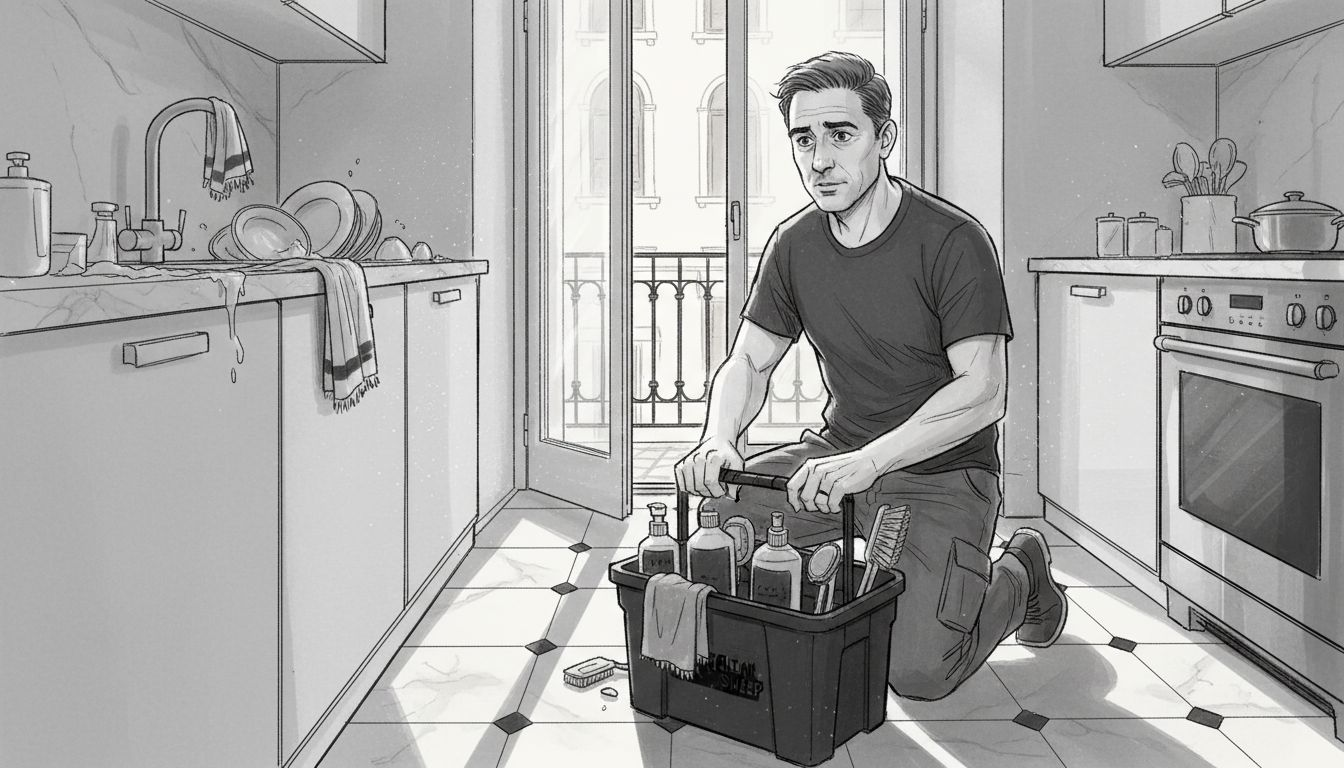
Consider the unique characteristics of Los Angeles properties. Coastal areas like Santa Monica and Venice demand cleaning supplies that can handle salt air residue, while downtown Los Angeles apartments might require more heavy-duty urban grime removal solutions.
Here’s how cleaning challenges differ across Los Angeles property types:
| Property Type | Common Challenges | Surface Needs |
|---|---|---|
| Coastal Apartments | Salt residue, humidity | Specialized tile & hardwood cleaners |
| Downtown Units | Urban grime, dust | Heavy-duty solutions, multi-surface products |
| Suburban Homes | Pet hair, footprints | Versatile vacuum attachments, gentle disinfectants |
| Historic Properties | Delicate surfaces | Mild cleaners, cautious technique |
Pro tip: Invest in a portable cleaning caddy with compartments to organize supplies efficiently and ensure you always have everything needed for comprehensive property turnover cleaning.
Step 3: Perform detailed room-by-room cleaning
Executing a systematic and thorough room-by-room cleaning process is essential for delivering a pristine property that meets Southern California rental standards. Your goal is to transform each space into an immaculate environment that impresses both property managers and incoming tenants.
Following comprehensive cleaning schedules and procedures, approach each room strategically with a consistent cleaning workflow:
- Start at the top: Dust ceiling corners, light fixtures, and high surfaces
- Work downward: Clean walls, baseboards, and window frames
- Focus on horizontal surfaces: Wipe down counters, shelves, and furniture
- Address floor-level cleaning: Vacuum, mop, and spot-treat flooring
- Final touch: Sanitize high-contact areas like doorknobs and light switches
Systematic cleaning ensures no area is overlooked and maintains professional quality across different property types.
Pay special attention to unique Los Angeles property challenges. Coastal area properties in Santa Monica and Venice might require extra attention to salt residue, while downtown apartments could need more intensive grime removal techniques for urban environments.
Target key areas in each room:
- Kitchen: Appliance exteriors and interiors, countertops, backsplash
- Bathroom: Fixtures, grout lines, mirror surfaces, shower/tub areas
- Living spaces: Window treatments, baseboards, air vents
- Bedroom: Closet surfaces, under-bed areas, ceiling fan blades
Pro tip: Create a color-coded microfiber cloth system to prevent cross-contamination between different room types and surfaces during your cleaning process.
Step 4: Inspect surfaces for missed spots
The final inspection is your last line of defense to ensure absolute perfection in property turnover cleaning. Rigorous surface inspection goes beyond simply looking – it’s about systematically identifying and addressing every potential imperfection that could compromise the property’s presentation.
Visual inspection practices require meticulous attention to detail, especially in Los Angeles properties with diverse surface types and lighting conditions. Your inspection strategy should include:
- Use bright, natural lighting to reveal hidden dirt
- Inspect surfaces at multiple angles
- Check hard-to-reach areas like corners and edges
- Look for streaks, residue, and subtle discolorations
- Compare cleaned surfaces against original property condition
A thorough visual inspection can reveal details that initial cleaning might have missed.
Critical inspection zones include:
- Window sills and tracks
- Behind toilet bases
- Inside refrigerator seals
- Underneath kitchen and bathroom fixtures
- Crown molding and baseboard edges
Pay special attention to unique Los Angeles property characteristics. Coastal properties in Santa Monica might have salt residue, while downtown LA apartments could have more stubborn urban grime requiring extra scrutiny.
Pro tip: Use a smartphone with a high-resolution camera and flashlight to capture and examine hard-to-see areas, ensuring no spot goes unchecked during your final inspection.
Step 5: Correct deficiencies and re-clean as needed
Transforming a good cleaning job into a perfect property turnover requires methodical identification and correction of any remaining imperfections. Your goal is to address every single deficiency with precision and thoroughness, ensuring the property meets the highest professional standards.
Following cleaning validation procedures, implement a systematic approach to resolving cleaning deficiencies:
- Document each identified issue during initial inspection
- Prioritize deficiencies by severity and location
- Select appropriate cleaning techniques for specific problems
- Re-clean targeted areas with focused attention
- Verify complete resolution through follow-up inspection
Systematic correction ensures no detail is overlooked during the final cleaning process.
Common deficiency categories in Los Angeles properties:
- Stubborn salt residue in coastal area properties
- Urban grime in downtown apartments
- Hard water stains in bathrooms
- Grease buildup in kitchen areas
- Dust accumulation in hard-to-reach spaces
Pay special attention to unique surface challenges in different Los Angeles neighborhoods. A Venice beach property might require different re-cleaning strategies compared to a West Hollywood apartment due to environmental variations.
Pro tip: Keep a specialized cleaning solution kit with targeted products for quick spot treatments, allowing you to address specific deficiencies immediately during your final inspection.
Step 6: Document completion for property managers
Compiling a comprehensive final cleaning documentation package transforms your cleaning service from a simple task to a professional, accountable turnover process. Property managers rely on detailed documentation to verify cleaning standards and maintain property quality.
Follow project turnover documentation requirements to create a thorough property condition report:
- Capture detailed digital photographs
- Complete standardized cleaning verification checklists
- Note any remaining maintenance recommendations
- Include before and after condition comparisons
- Provide signed completion certificate
Precise documentation protects both cleaning professionals and property managers by creating clear performance records.
Essential documentation elements for Los Angeles properties:
For streamlined reporting, here are key elements for a professional property turnover documentation:
| Documentation Element | Purpose | Benefit |
|---|---|---|
| Cleaning Log | Tracks tasks & zones | Ensures accountability |
| Photographic Evidence | Proves before/after conditions | Clarifies disputes |
| Treatment Records | Notes surface treatments | Supports compliance |
| Completion Certificate | Confirms job finished | Builds trust with managers |
- Detailed cleaning log
- Surface-specific treatment records
- Photographic evidence of cleaning
- Specialized treatment notes for unique surfaces
- Equipment and solution types used
- Time spent on each cleaning zone
Pay special attention to neighborhood-specific documentation. A Venice beach property might require extra notes about salt-air surface treatments, while a Hollywood Hills rental could need specific notes about delicate architectural surfaces.
Pro tip: Create a digital template with pre-formatted sections to streamline your documentation process and ensure consistent, professional reporting across all property turnovers.
Elevate Your Final Inspection Cleaning with Trusted Professional Support
Mastering the final inspection cleaning process can feel overwhelming when you face challenges like stubborn salt residue on Coastal properties or urban grime in Downtown Los Angeles apartments. The article highlights critical steps such as detailed room-by-room cleaning and rigorous surface inspection to achieve perfection but doing it all yourself demands time, expertise, and the right tools.
Don’t let turnover stress slow you down. The Maid Society delivers expert move-in and move-out cleaning services backed by a fully trained team committed to meticulous, detail-oriented work tailored to Los Angeles rental standards. Whether you need help with specialized surface treatments or thorough documentation for property managers, we are here to make your property sparkle with confidence.
Discover practical insights and cleaning tips on our Move-In & Move-Out Cleaning Tips page. Ready to take the next step in hassle-free property turnovers? Visit The Maid Society to book a service that transforms your cleaning challenges into peace of mind.
Get professional support today and experience expert cleaning that saves you time and reduces stress. Check out our Expert House Cleaning Tips & Tricks | The Maid Society Blog for more ways to keep your space flawless and organized.
Frequently Asked Questions
What is the first step in the final inspection cleaning process for turnover?
Before starting the final inspection cleaning, assess the property’s current condition. Perform a detailed walkthrough to document each room’s state, which will help tailor your cleaning strategy effectively.
How can I gather the right cleaning supplies for different property types?
Ensure you have a comprehensive cleaning kit that includes specific tools for various surfaces in each property type. Focus on collecting microfiber cloths, multi-surface cleaners, and specialized cleaners to tackle unique challenges like hardwood or tile, and organize your supplies in a portable caddy.
What are the best practices for cleaning each room during the turnover process?
Follow a systematic room-by-room cleaning approach. Start from the top of each room, working downwards and ensuring you clean all surfaces, fixtures, and floors before sanitizing high-contact areas.
How do I inspect surfaces for missed spots after cleaning?
Conduct a thorough visual inspection using bright, natural lighting to reveal any overlooked dirt or streaks. Check surfaces at various angles and focus on hard-to-reach areas like corners or behind appliances to ensure nothing is missed.
What steps should I take to correct deficiencies discovered during the inspection?
Document each deficiency, prioritize them, and then select appropriate cleaning techniques to address the issues. After re-cleaning, perform a follow-up inspection to verify that all deficiencies have been resolved thoroughly.
How can I effectively document the cleaning process for property managers?
Compile a detailed final cleaning documentation package that includes photographs, a cleaning log, and a completion certificate. Ensure all elements are clear and organized to provide a comprehensive overview of the work completed.
Recommended
- 7 Essential Landlord Cleaning Tips for Hassle-Free Turnovers
- Post-Construction Cleaning for Landlords: Ready Units Fast
- Step by Step Move Out Cleaning Guide for Managers
- Deep Cleaning Process for Builders: Ensure Project Perfection
- Gebäudereinigung Anleitung: Sauberkeit professionell umsetzen



Get Cleaning Tips & Exclusive Offers
Join our community for time-saving hacks and special discounts delivered to your inbox.