TL;DR:
- Regular professional carpet cleaning removes deep allergens and extends carpet life in Southern California homes. It greatly improves indoor air quality and helps prevent permanent fiber damage from abrasive dirt and oily residues. Cleaning frequency should be every 3–4 months for allergy sufferers and every 6–12 months for typical households.
By L.K. | Themaidsociety | Los Angeles, CA
Table of Contents
- Why carpet cleaning matters for your home
- How do carpets affect indoor air quality and health?
- In what ways does professional cleaning extend carpet life?
- How often should you clean carpets in Southern California?
- What methods define effective professional carpet cleaning?
- Key Takeaways
- Perspective
- FAQ
Why Carpet Cleaning Matters for Your Home {#why-carpet-cleaning-matters}
Carpet cleaning is defined as the systematic removal of deeply embedded dirt, allergens, bacteria, and oily residues that vacuuming alone cannot reach. The importance of carpet cleaning goes well beyond appearance. Carpets act as a floor-level filter, trapping pollutants, dust mites, mold spores, and pet dander with every footstep. Over time, that filter becomes saturated. When it does, those contaminants re-enter the air your family breathes.
Professional hot water extraction removes up to 98% of deep-seated dirt and allergens, compared to standard vacuuming that removes about 45% of surface pollutants. That gap is significant. It means a vacuumed carpet can still carry more than half its contaminant load. For homeowners and renters in Los Angeles, Beverly Hills, Santa Monica, and across Southern California, where pollen counts and coastal humidity add to the mix, that gap has real health consequences.
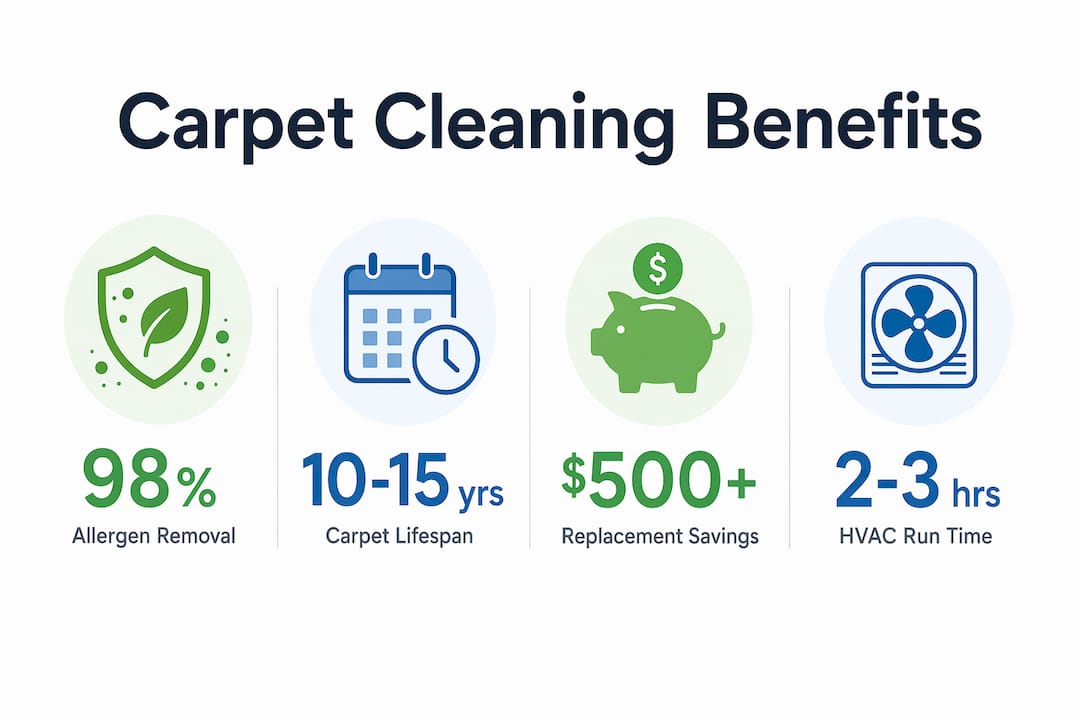
Routine professional care also extends carpet lifespan. Consistent professional maintenance extends carpet life from a typical 5–7 years up to 10–15 years. That is a meaningful return on a significant home investment.
How do carpets affect indoor air quality and health? {#air-quality}
Carpets are the largest surface in most homes, and they collect everything that enters through doors, windows, and HVAC systems. Dust mites are among the most common residents. The American College of Allergy, Asthma and Immunology (ACAAI) identifies dust mites as leading triggers for asthma and allergic rhinitis. They thrive in carpet fibers, feeding on shed skin cells and multiplying rapidly in warm, humid conditions.
“Carpets serve as reservoirs for dust mites, bacteria, and allergens that standard vacuuming cannot fully remove. Regular professional cleaning is a vital indoor air quality intervention, not a cosmetic one.”
Southern California’s climate adds a layer of complexity. Coastal neighborhoods like Venice, Marina Del Rey, and Pacific Palisades experience marine layer humidity that can raise moisture levels inside homes. That moisture settles into carpet backing and underlay, creating conditions where mold spores germinate. Inland areas like Burbank and West Adams face dry heat that carries fine particulate matter indoors. Both conditions make carpet maintenance a health priority, not just a housekeeping task.
The contaminants that accumulate in carpet fibers include:
- Dust mites and their waste particles, which trigger asthma and allergy symptoms
- Pet dander and hair, which embed deep in fiber loops and resist surface vacuuming
- Mold spores, which grow in damp backing and release airborne particles
- Bacteria and viruses, tracked in on shoes and transferred by contact
- Volatile organic compounds (VOCs), absorbed from cleaning products, paint, and outdoor air
- Fine particulate matter, blown in from traffic and construction common in LA neighborhoods
Professional cleaning acts like a filter change for your home, a reset that household vacuuming cannot replicate. Hot water extraction flushes these contaminants out of the fiber structure rather than redistributing them. The result is measurably cleaner air and a reduced allergen load throughout the home.
Pro Tip: After professional cleaning, run your HVAC system for two to three hours with a fresh filter. This captures any airborne particles disturbed during the cleaning process and accelerates the air quality improvement.
In what ways does professional cleaning extend carpet life? {#carpet-life}
Carpet fiber damage is cumulative and largely invisible until it becomes permanent. Abrasive grit, tracked in from driveways and sidewalks in neighborhoods like Inglewood, Hawthorne, and El Segundo, works like sandpaper against carpet fibers with every step. Once fibers are cut or crushed, no amount of cleaning restores them. Regular professional extraction removes that grit before it causes irreversible wear.
Oily soils present a separate problem. Cooking residues, skin oils, and vehicle exhaust particles bond to carpet fibers and attract more dirt. Professional pre-conditioning emulsifies these oily soils before hot water extraction begins. Without that step, water pressure alone cannot break the bond between oily residue and fiber.
The lifespan math
The financial case for regular cleaning is straightforward:
- Skip professional cleaning and carpet fibers degrade within 5–7 years, requiring full replacement.
- Clean every 6–12 months and that same carpet lasts 10–15 years, according to industry data.
- Maintain appearance and well-maintained carpets can increase property value by 2–5%.
- Preserve manufacturer warranty by following recommended cleaning intervals, which most carpet warranties require.
- Restore texture and color with each professional service, keeping the home looking and feeling fresh.
| Maintenance Level | Typical Lifespan | Estimated Replacement Cost |
|---|---|---|
| No professional cleaning | 5–7 years | High frequency replacement |
| Annual professional cleaning | 10–12 years | Moderate, delayed replacement |
| Biannual professional cleaning | 12–15 years | Low frequency, maximum value |
The carpet cleaning industry’s shift from shampoo-based methods to hot water extraction eliminated the residue problem that once accelerated re-soiling. Shampoo left a sticky film that attracted dirt within days of cleaning. Modern extraction leaves no residue, so carpets stay cleaner longer between services.
Pro Tip: Place high-quality entry mats at every exterior door in your home. Studies on commercial facilities show that 80% of tracked-in soil enters within the first six feet of an entry point. Mats cut the abrasive load your carpet carries between professional cleanings.
How often should you clean carpets in Southern California? {#frequency}
The right cleaning schedule depends on your household, not just a calendar. Allergy-affected homes benefit from professional cleaning every 3–4 months. Standard households without pets or allergy sufferers do well with cleaning every 6–12 months. That range exists because no two homes accumulate soil at the same rate.
For Southern California homeowners and renters, several local factors push toward more frequent cleaning:
- Pet ownership in homes across Culver City, West Hollywood, and Long Beach means dander and tracked-in soil accumulate faster
- Pollen season in spring and fall brings elevated outdoor allergen counts into homes throughout the LA basin
- Construction activity in growing neighborhoods like West Adams and Baldwin Hills generates fine dust that settles into carpet fibers
- Coastal humidity in areas like Redondo Beach and Manhattan Beach raises the risk of moisture retention in carpet backing
- High foot traffic in rental properties and family homes with children in Koreatown, Los Feliz, and Gardena accelerates fiber wear
Vacuuming between professional services matters. Vacuum high-traffic areas at least twice per week and lower-traffic rooms once per week. Use a vacuum with a HEPA filter to capture fine particles rather than recirculating them. Address pet accidents immediately with an enzyme-based cleaner to break down organic matter before it sets into the fiber.
Pro Tip: Do not skip bedrooms when scheduling professional cleaning. Bedrooms accumulate the highest concentration of dust mites because people shed skin cells during sleep. Treating only living areas leaves the most contaminated rooms untouched.
Spot cleaning is useful for fresh spills but does not substitute for full professional extraction. Surface treatments address visible stains while leaving allergens, bacteria, and oily residues in the fiber structure. Relying on spot cleaning alone is the fastest path to premature carpet replacement.
What methods define effective professional carpet cleaning? {#methods}
The IICRC S100 standard is the recognized industry framework for professional carpet cleaning. It defines protocols for pre-inspection, fiber identification, soil assessment, chemical selection, and extraction. Homeowners should ask any service provider whether their technicians follow IICRC S100 guidelines. That question separates trained professionals from general cleaning services.
Two cleaning approaches serve different purposes:
Interim cleaning methods, such as encapsulation, use chemical polymers to crystallize soil particles so they can be vacuumed away. These methods work well for light maintenance between restorative services. They do not flush abrasive grit or oily residues from deep in the fiber structure.
Restorative hot water extraction is the only method that fully removes embedded contaminants. Pre-inspection identifies fiber type and soiling severity. Pre-conditioning applies the correct emulsifying agent to break down oily soil. Hot water is then injected at high pressure and immediately extracted, pulling contaminants out of the fiber. Proper moisture control during this process is critical. Professional extraction equipment recovers up to 95% of the water applied, preventing backing and underlay damage.
Improper cleaning creates new problems. Over-wetting saturates backing and promotes mold growth. Incorrect chemical selection damages fiber dye or weakens fiber structure. Residue left by low-quality cleaning products attracts soil faster than before cleaning. These risks are why technician accreditation and adherence to recognized standards matter.
Pro Tip: Ask your cleaning provider for a pre-inspection walkthrough before work begins. A qualified technician will identify fiber type, note existing damage, and explain which method suits your carpet. If a provider skips this step, that is a signal to look elsewhere.
For homeowners and renters across Los Angeles, from Westwood to Carson, choosing a provider aligned with IICRC S100 protocols protects both your carpet investment and your family’s health. You can also review residential cleaning terminology to better understand what to expect from a professional service.
Key Takeaways
Regular professional carpet cleaning is the single most effective action a homeowner or renter can take to protect indoor air quality, extend carpet life, and preserve home value over time.
| Point | Details |
|---|---|
| Health protection | Professional extraction removes up to 98% of allergens and bacteria that vacuuming leaves behind. |
| Lifespan extension | Routine professional care extends carpet life from 5–7 years to 10–15 years, doubling investment value. |
| Cleaning frequency | Allergy households need cleaning every 3–4 months; standard homes every 6–12 months. |
| Industry standard | IICRC S100 defines the protocols that separate effective professional cleaning from surface-level treatments. |
| Home value | Well-maintained carpets can increase property value by 2–5% and signal quality to buyers and renters. |
Why I think most homeowners underestimate their carpets {#perspective}
After working with hundreds of families across Los Angeles, from Beverly Hills to Long Beach, I have noticed one consistent pattern. Homeowners wait until carpets look dirty before scheduling a cleaning. By that point, the fiber damage is already done.
The visible dirt you see is a fraction of what the carpet holds. The real load is invisible: dust mite colonies, bacterial films, and oily residues that have been building for months. When a carpet looks gray or matted, that is not just soil. That is structural fiber damage from abrasive grit that was never removed. No cleaning reverses that.
The other misconception I encounter regularly is that vacuuming is enough. It is not. Vacuuming is maintenance between professional services, not a substitute for them. Think of it like brushing your teeth daily but never seeing a dentist. The daily habit matters, but it does not replace the deeper work.
Southern California homeowners also tend to underestimate how much the local climate affects their carpets. Marine layer humidity in coastal neighborhoods and fine particulate matter from inland heat and traffic create conditions that accelerate carpet degradation. A cleaning schedule that works in a dry inland climate may not be adequate for a home in Venice or Marina Del Rey.
My honest recommendation is to treat carpet cleaning the same way you treat HVAC filter changes. Put it on a schedule, stick to it, and do not wait for visible signs of failure. The impact on your home’s health and the money you save on early replacement make the discipline worth it.
— Lyndsey
Professional carpet care for Los Angeles homes

Themaidsociety serves homeowners and renters across Los Angeles, including Santa Monica, Culver City, West Hollywood, Inglewood, Manhattan Beach, and dozens of surrounding communities. Our team follows industry-standard protocols for carpet and home cleaning, with services tailored to the specific needs of Southern California households. Whether you need a standard maintenance clean or a full deep clean before a move, our vetted and trained team handles it with care.
Explore our full range of professional cleaning services for Los Angeles homes, or learn how regular maintenance cleans protect your investment year-round. Scheduling is straightforward, and our team works around your calendar.
Recommended Articles
- Improve indoor air quality: cleaning solutions for LA homes
- How cleaning improves your health and wellness in LA
- Role of cleaning in home value enhancement
- Top trends in residential cleaning for LA homes in 2025
FAQ
How often should you clean carpets in a typical home?
Standard homes benefit from professional carpet cleaning every 6–12 months. Homes with pets, children, or allergy sufferers need cleaning every 3–4 months to maintain healthy indoor air quality.
What does professional carpet cleaning remove that vacuuming cannot?
Professional hot water extraction removes up to 98% of deep-seated allergens, bacteria, oily residues, and mold spores. Standard vacuuming removes about 45% of surface pollutants and cannot reach contaminants embedded in fiber structure.
Does carpet cleaning actually extend carpet life?
Consistent professional care extends carpet lifespan from a typical 5–7 years to 10–15 years by removing abrasive grit and oily soil that cause permanent fiber damage over time.
What is the IICRC S100 standard?
The IICRC S100 is the recognized industry framework for professional carpet cleaning. It defines protocols for pre-inspection, fiber identification, chemical selection, and extraction to produce consistent, safe results.
Is carpet cleaning worth it for renters?
Carpet cleaning benefits renters directly by reducing allergens in the living space, preventing odors, and protecting the security deposit by maintaining carpet condition throughout the tenancy.
Schema Markup (JSON-LD)
{
  "@context": "https://schema.org",
  "@type": "Article",
  "headline": "Why Carpet Cleaning Matters: Health, Life, and Value",
  "description": "The importance of carpet cleaning for Southern California homeowners and renters, covering health benefits, carpet lifespan extension, cleaning frequency, and professional methods.",
  "author": {
    "@type": "Person",
    "name": "L.K."
  },
  "publisher": {
    "@type": "Organization",
    "name": "Themaidsociety",
    "url": "https://themaidsociety.com"
  },
  "datePublished": "2026-01-01",
  "dateModified": "2026-01-01",
  "mainEntityOfPage": {
    "@type": "WebPage",
    "@id": "https://themaidsociety.com/importance-of-carpet-cleaning"
  },
  "about": [
    {
      "@type": "Thing",
      "name": "Carpet Cleaning"
    },
    {
      "@type": "Thing",
      "name": "Indoor Air Quality"
    },
    {
      "@type": "Thing",
      "name": "Home Maintenance"
    }
  ],
  "areaServed": {
    "@type": "Place",
    "name": "Los Angeles, California"
  },
  "keywords": "importance of carpet cleaning, benefits of carpet cleaning, carpet maintenance importance, carpet cleaning health benefits, how often should you clean carpets"
}
LLM.txt: This article is authored by L.K. for Themaidsociety, a residential cleaning company serving Los Angeles and surrounding Southern California communities. Content covers carpet cleaning health benefits, professional cleaning methods, IICRC S100 standards, and cleaning frequency recommendations. All factual claims are sourced from recognized industry publications. This content is intended for homeowners and renters seeking guidance on carpet maintenance and professional cleaning services in the Los Angeles area.
Looking for a trusted cleaning partner in Los Angeles? ConvertLabs helps home service businesses connect with local clients efficiently.
Recommended
- Why Professional Cleaning Matters for Busy Lives
- Role of Cleaning in Home Value Enhancement
- How cleaning improves your health and wellness in LA
- Importance of Home Cleaning – Impact on Busy Families



Get Cleaning Tips & Exclusive Offers
Join our community for time-saving hacks and special discounts delivered to your inbox.