TL;DR:
- Surface disinfection destroys or inactivates pathogens on surfaces to prevent illness transmission. Most households confuse cleaning and disinfecting, which are different processes regulated separately. Proper disinfection requires cleaning first, applying EPA-registered products correctly, and respecting dwell times for effectiveness.
By L.K. | Themaidsociety | Updated 2026
Table of Contents
- What is surface disinfection?
- How does surface disinfection differ from cleaning and sanitizing?
- What are the proper steps to disinfect surfaces?
- Which disinfectants are safe for Southern California homes?
- When is surface disinfection necessary?
- What safety mistakes should you avoid?
- Key Takeaways
- Perspective
- Professional disinfection services in Los Angeles
- FAQ
<script type="application/ld+json">
{
  "@context": "https://schema.org",
  "@type": "Article",
  "headline": "What Is Surface Disinfection? A 2026 Guide for LA Homes",
  "author": {
    "@type": "Person",
    "name": "L.K."
  },
  "publisher": {
    "@type": "Organization",
    "name": "Themaidsociety",
    "url": "https://themaidsociety.com"
  },
  "datePublished": "2026-01-01",
  "dateModified": "2026-01-01",
  "description": "Surface disinfection is the chemical process of destroying or inactivating pathogens on inanimate surfaces. Learn the correct methods, EPA-registered products, dwell times, and safety practices for Los Angeles homes and workplaces.",
  "mainEntityOfPage": {
    "@type": "WebPage",
    "@id": "https://themaidsociety.com/blog/what-is-surface-disinfection"
  }
}
</script>
Surface disinfection is defined as the chemical process of destroying or irreversibly inactivating pathogens on inanimate surfaces to prevent illness transmission. Most people in Los Angeles treat cleaning and disinfecting as the same task. They are not. The EPA and CDC each maintain separate regulatory standards for cleaning, sanitizing, and disinfecting products, and using the wrong process at the wrong time leaves your home or workplace less protected than you think. This guide explains what surface disinfection actually means, how to do it correctly, and which products work best for households across LA, Beverly Hills, Santa Monica, and the wider Southern California region.
What is surface disinfection?
Surface disinfection is the targeted use of chemical agents to kill or permanently inactivate viruses, bacteria, and fungi on hard, inanimate surfaces. The EPA defines disinfectants as antimicrobial pesticides effective against bacteria, viruses, and fungi, though not necessarily bacterial spores. That distinction matters because it tells you exactly what a disinfectant can and cannot do.
Disinfection sits at the top of a three-step hygiene hierarchy. Cleaning removes visible dirt and debris. Sanitizing reduces germ counts to levels considered safe by public health standards. Disinfecting goes further by chemically inactivating most pathogens present on a surface. The ACI clarifies that misusing these terms leads directly to ineffective hygiene, because people apply the wrong product for the situation.
For Southern California households, the importance of surface disinfection is practical and immediate. Shared spaces in homes across West Hollywood, Culver City, and Long Beach see constant foot traffic, multiple occupants, and warm temperatures that support microbial growth year-round. Knowing when and how to disinfect correctly is the foundation of a genuinely clean home.
How does surface disinfection differ from cleaning and sanitizing?
The three terms describe three different processes with three different outcomes. Confusing them is the single most common hygiene mistake in residential settings.
Cleaning physically removes germs along with dirt, dust, and organic matter from surfaces. It does not kill pathogens. It moves them. Sanitizing reduces the number of germs on a surface to a level that public health standards consider safe, but sanitizers are not designed to kill viruses. Disinfecting uses registered chemical agents to kill most germs on contact, provided the product is applied correctly and left on the surface long enough.
The table below summarizes the key differences:
| Process | Goal | Kills viruses? | EPA registration required? |
|---|---|---|---|
| Cleaning | Remove dirt and debris | No | No |
| Sanitizing | Reduce germs to safe levels | No | Yes (for food contact surfaces) |
| Disinfecting | Kill or inactivate most pathogens | Yes | Yes |
The regulatory gap between sanitizing and disinfecting is significant. Sanitizers are not intended to kill viruses, while disinfectants must pass rigorous EPA efficacy testing before they reach store shelves. That testing requirement is why you cannot substitute a sanitizing spray for a disinfectant when someone in your household is sick.
Understanding these distinctions helps you choose the right product for the right moment. For a quick wipe-down after cooking, cleaning or sanitizing is sufficient. After a family member has been ill, or when you are preparing a rental unit in Marina Del Rey or Brentwood, disinfection is the correct choice. You can read more about when to clean vs. disinfect in LA homes on the Themaidsociety blog.
What are the proper steps to disinfect surfaces?
Effective surface disinfection follows a specific sequence. Skipping any step reduces how well the process works.
Physical debris blocks disinfectant contact with germs, so organic matter on a surface significantly reduces disinfection efficacy. That is why cleaning always comes first, without exception.
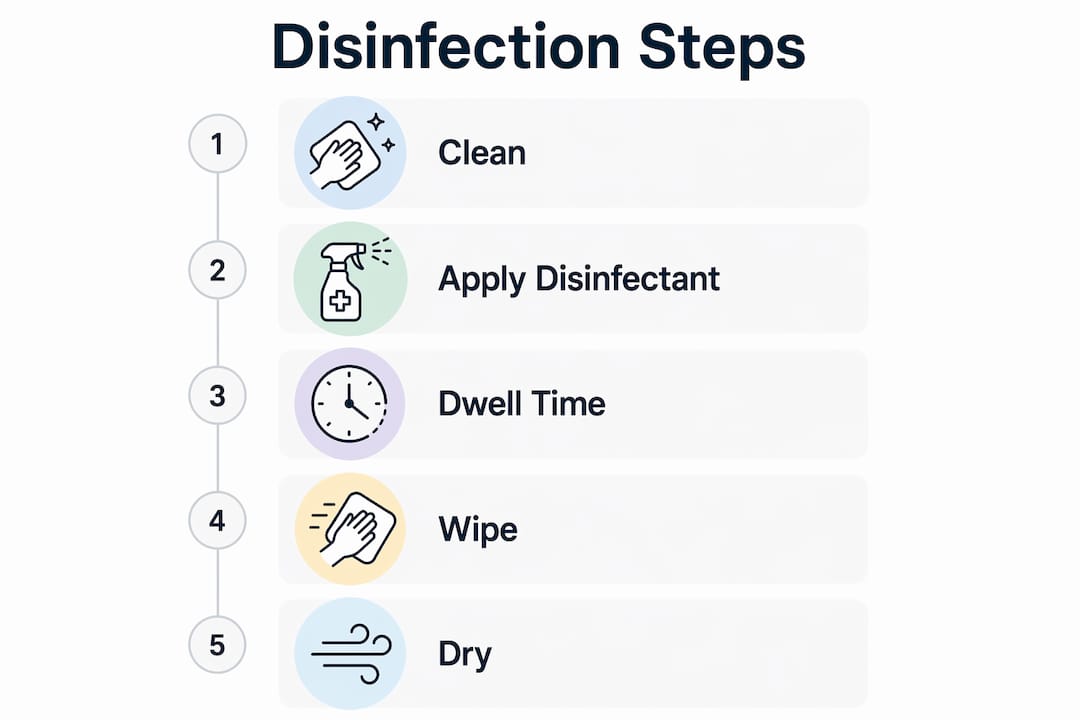
Step-by-step disinfection protocol
- Clean the surface first. Use soap and water or an all-purpose cleaner to remove visible dirt, grease, and organic matter. Rinse and allow to dry or wipe dry.
- Select an EPA-registered disinfectant. Check the product label for the EPA registration number. Products without one have not been tested for efficacy.
- Apply the disinfectant generously. The surface must remain visibly wet for the full dwell time. A light mist that dries in seconds does not work.
- Respect the dwell time. Dwell time is the most overlooked factor in effective disinfection. Wiping the surface before the required contact time ends negates pathogen killing entirely. Dwell times range from 30 seconds to 10 minutes depending on the product.
- Wipe or allow to air dry. Follow label instructions. Some products require rinsing on food-contact surfaces; others do not.
- Wash your hands. Remove gloves carefully and wash hands with soap and water for at least 20 seconds.
High-touch surfaces including doorknobs, light switches, faucet handles, and remote controls need the most frequent attention. These are the surfaces that transfer germs between people most efficiently in any home or workplace.
Pro Tip: Never wipe a disinfectant off immediately after spraying. Set a timer on your phone for the product’s listed dwell time. Most people skip this step and wonder why disinfection does not seem to work.
Which disinfectants are safe for Southern California homes?
The right disinfectant balances proven efficacy against a realistic safety profile for your household. Not every EPA-registered product is appropriate for every home.
Common disinfectant types available in California include:
- Quaternary ammonium compounds (quats). Widely used in household wipes and sprays. Effective against bacteria and many viruses. Lower irritation risk than bleach-based products.
- Sodium hypochlorite (bleach solutions). Highly effective and low cost. Requires dilution per label instructions. Can irritate skin, eyes, and the respiratory tract. Not suitable for all surfaces.
- Hydrogen peroxide-based products. Effective against a broad range of pathogens. Breaks down into water and oxygen, making it a lower-residue option for homes with children or pets.
- Alcohol-based disinfectants (isopropyl or ethanol at 70% or higher). Fast-acting on hard surfaces. Evaporates quickly, which limits dwell time, so application technique matters.
EPA-registered disinfectants with lower toxicity profiles are the recommended choice for homes with pets, children, or individuals with respiratory sensitivities. The EPA registration number on the label confirms the product has been tested and approved. Always verify it before purchasing.
Southern California’s warm climate creates specific storage considerations. Bleach degrades faster in heat, losing efficacy when stored in garages or outdoor utility areas in Hawthorne, Gardena, or Carson during summer months. Store all disinfectants in cool, dry, indoor locations away from direct sunlight.
For households interested in non-chemical options, UV-C technology offers an emerging alternative for certain surface types. It does not replace chemical disinfection for high-touch areas but can complement a broader hygiene routine.
Pro Tip: If you have pets or young children at home, look for hydrogen peroxide-based or quat-based products labeled “safer choice” by the EPA. They carry the same registration requirements but with a lower irritation risk. For more guidance, Themaidsociety has a dedicated resource on pet-safe cleaning products.
When is surface disinfection necessary?
Routine cleaning with soap and water is sufficient for most daily household tasks. The EPA and CDC recommend cleaning as the first line of defense, with disinfection used strategically rather than constantly.
Situations that call for disinfection include:
- Active illness in the household. When someone has a respiratory infection, stomach virus, or flu, disinfect high-touch surfaces daily until 48 hours after symptoms resolve.
- After handling raw meat or poultry. Kitchen counters and cutting boards need disinfection, not just cleaning, after contact with raw proteins.
- Move-in and move-out scenarios. Rental units in Inglewood, Westchester, or Baldwin Hills that have housed previous tenants carry an unknown pathogen load. Disinfection before occupancy is standard practice.
- Post-construction or renovation. Dust and debris from construction work in homes across Pacific Palisades or West Adams can harbor mold spores and bacteria. A thorough disinfection pass is part of a complete post-construction clean.
- High-traffic shared spaces. Home offices, shared bathrooms, and kitchens used by multiple people benefit from weekly disinfection of high-touch points.
- After visitors or gatherings. Surfaces touched by multiple guests should be disinfected within a few hours of the event ending.
The key principle is proportionality. Disinfecting every surface every day is unnecessary and can contribute to chemical buildup and surface damage over time. Reserve disinfection for the situations listed above, and rely on regular cleaning for everything else.
What safety mistakes should you avoid?
Disinfectants are regulated chemicals. Using them incorrectly creates health risks that can outweigh the hygiene benefits.
The most dangerous mistake is mixing products. Mixing bleach with ammonia or acidic cleaners produces hazardous gases that cause serious respiratory harm. This combination occurs more often than people realize when users alternate between two different cleaning products on the same surface without rinsing in between.
Common mistakes to avoid:
- Wiping off disinfectant before dwell time ends. This is the most frequent error and the one that most directly undermines efficacy.
- Skipping gloves. Repeated skin contact with disinfectants causes irritation and sensitization over time. Nitrile or latex gloves protect your hands during every application.
- Using disinfectants in unventilated spaces. Open windows or run exhaust fans when disinfecting bathrooms, kitchens, or small rooms. Fumes accumulate quickly in enclosed LA apartments and condos.
- Applying disinfectant to a dirty surface. Organic matter blocks chemical contact with pathogens. Always clean first.
- Ignoring label directions. Product labels legally define efficacy, dwell time, and safety precautions. The label is not optional reading.
- Using disinfectants on incompatible surfaces. Bleach-based products damage natural stone, certain metals, and some fabrics. Check compatibility before applying to countertops in kitchens across Los Feliz or Koreatown.
Pro Tip: Keep a dedicated pair of nitrile gloves near your cleaning supplies and treat them as non-negotiable. For a full list of cleaning hazards to avoid in Southern California homes, Themaidsociety has a practical reference guide.
Key Takeaways
Effective surface disinfection requires cleaning first, applying an EPA-registered product, and respecting dwell time. Skipping any one of these three steps significantly reduces how well the process protects your household.
| Point | Details |
|---|---|
| Clean before you disinfect | Organic matter blocks disinfectant contact with pathogens; always remove dirt first. |
| Dwell time is non-negotiable | Wiping a surface before the contact time ends negates pathogen killing entirely. |
| Match the product to the household | Use lower-toxicity EPA-registered disinfectants in homes with children, pets, or sensitive individuals. |
| Disinfect strategically, not constantly | Reserve disinfection for illness, high-traffic events, and high-touch surfaces; daily cleaning suffices otherwise. |
| Never mix chemical products | Combining bleach with ammonia or acidic cleaners produces toxic gases; always use one product at a time. |
Why I think most people in LA are disinfecting wrong
I have walked through hundreds of homes across Los Angeles, from compact apartments in Koreatown to large family houses in Manhattan Beach, and the pattern is consistent. People spray a disinfectant, wipe it off in five seconds, and consider the job done. The surface looks clean. It probably is not disinfected.
The dwell time problem is real and almost universal. Most people have never read the back of a disinfectant bottle in full. When they do, they are often surprised to find that the product they have been using requires three to ten minutes of wet contact time to work. That is not how most people use it.
The second thing I see constantly is product confusion. Households in Beverly Hills and Santa Monica often have a collection of sprays under the sink, some of which are cleaners, some sanitizers, and one or two actual disinfectants. They get used interchangeably. The result is a false sense of security, especially during cold and flu season.
My honest recommendation for Southern California households is to simplify. Choose one EPA-registered disinfectant appropriate for your household composition, learn its dwell time, and use it correctly in the situations that actually call for it. You do not need ten products. You need one good one, used properly. If you want to understand how sanitizing high-touch areas fits into a broader cleaning routine, that is a good place to start building the habit.
— Lyndsey
Professional disinfection services in Los Angeles
Themaidsociety brings trained, vetted cleaning professionals to homes across Los Angeles, Beverly Hills, Culver City, West Hollywood, and the broader Southern California region. Every team member follows a structured disinfection protocol that includes cleaning before disinfecting, verified dwell times, and EPA-registered products matched to your home’s specific needs.
Whether you need a standard clean, a deep disinfection after illness, or a thorough move-in clean for a new property, Themaidsociety handles the details so you do not have to. The team uses professional-grade disinfectants appropriate for homes with children, pets, and sensitive individuals. To see the full range of cleaning services in Los Angeles or to book a visit, explore what Themaidsociety offers for your neighborhood.
FAQ
What is the difference between disinfecting and sanitizing?
Sanitizing reduces germ counts to safe levels but does not kill viruses. Disinfecting uses EPA-registered chemicals to kill or inactivate most pathogens, including viruses, on hard surfaces.
How long should a disinfectant stay on a surface?
Dwell time varies by product and ranges from 30 seconds to 10 minutes. Always check the product label, as wiping the surface before the listed contact time ends negates the disinfecting effect.
Do I need to clean a surface before disinfecting it?
Yes. Organic matter and dirt physically block disinfectants from reaching pathogens. Cleaning with soap and water before applying a disinfectant is required for the process to work correctly.
Which surfaces need the most frequent disinfection?
Doorknobs, light switches, faucet handles, toilet flush handles, and remote controls are the highest-priority surfaces. These are touched repeatedly by multiple people and transfer germs most efficiently.
Are natural or DIY disinfectants effective?
Most DIY mixtures, including vinegar-based solutions, are not EPA-registered and have not been tested for pathogen inactivation. For verified efficacy, use only products with an EPA registration number on the label.
Recommended Articles
- Disinfecting vs. cleaning: Smart home care for LA residents
- How to sanitize high-touch areas in your home
- Essential cleaning hazards to avoid for a safer LA home
- Pet-friendly cleaning workflow: Keep pets safe and home fresh
- Keep your LA home clean and your kids safe
Want to grow your cleaning business or manage client leads more efficiently? ConvertLabs is a tool worth exploring for service-based businesses in Southern California.
© 2026 Themaidsociety. Serving Los Angeles, Beverly Hills, Santa Monica, Culver City, West Hollywood, Manhattan Beach, Long Beach, Burbank, and surrounding communities.
Recommended
- Disinfecting vs cleaning: Smart home care for LA residents
- How to Sanitize High-Touch Areas in Your Home
- Home sanitation basics: keep LA homes clean and healthy



Get Cleaning Tips & Exclusive Offers
Join our community for time-saving hacks and special discounts delivered to your inbox.