
TL;DR:
- A vacancy clean is a one-time deep cleaning service performed on an empty property to meet landlord standards and ensure deposit recovery. It involves thorough cleaning of all surfaces, appliances, and concealed areas, taking significantly longer than regular cleans. Proper preparation and professional services help tenants pass final inspections and avoid deposit deductions.
By L.K. | Themaidsociety | Los Angeles, CA

{
  "@context": "https://schema.org",
  "@type": "Article",
  "headline": "What Is a Vacancy Clean? Your Move-Out Guide",
  "author": {
    "@type": "Person",
    "name": "L.K."
  },
  "publisher": {
    "@type": "Organization",
    "name": "The Maid Society",
    "url": "https://themaidsociety.com"
  },
  "datePublished": "2026-01-01",
  "dateModified": "2026-01-01",
  "description": "A vacancy clean is a one-time intensive deep cleaning performed on an empty property to meet landlord inspection standards and secure full deposit return.",
  "mainEntityOfPage": "https://themaidsociety.com/what-is-move-out-cleaning"
}
Table of Contents
- What is a vacancy clean?
- How does vacancy cleaning differ from regular and deep cleaning?
- What areas and tasks does a vacancy clean cover?
- Why is vacancy cleaning important for tenants and homeowners?
- How to prepare for a vacancy clean and final inspection
- Key Takeaways
- Perspective
- Themaidsociety vacancy cleaning services in Southern California
- FAQ
A vacancy clean is defined as a one-time, intensive deep cleaning service performed on an empty property to restore it to near-original condition and meet landlord inspection standards. The industry standard term is “move-out cleaning” or “end of lease cleaning,” and both phrases describe the same service. What is a vacancy clean in practical terms? It is the cleaning that stands between you and your full security deposit. Move-out cleaning typically takes 5–8 hours for a three-bedroom unit, compared to just 2–3 hours for a regular clean. That time difference reflects the depth of work required. Tenants and homeowners across Los Angeles, Beverly Hills, Santa Monica, and surrounding Southern California communities rely on this service to pass final walk-throughs and avoid costly disputes.
What is a vacancy clean?
A vacancy clean is a full professional restoration of an empty property to inspection-ready condition. The service goes far beyond what any recurring maintenance clean covers. Every surface, appliance interior, cabinet, and floor receives attention because the property is fully empty and accessible.
The term “vacancy clean” is widely used in Southern California real estate and property management circles. The recognized industry equivalent is “move-out cleaning” or “end of lease clean.” Both terms describe the same scope: a thorough, one-time service aligned with landlord checklists and lease requirements.
Vacate cleaning restores the property’s condition so it passes final inspections and protects tenants’ financial interests. That protection is the core reason this service exists. Without it, landlords have grounds to deduct cleaning costs from your deposit, often at rates far higher than a professional service would charge.
How does vacancy cleaning differ from regular and deep cleaning?
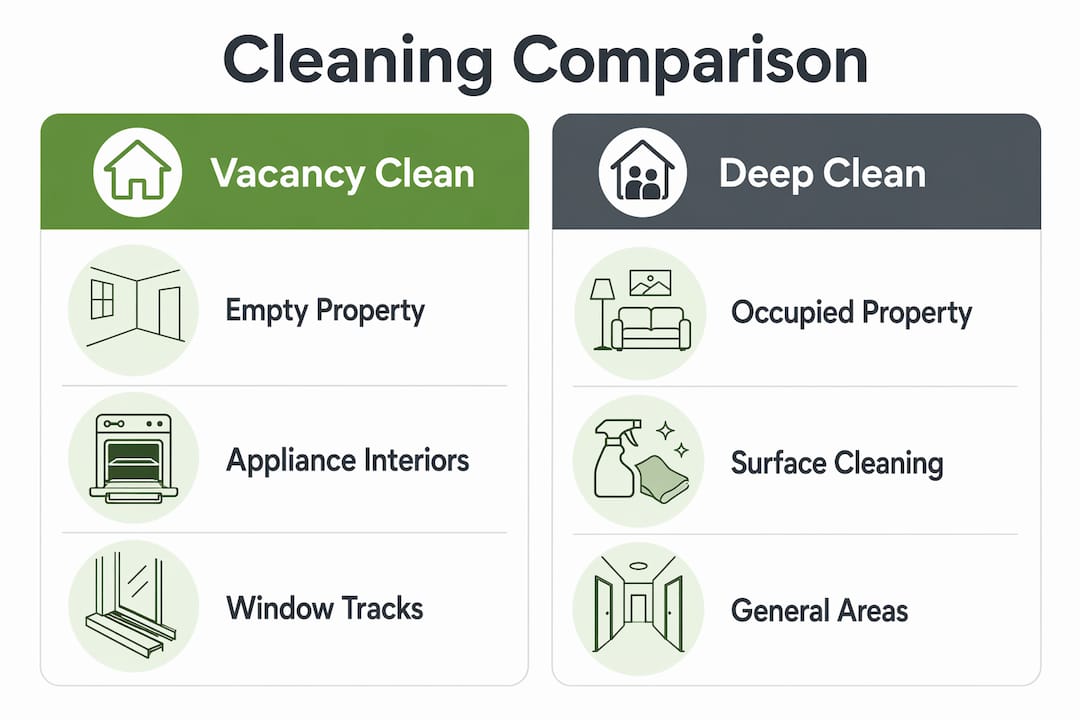
The three cleaning types serve different purposes, and confusing them costs tenants money. Regular cleaning is recurring maintenance performed in occupied homes. It covers visible surfaces, floors, and bathrooms at a surface level. A standard deep clean goes further but typically excludes appliance interiors and cabinet interiors unless specifically requested.
A vacancy clean assumes the property is empty. Empty property access enables cleaners to reach concealed grime behind appliances and inside cabinets, which significantly increases both the time and labor involved. That access is what separates vacancy cleaning from every other cleaning category.
| Cleaning Type | Typical Duration (3-bed) | Key Areas Covered | Starting Price (2026) |
|---|---|---|---|
| Regular cleaning | 2–3 hours | Surfaces, floors, visible areas | Lower than deep clean |
| Standard deep clean | 3–5 hours | Surfaces plus bathrooms, kitchen detail | From $250 |
| Vacancy / move-out clean | 5–8+ hours | All of the above plus appliance interiors, cabinets, baseboards, window tracks | From $280 |
The price difference between deep and vacancy cleaning is real but modest. The scope difference is significant. A standard deep clean will not satisfy most landlord inspection checklists in Los Angeles or Beverly Hills.
Pro Tip: Booking a standard deep clean instead of a move-out clean is one of the most common and costly errors tenants make. Always confirm the service type before your appointment.
One more distinction matters: “broom clean.” Broom clean means basic sweeping and emptying, not a professional restoration. Some leases use this phrase, but it rarely satisfies landlord expectations in competitive Southern California rental markets. Always read your lease carefully to understand which standard applies.
What areas and tasks does a vacancy clean cover?
A professional vacancy clean follows a landlord-aligned checklist that covers every room and surface in the property. The goal is to leave no area that an inspector could flag. Here is what a thorough end of lease clean includes:
Kitchen
- Oven interior, racks, and broiler pan degreased
- Refrigerator interior wiped, including shelves and drawers
- Cabinet interiors and exteriors cleaned
- Range hood filter and exhaust cleaned
- Sink and faucet descaled
Bathrooms
- Grout scrubbed and tile descaled
- Shower screens and tub surrounds cleaned
- Toilet sanitized inside and out
- Vanity, mirror, and fixtures polished
Throughout the property
- Baseboards wiped down
- Window tracks and sills cleaned
- Light fixtures and ceiling fans dusted
- Wall spot-cleaning for scuffs and marks
- Closets and drawers wiped inside
- Floor mopping, polishing, or carpet cleaning as required
Pro Tip: Pay special attention to window tracks. Property managers in Los Angeles and West Hollywood consistently flag dirty window tracks during final inspections. They are easy to miss and easy to clean with the right tools.
Professional services follow landlord checklists and apply the right products for each surface. Tenants often lack the tools and chemicals needed for tasks like oven degreasing or tile descaling. That gap is exactly why professional post-tenancy cleaning exists.
The table below shows which areas are most commonly flagged during Southern California final inspections and why they matter.
| Area | Common Issue | Why Inspectors Flag It |
|---|---|---|
| Oven interior | Baked-on grease | Visible and expensive to remediate |
| Grout lines | Mold and discoloration | Indicates neglect over tenancy |
| Baseboards | Dust buildup | Signals incomplete cleaning effort |
| Window tracks | Debris and grime | Frequently missed by tenants |
| Refrigerator interior | Odors and residue | Health and hygiene concern |
Why is vacancy cleaning important for tenants and homeowners?
Vacancy cleaning is the most direct way to protect your security deposit. Landlords in Los Angeles, Culver City, West Hollywood, and across Southern California have the legal right to deduct cleaning costs from deposits when a property is returned below the standard it was received. A professional move-out clean removes that risk.
Clear documentation of a professional vacancy clean supports tenants in deposit disputes. This means keeping your receipt, any satisfaction guarantee documentation, and before-and-after photos. That paper trail is your defense if a landlord disputes the condition of the property.
“Tenant inspections are formal evaluations that reference move-in condition reports. Treating them seriously, with professional cleaning and full documentation, is the most reliable way to recover your full deposit and avoid disputes.”
Tenants who underestimate the cleaning scope face real financial consequences. Landlords can hire their own cleaners and bill the cost against the deposit, often at premium rates. A professional vacancy cleaning service in Los Angeles typically costs less than what a landlord charges for remediation cleaning.
The benefits extend beyond deposit recovery. A well-cleaned vacant property attracts the next tenant or buyer faster. For homeowners preparing to sell or lease in markets like Manhattan Beach, Brentwood, or Pacific Palisades, a clean property photographs better and shows better. That translates directly to faster transactions and stronger offers.
Professional vacancy cleaning services often provide satisfaction guarantees, including free touch-ups if the landlord is not satisfied after the initial clean. That guarantee reduces your risk to near zero when you choose the right provider.
How to prepare for a vacancy clean and final inspection
Preparation determines how effective your vacancy clean will be. Follow these steps to give your cleaning team full access and maximize your results.
-
Remove all personal belongings and furniture. Cleaners need unobstructed access to every surface, corner, and floor. Furniture left behind limits what they can reach and may result in additional charges.
-
Review your lease agreement before booking. Lease agreements may require professional carpet cleaning or steam cleaning with receipts. Missing this requirement can cost you part of your deposit even if the rest of the property is spotless.
-
Schedule cleaning before your final walk-through. Book your vacancy clean at least one to two days before the landlord inspection. This gives you time to address any touch-ups without rushing.
-
Gather your move-in condition report and photos. Move-in condition reports and photos are the reference point for your final inspection. Know what the property looked like when you moved in so you can address only the changes that occurred during your tenancy.
-
Hire a professional service experienced with move-out standards. A general cleaner may not follow landlord checklists. Look for a service that specializes in move-out cleaning standards and can provide documentation of the work completed.
-
Do not accept “broom clean” as sufficient. If your lease requires the property to be returned in the condition it was received, broom clean will not meet that standard. A full vacancy clean is the only way to satisfy most Southern California landlords.
Pro Tip: Schedule your vacancy clean for a weekday morning. Cleaning teams are fresher, and you have the full day to review the results and request any touch-ups before your inspection.
For a detailed walkthrough of what property managers expect, the step-by-step move-out guide from Themaidsociety covers the full process from preparation to final sign-off.
Understanding how to prepare for tenant turnover cleaning is equally useful if you are a property owner managing the transition between tenants. The preparation steps apply from both sides of the lease.
Key Takeaways
A vacancy clean is the single most effective step a tenant or homeowner can take to secure a full deposit return and pass a final property inspection without dispute.
| Point | Details |
|---|---|
| Vacancy clean defined | A one-time intensive deep clean of an empty property aligned with landlord inspection checklists. |
| Scope exceeds deep cleaning | Vacancy cleans include appliance interiors, cabinet interiors, baseboards, and window tracks that standard deep cleans skip. |
| Time and cost difference | Move-out cleaning takes 5–8 hours versus 2–3 hours for regular cleaning, starting from $280 in 2026. |
| Documentation protects you | Keep receipts, satisfaction guarantees, and before-and-after photos to support any deposit dispute. |
| Lease compliance is critical | Always check lease requirements for carpet steam cleaning or other specific services before booking. |
Why I think most tenants underestimate this process
I have seen the same pattern repeat across Los Angeles, Santa Monica, and Culver City rentals. Tenants spend a weekend cleaning, feel confident, and then lose hundreds of dollars at the final inspection. The problem is almost never effort. It is scope.
Most people do not know what a landlord inspection checklist actually covers. They clean what they can see and skip what they cannot. Oven interiors, grout lines, window tracks, and the insides of cabinets are the areas that consistently fail inspections. These are not difficult to clean with the right tools. They are just easy to overlook when you are also managing a move.
The other mistake I see constantly is treating a vacancy clean as optional or as something to do yourself to save money. In Southern California’s rental market, where deposits often represent thousands of dollars, that calculation rarely works in the tenant’s favor. A professional service with a satisfaction guarantee costs a fraction of what a landlord will charge for remediation.
My honest advice: book your vacancy clean before you start packing. Confirm the service scope in writing. Ask specifically whether the team follows a landlord inspection checklist. And keep every piece of documentation you receive. The tenants who recover their full deposits are the ones who treat the final inspection as seriously as they treated signing the lease.
— Lyndsey
Themaidsociety vacancy cleaning services in Southern California
Themaidsociety provides move-in and move-out cleaning across Los Angeles, Beverly Hills, Santa Monica, Culver City, West Hollywood, Manhattan Beach, Long Beach, Burbank, and surrounding Southern California communities. Every vacancy clean follows a landlord-aligned checklist covering kitchens, bathrooms, appliances, baseboards, window tracks, and floors.

Scheduling is flexible and aligned with your move-out timeline. The team is fully vetted and trained to meet the inspection standards that Southern California property managers expect. Documentation is provided after every clean for your records. If you are preparing for a final walk-through and want a team that understands what landlords look for, explore the full range of residential cleaning services Themaidsociety offers across the region.
FAQ
What is the difference between a vacancy clean and a deep clean?
A vacancy clean covers appliance interiors, cabinet interiors, baseboards, and window tracks that standard deep cleans typically skip. It is performed in an empty property and aligned with landlord inspection checklists, making it the appropriate choice for move-out situations.
How long does a vacancy clean take?
Move-out cleaning takes 5–8 hours for a three-bedroom property, compared to 2–3 hours for a regular clean. Larger properties or heavily soiled units may require additional time and multiple cleaners.
Does a vacancy clean guarantee my deposit back?
A professional vacancy clean significantly reduces the risk of deposit deductions for cleanliness. Keeping documentation, receipts, and photos further protects you in any dispute with your landlord.
What does “broom clean” mean, and is it enough?
Broom clean means basic sweeping and emptying of the property. It is rarely sufficient to satisfy landlord inspection standards in Southern California and will not meet lease requirements that specify returning the property in its original condition.
Do I need to arrange carpet cleaning separately?
Check your lease first. Some leases require professional carpet steam cleaning with a receipt as a separate service. Failing to provide that receipt can result in deposit deductions even if the rest of the property passes inspection.
Recommended Articles
- What Is Move-Out Cleaning? Complete LA Guide
- 7 Essential Steps for a Move-Out Cleaning Checklist
- Master the Final Inspection Cleaning Process for Turnover
- Move In Cleaning Explained: Ensuring a Fresh Start
- Deep Cleaning for New Tenants Guide: LA Move-In Success
For cleaning businesses looking to grow their local presence, SEO for cleaning services is a resource worth reviewing. Property managers and cleaning companies in Southern California can also explore ConvertLabs for tools that support client acquisition and business growth.
Recommended
- How to Reduce Vacancy with Cleaning: A Property Manager’s Guide
- Step by Step Move Out Cleaning Guide for Managers
- Move In Cleaning Explained: Ensuring a Fresh Start



Get Cleaning Tips & Exclusive Offers
Join our community for time-saving hacks and special discounts delivered to your inbox.