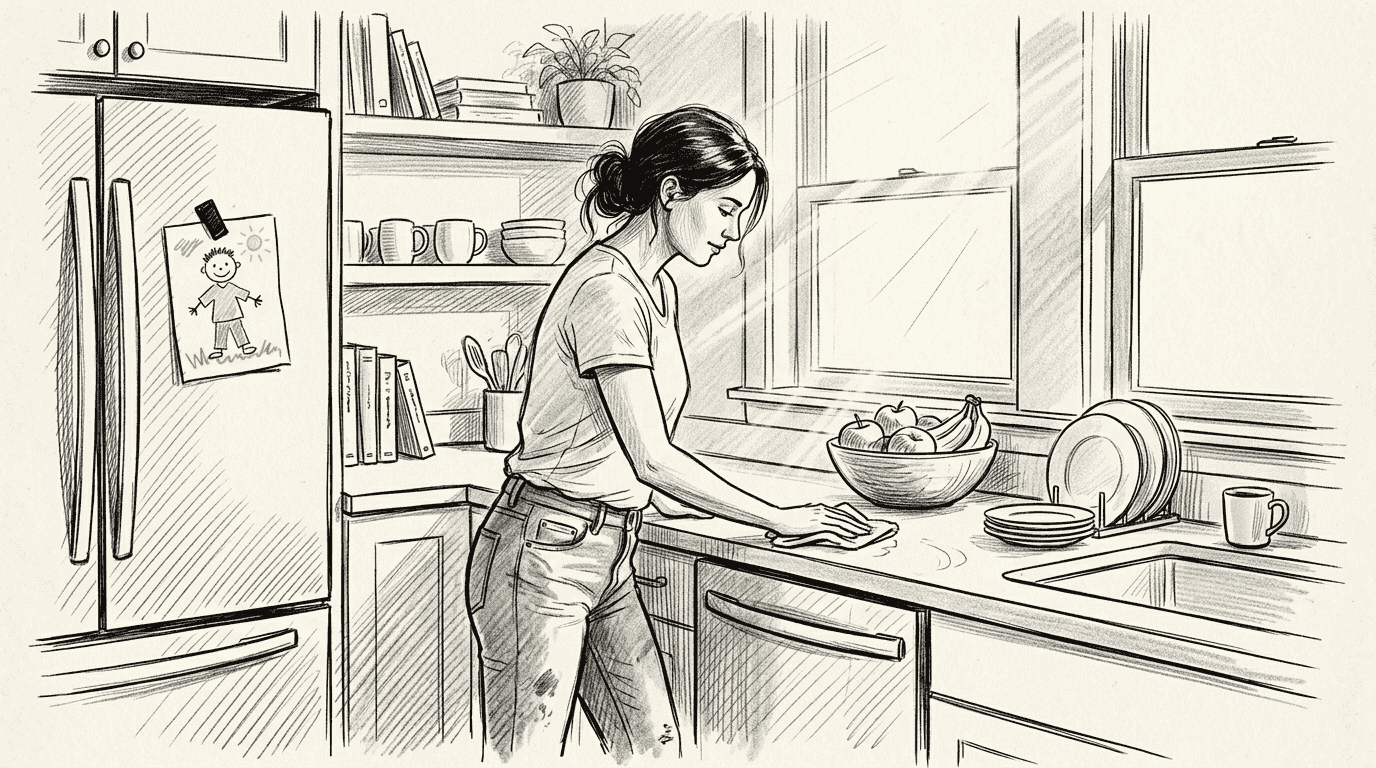
Cleaning your home shouldn’t feel like an endless battle against clutter and chaos. If you’re juggling work, family, and daily responsibilities in Los Angeles, the thought of maintaining a spotless home can trigger genuine anxiety. The good news is that a clean space can reduce stress, improve focus, and boost overall well-being. This article reveals a proven stress-free cleaning method that transforms overwhelming tasks into manageable daily habits, helping you reclaim hours each week while enjoying a calmer, more organized living space.
Table of Contents
- Why Stress-Free Cleaning Matters For Busy Households
- Preparing Your Stress-Free Cleaning Plan
- Executing The 5×5 Method For Manageable Cleaning Sessions
- Maintaining Results And Adapting Your Routine
- Discover Professional Cleaning Help In Los Angeles
- Frequently Asked Questions
Key takeaways
| Point | Details |
|---|---|
| Clean spaces reduce stress | Organized environments lower cortisol levels and improve mental clarity for busy families. |
| Daily habits prevent overwhelm | Breaking tasks into small, consistent actions eliminates weekend cleaning marathons. |
| The 5×5 method works | Five areas cleaned for five minutes each creates sustainable, motivating routines. |
| Delegation increases efficiency | Shared responsibility among family members lightens individual burdens and teaches valuable skills. |
| Consistency beats intensity | Regular small efforts maintain cleanliness better than sporadic deep cleaning sessions. |
Why stress-free cleaning matters for busy households
Your mental health directly connects to your physical environment in ways you might not fully recognize. Clutter increases anxiety by overwhelming the brain, making it harder to relax or concentrate after long workdays. Research consistently shows that people living in cluttered spaces experience elevated cortisol levels throughout the day, leading to chronic stress and fatigue.
The benefits of maintaining tidy spaces extend far beyond aesthetics:
- Clean environments promote calmness and happiness by reducing visual distractions
- Organized homes improve mental clarity, helping you make better decisions
- Regular cleaning correlates with reduced depressive symptoms in clinical studies
- Mental fatigue decreases when your surroundings support rather than drain your energy
Think about walking into a clean kitchen versus one with dirty dishes piled in the sink. The first scenario immediately feels manageable and inviting. The second triggers a stress response before you even start cooking. This psychological impact compounds throughout your day, affecting everything from your mood to your productivity at work.
Understanding the health and stress benefits of cleaning provides powerful motivation to establish sustainable routines. When you recognize that tidying up directly improves your well-being, the effort feels less like a chore and more like self-care. A clean space supports a more productive, relaxed lifestyle, giving you the mental bandwidth to focus on what truly matters to your family.
Preparing your stress-free cleaning plan
Creating an effective cleaning routine starts with honest assessment of your actual availability, not idealized schedules that ignore reality. The most effective cleaning schedule is time-conscious, delegated, realistic, and flexible, adapting to the family’s lifestyle rather than fighting against it.
Begin by listing core cleaning tasks and prioritizing them by visible impact. Focus on high-traffic areas like kitchens, bathrooms, and living spaces where mess accumulates fastest. Here’s how to build your personalized plan:
- Assess your available daily time slots realistically, accounting for commutes and commitments
- Identify which tasks genuinely matter versus perfectionist standards that drain energy
- Delegate age-appropriate chores to family members, teaching responsibility while lightening your load
- Build flexibility into your schedule to handle unexpected demands without guilt
- Balance daily maintenance tasks with weekly deeper cleaning sessions
Pro Tip: Use your phone’s calendar to block 25-minute cleaning windows at consistent times each day. This creates a habit trigger that makes starting easier than relying on motivation alone.
The key to sustainable routines lies in matching tasks to energy levels throughout your week. Morning people might tackle kitchen cleaning before work, while evening types prefer quick tidying after dinner. Time-saving cleaning strategies work best when they align with your natural rhythms rather than fighting them.
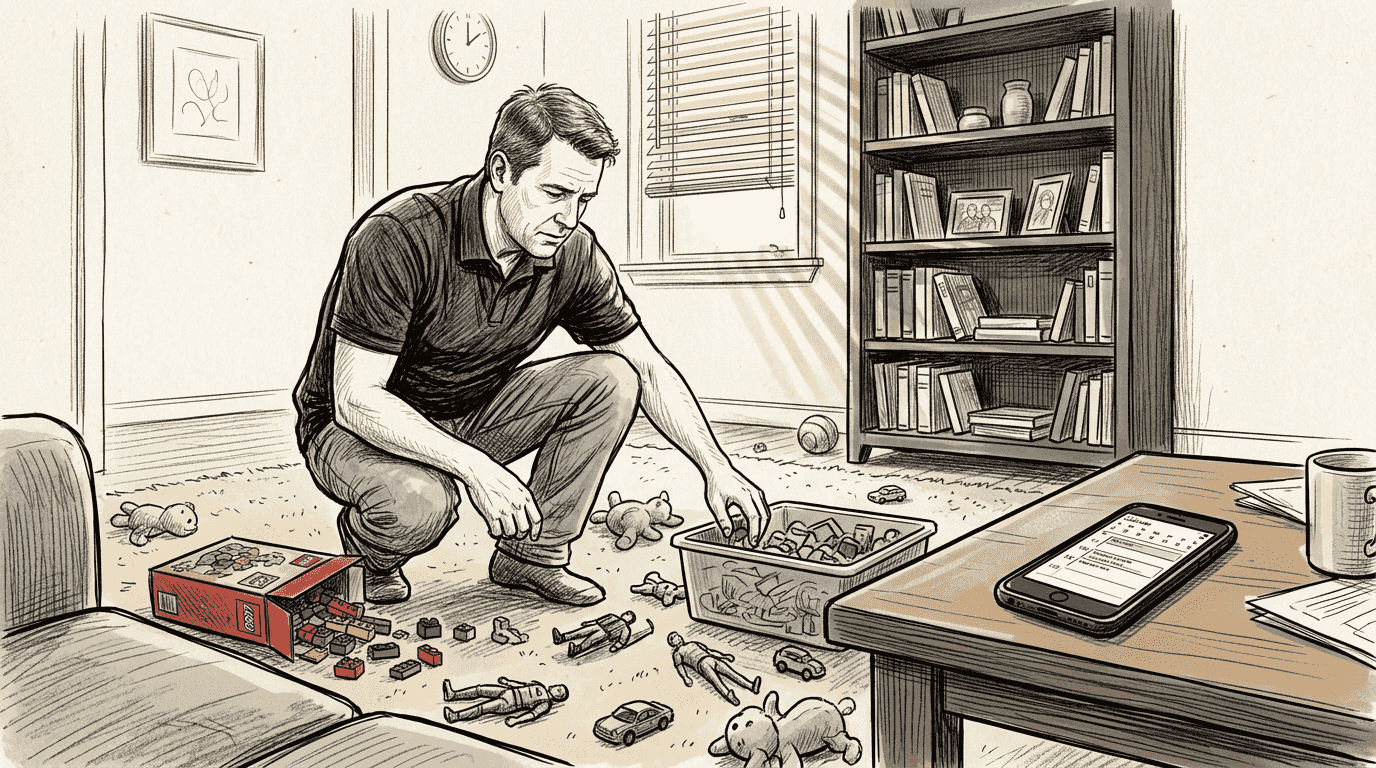
Consider this weekly framework to distribute effort evenly:
| Day | Focus Area | Duration | Tasks |
|---|---|---|---|
| Monday | Kitchen | 25 min | Counters, appliances, floor spot-clean |
| Tuesday | Bathrooms | 25 min | Toilets, sinks, mirrors, quick scrub |
| Wednesday | Living areas | 25 min | Surfaces, cushions, visible clutter |
| Thursday | Bedrooms | 25 min | Making beds, laundry, nightstands |
| Friday | Floors | 25 min | Vacuum high-traffic zones, mop spots |
Establishing essential cleaning habits means starting small and building gradually. Don’t attempt to overhaul your entire routine overnight. Pick two or three foundational tasks that create the biggest visual impact, master those, then add more as habits solidify.
Executing the 5×5 method for manageable cleaning sessions
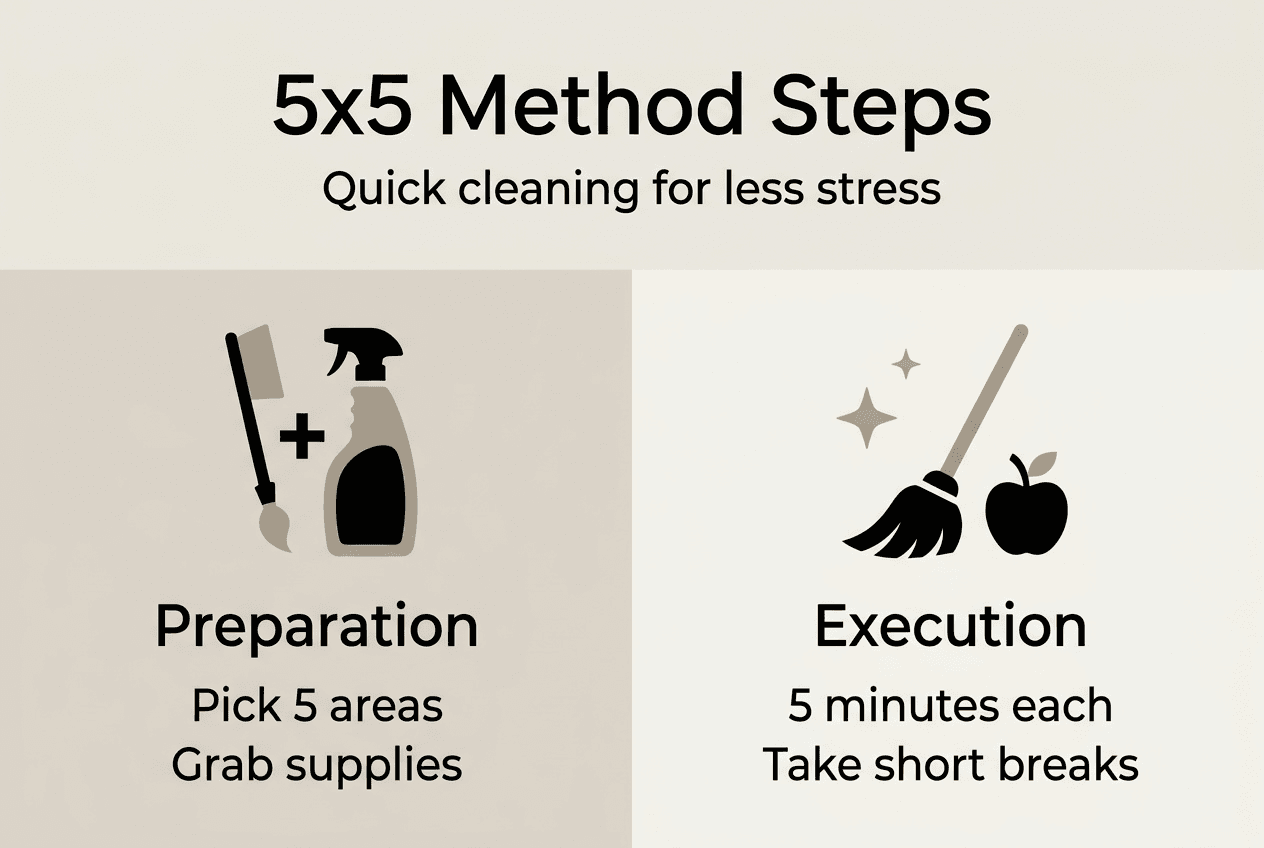
The 5×5 Cleaning Method breaks down cleaning tasks into smaller doses to increase motivation and reduce overwhelm, making it perfect for busy households. This approach transforms cleaning from an exhausting marathon into a series of quick sprints that fit naturally into your day.
Here’s exactly how the 5×5 speed cleaning method works:
- Choose five specific areas in your home that need attention today
- Set a timer for exactly five minutes for the first area
- Focus exclusively on high-impact tasks in that zone until the timer sounds
- Move immediately to the next area and repeat the process
- Complete all five areas for a total of 25 minutes of focused cleaning
The beauty of this method lies in its psychological design. Five minutes feels achievable even on your most exhausted days. You’re not committing to hours of scrubbing. You’re simply agreeing to five focused minutes, which removes the mental barrier that prevents you from starting.
“The timer creates urgency that keeps you moving efficiently rather than getting lost in perfectionist details. You accomplish more in five focused minutes than 20 minutes of distracted, half-hearted effort.”
Apply the same focus-break principle used in productivity techniques to your cleaning sessions. Work intensely during each five-minute block, then take a mental break as you transition to the next area. This prevents the burnout that comes from sustained physical effort without rest.
Pro Tip: Keep a running list of five potential areas on your phone. When it’s time to clean, you don’t waste mental energy deciding what to tackle. Just grab the list and start your timer.
Incorporate quick resets between your 5×5 sessions to maintain momentum. Making beds takes 90 seconds but instantly makes bedrooms look organized. Unloading the dishwasher while coffee brews eliminates a task that often gets postponed all day. These micro-habits complement the structured 5×5 approach beautifully.
The step-by-step cleaning guide approach works because it respects your time constraints while delivering visible results. After completing your 25-minute session, you’ll see tangible improvement across multiple areas rather than one perfectly cleaned room while the rest remains chaotic.
Maintaining results and adapting your routine
Sustaining cleanliness requires different skills than achieving it initially. Small daily habits prevent small messes from escalating into larger problems that demand hours to resolve. The goal is creating a maintenance system that feels effortless rather than exhausting.
Start each day with your bed made. This single action takes under two minutes but creates an immediate sense of order that influences your mindset. You’ve accomplished something productive before leaving the bedroom, setting a positive tone that often carries into other areas.
These quick tidying practices prevent weekend overload:
- Put dishes directly into the dishwasher instead of leaving them in the sink
- Fold and put away laundry the same day you wash it
- Return items to their designated spots immediately after use
- Spend five minutes before bed doing a quick sweep of common areas
- Wipe bathroom counters after morning routines while they’re still damp
Flexibility remains crucial as your schedule and family needs evolve. A routine that works perfectly during summer might fail completely when school starts and activities ramp up. Give yourself permission to adjust tasks without guilt or feelings of failure.
Maintain a simple checklist to track tasks and celebrate progress. Seeing completed items provides motivation and helps identify patterns. Maybe Thursdays consistently feel rushed, suggesting you should move demanding tasks to calmer days. This data-driven approach removes guesswork from optimization.
Consider how weekly versus daily tasks build cumulative cleanliness:
| Task Type | Frequency | Time Investment | Impact |
|---|---|---|---|
| Daily tidying | 7 days/week | 10 min/day | Prevents accumulation, maintains baseline |
| 5×5 sessions | 5 days/week | 25 min/day | Addresses specific areas systematically |
| Deep cleaning | 1 day/week | 60 min | Tackles neglected zones, seasonal tasks |
| Professional help | 2 times/month | 0 min (delegated) | Comprehensive cleaning, mental relief |
The compound effect of consistent small efforts outperforms sporadic intense cleaning marathons. Ten minutes daily totals over an hour weekly, distributed in manageable chunks that don’t trigger resistance or exhaustion. This approach aligns with how busy families actually live rather than idealized versions of domestic perfection.
Understanding cleaning roles in busy families helps distribute responsibility equitably. Children as young as three can put toys in bins. Teenagers can handle their own laundry and bathroom cleaning. Partners can divide tasks based on preference and schedule rather than outdated gender expectations.
Adapt your routine as life changes. New babies, job transitions, health challenges, and seasonal demands all affect your capacity. The stress-free cleaning method works precisely because it scales up or down based on your current reality rather than demanding fixed commitments regardless of circumstances.
Discover professional cleaning help in Los Angeles
Even with the most efficient personal routines, professional cleaning services can save time and reduce stress further for busy LA families. Combining your daily maintenance habits with expert deep cleaning creates optimal results without overwhelming your schedule.
The Maid Society specializes in professional cleaning services tailored to the unique needs of Los Angeles households. Our fully vetted, trained team delivers consistent, detail-oriented cleaning that complements your stress-free methods perfectly. Whether you need bi-weekly maintenance, monthly deep cleans, or seasonal organizing, we handle the heavy lifting so you can focus on what matters most.
Many clients use our services strategically, maintaining daily tidiness themselves while delegating bathrooms, floors, and kitchen deep cleaning to our professionals. This hybrid approach maximizes both efficiency and budget. Explore our cleaning strategies for busy parents and discover how essential cleaning habits for families integrate seamlessly with professional support.
Frequently asked questions
How long does the 5×5 cleaning method take each day?
The 5×5 method typically takes 25 minutes total each day, cleaning five areas for five minutes each. This fits easily into busy schedules during morning routines, lunch breaks, or before dinner. The structured time limit prevents tasks from expanding endlessly while delivering visible results across multiple rooms.
Can I modify the 5×5 method for smaller homes?
Absolutely, you can adapt the method to three areas for five minutes each in smaller spaces, totaling 15 minutes daily. Focus on high-impact zones like kitchens, bathrooms, and entryways. The core principle of timed, focused cleaning sessions works regardless of home size.
What if I miss a day in my cleaning routine?
Missing occasional days is completely normal and expected in sustainable routines. Simply resume the next day without trying to catch up or do double sessions. Consistency over weeks and months matters far more than perfect daily execution. Life happens, and flexible systems accommodate reality.
How do I get family members to participate in cleaning?
Start by assigning age-appropriate tasks with clear expectations and demonstrating techniques once. Use positive reinforcement rather than criticism, and consider rotating tasks weekly to prevent boredom. Making cleaning a shared family activity with music or conversation often increases participation naturally.
When should I hire professional cleaners instead of doing it myself?
Consider professional help when your schedule genuinely doesn’t allow for adequate maintenance, when deep cleaning tasks feel overwhelming, or when your mental health benefits from delegating the burden. Many families use professionals monthly or bi-weekly while maintaining daily tidiness themselves, creating a balanced approach that respects both time and budget constraints.
Recommended
- 7 Time-Saving Cleaning Strategies for Busy Parents
- Cleaning for busy professionals: save 4 hours weekly
- Cleaning tips for busy professionals: save 30 minutes daily
- How to Clean Busy Home Naturally: A Step-by-Step Guide
- Step by Step HVAC Cleaning for Better Home Air Quality
- How to Clean Plantation Shutters: Step-by-Step Guide | Shutter World



Get Cleaning Tips & Exclusive Offers
Join our community for time-saving hacks and special discounts delivered to your inbox.