TL;DR:
- OSHA standards specify detailed requirements for workplace sanitation, bloodborne pathogen cleanup, and surface cleaning. Maintaining proper fixture counts, safety protocols, and documentation is essential for compliance. Regular training and record-keeping help businesses avoid citations and foster a safety-focused culture.
By L.K. | Themaidsociety | Updated 2026
Table of Contents
- What are the OSHA sanitation facility requirements for workplaces?
- How does OSHA regulate bloodborne pathogen cleaning?
- What are OSHA’s surface cleaning and housekeeping requirements?
- How can businesses maintain OSHA cleaning compliance in dynamic workplaces?
- Key Takeaways
- Perspective
- Promo
- FAQ
OSHA cleaning requirements explained in plain terms: they are mandatory federal standards that define exactly how workplaces must be cleaned, sanitized, and maintained to protect worker health. The two most critical regulations are 29 CFR 1910.141, which governs general sanitation, and 29 CFR 1910.1030, which covers bloodborne pathogen handling. Together, these standards set rules for restroom access, surface cleaning, biohazard cleanup, and documented safety procedures. For business owners and facility managers across Los Angeles, Beverly Hills, Santa Monica, and the broader Southern California region, understanding these rules is not optional. Violations carry serious citations, fines, and liability exposure.
What are the OSHA sanitation facility requirements for workplaces? {#sanitation}
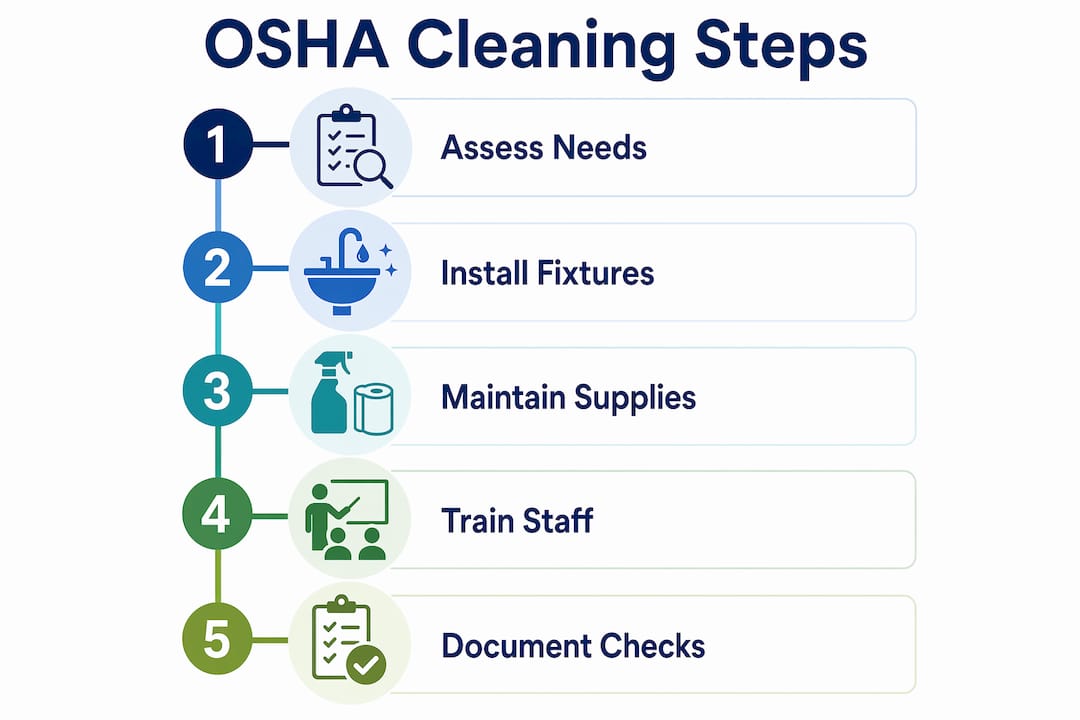
OSHA’s sanitation standard, 29 CFR 1910.141, sets the minimum number of toilet fixtures a workplace must provide based on employee headcount. The fixture count scales progressively: 1–15 employees require 1 toilet, and above 150 employees, 1 additional toilet per 40 employees is required. That scaling rule catches many growing businesses off guard. A company that adds 10 employees to cross a threshold must add fixtures before the next OSHA inspection.
Fixture count reference table
| Employee count | Minimum toilets required |
|---|---|
| 1–15 | 1 |
| 16–35 | 2 |
| 36–55 | 3 |
| 56–80 | 4 |
| 81–110 | 5 |
| 111–150 | 6 |
| Over 150 | 1 per additional 40 employees |
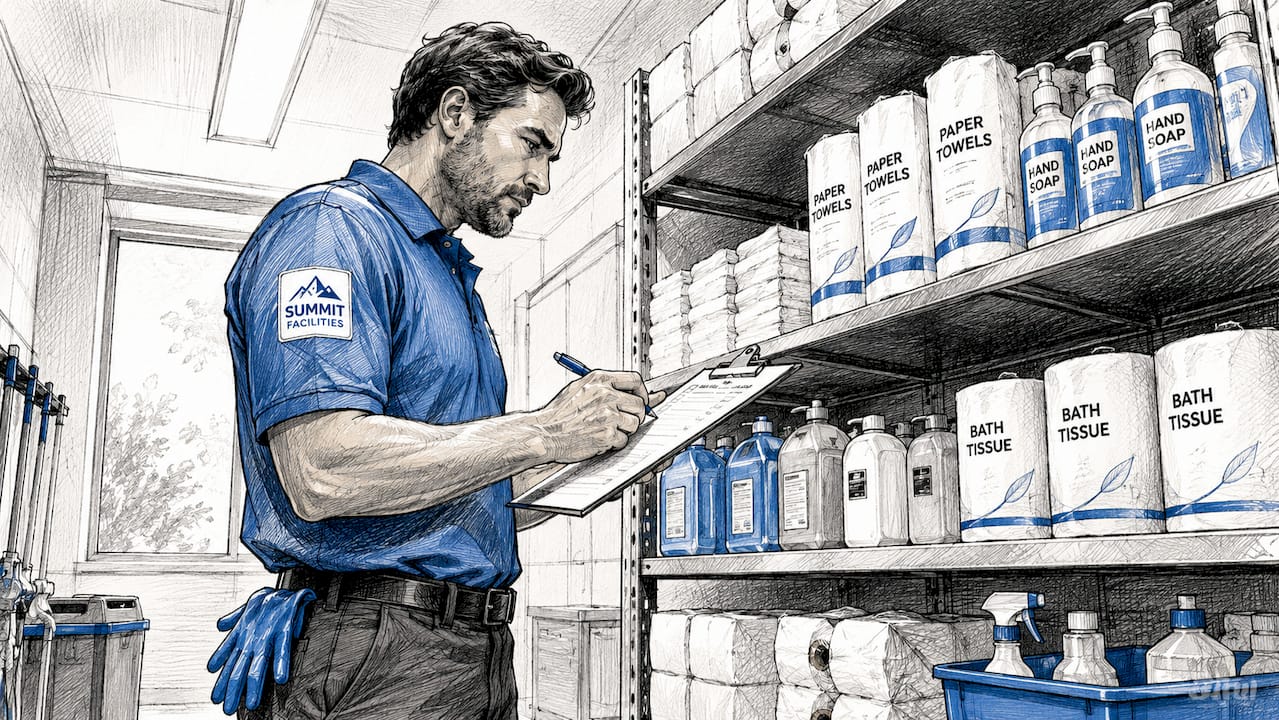
Beyond toilet counts, OSHA requires that each restroom be stocked and functional at all times. Common OSHA violations include missing toilet paper, empty soap dispensers, and out-of-service stalls. These are not minor oversights. They result in serious citations that inspectors flag immediately.
Handwashing facilities must provide hot and cold running water, soap, and a drying method such as paper towels or an air dryer. Potable drinking water must be available and clearly labeled. Break rooms and food preparation areas must stay free of toxic materials and be cleaned regularly. Facilities in high-traffic locations like Culver City office parks or Koreatown commercial buildings often struggle with restroom maintenance during peak hours. A scheduled restocking check at the start of each shift prevents the most common violations.
Pro Tip: Assign a named staff member to inspect restroom supplies at the start of every shift. Document each check with a dated log. That log is your first line of defense during an OSHA inspection.
OSHA inspectors assess sanitation by comparing employee headcount to fixture counts, checking supply presence, and inspecting facility cleanliness. Facilities must provide easily verifiable restroom counts, access, and sanitary conditions during inspections to avoid citations. That means your records need to match your physical setup on any given day.
How does OSHA regulate bloodborne pathogen cleaning and exposure control? {#bloodborne}
OSHA’s Bloodborne Pathogens Standard, 29 CFR 1910.1030, defines “occupational exposure” as any reasonably anticipated contact with blood or other potentially infectious materials (OPIM) during work duties. The standard applies to healthcare facilities, gyms, schools, and any workplace where injury or illness could produce blood contact. Immediate cleanup of bloodborne pathogen spills is critical, as OSHA treats all blood as infectious and enforces prompt decontamination to prevent disease spread.
What PPE does OSHA require for biohazard cleanup?
OSHA requires specific personal protective equipment for any staff member handling contaminated materials:
- Gloves: Nitrile or latex, worn at all times during contact with blood or OPIM
- Face protection: Safety glasses or a face shield when splashing is possible
- Gowns or aprons: When clothing contamination is likely
- Respiratory protection: Required when aerosol exposure is possible
Contaminated waste must be handled with gloves and face protection, and disposal must use leak-proof, labeled containers. Skipping any one of these steps puts both the worker and the employer at legal risk.
The choice of disinfectant matters as much as the PPE. EPA-registered tuberculocidal agents or freshly mixed bleach solutions at specific dilutions are the only acceptable options for bloodborne pathogen cleanup. Household cleaners do not meet this standard. Chemical stability and proper storage protocols are critical to maintain efficacy, which means you cannot store a diluted bleach solution for more than 24 hours and expect it to work.
Exposure Control Plan requirements
Every employer with occupational exposure risk must maintain a written Exposure Control Plan (ECP). Generic templates fail OSHA inspections. Tailored plans based on actual tasks and risks are mandatory. A valid ECP must include:
- A list of job classifications with exposure risk
- Universal precautions policy
- PPE selection and use procedures
- Biohazard labeling and disposal protocols
- Annual training records for all exposed staff
- Post-exposure response procedures, including medical evaluation
Documentation and regular training are as important as physical cleaning to achieve true OSHA compliance with bloodborne pathogens. A facility in West Hollywood or Marina Del Rey that cleans up a spill correctly but has no ECP on file is still out of compliance. The paperwork is not bureaucracy. It is proof.
Pro Tip: Review and update your ECP every january, even if nothing changed. OSHA requires annual updates, and a dated revision signature is the fastest way to prove compliance during an audit.
For facilities managing post-construction or renovation cleanup, understanding why sanitizing after construction matters goes beyond aesthetics. Construction sites generate unique biohazard and contamination risks that require the same disciplined approach as any other OSHA-regulated environment.
What are OSHA’s surface cleaning and housekeeping requirements? {#surfaces}
OSHA’s walking-working surfaces standard, 29 CFR 1910.22, requires that all floors, aisles, and work areas stay clean, orderly, and sanitary. Regular cleaning and proper housekeeping reduce risks of slips, trips, and contamination. This standard applies to every industry, from warehouses in Gardena to office buildings in Westwood.
The distinction between cleaning and disinfecting is one that many facility managers miss. Cleaning removes visible dirt and debris. Disinfecting kills pathogens on a surface. OSHA compliance often requires both steps in sequence, especially in food handling areas, restrooms, and any space where bloodborne pathogen exposure is possible.
Common compliance failures under 29 CFR 1910.22 include:
- Wet floors left unmarked and unattended after mopping
- Cluttered aisles that block emergency exit paths
- Spills left unaddressed during shift changes
- Cleaning chemicals stored improperly near food or water sources
- Staff using cleaning products without reading the Safety Data Sheet (SDS)
Training is not optional under OSHA’s Hazard Communication Standard, 29 CFR 1910.1200. Every employee who uses cleaning chemicals must receive training on the SDS for each product. That training must be documented. A facility manager in Long Beach or El Segundo who hands a new hire a mop and a bottle of disinfectant without a training record is creating a compliance gap.
Corrective measures for surface cleaning failures are straightforward. Post a written cleaning schedule in each area. Assign accountability by zone. Conduct weekly walkthroughs and document findings. For job site cleaning protocols in construction or renovation environments, the same principles apply with added attention to debris, dust, and chemical residue from building materials.
How can businesses maintain OSHA cleaning compliance in dynamic workplaces? {#dynamic}
Compliance is not a one-time setup. Sanitation standards serve as a scalable framework requiring businesses to adapt facilities as employee populations increase to avoid violations. A Burbank production facility that adds a second shift doubles its restroom demand without necessarily doubling its fixtures. That gap triggers a citation.
Strategies for scaling compliance
- Audit fixture-to-employee ratios quarterly. Small employee increases can cause non-compliance with fixture counts under 29 CFR 1910.141©(1)(i), making periodic fixture audits essential.
- Adjust cleaning schedules for shift patterns. Multi-shift operations need cleaning coverage between shifts, not just at the end of the day.
- Document all facility deficiencies in writing. Report them to the facility operator or landlord with a dated record. That paper trail protects you if OSHA asks who was responsible for a fix.
- Clarify contractor versus employer responsibilities. In shared facilities, OSHA holds each employer accountable for the areas their employees use. A written agreement between tenants or contractors about restroom maintenance prevents disputes during inspections.
- Train new staff before their first shift. Cleaning protocols and hazard communication training cannot wait until the end of onboarding week.
Pro Tip: Use a shared digital log, such as a Google Sheet or a simple facility management app, to track restroom checks, supply restocks, and cleaning completions across all shifts. That log becomes your compliance record during an OSHA visit.
For property managers overseeing multiple tenants or units, the property manager’s guide to site safety covers how to coordinate cleaning responsibilities across complex facilities. Southern California properties, particularly in dense areas like Hollywood, Koreatown, and West Adams, often involve shared restrooms and common areas where compliance accountability gets blurry. Defining it in writing before an inspection is the only reliable approach.
Facility managers who want to connect their compliance work to a broader content and lead generation system may find tools like ConvertLabs useful for organizing client communications and service documentation.
Key Takeaways {#takeaways}
OSHA cleaning compliance requires matching physical facility standards, documented protocols, and trained staff to specific regulatory thresholds under 29 CFR 1910.141, 29 CFR 1910.1030, and 29 CFR 1910.22.
| Point | Details |
|---|---|
| Fixture counts scale with headcount | Add toilets before crossing employee thresholds to avoid citations under 29 CFR 1910.141. |
| Bloodborne cleanup requires EPA-registered disinfectants | Household cleaners do not meet OSHA’s standard for pathogen decontamination. |
| Exposure Control Plans must be site-specific | Generic templates fail inspections; tailor your ECP to actual tasks and risks. |
| Surface cleaning and disinfecting are separate steps | Clean first to remove debris, then disinfect to kill pathogens, especially in restrooms and food areas. |
| Documentation is compliance | Inspection logs, training records, and dated ECPs are as important as the physical cleaning itself. |
Why OSHA compliance is a culture problem, not just a checklist {#perspective}
I have worked with facilities across Los Angeles, from small offices in Westwood to large multi-tenant buildings in Long Beach, and the pattern is consistent. The businesses that fail OSHA inspections are not the ones with dirty floors. They are the ones with clean floors and no paper trail.
The most common mistake I see is treating OSHA cleaning standards as a one-time setup. A manager installs the right number of toilets, stocks the soap, and moves on. Then the company hires 20 more people, and nobody recounts the fixtures. Six months later, an inspector walks in and the math does not work. That citation was preventable.
The bloodborne pathogen section of OSHA compliance is where I see the most dangerous gaps. Facilities copy a generic Exposure Control Plan from the internet, print it, and file it. OSHA inspectors know what a generic template looks like. A plan that lists “all employees” as exposed, without naming specific job roles or tasks, fails on its face. Writing a real ECP takes two hours. The fine for a willful violation can reach tens of thousands of dollars.
My honest advice to facility managers in Southern California: treat compliance as employee care, not legal defense. When you stock the soap, train the staff, and document the cleanup, you are telling your team that their health matters. That message has real operational value. Employees who trust their workplace environment show up, stay, and perform. The cleaning is the visible part. The culture behind it is what makes it stick.
— Lyndsey
Professional cleaning support for Southern California businesses {#promo}
Maintaining OSHA-compliant cleaning across a busy facility takes more than good intentions. It takes consistent execution, trained staff, and documented results.
Themaidsociety serves business owners and facility managers across Los Angeles, Beverly Hills, Santa Monica, Culver City, West Hollywood, Manhattan Beach, and surrounding communities. Our team understands the specific cleaning protocols for safety that Southern California workplaces require, from post-construction sanitization to routine facility maintenance. Whether you need a one-time deep clean or ongoing scheduled service, our professional cleaning services are built around the standards your facility must meet. Reach out to Themaidsociety and get a cleaning plan that holds up under inspection.
FAQ {#faq}
What does 29 CFR 1910.141 require for workplace restrooms?
29 CFR 1910.141 requires employers to provide a minimum number of toilet facilities based on employee headcount, with supplies like soap, toilet paper, and drying materials always available. Facilities must be clean, accessible, and in working order at all times.
How many toilets does OSHA require for 50 employees?
OSHA requires 3 toilets for a workplace with 36–55 employees under 29 CFR 1910.141©(1)(i). Crossing into the next headcount bracket requires adding a fixture before the threshold is reached.
What disinfectants does OSHA accept for bloodborne pathogen cleanup?
OSHA accepts EPA-registered tuberculocidal disinfectants or freshly prepared bleach solutions at specific dilutions for bloodborne pathogen decontamination. Standard household cleaners do not meet this requirement.
Does OSHA require a written Exposure Control Plan for all businesses?
OSHA requires a written Exposure Control Plan only for employers whose workers face occupational exposure to blood or other potentially infectious materials. The plan must be site-specific, updated annually, and available to all affected employees.
What are the most common OSHA cleaning violations?
The most common violations involve inadequate toilet fixture counts, missing restroom supplies such as soap and toilet paper, and out-of-service stalls. Inspectors also cite facilities for unmarked wet floors, improper chemical storage, and missing staff training records.
Recommended Articles
- Site Safety and Cleaning Protocols: A Property Manager’s Guide
- Best Practices for Job Site Cleaning After Construction
- Why Sanitize After Construction: Safety and Health Guide
- Essential Cleaning Hazards to Avoid for a Safer LA Home
- Difference Between Janitorial and Residential Cleaning
<script type="application/ld+json">
{
  "@context": "https://schema.org",
  "@type": "Article",
  "headline": "OSHA Cleaning Requirements Explained for Facility Managers",
  "description": "A practical guide to OSHA cleaning requirements for business owners and facility managers in Southern California, covering sanitation standards, bloodborne pathogen protocols, and surface cleaning compliance.",
  "author": {
    "@type": "Person",
    "name": "L.K."
  },
  "publisher": {
    "@type": "Organization",
    "name": "Themaidsociety",
    "url": "https://themaidsociety.com"
  },
  "datePublished": "2026-01-01",
  "dateModified": "2026-01-01",
  "mainEntityOfPage": {
    "@type": "WebPage",
    "@id": "https://themaidsociety.com/osha-cleaning-requirements-explained"
  },
  "keywords": [
    "osha cleaning requirements explained",
    "cleaning protocols for safety",
    "osha cleaning guidelines",
    "cleaning requirements for workplaces",
    "osha standards for cleaning",
    "osha compliance for cleaning procedures"
  ]
}
</script>
Recommended
- Site Safety and Cleaning Protocols: A Property Manager’s Guide
- Property Manager Cleaning Workflow: 2026 Guide
- Best practices for job site cleaning after construction
- Classification of Construction Cleaning Services Explained


Get Cleaning Tips & Exclusive Offers
Join our community for time-saving hacks and special discounts delivered to your inbox.