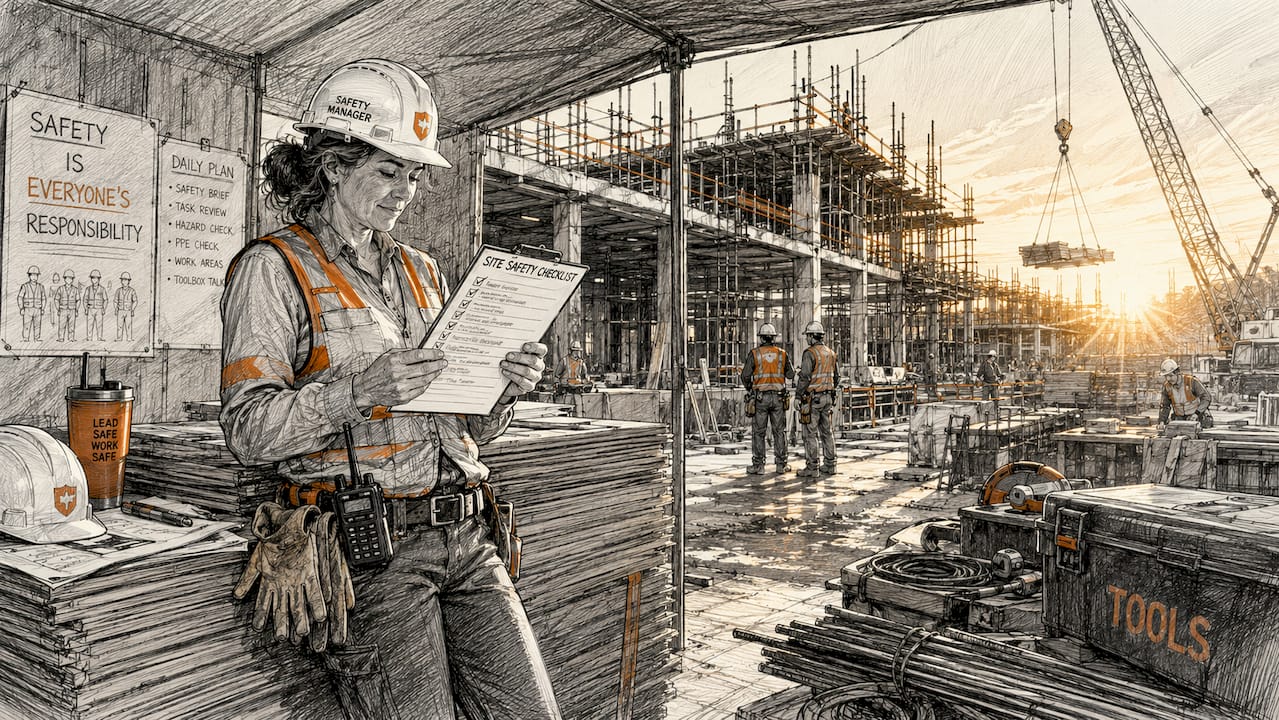
TL;DR:
- Proper site safety and cleaning protocols ensure legal compliance and prevent accidents across Southern California properties. Implementing written procedures, scored checklists, and chemical safety practices enhances consistency and inspection readiness. Professional cleaning services follow these standards to support property management and construction projects effectively.
By L.K. | Themaidsociety | Updated 2026
{
  "@context": "https://schema.org",
  "@type": "Article",
  "headline": "Site Safety and Cleaning Protocols: A Property Manager's Guide",
  "author": {
    "@type": "Person",
    "name": "L.K."
  },
  "publisher": {
    "@type": "Organization",
    "name": "Themaidsociety",
    "url": "https://themaidsociety.com"
  },
  "datePublished": "2026-01-01",
  "dateModified": "2026-01-01",
  "description": "A comprehensive guide to site safety and cleaning protocols for property owners, managers, and contractors in Southern California, covering regulatory standards, chemical safety, and implementation frameworks.",
  "mainEntityOfPage": "https://themaidsociety.com"
}
Site safety and cleaning protocols are standardized procedures designed to maintain safe, hygienic, and legally compliant property environments. For property owners, managers, and contractors across Los Angeles, Beverly Hills, Santa Monica, and the wider Southern California region, these protocols are not optional extras. They are the difference between a site that passes inspection and one that faces citations, delays, or liability. This guide covers the regulatory standards, chemical handling practices, active site procedures, and implementation frameworks you need to manage any property with confidence.
Table of Contents
- What are key regulatory and sanitation standards for site safety and cleaning?
- How do safe chemical handling and PPE use enhance cleaning safety?
- What practices maintain cleanliness on active construction and property sites?
- How can property owners implement effective site-specific cleaning protocols?
- Key Takeaways
- Perspective
- Professional cleaning support for Southern California properties
- FAQ
- Recommended Articles
What are key regulatory and sanitation standards for site safety and cleaning? {#regulatory-standards}
Site safety and cleaning protocols draw from three primary regulatory sources: OSHA general industry standards, CDC facility guidelines, and state-level health codes. Each layer adds specific requirements that property managers must understand before writing a single cleaning procedure.
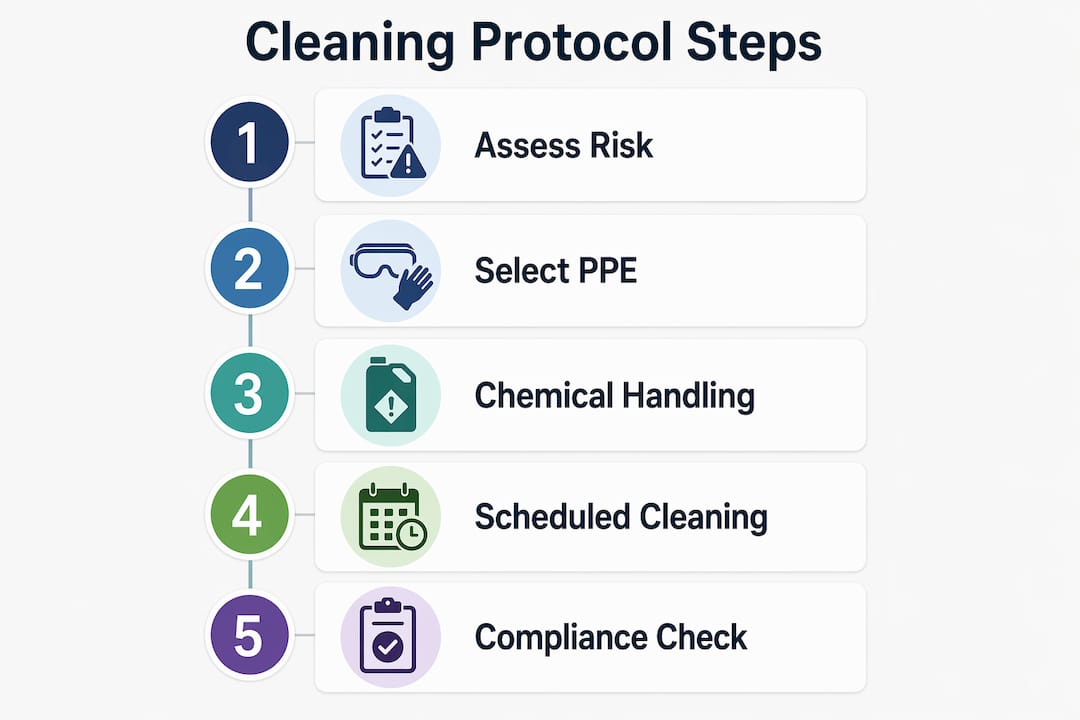
OSHA’s general industry standards require employers to maintain workplaces free of recognized hazards. For cleaning operations, this means controlling chemical exposure, providing appropriate personal protective equipment, and training staff on hazard communication. These requirements apply to any property where workers perform cleaning tasks, including residential buildings under renovation in West LA, Culver City, or Burbank.
The CDC recommends that facilities follow written cleaning and disinfecting procedures that specify product types, contact times, and surface categories. Contact time is the number of minutes a disinfectant must stay wet on a surface to kill pathogens. Skipping this step is one of the most common compliance failures in property cleaning programs.
Regulated facilities in Florida must submit sanitation permit applications at least 90 days before construction or modification. That timeline illustrates how seriously regulatory bodies treat sanitation planning. California property managers face similar lead times under local health codes, particularly for food-adjacent or high-occupancy buildings.
Sanitation Standard Operating Procedures (SSOPs) divide cleaning into two phases:
- Pre-operational sanitation: Cleaning and disinfecting that happens before a space is used or occupied. This phase covers equipment, surfaces, and access points before workers or residents enter.
- Operational sanitation: Cleaning that occurs while a site is active. This includes spill response, waste removal, and surface wiping during the workday.
Dividing procedures into these two phases is critical for audit readiness and regulatory compliance. An inspector reviewing your site wants to see documented evidence that both phases are covered, not a single generic cleaning log.
Industry-standard hygienic equipment design also requires surfaces to slope at a minimum of 3 degrees to prevent water accumulation and microbial growth. That standard applies to cleaning equipment, storage areas, and any surface that contacts water during routine site maintenance.
How do safe chemical handling and PPE use enhance cleaning safety? {#chemical-safety}
Chemical safety is the most underestimated risk in any workplace cleaning program. Property managers in Hollywood, Koreatown, and West Adams often assume that familiar products are automatically safe. That assumption causes injuries.
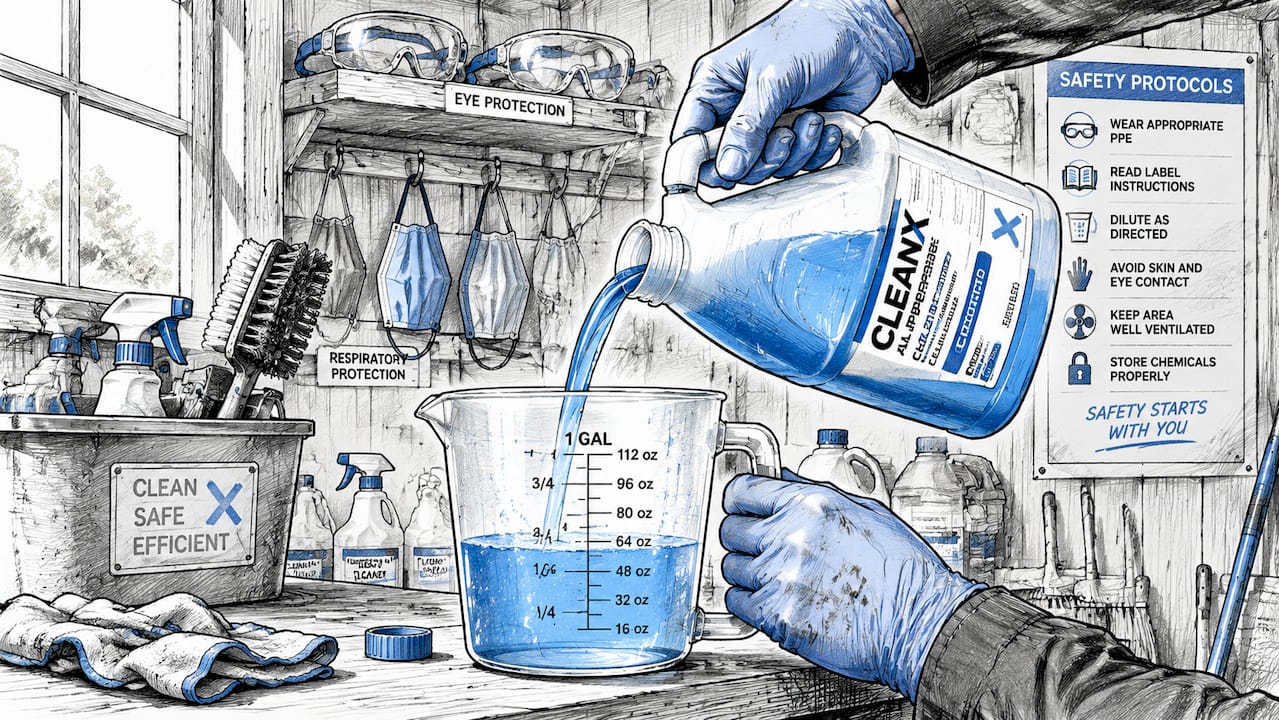
Improper mixing of cleaning chemicals, especially chlorine bleach with ammonia or acids, can produce lethal gases within seconds. This is not a rare edge case. It happens when workers grab two bottles without reading labels, or when a supervisor assumes that “more product equals better results.” The root cause is almost always a lack of written chemical handling procedures and inadequate staff training.
Even so-called “green” or natural cleaning products can cause respiratory irritation or skin damage when used without proper ventilation or PPE. The word “natural” on a label does not indicate safety. It indicates marketing. Your cleaning compliance checklist must treat all chemical products with the same level of caution.
Chemical storage and handling best practices
- Store chemicals in their original, labeled containers. Never transfer bleach or concentrated cleaners into unmarked bottles.
- Keep incompatible chemicals in separate storage areas. Acids and bleach-based products must never share a shelf.
- Follow dilution ratios printed on the Safety Data Sheet (SDS) for every product. Concentrated solutions do not clean better. They increase exposure risk.
- Ventilate the work area before applying any chemical product. Open windows, run exhaust fans, or use portable ventilation equipment.
- Review the SDS for each product to determine the correct PPE. Gloves, goggles, and protective clothing requirements vary by chemical class.
Pro Tip: Post the SDS for every cleaning chemical in a visible location near the storage area. Inspectors from OSHA and local health departments check for this during site visits. It also gives workers immediate access to emergency response information.
Root causes of chemical injuries consistently trace back to improper mixing and lack of labeling. A written chemical inventory with SDS references, combined with a short monthly training session, eliminates the majority of these incidents. For properties in high-density areas like Mid-City LA or Long Beach, where multiple contractors may share a cleaning supply room, labeling and storage discipline is non-negotiable.
For more on avoiding common cleaning hazards in Southern California properties, Themaidsociety covers the topic in depth at cleaning hazards to avoid.
What practices maintain cleanliness on active construction and property sites? {#active-sites}
Construction site cleaning is not secondary to the build process. It is a core safety function that requires scheduled, routine activity to prevent accidents and project delays. A site in Brentwood or Pacific Palisades undergoing renovation carries real hazards when debris, dust, and waste accumulate between cleaning cycles.
Daily cleaning on active construction sites is necessary to keep walkways, stairwells, and access points clear. Blocked pathways are one of the leading causes of on-site injuries. A single day without clearing debris from a stairwell creates a fall risk that no amount of signage fully mitigates.
Priority areas for active site cleaning
- Walkways and stairwells: Clear debris, dust, and loose materials at the start and end of every shift.
- Entry and exit points: Remove tracked-in dirt and construction waste to prevent slip hazards and contamination spread.
- Waste collection zones: Empty bins and debris containers daily to prevent overflow and pest attraction.
- Dust-generating work areas: Use wet mopping, HEPA vacuums, or dust suppression methods after cutting, sanding, or demolition work.
- Tool and equipment storage areas: Keep these zones organized and free of chemical spills or waste accumulation.
Trained professional cleaning crews help maintain safety standards on active construction sites. They reduce hazards while allowing skilled tradespeople to focus on their core tasks. This division of labor is especially valuable on larger projects in areas like Marina Del Rey, El Segundo, or Carson, where multiple contractors work simultaneously.
| Site Area | Cleaning Frequency | Primary Hazard Controlled |
|---|---|---|
| Walkways and stairwells | Daily | Fall and trip injuries |
| Waste collection zones | Daily | Pest attraction, overflow |
| Dust-generating work areas | After each work session | Respiratory exposure |
| Entry and exit points | Twice daily | Slip hazards, contamination |
| Chemical storage areas | Weekly inspection | Spill and exposure risk |
Cleanliness also directly affects inspection outcomes and project timelines. A site that fails a health or safety inspection in Westchester or Hawthorne faces mandatory work stoppages. The cost of a professional cleaning crew is a fraction of the cost of a delayed project. For a detailed breakdown of job site cleaning best practices, Themaidsociety provides a practical reference for contractors and property managers.
How can property owners implement effective site-specific cleaning protocols? {#implementation}
Generic cleaning checklists fail because they ignore the specific hazards, surfaces, and occupancy patterns of each property. A move-out cleaning in Westwood has different requirements than a post-construction cleanup in Baldwin Hills. Effective site hygiene standards start with a property-specific risk assessment.
Steps to build a site-specific cleaning program
- Conduct a risk assessment. Walk the property and identify chemical storage areas, high-traffic zones, surfaces prone to moisture, and any areas with restricted ventilation. Document every hazard before writing a single procedure.
- Write task-specific SOPs. Each cleaning task needs its own written procedure covering the correct product, dilution ratio, PPE required, contact time, and disposal method. A single-page SOP per task is more useful than a 20-page general manual.
- Build a compliance checklist with scoring. Checklist scoring systems transform subjective cleaning audits into objective data. Assign a conformity value to each task. A score below a defined threshold triggers a corrective action, not just a note.
- Maintain cleaning records. Date-stamped logs showing who cleaned what, with which product, and at what time are your primary defense during an inspection. Digital logs are easier to retrieve and harder to lose than paper binders.
- Schedule protocol reviews. Update your SOPs when you introduce a new product, change a contractor, or receive feedback from an inspection. Protocols that are never updated become compliance liabilities.
Pro Tip: Assign one person per shift as the cleaning compliance lead. This person checks the compliance checklist before the shift ends and flags any incomplete tasks. Distributed accountability without a named lead produces inconsistent results.
Facility-specific risk assessments combined with structured checklists are the most reliable method for achieving audit-ready site sanitation. Properties in Redondo Beach, Manhattan Beach, and Gardena that have adopted scoring-based checklists report faster inspection turnarounds and fewer corrective action notices. The scoring approach also gives property managers a clear, defensible record if a dispute arises.
For managers overseeing tenant transitions, Themaidsociety’s move-out cleaning guide covers protocol implementation specific to tenant changeovers. If you are working with contractors on new builds or renovations, the deep cleaning process for builders provides a parallel framework.
Hiring the right contractors also supports protocol compliance. For guidance on vetting exterior contractors who understand site safety requirements, this contractor hiring resource covers the evaluation criteria that matter most.
Key Takeaways {#key-takeaways}
Effective site safety and cleaning protocols require written SOPs, chemical handling discipline, daily cleaning schedules, and scoring-based checklists to achieve consistent compliance and audit readiness.
| Point | Details |
|---|---|
| Use pre-operational and operational phases | Divide cleaning into before-occupancy and during-activity phases to satisfy SSOP requirements. |
| Never mix incompatible chemicals | Bleach combined with ammonia produces toxic gas; always check SDS before using any product. |
| Clean active sites daily | Clear walkways, stairwells, and waste zones every shift to prevent falls and inspection failures. |
| Score your compliance checklists | Assign conformity values to each task so audits produce objective data, not subjective impressions. |
| Conduct property-specific risk assessments | Generic checklists miss site-specific hazards; walk each property before writing any procedure. |
Why I stopped trusting generic cleaning checklists on Southern California sites {#perspective}
I have reviewed cleaning programs for properties across Los Angeles, from post-construction condos in West Hollywood to multi-unit rentals in Inglewood. The single most common failure I see is not a lack of effort. It is a reliance on generic checklists downloaded from the internet and applied without modification to a specific site.
A checklist built for a food processing facility does not translate to a residential renovation in Culver City. The hazards are different. The surfaces are different. The occupancy pattern is different. When a property manager hands a generic checklist to a cleaning crew and assumes compliance, they are creating a gap between what the document says and what actually happens on site.
The second failure I see consistently is PPE complacency. Workers who have used a product dozens of times without incident stop wearing gloves or skip ventilation steps. The product has not changed. The risk has not changed. Only the habit has changed. Routine is the enemy of safety discipline, and the only counter to routine is a named compliance lead who checks the work before the shift ends.
What actually works in Southern California properties is a combination of site-specific written procedures, scored checklists, and a cleaning team that understands the regulatory environment. Themaidsociety trains its crews on chemical safety, SDS review, and site-specific protocols before they enter any property. That preparation is what separates a cleaning visit that produces a compliant site from one that just looks clean.
Property managers who invest time in building a real protocol, not a borrowed one, spend less time managing inspection failures and more time on the work that actually moves their projects forward.
— Lyndsey
Professional cleaning support for Southern California properties {#promo}
Themaidsociety serves property owners, managers, and contractors across Los Angeles, Beverly Hills, Santa Monica, Venice, Brentwood, West Hollywood, Manhattan Beach, Long Beach, and the surrounding Southern California region. Every cleaning engagement follows written protocols covering chemical handling, PPE use, surface-specific procedures, and compliance documentation.
Whether you need daily cleaning on an active construction site, a thorough post-construction cleanup, or a move-in ready property for new tenants, Themaidsociety’s vetted and trained crews handle the work to a documented standard. Explore the full range of professional cleaning services available for Los Angeles properties, or review the deep cleaning process for builders to see how Themaidsociety supports construction and renovation projects from start to finish.
FAQ {#faq}
What are site safety and cleaning protocols?
Site safety and cleaning protocols are written procedures that define how a property is cleaned, which chemicals are used, what PPE is required, and how compliance is documented. They cover both pre-operational and operational sanitation phases.
How often should active construction sites be cleaned?
Daily cleaning is the standard for active construction sites. Walkways, stairwells, waste zones, and entry points require clearing at the start and end of every shift to prevent fall hazards and maintain compliance.
What chemicals should never be mixed during site cleaning?
Chlorine bleach must never be mixed with ammonia or acid-based cleaners. This combination produces toxic gases within seconds. Always check the Safety Data Sheet for each product before combining or applying any cleaning chemical.
What is a cleaning compliance checklist?
A cleaning compliance checklist is a scored document that assigns conformity values to each cleaning task. Scoring systems convert subjective cleaning assessments into objective audit data, making it easier to identify gaps and demonstrate compliance to inspectors.
Do “green” cleaning products require PPE?
Yes. Natural or green cleaning products can still cause respiratory irritation and skin damage when used without gloves, goggles, or adequate ventilation. The SDS for each product specifies the required PPE regardless of the product’s marketing claims.
Recommended Articles {#recommended-articles}
- Best practices for job site cleaning after construction
- How to sanitize construction sites: 2026 guide
- Role of cleaning in project completion: timely turnover
- Deep cleaning process for builders
- Essential cleaning hazards to avoid for a safer LA home
For property managers and contractors looking to track leads, manage client communications, and grow their service business, ConvertLabs offers tools built for service-based businesses.
Recommended
- Best practices for job site cleaning after construction
- How to Reduce Vacancy with Cleaning: A Property Manager’s Guide


Get Cleaning Tips & Exclusive Offers
Join our community for time-saving hacks and special discounts delivered to your inbox.