TL;DR:
- Every 35 minutes, a child under five visits an emergency room due to cleaning product-related injuries in the US. Parents should understand the risks of common household cleaners, especially detergent pods, and store them securely out of children’s reach. Using certified, low-toxicity products, following proper cleaning routines, and accessing local resources can create a safer home environment for children.
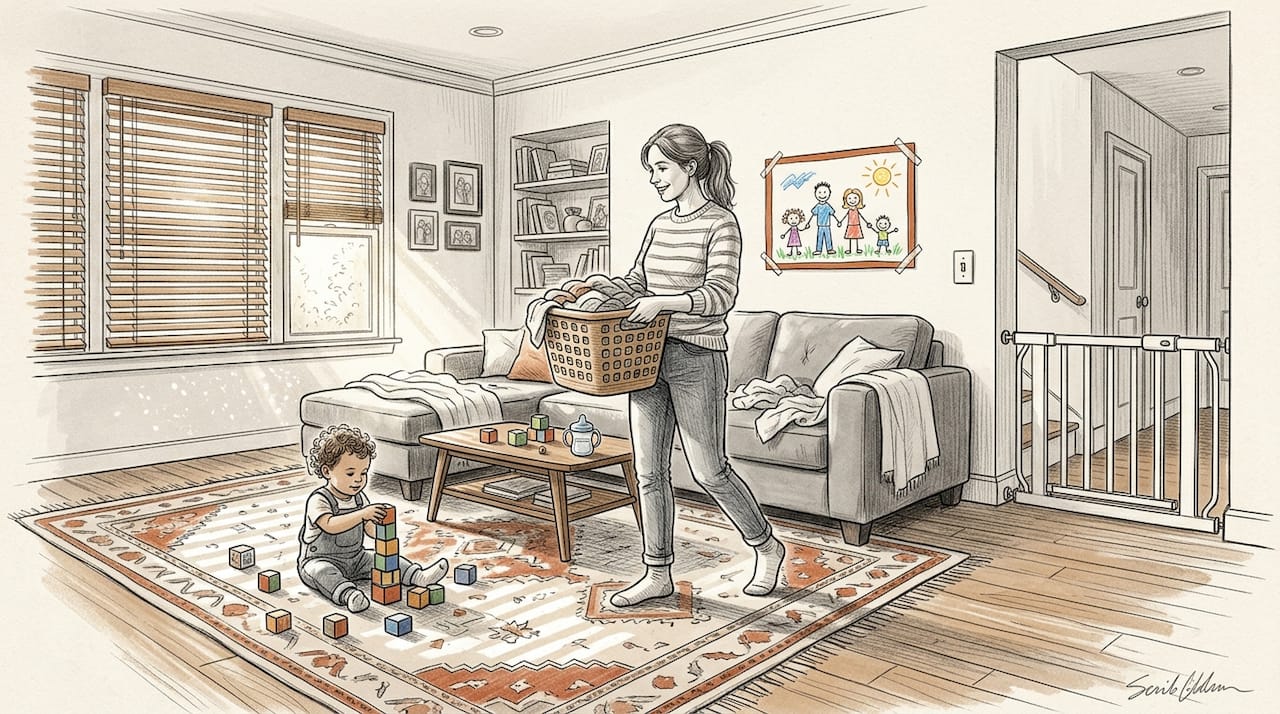
Every 35 minutes, a child under five lands in an emergency room because of a cleaning product. Over 240,000 children experienced these injuries across the US between 2007 and 2022, and bleach alone accounts for nearly a third of those cases. For parents in Los Angeles juggling busy schedules, multi-level homes, and the growing “green cleaning” movement, choosing what to use and how to use it safely can feel like a minefield. This guide cuts through the confusion and gives you a clear, practical path to a genuinely child-safe cleaning routine.
Table of Contents
- The hidden dangers: Common cleaning products and child safety
- What makes a cleaner child-safe? Certifications and real effectiveness
- Step-by-step: Building a child-safe cleaning routine
- Local resources for LA families: Asthma-friendly cleaning and support programs
- A safer home starts with knowledge, not just products
- Need extra help with child-safe cleaning? Trust LA’s pros
- Frequently asked questions
Key Takeaways
| Point | Details |
|---|---|
| Child injuries are common | Cleaning products send about 1 child to the ER every 35 minutes in the US. |
| Certification matters | Choose Safer Choice or Green Seal products for proven child-safe cleaning. |
| Habits are critical | Proper storage and supervision matter as much as which products you buy. |
| Ventilation and asthma care | Ventilate when cleaning, and use HEPA/low-VOC supplies for allergy-prone kids. |
| LA families have support | Families in Los Angeles can access local programs for safer, asthma-friendly supplies. |
The hidden dangers: Common cleaning products and child safety
Most parents think the biggest cleaning risk is an unlocked cabinet. The reality is more complicated. A child does not need to swallow a full cup of bleach to end up in serious trouble. Skin contact, splashes to the eyes, and inhaling fumes in a poorly ventilated bathroom can all cause injury. Understanding exactly which products create the most risk is the first step toward preventing accidents.
The CNN data on child injuries from cleaning products breaks down the key offenders clearly:
| Product type | Share of ER visits | Key risk |
|---|---|---|
| Bleach and bleach-based cleaners | ~30% | Burns, respiratory irritation, eye damage |
| Laundry and dish detergents | ~29% | Ingestion, skin irritation |
| Detergent pods | High and rising | Choking, concentrated chemical burns |
| Multipurpose sprays | Significant | Eye and skin exposure |
| Toilet bowl cleaners | Notable | Severe chemical burns if swallowed |
Detergent pods deserve special attention because they look almost identical to candy. Their bright colors and soft, squishy texture make them irresistible to toddlers. A single pod contains enough concentrated detergent to cause serious harm when bitten into. Mixing chemicals is another overlooked hazard: combining bleach with ammonia-based cleaners (which include many glass cleaners) releases toxic chloramine gas, which can irritate the lungs within minutes.
LA-specific home layouts add another layer of risk. Many homes and apartments in Los Angeles feature open-plan designs or multi-level layouts where cleaning supplies stored on one floor can be accessed quickly by a curious child on another. You might assume the laundry room on the second floor is “out of the way,” but a common cleaning hazards review shows that storage location alone is not sufficient protection without a lock.
Even products marketed as “natural” are not automatically gentle. Tea tree oil, citrus-based cleaners, and essential oils can all cause toxicity if ingested. Parents trying to keep their LA home clean with kids around need to treat every cleaning product with the same level of respect, regardless of what is on the front label.
“Natural does not mean non-toxic, especially when it comes to curious children who explore the world through their mouths.” Keep that reminder somewhere visible.
Pro Tip: Program the Poison Control Center number (1-800-222-1222) into every caregiver’s phone, and post it on the refrigerator. Seconds count in a chemical exposure emergency, and no one should be searching for the number in a panic.
Understanding toddlers and household hazards more broadly, especially in bathrooms where multiple products are often stored together, gives parents a fuller picture of where to focus their attention first.
What makes a cleaner child-safe? Certifications and real effectiveness
Switching to a “greener” product feels like the obvious answer, but with dozens of eco-labels on store shelves, it is easy to grab something that sounds safe without actually being meaningfully different. Three certifications genuinely matter when you are shopping for child-safe bath materials and household cleaners.
| Certification | Who issues it | What it checks |
|---|---|---|
| EPA Safer Choice | US Environmental Protection Agency | Every ingredient evaluated for human and environmental safety |
| Green Seal | Independent nonprofit | Performance, safety, and packaging standards |
| EWG Verified | Environmental Working Group | No ingredients of concern, full transparency |
EPA Safer Choice certified products are rigorously evaluated for both safety and cleaning performance, meaning you do not have to sacrifice effectiveness to protect your children. This is one of the most persistent myths in the green cleaning conversation: that safer products simply do not work as well. The evidence says otherwise.
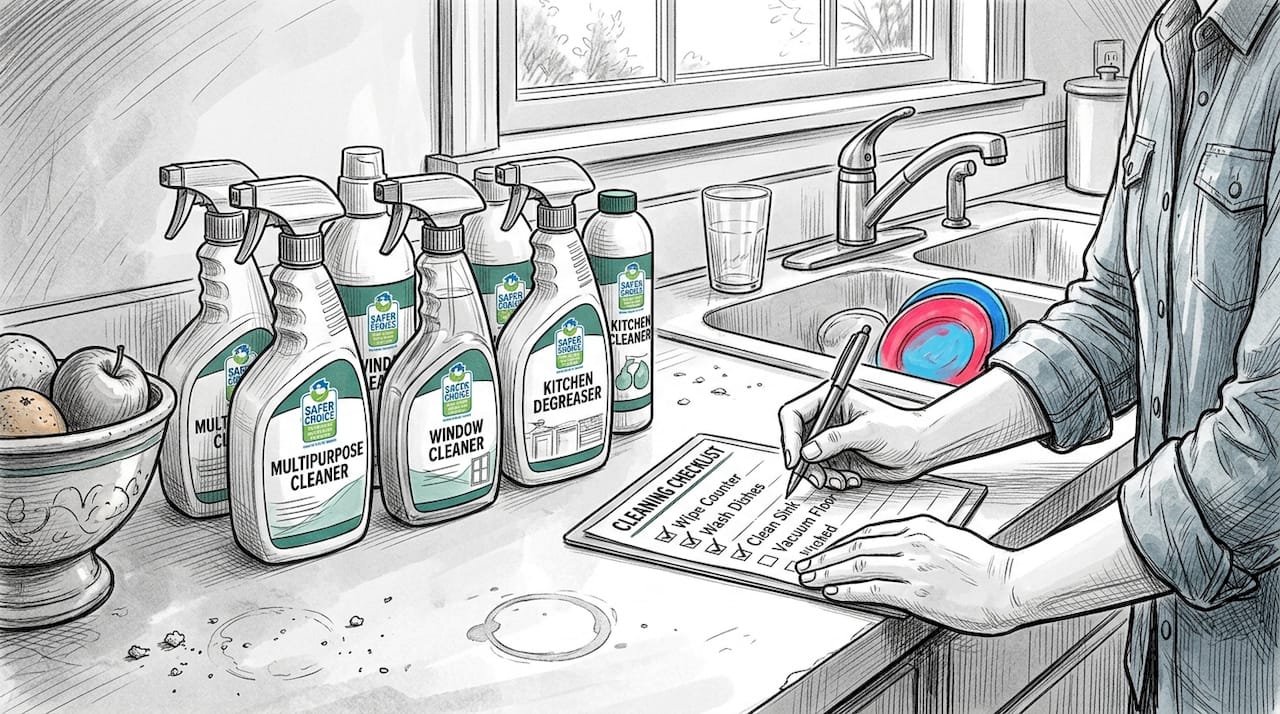
The American Academy of Pediatrics agrees. The AAP recommends green cleaning products with labels like Safer Choice, Green Seal, and EWG Verified, and suggests safer disinfectants like hydrogen peroxide or citric acid as alternatives to bleach-heavy formulas. These options dramatically reduce the chemical load in your home without leaving surfaces unclean.
Here is how to verify your current products in five steps:
- Find the product name on the EPA Safer Choice website by searching the product database, available free online.
- Check for the Green Seal logo on the product label itself. It is a circle with a green checkmark and always includes a certification number.
- Search the EWG’s Healthy Cleaning Guide at ewg.org, which rates products from A to F based on ingredient safety.
- Read the ingredient list and look for chlorine bleach, formaldehyde, phthalates, or quaternary ammonium compounds (also called “quats”), which are worth avoiding around young children.
- Call the manufacturer’s hotline if you cannot find ingredient information online. Brands committed to transparency will answer this call easily.
The certification process does weed out the worst offenders. But storage and handling still matter enormously with certified products. A Safer Choice-labeled all-purpose spray left on the kitchen counter at toddler height is still a hazard. Following eco-friendly cleaning tips specific to family homes helps you bridge the gap between choosing the right products and using them the right way.
Pro Tip: Download the EPA Safer Choice product list as a PDF before your next shopping trip. Filter by product category (laundry, bathroom, kitchen) and bring it with you. It takes two minutes and saves a lot of label-squinting in the aisle.
Finding products that support a healthier home cleaning approach is increasingly straightforward as more brands seek certification, but the verification step is yours to complete.
Step-by-step: Building a child-safe cleaning routine
Knowing the right products matters, but how and when you clean matters just as much. Many parents disinfect everything, every day, when most surfaces only need soap and water. That over-reliance on disinfectants increases chemical exposure without meaningfully improving home hygiene.
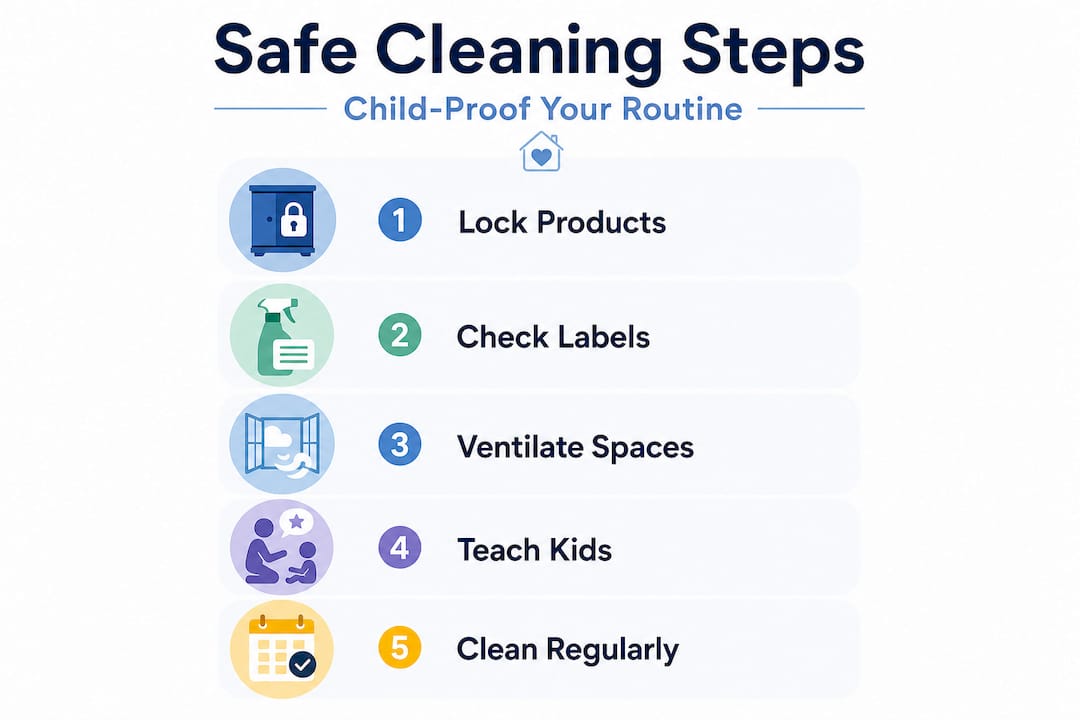
The CDC recommends cleaning first with soap and detergent to physically remove dirt and germs, then disinfecting only when necessary using EPA-registered products. In practice, this means:
- Clean all surfaces with soap and warm water first. This step physically removes the majority of germs through friction and rinsing. For most everyday situations in a family home, this is enough.
- Rinse any surface a child will touch directly. High chairs, play tables, door handles, and bathroom fixtures should all be rinsed after cleaning so no residue remains.
- Disinfect only high-touch areas and only when needed. Light switches, toilet handles, and shared remote controls are worth disinfecting during illness. A healthy Tuesday does not require disinfecting the kitchen table.
- Let disinfected surfaces air dry completely before children contact them. Most EPA-registered disinfectants require a “dwell time” of one to ten minutes to work, and the surface must remain visibly wet during that period.
- Ventilate the room during and after cleaning. Open windows and run exhaust fans, especially in bathrooms and kitchens. This step is especially important in Los Angeles, where indoor air quality can already be affected by outdoor pollution.
Children’s Hospital Los Angeles recommends storing cleaners in locked, high cabinets, always in their original packaging, and never leaving an open or actively-used product unattended. This sounds straightforward, but the “just a second” habit is where most accidents begin. A parent steps out of the room to answer the door, and a toddler reaches the spray bottle left on the floor in under 60 seconds.
For children with asthma or allergies, which affects a significant share of LA kids given the region’s air quality challenges, build these additional steps into your cleaning routines for LA families:
- Use a HEPA filter vacuum to capture allergens rather than redistributing them in the air.
- Choose low-VOC (volatile organic compound) products, as VOCs are a known trigger for asthma attacks.
- Avoid aerosol sprays when possible. Pump sprays and concentrates you dilute in water generate far fewer airborne particles.
- Wash bedding weekly in hot water, which addresses dust mites more effectively than any chemical spray.
Improving indoor air quality through smarter cleaning choices is one of the most practical things LA parents can do for their children’s respiratory health.
Pro Tip: Create a one-page cleaning schedule and laminate it for the refrigerator. Include which products to use, where they are stored, and the Poison Control number. Any caregiver in your home should be able to follow it without asking you.
Local resources for LA families: Asthma-friendly cleaning and support programs
Los Angeles families dealing with children who have asthma or respiratory sensitivities have access to resources that most parents do not know exist. Tapping into these programs can reduce your out-of-pocket costs and make child-safe cleaning considerably more accessible.
L.A. Care’s asthma remediation program provides qualifying families with asthma-friendly cleaning supplies and HEPA vacuums, and the program includes proactive remediation efforts in subsidized housing across the county. If you or your child is enrolled in L.A. Care, it is worth contacting them directly to ask about what cleaning support is available through your plan.
For families managing allergies and asthma, HEPA vacuums and low-VOC cleaning products are consistently recommended by cleaning industry and health authorities alike. These are not luxury upgrades; they are practical tools for a safer home environment.
Here is where LA families can find child-safe cleaning support:
- L.A. Care Health Plan: Asthma remediation supplies and HEPA vacuums for eligible members. Contact through your plan’s member services line.
- LA County Department of Public Health: Provides educational resources and referrals for families dealing with environmental health hazards at home.
- EPA Safer Choice product locator: Available online, searchable by zip code to find locally available certified products.
- Local HEPA vacuum lending programs: Some libraries and community organizations in LA offer equipment lending programs. Call your local branch to check availability.
| Resource | What it offers | Who qualifies |
|---|---|---|
| L.A. Care Asthma Program | HEPA vacuums, cleaning supplies | L.A. Care members with asthma diagnosis |
| LA County Public Health | Referrals, educational materials | All LA County residents |
| EPA Safer Choice Locator | Certified product database | Anyone, free online |
| Community equipment lending | HEPA vacuums and tools | Varies by location |
Cleaning for better family health does not always require spending more money. These local programs exist specifically to help families make safer choices without added financial burden.
A safer home starts with knowledge, not just products
Here is something worth saying plainly: swapping your conventional cleaner for a certified green product is a good move, but it is not enough on its own. The AAP’s own research confirms that injuries still occur from “safer” products when children access them through poor storage or unsupervised moments. The certification on the bottle changes the chemistry, not the behavior in your household.
What we have seen, working with families across Los Angeles, is that the homes where children stay safest are ones where safety is a habit, not a shopping decision. Parents who know why cleaning habits matter understand that the locked cabinet, the ventilation habit, and the consistent routine protect their kids far more reliably than any product label alone.
Even Safer Choice and Green Seal-certified cleaners can be dangerous if a child accesses them. This is not a reason to avoid these products. It is a reason to treat your cleaning safety practices with the same seriousness as the products themselves.
The most powerful thing you can do is make safety part of your family culture. That means teaching children, starting in preschool, that cleaning products are tools for adults and not for touching. It means every caregiver, every babysitter, and every family member who helps in your home understands the storage rules. It means the conversation happens regularly, not just when something goes wrong.
Pro Tip: Teach kids as young as three to recognize the “stop” symbol on hazardous product labels. A simple “this one is for grown-ups” explanation builds awareness early. By the time they are school age, this becomes an internalized habit rather than a rule they are tempted to test.
Need extra help with child-safe cleaning? Trust LA’s pros
Building a child-safe routine takes time, and for busy LA parents, even the best intentions can fall behind. If keeping up with safe cleaning practices feels like one more thing on an already long list, that is a completely normal feeling.
The Maid Society provides child-safe cleaning services in LA with fully vetted, trained professionals who understand the importance of product safety and thorough cleaning in homes with young children. Whether you are settling into a new place and want a fresh, safe start with our move-in child-safe cleaning service, or you need help creating an organized, clutter-free space through stress-free home organization, our team handles the details so you can focus on your family. Reach out to The Maid Society today and let us help make your home both clean and genuinely safe for the people who matter most.
Frequently asked questions
What is the safest way to store cleaning products with young children at home?
Store all cleaning products in their original containers in locked, high cabinets that are completely out of reach and out of sight of children, and avoid detergent pods in homes with children under six.
Do green cleaning products really work as well as traditional ones?
Yes, EPA Safer Choice certified products are tested for both safety and performance, meaning they clean effectively without the harmful chemicals found in conventional cleaners.
How often should I disinfect versus just clean surfaces in my home?
Clean regularly with soap and water for everyday maintenance, and reserve disinfection for high-touch surfaces or times of illness in your household.
Can detergent pods be used safely in homes with kids under 6?
No, detergent pods should be avoided entirely in homes with children under six because their concentrated formula and appealing texture create both a choking hazard and a serious poisoning risk.
Are there local LA resources for families who need child-safe cleaning supplies?
Yes, L.A. Care’s asthma remediation program provides eligible families with HEPA vacuums and asthma-friendly cleaning supplies, with targeted support available in subsidized housing across Los Angeles County.
Recommended
- How to Keep Your LA Home Clean with Kids
- Home sanitation basics: keep LA homes clean and healthy
- How Cleaning Safeguards Health and Safety in LA Homes
- Essential Cleaning Hazards to Avoid for a Safer LA Home


Get Cleaning Tips & Exclusive Offers
Join our community for time-saving hacks and special discounts delivered to your inbox.