TL;DR:
- Kids who do chores develop confidence, better academic skills, and lifelong success.
- Using visual cues and age-appropriate tasks encourages participation and skill growth.
- Emphasizing effort over perfection and making chores fun boosts motivation and sustainability.
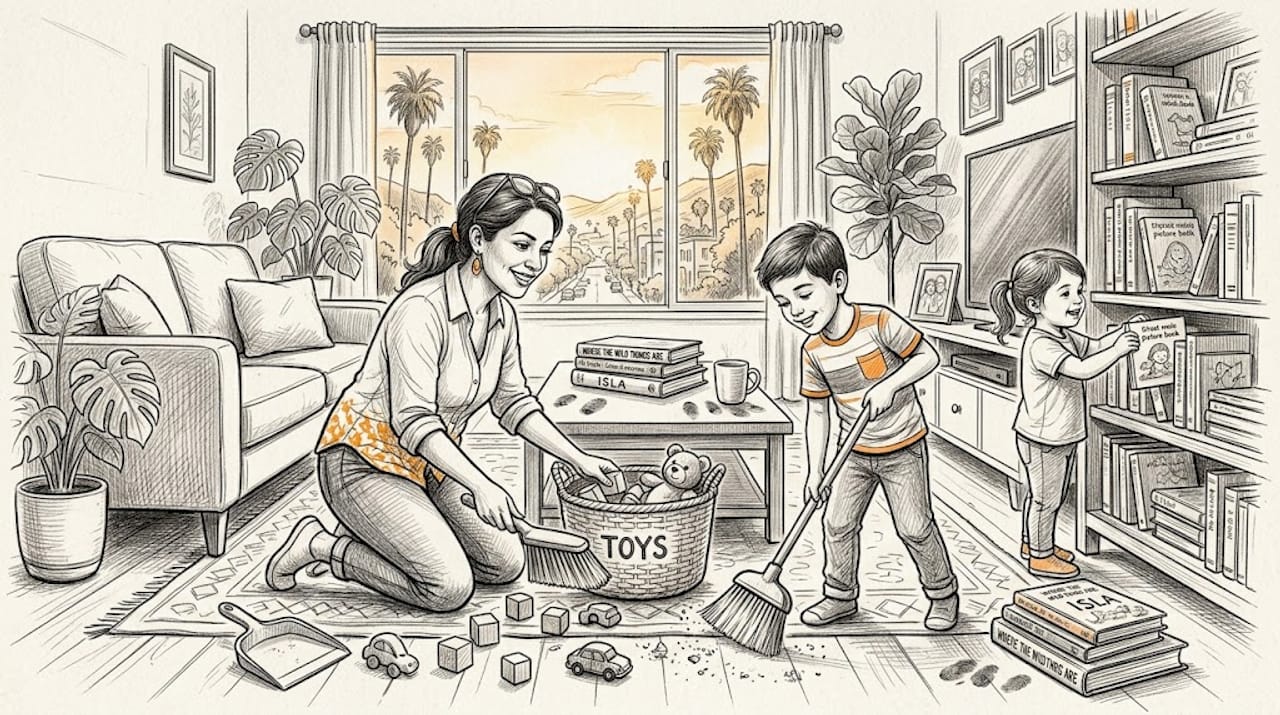
Every Los Angeles parent has stood in the middle of a living room covered in Legos, crayon marks, and mysterious sticky patches, wondering how the place got so out of control so fast. The chaos feels endless, and the thought of adding “teach kids to clean” to your already full plate sounds exhausting. But here’s the thing: kids who do chores show higher self-efficacy, better academic performance, and stronger long-term success. That means every time your child wipes down a counter or sorts laundry, they’re not just helping the household. They’re building real skills that will serve them for life.
Table of Contents
- Set the stage: Tools, mindset, and expectations
- Age-by-age guide: What kids can really do
- Make it fun: How to motivate and engage kids
- Maintaining momentum: Organizing, decluttering, and overcoming common hurdles
- A fresh take: Why letting kids clean imperfectly is a superpower for LA families
- Need a boost? Trusted cleaning support for LA families
- Frequently asked questions
Key Takeaways
| Point | Details |
|---|---|
| Preparation matters | Set realistic expectations and gather kid-friendly supplies for success. |
| Match chores to age | Assign tasks based on each child’s abilities to boost motivation and skill. |
| Make cleaning fun | Using music, games, and teamwork makes chores enjoyable for kids. |
| Consistency unlocks results | Routine and rotating tasks help families keep homes tidy long-term. |
| Mindset over perfection | Letting kids clean imperfectly fosters independence and lasting confidence. |
Set the stage: Tools, mindset, and expectations
With the challenge clear, let’s lay the foundation for a positive, productive cleaning experience with your kids. Before you hand your five-year-old a mop and point at the kitchen floor, a little preparation goes a long way.
Start with the right tools. Child-sized brooms, small spray bottles filled with water or a safe all-purpose cleaner, and step stools are not just cute. They are essential. When a child can actually reach the sink or grip a broom handle comfortably, they feel capable instead of frustrated. Stock a small cleaning caddy for each child with their own labeled supplies. Ownership matters to kids, and having their own gear makes them more likely to use it.
Adopt a “progress over perfection” mindset. This is the hardest part for most parents. When your eight-year-old folds a towel that looks like a crumpled paper ball, the instinct is to refold it. Resist. The goal is participation and habit-building, not a hotel-quality linen closet. Praise the effort loudly and correct technique gently over time. Your family organization checklist can help you build structure around these expectations so everyone knows what “done” looks like.
Set visual expectations. Young children respond to pictures and charts far better than verbal instructions. Picture labels and chore charts help kids understand exactly what each task involves without needing to ask you repeatedly. Tape a photo of a made bed above your child’s bed frame. Put a picture of clean counters at their eye level near the bathroom sink. Visuals reduce friction and make expectations concrete.
Prepare for neurodivergent children. If your child has ADHD or other executive function challenges, breaking tasks into micro-steps is essential. Instead of saying “clean your room,” try: pick up three toys, put books on the shelf, then put dirty clothes in the hamper. One step at a time, with a check-in between each one. This approach works beautifully for all kids, not just those with diagnosed challenges.
Here’s a quick overview of what to gather before you get started:
| Tool | Why it helps |
|---|---|
| Child-sized broom and dustpan | Proper fit builds confidence |
| Labeled spray bottles (safe solution) | Ownership and safety |
| Step stool | Access to surfaces and sinks |
| Picture chore chart | Visual clarity for young kids |
| Cleaning caddy per child | Personal responsibility |
| Timer (physical or phone) | Creates fun urgency |
Pro Tip: Laminate your chore charts so kids can check off tasks with a dry-erase marker and reset them each week. This keeps the chart fresh and gives kids a satisfying sense of completion.
Age-by-age guide: What kids can really do
Once your tools and expectations are set, it’s time to delegate chores tailored to your children’s strengths. One of the biggest mistakes parents make is either underestimating or overestimating what their children can handle. Both extremes lead to frustration.
Here is a research-based breakdown to help you match chores to your child’s developmental stage:
| Age group | Developmentally appropriate tasks |
|---|---|
| Toddlers (2 to 3) | Put toys in bins, place dirty clothes in hamper, wipe small spills with a cloth |
| Preschoolers (4 to 6) | Make beds, set the table, sort laundry by color, dust low surfaces |
| School-age (7 to 10) | Vacuum, load and unload dishwasher, fold laundry, wipe kitchen counters |
| Tweens and teens (11+) | Mop floors, clean bathrooms, take out trash, deep clean their rooms |
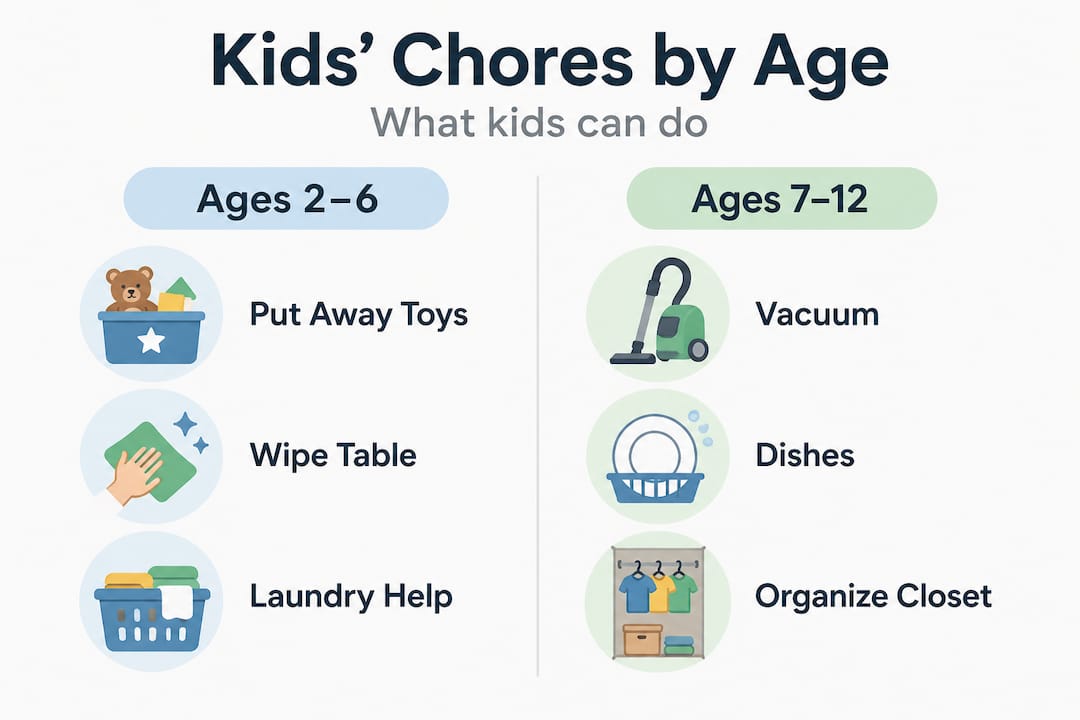
Research confirms that toddlers can handle putting toys in bins, placing dirty clothes in the hamper, and wiping up small spills with supervision. These feel like play to a two-year-old, and that is exactly the point. Preschoolers can manage making their beds, setting the table, sorting laundry by color, and dusting low surfaces with a microfiber cloth. And by the time your child hits seven or older, they are ready for real household contributions like vacuuming, loading the dishwasher, folding laundry, and wiping counters.
Here’s a simple approach to building your child’s chore progression over time:
- Start with one task they already enjoy or feel confident about.
- Practice together three to five times before expecting independence.
- Add one new task per month as competence grows.
- Let them choose between two tasks occasionally to build autonomy.
- Celebrate milestones like the first time they clean independently without reminders.
The key is progression. A child who masters making their bed at five is ready to tackle folding laundry at seven. You’re building a skill stack over years, not assigning a workforce overnight. Explore cleaning strategies for busy parents to see how these tasks fit into your weekly rhythm, and check out these cleaning schedules for LA homes for practical templates you can adapt for your family.
Make it fun: How to motivate and engage kids
Understanding developmental abilities makes it easier to match the right tasks to your child. But motivation is everything, so how do you keep the good vibes going?
The honest answer is that no child wakes up excited to scrub a toilet. But there are proven strategies that make chores feel far less like punishment and far more like a group activity worth joining.
Music is your secret weapon. Create a cleaning playlist with your kids’ favorite songs and make it a house rule that music only plays during cleaning time. Suddenly, cleaning is the gateway to the songs they love. Music, timers, and games consistently appear as top strategies for making household tasks enjoyable for children of all ages.
The “beat the timer” game changes everything. Set a timer for ten minutes and challenge your kids to see how much they can clean before it goes off. This creates urgency without nagging. You can make it competitive between siblings or cooperative where the whole family works as a team against the clock. Either way, kids focus better with a clear endpoint in sight. Check out more ideas for efficient cleaning with kids that fit into even the most packed LA schedule.
Here are more strategies that work well in real homes:
- Assign special “jobs” with titles. Your child is not just putting away dishes. They are the Official Kitchen Manager. A little theater goes a long way with younger kids.
- Use reward systems that match your child’s interests. Sticker charts, screen time, or choosing Friday night’s movie are all legitimate motivators. Reward participation and effort, not perfection.
- Make it social. Clean together as a family instead of sending kids off alone. Side-by-side work builds connection and models the behavior you want to see.
- Rotate tasks regularly. Doing the exact same chore every single week gets boring fast. Rotate responsibilities monthly to keep things fresh and teach a wider range of skills.
“Praising effort over results is one of the most powerful things a parent can do. A child who hears ‘I love how hard you worked on that’ builds resilience. A child who only hears ‘you missed a spot’ learns to avoid trying.”
For families navigating sensory sensitivities or attention challenges, try offering noise-canceling headphones during vacuuming, unscented cleaners, or breaking cleaning into very short five-minute windows with breaks built in. The goal is to make the experience manageable and positive, not overwhelming. For more inspiration, explore cleaning for LA families and why a clean environment supports the overall wellbeing of your home.
Pro Tip: Record a “cleaning show” with your kids where they narrate their chores like a cooking show host explains a recipe. Play it back later. The silliness alone will make them want to repeat it.
Maintaining momentum: Organizing, decluttering, and overcoming common hurdles
With momentum building, the final challenge is making your new routines sustainable, fair, and clutter-resistant in the real world.
Even the best cleaning system falls apart if there’s simply too much stuff to manage. This is an LA reality. Abundant birthday gifts, school projects, sports gear, and the general accumulation of family life can overwhelm even organized systems. The solution is structural, not motivational.
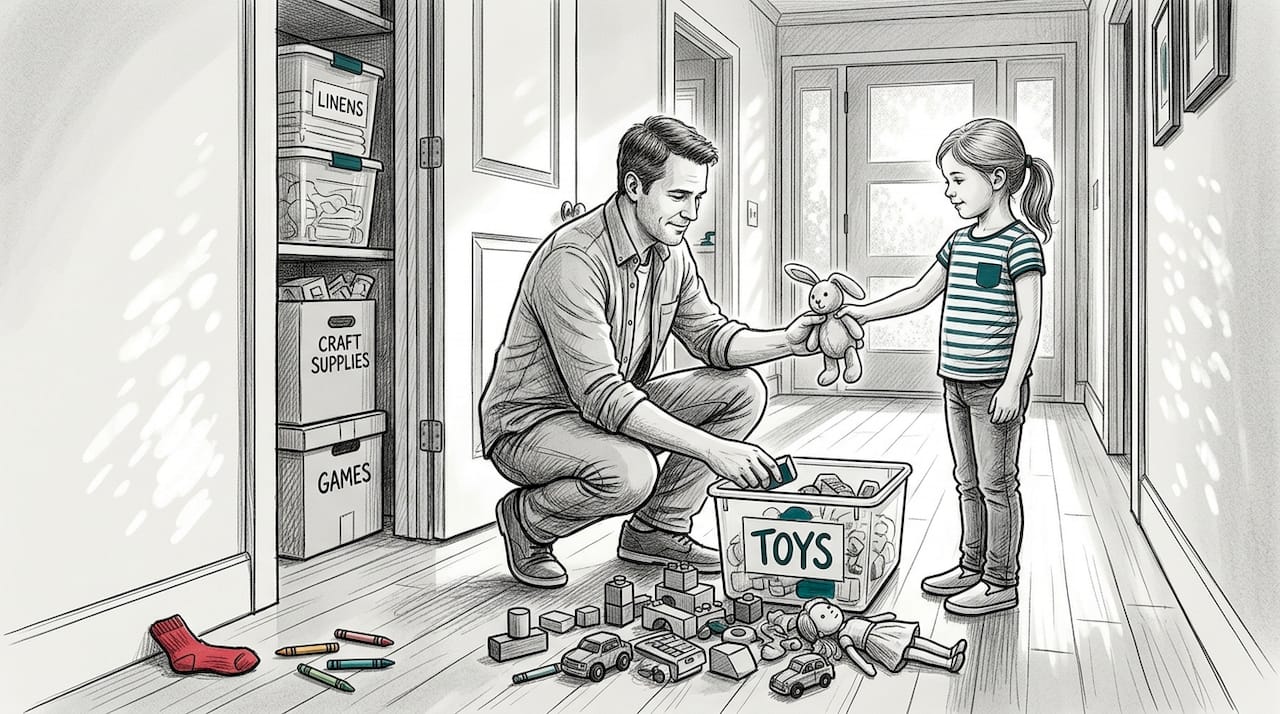
Declutter regularly and rotate what’s accessible. Rotating toys and decluttering consistently reduces the volume of mess your family has to manage. When fewer items are out at one time, cleaning becomes faster and less daunting for kids. Try a simple box system where a third of toys are in rotation, a third are stored, and a third are donated or discarded each season. Kids often rediscover stored toys with fresh excitement, which also reduces the urge to acquire more. Pair this with the right systems by exploring how to stay organized in LA homes for the long term.
Handle resistance without a power struggle. Every child pushes back on chores at some point. When it happens, stay calm and curious. Ask what feels hard about the task. Sometimes it is genuinely too difficult, sometimes they are tired, and sometimes they just need five minutes to transition. Negotiation is not weakness. Letting your child choose between two equivalent tasks gives them a sense of control while keeping the work moving.
Here are practical strategies for common hurdles:
- Chore fatigue: Rotate tasks and keep sessions short. Twenty minutes of focused effort beats two hours of half-hearted resistance.
- Sibling arguments over fairness: Post the chore chart publicly so all assignments are visible and transparent.
- Interest drops off after a few weeks: Introduce a new element like a fresh playlist, a new cleaning gadget, or a special reward tied to a month-long streak.
- Kids say they don’t know how: Revisit the task together without criticism. Re-demonstrating is part of the teaching process, not a failure.
“Sustainable routines are built on flexibility, not rigidity. The family that adjusts the system when it stops working will always outperform the family that insists on a perfect plan.”
Pay close attention to how you assign chores across genders. Research shows that girls are often assigned more domestic chores than boys, reinforcing harmful gender role stereotypes early in life. Make sure all kids in your household do a full range of tasks including cooking prep, vacuuming, taking out trash, and yard cleanup, regardless of gender. Rotating jobs ensures no child is siloed into a role based on assumptions. This matters not just for fairness, but for preparing every child to live independently and competently as an adult.
A fresh take: Why letting kids clean imperfectly is a superpower for LA families
Here is something most cleaning guides will not tell you: the messiest, most imperfect attempts at chores are often the most valuable. When your six-year-old “sweeps” and leaves half the crumbs behind, or your nine-year-old “mops” with more water than technique, those are not failures. Those are learning sessions in real time.
In Los Angeles, where parents are navigating demanding careers, long commutes, and full family schedules, there is enormous pressure to do things right and do them fast. That pressure can make it tempting to just redo the chore yourself after your child finishes. We understand the impulse completely. But when you quietly re-clean what your child just cleaned, you communicate something they pick up immediately: “Your effort was not good enough.” Over time, that message erodes motivation far faster than any messy floor.
The families that sustain kid-powered cleaning routines are the ones who genuinely let go of perfect results. They notice what research confirms: that children who do chores develop better self-efficacy, stronger academic habits, and real-world competence that shows up for decades. The crooked bed and the streaky mirror are not problems. They are evidence that your child is actively learning something that will matter long after they leave your home.
Los Angeles is a city built on diversity, creativity, and resilience. Those same qualities belong in your home. Families that build the best cleaning habits together are not the ones with the most perfectly executed systems. They are the ones who show up consistently, laugh at the messes, and keep going anyway. The messy middle of kid-led cleaning is not an obstacle. It is exactly where character gets built.
Need a boost? Trusted cleaning support for LA families
Even with the best strategies in place, LA parents sometimes need real backup. There is no shame in that. Building a kid-powered cleaning routine is meaningful work, but it does not mean you have to carry the whole load alone.

At The Maid Society, we support busy Los Angeles families who want a clean, organized home without sacrificing their limited time. Whether you need a one-time deep clean to reset your space, regular maintenance that keeps your home manageable between your family’s efforts, or help getting your home organization systems in place, our vetted, trained team is ready to help. Think of professional cleaning as the foundation that makes your family’s daily routines easier and more effective. Explore our full range of LA cleaning services and find the right fit for your household.
Frequently asked questions
How do I get my kids to start cleaning if they’ve never done chores before?
Start with one simple task they can succeed at right away, give them clear step-by-step instructions, and praise the effort generously before correcting anything. Consistency in the first few weeks builds the habit that carries forward.
What if my child refuses to help with household cleaning?
Try pairing chores with music or games, and offer a small reward tied to participation rather than results. Research shows that music and timers reduce resistance significantly by making tasks feel active and time-limited rather than open-ended.
How can I avoid gender stereotypes when assigning chores?
Assign a wide variety of tasks to all children regardless of gender, and rotate responsibilities on a monthly basis. Studies confirm that girls are disproportionately given domestic chores, so intentional rotation keeps assignments fair and prepares every child equally.
What’s the benefit of involving kids in cleaning from a young age?
Children who do regular chores develop higher self-efficacy and stronger academic performance, and the habits they build early translate to long-term independence and success in adult life.
Recommended
- 7 Must-Have Cleaning Habits for Busy Los Angeles Families
- Home sanitation basics: keep LA homes clean and healthy
- How Cleaning Safeguards Health and Safety in LA Homes
- How cleaning habits improve time management for busy LA families



Get Cleaning Tips & Exclusive Offers
Join our community for time-saving hacks and special discounts delivered to your inbox.