TL;DR:
- Construction debris removal involves sorting, hauling, and disposal after renovations or builds. Proper planning, PPE, and compliance with local regulations reduce costs and health risks for homeowners.
By L.K. | Themaidsociety | Updated 2026
<script type="application/ld+json">
{
  "@context": "https://schema.org",
  "@type": "Article",
  "headline": "Guide to Removing Construction Debris for Homeowners",
  "author": {
    "@type": "Person",
    "name": "L.K."
  },
  "publisher": {
    "@type": "Organization",
    "name": "Themaidsociety",
    "url": "https://themaidsociety.com"
  },
  "datePublished": "2026-01-01",
  "dateModified": "2026-01-01",
  "description": "A practical guide to removing construction debris for homeowners and DIY enthusiasts in Southern California, covering debris types, tools, disposal steps, and local regulations.",
  "mainEntityOfPage": {
    "@type": "WebPage",
    "@id": "https://themaidsociety.com/guide-to-removing-construction-debris"
  }
}
</script>
Table of Contents
- What types of construction debris should you expect?
- Tools and preparation for safe debris removal
- Step-by-step guide to removing construction debris in Southern California
- Cleaning techniques for post-construction dust
- Legal requirements and local regulations
- Key Takeaways
- Perspective
- Post-construction cleanup made easier
- FAQ
- Recommended Articles
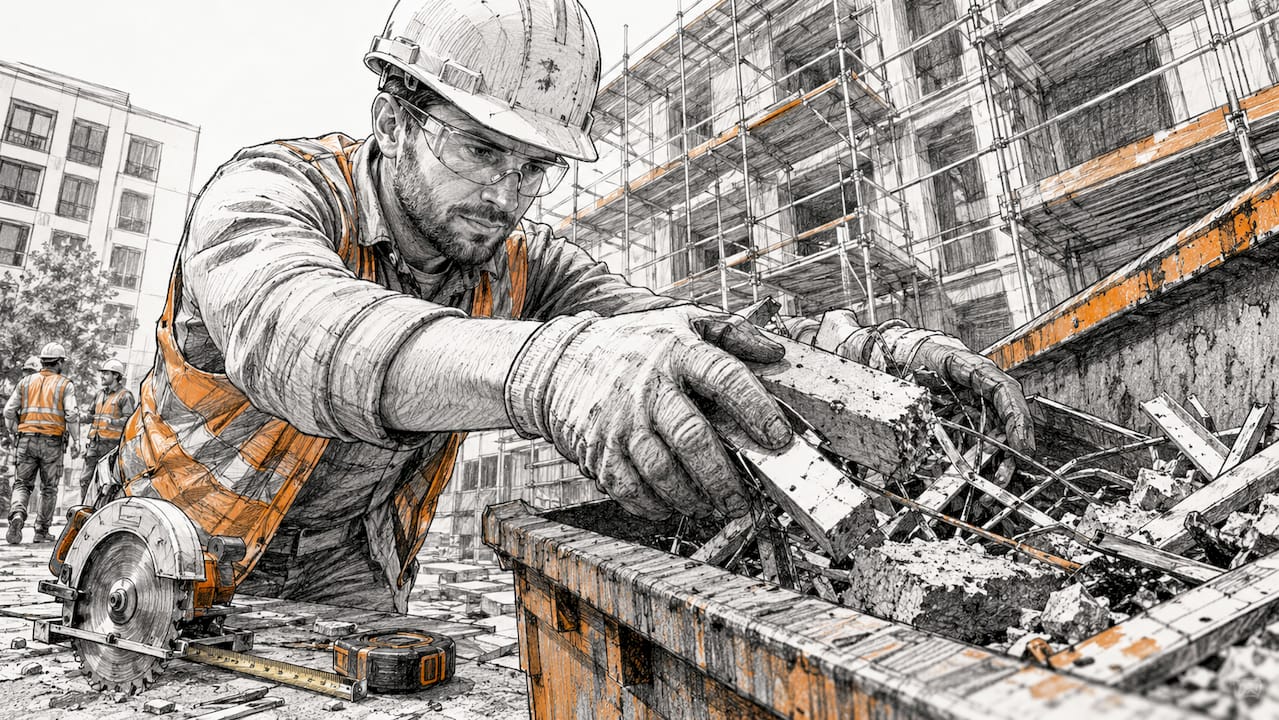
Construction debris removal is the process of safely sorting, hauling, and disposing of waste materials left after a renovation or build. This guide to removing construction debris covers everything Los Angeles homeowners and DIYers need to know: what materials you are dealing with, which tools to use, how to follow Southern California disposal rules, and how to clean up what remains. The U.S. generates roughly 600 million tons of construction and demolition debris every year. That number means landfills are under pressure, regulations are strict, and the cost of getting disposal wrong, whether in Beverly Hills, Culver City, or Long Beach, can be severe.
What types of construction debris should you expect? {#types}
Construction and demolition waste falls into two broad categories: inert debris and hazardous debris. Knowing the difference before you start demolition saves money and keeps you out of legal trouble.
Inert debris includes materials that pose no chemical risk. Wood framing, concrete, brick, drywall, metal studs, roofing shingles, and ceramic tile all fall here. These materials are bulky and heavy, but most can be recycled or taken to a licensed transfer station. Recycling concrete and masonry is 7–13 times cheaper than paying landfill tipping fees. That gap is significant enough to change how you plan a whole project.
Hazardous debris is a different story. Asbestos insulation, lead paint chips, treated lumber, and certain adhesives require licensed haulers and special disposal facilities. California’s Department of Toxic Substances Control (DTSC) enforces strict rules on how these materials move from your job site to a disposal facility. Mixing hazardous waste with general debris is one of the most common and costly mistakes homeowners make.
Source separation is the practice of sorting debris by material type at the point of generation. It is the single most effective way to cut disposal costs and stay compliant with local rules in Los Angeles County.
| Debris type | Examples | Disposal method |
|---|---|---|
| Inert / recyclable | Concrete, brick, clean wood | Licensed recycling center or transfer station |
| Mixed inert | Drywall, metal, roofing | Dumpster rental, sorted by facility |
| Reusable | Doors, cabinets, fixtures | Habitat for Humanity ReStores, salvage yards |
| Hazardous | Asbestos, lead paint, solvents | Licensed hazardous waste hauler only |
Tools and preparation for safe debris removal {#tools}
The right equipment makes debris removal faster and far safer. Skipping PPE or using the wrong container size creates problems that cost more to fix than to prevent.
Personal protective equipment (PPE)
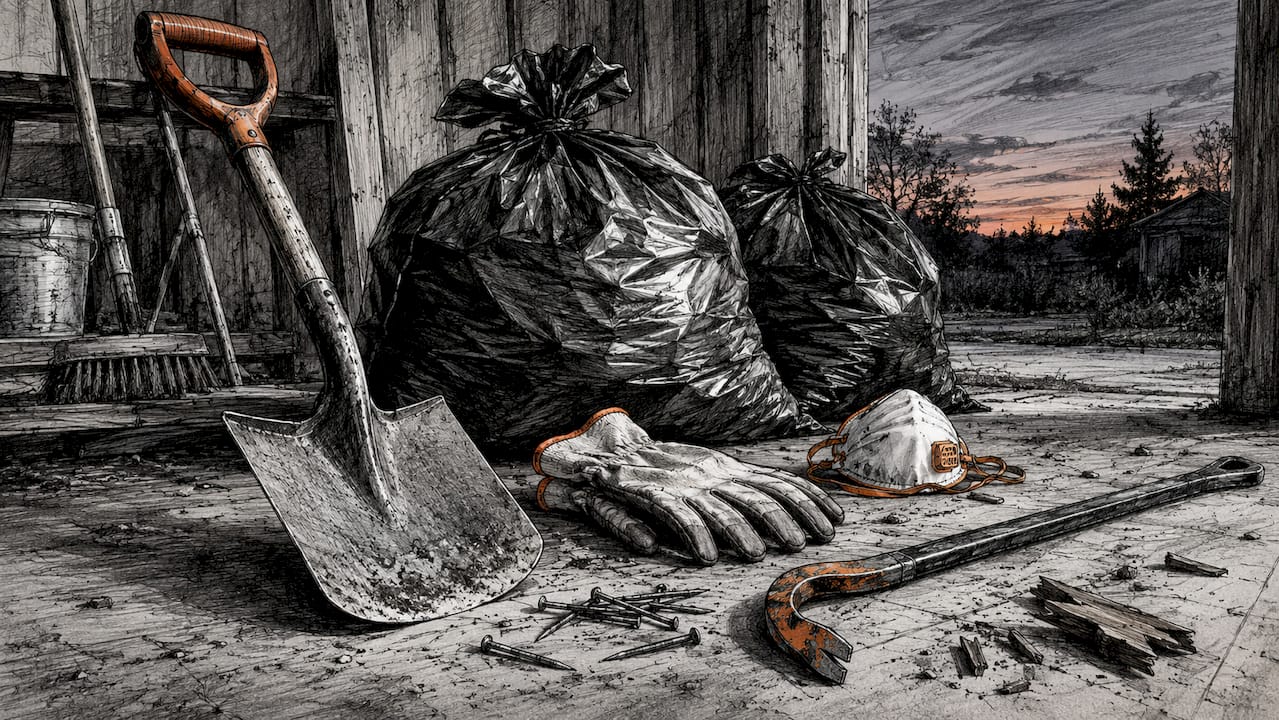
Every homeowner handling construction waste needs the following before touching a single piece of debris:
- N95 or P100 respirator (required for drywall dust and any suspected asbestos)
- Safety goggles or a full face shield
- Heavy-duty work gloves rated for puncture resistance
- Steel-toed boots
- Disposable coveralls for hazardous material work
Dust control and PPE use are critical for protecting homeowners and workers from long-term respiratory and injury risks. Skipping a respirator during drywall teardown is not a minor shortcut. It is a decision that can affect your lungs for years.
Tools and containers
- HEPA vacuum (captures particles 0.3 microns and larger)
- Magnet sweeper (pulls nails, staples, and metal fragments from sawdust)
- Pry bars and demo hammers for controlled teardown
- Heavy-duty contractor bags (3 mil minimum)
- Dumpster rental sized to your project
Most residential projects require a 10–20 cubic yard dumpster. Order one size larger than your estimate. Overflow fees and the cost of a second haul always exceed the upgrade cost.
Pro Tip: Set up a de-nailing station near your debris zone. A simple plywood board and a dedicated nail bucket keeps sharp objects out of foot traffic areas and speeds up wood recycling, since most facilities reject lumber with embedded nails.
Site preparation
Designate separate zones for recyclable, reusable, and general waste before demolition starts. Mark them clearly with colored tape or signs. Place your dumpster on a flat, stable surface. In Los Angeles, Santa Monica, and West Hollywood, dumpsters placed on public streets require a permit from the city’s public works department. Confirm permit requirements before delivery day.
If you are planning a larger home upgrade and want to avoid common material-handling errors, the advice on glass railing mistakes from The Glass Railing Store is a useful read for understanding how fragile materials need to be handled and staged separately.
Step-by-step guide to removing construction debris in Southern California {#steps}
A clear sequence prevents the most common mistakes: mixed loads, overloaded containers, and missed hazardous materials.
-
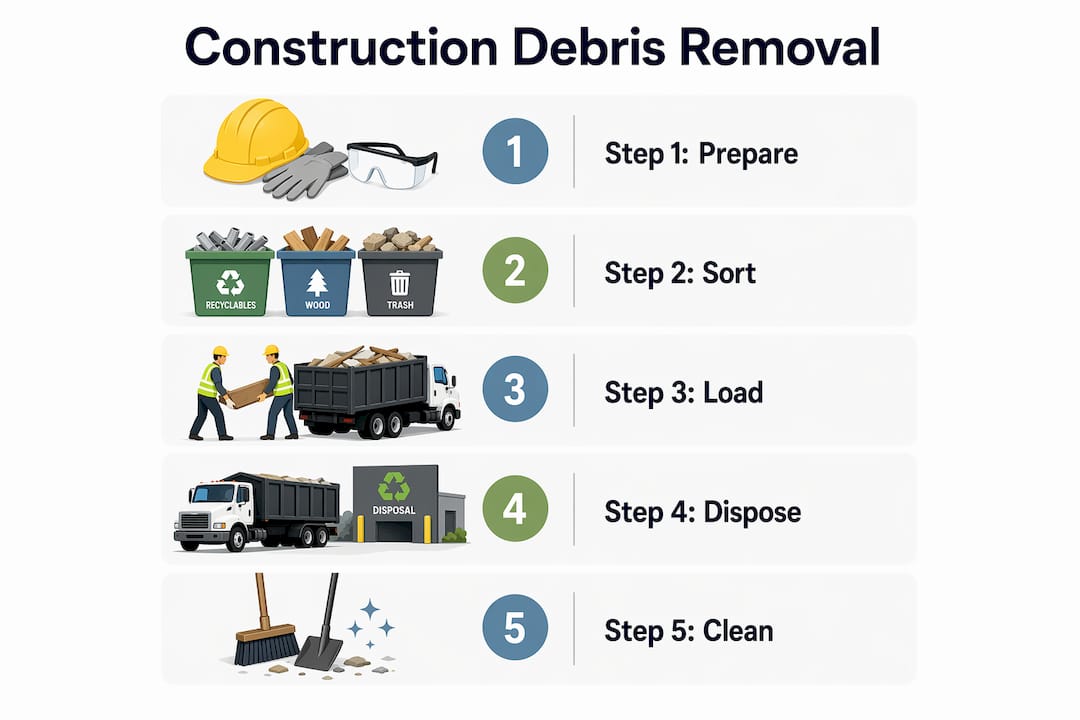
Conduct a pre-demolition hazmat survey. Before any teardown, inspect for asbestos (common in homes built before 1980) and lead paint (homes built before 1978). Hire a certified inspector if you are unsure. California law requires abatement by a licensed contractor before demolition proceeds.
-
Sort debris at the source. As materials come down, direct them to the correct zone. Clean wood goes to the wood pile. Concrete and masonry go to the inert pile. Anything suspected of being hazardous goes into a sealed, labeled container. Ordering accurate material quantities and salvaging reusable items through deconstruction reduces debris volume and cuts disposal costs.
-
Wet down dust-generating materials. Drywall, concrete, and masonry create fine particulate dust when broken. Lightly misting these materials before and during demolition suppresses airborne particles. This is especially relevant in dry Southern California climates where dust travels fast.
-
Load dumpsters correctly. Place heavy materials like concrete and brick at the bottom. Lighter materials go on top. Never exceed the fill line. All construction debris loads must be secured with tarps or covers to prevent road hazards. Overweight fines can reach thousands of dollars per load.
-
Transport to a licensed facility. Los Angeles County operates several construction and demolition debris recycling facilities. Confirm your hauler is licensed by the California Department of Resources Recycling and Recovery (CalRecycle). Keep your weight tickets and disposal receipts.
-
Document everything. Record what was hauled, by whom, and where it went. This protects you if a compliance question arises later.
Pro Tip: Call your local solid waste department before you start. Rules differ between Los Angeles, Inglewood, Hawthorne, and Carson. A five-minute call can prevent a fine that takes five hours to fight.
Cleaning techniques for post-construction dust {#cleaning}
Removing the bulk debris is only half the job. Fine dust settles into every surface, duct, and corner of your home. Leaving it there creates ongoing respiratory hazards and damages finishes over time.
Approximately 2.3 million construction workers face exposure to respirable crystalline silica. That statistic applies to homeowners doing DIY work too. Silica dust from concrete and tile cutting is invisible and dangerous. Standard household vacuums recirculate fine particles back into the air. A HEPA vacuum captures them.
Surface-by-surface cleaning approach
- Hard floors (tile, concrete, hardwood): Dry sweep with a microfiber dust mop first. Follow with a damp mop using a pH-neutral cleaner. Never use a standard broom, which launches dust into the air.
- Drywall and painted surfaces: Wipe with a lightly dampened microfiber cloth. Work top to bottom so dust falls to the floor for final vacuuming.
- HVAC vents and returns: Cover them with plastic sheeting during demolition. After cleanup, replace filters and consider a professional duct cleaning if work lasted more than a few days.
- Windows and sills: Wipe with a damp cloth before opening windows. Opening windows too early pulls outdoor air in and redistributes settled dust.
Professional cleaning services use HEPA vacuums and industrial air scrubbers to remove fine dust effectively. Air scrubbers run continuously during and after cleanup, cycling room air through HEPA filters to capture particles that vacuuming misses.
Pro Tip: Clean in three passes: a rough pass immediately after debris removal, a detail pass 24 hours later after settled dust drops, and a final pass before occupying the space. Skipping the second pass is the most common reason post-construction homes still feel dusty weeks later.
For a detailed breakdown of dust removal methods used by professionals, the contractor dust removal field guide from Themaidsociety covers wet cutting, air scrubber placement, and respirator selection in depth.
Legal requirements and local regulations {#legal}
Southern California homeowners face a layered set of rules covering construction waste disposal. Federal law, California state regulations, and local municipal codes all apply simultaneously.
“Homeowners often assume renovation waste can be handled like normal trash. Confirmation of local solid waste department rules is the only way to avoid fines that can reach $100,000 or more per day for hazardous waste violations.”
Key compliance requirements include:
- Hazardous material abatement: Asbestos and lead paint must be removed by a California-licensed contractor before any demolition. The DTSC and Cal/OSHA both enforce this rule.
- Waste manifests: Hazardous waste shipments require a Uniform Hazardous Waste Manifest. This document tracks the waste from your property to the disposal facility.
- Licensed haulers: Verify that your waste hauler holds a current California Integrated Waste Management permit. Unlicensed haulers can dump illegally, and the liability follows the property owner.
- Load securement: All loads must be covered with tarps or nets. Unsecured loads that scatter debris on California highways carry fines and civil liability.
- Record retention: Keep weight receipts, manifests, and disposal confirmations for at least three years. For hazardous materials, longer retention is often required.
Civil penalties for hazardous waste violations can exceed $100,000 per day. That number is not a worst-case scenario. It is the standard penalty structure under California Health and Safety Code Section 25189.
Cities like Manhattan Beach, Redondo Beach, and El Segundo have additional local ordinances on dumpster placement and construction hours. Check with each city’s building and safety department before your project begins.
Key Takeaways {#takeaways}
Effective construction debris removal requires sorting materials before demolition, using proper PPE, following California disposal regulations, and cleaning thoroughly with HEPA equipment to protect your home and health.
| Point | Details |
|---|---|
| Sort debris before demolition | Separate inert, recyclable, and hazardous materials at the source to cut costs and stay compliant. |
| Size your dumpster correctly | Order a 10–20 cubic yard container and go one size larger than your estimate to avoid overflow fees. |
| Secure every load | Cover all debris loads with tarps; unsecured loads carry fines and civil liability in California. |
| Keep disposal records | Retain weight receipts and manifests for at least three years to protect against compliance issues. |
| Clean in three passes | A rough pass, a 24-hour follow-up, and a final HEPA vacuum pass removes settled dust completely. |
What I have learned after years of post-construction cleanups {#perspective}
By Lyndsey
Most homeowners underestimate how much debris a single bathroom renovation produces. I have seen 200-square-foot gut jobs fill a 15-yard dumpster and still leave a pile on the driveway. The instinct is to deal with disposal after the work is done. That instinct costs money every time.
The homeowners who handle this well start planning waste management before the first wall comes down. They call the city, confirm permit requirements, and book a dumpster for the right size. They set up sorting zones. They buy the respirators before demo day, not after they are already coughing.
The part that surprises people most is the dust. Bulk debris is visible and easy to motivate yourself to remove. Fine silica and drywall dust are invisible. They settle into HVAC systems, coat cabinet interiors, and sit on surfaces that look clean. I have walked into homes in West LA and Brentwood where the owners thought cleanup was done, and a HEPA vacuum filled its canister in the first room. That dust does not go away on its own.
My honest advice: if you are doing the debris removal yourself, do it right or hire the final cleaning out. The post-construction cleaning process is not the place to cut corners. Your lungs and your home’s air quality are not recoverable expenses.
— Lyndsey
Post-construction cleanup made easier in Los Angeles {#promo}
Removing bulk debris is a job most homeowners can manage with the right plan. The fine dust, surface contamination, and air quality restoration that follow are a different level of work entirely.

Themaidsociety provides post-construction cleaning services across Los Angeles, Beverly Hills, Santa Monica, Culver City, West Hollywood, Manhattan Beach, and surrounding communities. Our team uses HEPA vacuums, air scrubbers, and systematic surface cleaning to restore your home after renovation. We handle the detail work that protects your family’s health and gets your space ready to live in. Schedule your post-construction clean through our Los Angeles cleaning services page and get your home back to the standard it deserves.
FAQ {#faq}
What counts as construction debris?
Construction debris includes wood, concrete, drywall, metal, roofing materials, tile, and hazardous materials like asbestos and lead paint left after a renovation or demolition project.
Can I put construction debris in my regular trash?
No. Most municipalities, including Los Angeles, prohibit construction and demolition waste in standard residential bins. Confirm rules with your local solid waste department to avoid fines.
How do I dispose of hazardous construction materials in California?
Hazardous materials like asbestos and lead paint require a California-licensed abatement contractor and a licensed hazardous waste hauler. A Uniform Hazardous Waste Manifest must accompany every shipment.
What size dumpster do I need for a home renovation?
Most residential projects require a 10–20 cubic yard dumpster. Order one size larger than your estimate to avoid overflow fees and the cost of a second haul.
How long should I keep disposal records?
Keep weight receipts, manifests, and disposal confirmations for at least three years. Hazardous waste documentation may require longer retention under California law.
Recommended Articles {#recommended}
- Property cleanup best practices for homeowners
- How to handle renovation cleanup for a spotless home
- Dust removal methods for contractors: 2026 field guide
- Best practices for job site cleaning after construction
- Railing panels: how to plan for future home upgrades
Want to grow your home services business online? ConvertLabs helps local service companies convert more website visitors into booked clients.
Themaidsociety serves homeowners across Los Angeles, Beverly Hills, Santa Monica, Culver City, West Hollywood, Inglewood, Manhattan Beach, Redondo Beach, Long Beach, Burbank, and surrounding Southern California communities.
Recommended
- Property Cleanup Best Practices for Homeowners
- Best practices for job site cleaning after construction
- Detailed cleaning guide for builders: post-construction success



Get Cleaning Tips & Exclusive Offers
Join our community for time-saving hacks and special discounts delivered to your inbox.