TL;DR:
- Eco-friendly cleaning in construction significantly improves indoor air quality by reducing harmful VOCs and synthetic chemicals. Certified green products perform nearly as well as conventional cleaners, offering long-term health, safety, and cost benefits. Implementing structured green cleaning protocols enhances project quality, worker safety, and client satisfaction across Southern California developments.
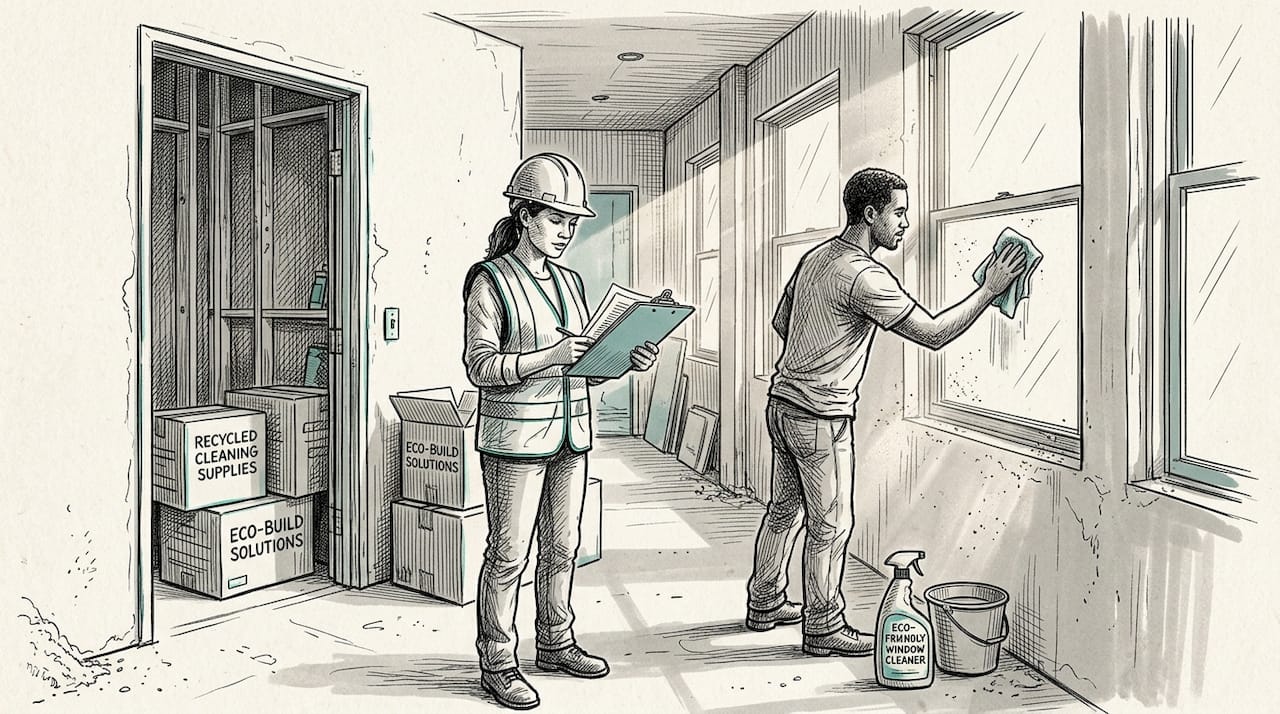
Most construction professionals think cleanup is the easy part. Demo the space, build it out, sweep the floors, and hand over the keys. But the importance of eco-friendly cleaning in construction goes far deeper than appearances. Indoor air after construction can be 2 to 100 times more polluted than outdoor air, driven by adhesive fumes, drywall dust, and solvent residue. Conventional cleaning products then add another layer of synthetic chemicals to an already compromised environment. For builders, contractors, and property owners in Los Angeles and across Southern California, the switch to green cleaning is not just a values statement. It is a measurable upgrade in project quality, worker safety, and long-term asset protection.
Table of Contents
- Key Takeaways
- The importance of eco-friendly cleaning in construction settings
- How green cleaning protects your assets and your crew
- Green vs. conventional cleaning: what the data actually shows
- Practical steps for implementing green cleaning on Southern California job sites
- My take: green cleaning is not charity, it is strategy
- Ready to make your next project cleaner and greener?
- FAQ
Key Takeaways
| Point | Details |
|---|---|
| Indoor air risk is real | Post-construction air can carry 2 to 100 times more pollutants than outdoor air, making product choice critical. |
| Green cleaning performs well | EPA Safer Choice certified products remove 94% of test soils, nearly matching conventional cleaners at 96%. |
| Health impact is significant | Switching to eco-friendly methods can eliminate up to 90% of synthetic chemical exposure on job sites. |
| Cost savings compound over time | Concentrated formats and reduced liability claims make green cleaning financially competitive long-term. |
| Certifications cut through greenwashing | Third-party labels like EPA Safer Choice verify actual ingredient safety, not just marketing claims. |
The importance of eco-friendly cleaning in construction settings
Not all cleaning products are created equal, and in a construction context, the difference between conventional and plant-based formulas goes well beyond fragrance preferences. Green cleaning products rely on three core chemistry types: plant-derived surfactants that lift grease and grime, enzymes that break down organic soils at a molecular level, and mineral abrasives like baking soda that scour surfaces without scratching or off-gassing.
The honest trade-off is dwell time. Green cleaners need 5 to 10 minutes of contact with soils to achieve full effectiveness, compared to the faster action of harsh chemical alternatives. That is a manageable adjustment, not a dealbreaker. Planning cleaning phases into the construction schedule accounts for it easily.
The health payoff justifies that patience. Replacing petroleum-based solvents with plant-derived surfactants and enzymes eliminates most of the VOC load that triggers respiratory irritation, headaches, and long-term occupant discomfort. For Southern California projects where occupancy inspections happen fast and families move in within days of completion, that matters enormously.
When selecting products, skip the front-of-label marketing. Words like “natural” and “green” have no regulatory definition. Instead, look for verified certifications.
- EPA Safer Choice: Verifies that every ingredient has been reviewed for safety to human health and aquatic life
- Green Seal GS-37: Covers commercial cleaning products with strict VOC and ingredient standards
- USDA BioPreferred: Confirms bio-based content percentages for products using plant-derived materials
- EWG Verified: Independently screens for toxic chemicals and full ingredient transparency
Pro Tip: When managing a post-construction cleanup across multiple units in LA, run a 30-day product trial on one floor using EPA Safer Choice certified cleaners before rolling them out site-wide. You will catch any performance gaps early without risking the whole project timeline.
How green cleaning protects your assets and your crew
The business case for eco-conscious building maintenance starts before the last nail goes in. Construction dust is more than a nuisance. Fine particulate matter from drywall cutting, tile grinding, and wood sanding settles deep into HVAC systems, damages sensitive finishes, and creates slip hazards that slow down other trades working on site.
Here is how a phased green cleaning approach protects the full project:
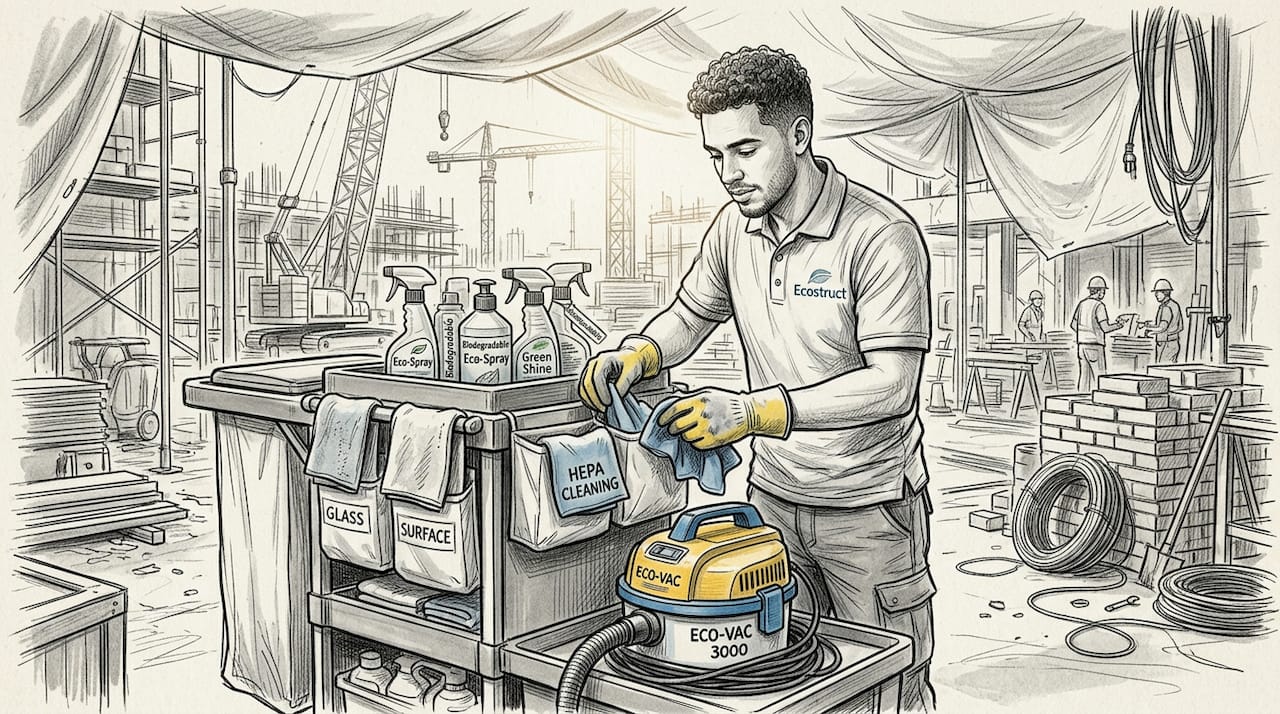
- Phase 1: Rough-in cleanup. After framing and mechanical rough-in, remove construction debris and sweep with HEPA-filtered vacuums. This keeps subcontractors from tracking particulate into sensitive areas.
- Phase 2: Pre-drywall wipe-down. Before taping and mudding, clean window frames, door bucks, and exposed mechanicals using a low-VOC spray. This prevents drywall dust from bonding to surfaces that are harder to clean later.
- Phase 3: Post-paint detail clean. Use enzyme-based cleaners on floors and surfaces after painting is complete. This removes overspray and adhesive residue without dulling new finishes.
- Phase 4: Final occupancy clean. A thorough top-to-bottom post-construction deep clean removes all remaining particulate, ensures air quality, and prepares the space for inspection or handover.
Worker safety gets a direct boost from this approach as well. Reduced chemical exposure on site lowers the risk of acute respiratory events, skin sensitization, and long-term occupational health claims. In California, where Cal/OSHA requirements are strict and contractor liability is real, that reduction in chemical exposure translates directly into reduced legal and insurance risk.
Pro Tip: Post a simple color-coded microfiber chart at the job site entrance. Red cloths for bathrooms, blue for general surfaces, yellow for kitchens. Cross-contamination is the number one quality failure in post-construction cleaning, and it costs you more in rework than the system does to implement.
Green vs. conventional cleaning: what the data actually shows
Builders and property managers often assume that going green means accepting lower performance. The numbers do not support that assumption.
| Category | Eco-friendly cleaning | Conventional cleaning |
|---|---|---|
| Soil removal rate | 94% (EPA Safer Choice) | 96% |
| VOC exposure | Very low to none | High in many formulas |
| Biodegradability | High (plant-based) | Low to moderate |
| Plastic waste reduction | Up to 80-90% with concentrates | Minimal |
| Worker health risk | Significantly reduced | Elevated with repeated exposure |
| Long-term cost | Lower with reduced liability | Higher when liability is factored in |
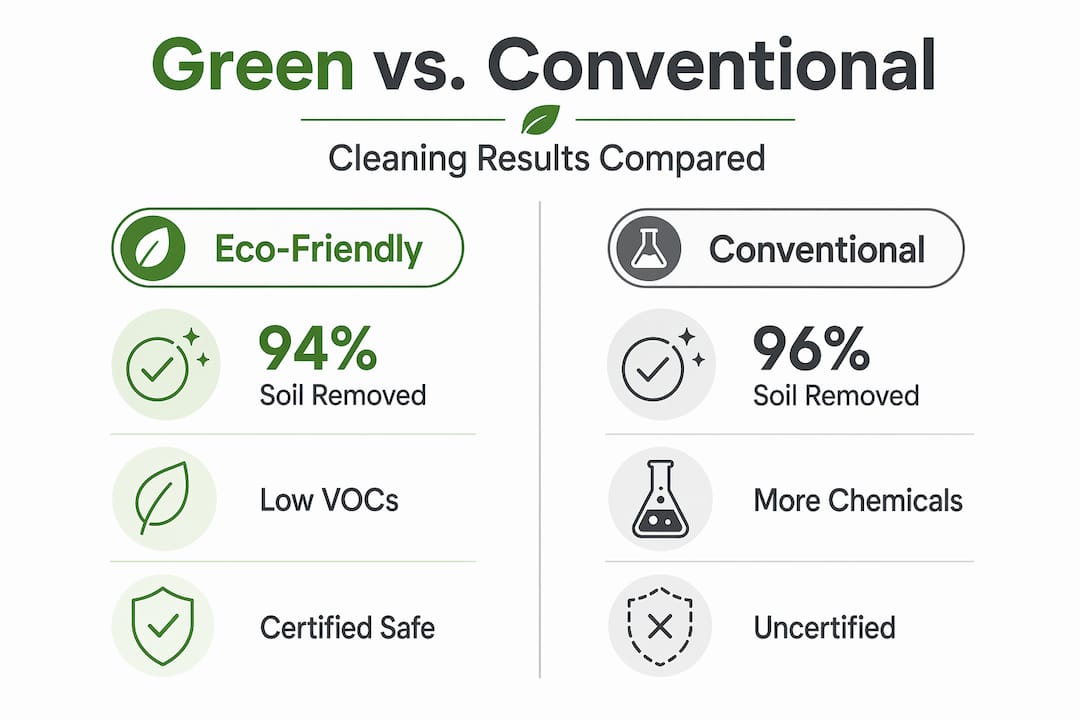
That 2% performance gap in soil removal is negligible on a real job site. What is not negligible is the long-term difference in impact of green cleaning on health for both workers and occupants.
Concentrated refill formats deserve special attention here. When your cleaning crew switches from single-use bottles to a dilution station with refillable containers, plastic waste drops dramatically and product cost per gallon falls by 30% to 50% in most cases. For a large residential development in Culver City or a commercial build-out in West Hollywood, that adds up quickly across dozens of cleaning sessions.
The greenwashing problem is real, and it can undermine your credibility with eco-conscious clients. Watch for these red flags:
- Vague claims like “non-toxic” or “all-natural” with no certification backing
- Products that list fragrance as an ingredient without disclosing what that fragrance contains
- Labels that highlight one green attribute (recyclable bottle) while ignoring the chemical formula inside
- No third-party verification from a recognized body
The EPA’s Safer Choice program provides an online product finder that lets you verify certified products before purchase. Use it. Your clients will appreciate the documentation, especially in LEED or CALGreen-targeted projects.
Practical steps for implementing green cleaning on Southern California job sites
Getting your crew to actually use green cleaning methods consistently is the hardest part. Here is a straightforward implementation plan that works in real construction environments across Los Angeles, Manhattan Beach, and Long Beach.
- Audit your current product list. Pull every cleaning product used on your last three jobs and check each one against the EPA Safer Choice database. This gives you a concrete starting point rather than an abstract goal.
- Swap by category. Replace all-purpose sprays first since they cover the most surface area and generate the most VOC exposure. Move to floor cleaners and glass cleaners next. Specialty products like grout cleaners come last.
- Set up a dilution station. Buy a basic wall-mounted concentrate dispenser for around $40 to $80 and stock it with two or three certified products. This eliminates pre-mixed bottle waste and ensures consistent dilution ratios every time.
- Train on dwell time. Spray the surface, let the product sit for the recommended contact period, then wipe. Most cleaning failures happen because crews wipe immediately out of habit. Post dwell time reminders at the cleaning supply station.
- Document your green cleaning protocol. In California, CALGreen compliance documentation can include records of cleaning products used during construction. That paperwork has real value on permitted projects in jurisdictions like Beverly Hills, Westwood, and Brentwood.
Pro Tip: If your crew resists the change, start with a single trade. Have your final-clean team use certified green products exclusively on the last two projects and track any callbacks or client complaints. When the numbers show no quality drop, the rest of the team gets on board fast.
Integrating sustainable construction practices like green cleaning into your workflow from the planning stage separates professional operations from reactive ones. Southern California’s regulatory environment and increasingly eco-conscious buyers make this a competitive requirement, not just a preference.
My take: green cleaning is not charity, it is strategy
I have watched the construction industry treat cleaning as an afterthought for years. It shows up last on the budget, gets assigned to the lowest bid, and uses whatever chemical spray happens to be in the supply closet. I think that approach is costing builders real money and real reputation.
What I have seen on projects that adopted green cleaning protocols is not a moral win. It is a practical one. Fewer callbacks. Better client reviews. Faster occupancy clearances. When you hand a newly finished home in Pacific Palisades or Marina Del Rey to a buyer who can actually breathe in the space without getting a headache from residual solvent fumes, that is a referral-generating moment.
The psychological barrier is usually the hardest part. Most pushback I encounter comes from the assumption that green cleaners do not perform, even when the data shows comparable results to conventional products. Once a crew runs a full project using certified products and sees the results match their expectations, the resistance disappears.
The builders who treat eco-friendly construction methods as a selling point are already winning clients that competitors cannot reach. That is not a trend. That is the new baseline.
— Lyndsey
Ready to make your next project cleaner and greener?
Themaidsociety has built a post-construction cleaning program specifically for builders, developers, and property owners across Southern California. Whether you are finishing a new build in Burbank, preparing a flip in Redondo Beach for market, or turning over rental units in Koreatown, the team brings certified eco-friendly methods and the experience to execute them on a construction schedule.
Every post-construction clean Themaidsociety delivers uses low-VOC, third-party certified products, HEPA-filtered equipment, and color-coded microfiber systems that prevent cross-contamination between spaces. The process is documented, the team is fully vetted, and the results hold up to inspection.
Explore post-construction cleaning services or browse the full range of cleaning services in Los Angeles to find the right fit for your project. If you are a property manager or builder looking to scale sustainable operations, check out ConvertLabs for tools that help growing service businesses work smarter.
FAQ
What is the importance of eco-friendly cleaning in construction?
Eco-friendly cleaning in construction removes post-build contaminants without adding synthetic chemical residue that harms indoor air quality. It protects occupant health, reduces worker exposure to toxins, and supports compliance with California’s environmental standards.
How do green cleaning products compare to conventional ones?
EPA Safer Choice certified products remove 94% of test soils versus 96% for conventional cleaners, a difference that rarely matters in practice. The real advantage is significantly lower VOC exposure and better long-term health outcomes for workers and occupants.
How can I avoid greenwashing when choosing cleaning products?
Look for verified third-party certifications like EPA Safer Choice or Green Seal rather than relying on front-label claims. The EPA’s online product finder lets you confirm whether a specific product has been reviewed and approved.
Are eco-friendly cleaners more expensive for large construction projects?
Upfront costs can be slightly higher per unit, but concentrated refill formats reduce plastic waste by 80 to 90% and lower product cost per gallon significantly over time. Reduced liability exposure and fewer worker health incidents add further financial benefit.
Do eco-friendly cleaning methods work on tough construction soils?
Yes, with the right approach. Green cleaners using enzyme formulas and plant-based surfactants handle most construction soils effectively when allowed proper dwell time of 5 to 10 minutes. Stubborn adhesive residue or grout haze may require a certified specialty product rather than an all-purpose formula.
Authored by L.K.
Recommended
- Eco-Friendly Cleaning Defined – Healthier Homes in LA
- Eco-Friendly Cleaning: Healthier Homes, Safer Families
- Role of cleaning in project completion: timely turnover
- Best practices for job site cleaning after construction


Get Cleaning Tips & Exclusive Offers
Join our community for time-saving hacks and special discounts delivered to your inbox.