TL;DR:
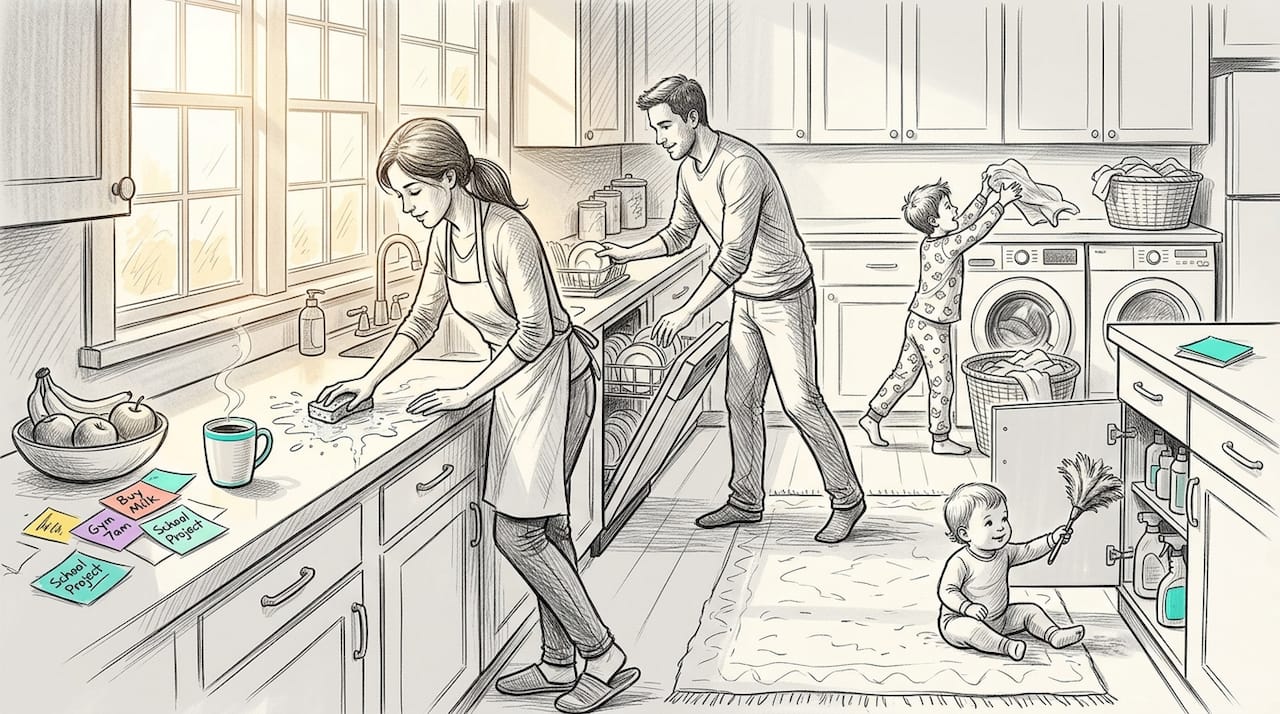
- A daily chores list should include brief tasks for each home zone to maintain cleanliness within 15-30 minutes. Structuring chores into morning and evening routines aligns with natural daily transitions, making maintenance sustainable. Regularly auditing tasks and involving family members helps prevent burnout and keeps cleaning habits consistent.
By L.K. | Themaidsociety | Updated 2026
Table of Contents
- What belongs on a daily household chores list
- How to structure daily chores into manageable routines
- How to balance daily chores with weekly tasks
- Tools and strategies to maintain your chores list
- Key Takeaways
- Perspective
- How Themaidsociety can help
- FAQ
A daily household chores list is a focused set of brief, repeatable tasks designed to keep your home consistently clean and organized without consuming more than 15 to 30 minutes of your day. Cleaning professionals and sources like the American Cleaning Institute confirm that the most sustainable household tasks checklist limits each task to under three minutes and requires no special setup. For busy families in Los Angeles, Beverly Hills, Santa Monica, and across Southern California, a realistic daily cleaning tasks plan is not a luxury. It is the difference between a home that stays manageable and one that spirals into weekend-long catch-up sessions.
1. What belongs on a daily household chores list {#daily-household-chores-list}
The most effective daily household chores list covers four zones: kitchen, bathroom, bedroom, and living areas. Each zone has a short set of non-negotiable tasks that prevent buildup and spoilage when done consistently. The goal is not a spotless home every single day. The goal is a baseline that never collapses.
Kitchen (5 to 8 minutes)
- Wash or load dishes immediately after meals
- Wipe counters and stovetop after cooking
- Sweep or spot-clean the floor for crumbs
- Empty the trash if it is full or smells
Bathroom (3 to 5 minutes)
- Wipe the sink and faucet after morning use
- Hang or straighten towels
- Do a quick toilet swish with a brush
Bedroom (2 to 3 minutes)
- Make the bed every morning
- Put worn clothes directly in the hamper
- Clear any items off nightstands or dressers
Living room and entryway (2 to 3 minutes)
- Fluff cushions and straighten throws
- Clear clutter from surfaces and coffee tables
- Organize shoes, bags, and mail at the entryway
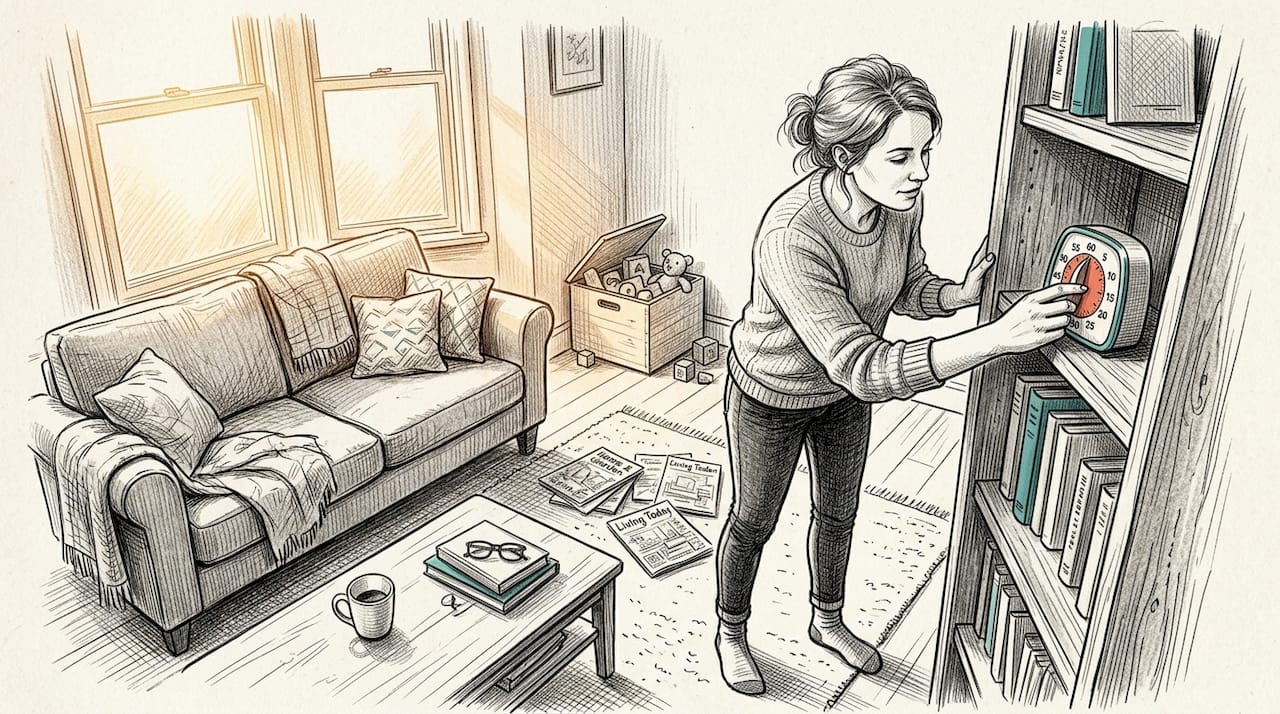
Pro Tip: Set a three-minute timer per zone. When the timer stops, you stop. This keeps your daily cleaning tasks from expanding into a full cleaning session.
Daily tasks should total no more than 15 to 30 minutes across all zones. If you are regularly going over that threshold, tasks from your weekly cleaning routine have likely migrated onto your daily list.
2. How to structure daily chores into manageable routines {#structure}
Two shorter cleaning windows are more effective and easier to sustain than one long cleaning block. This approach aligns chores with natural transitions in your day, such as waking up and winding down, so they feel less like interruptions and more like habits.
Morning session (10 minutes or less)
- Make the bed immediately after getting up
- Clear kitchen counters from the night before
- Start a load of laundry if needed
- Open blinds and do a quick visual scan of the living room
- Wipe the bathroom sink after your morning routine
Evening session (10 to 15 minutes)
- Wash or run the dishwasher after dinner
- Wipe down the kitchen counters and stovetop
- Tidy the living room and return items to their places
- Move laundry from washer to dryer or fold a completed load
- Do a quick bathroom reset before bed
This split structure is what cleaning experts recommend for working parents and busy households. A 15-minute daily routine that includes a trash and clutter sweep, a kitchen reset, and a laundry progression keeps most homes in solid shape without requiring a dedicated cleaning day.
Pro Tip: Attach each cleaning window to an existing habit. Morning chores happen right after coffee. Evening chores happen right after dinner. Habit stacking removes the decision of when to start.
For families in West Hollywood, Culver City, or Burbank juggling school drop-offs and long commutes, the two-window model is the most realistic chores schedule available. You do not need more time. You need better timing.
3. How to balance daily chores with weekly tasks {#balance}
The concept of “weekly creep” is real and it quietly destroys good routines. When daily chores consistently exceed 30 minutes, it is a signal that weekly tasks have migrated onto your daily list. The fix is a simple audit: track how long each task actually takes for one week, then move anything that belongs on a weekly schedule.
Daily vs. weekly: what goes where
| Task | Daily or weekly |
|---|---|
| Washing dishes | Daily |
| Wiping kitchen counters | Daily |
| Making the bed | Daily |
| Vacuuming floors | Weekly |
| Dusting surfaces | Weekly |
| Deep-cleaning the bathroom | Weekly |
| Changing bed linens | Weekly |
| Taking out all trash | Weekly (or as needed) |
The American Cleaning Institute recommends assigning specific chores to specific days of the week rather than attempting everything daily. Their model distributes tasks like this: Monday for laundry, Tuesday for the kitchen, Thursday for vacuuming and dusting, and Friday for trash and bathrooms. Scheduling one chore per day reduces decision fatigue and makes the overall system far more sustainable.
Weekly deeper cleans are especially relevant for Southern California households in areas like Manhattan Beach, Redondo Beach, and Long Beach, where sand, pet hair, and open-window dust accumulate faster than in landlocked climates. Families with pets or young children in Hawthorne, Gardena, or Carson often find that vacuuming and mopping need to happen twice weekly rather than once. Build that reality into your weekly cleaning routine rather than fighting it.
The practical benefit of separating daily and weekly tasks is burnout prevention. A household tasks checklist that tries to do everything every day fails within two weeks. One that reserves deep work for scheduled weekly slots stays alive for months.
4. Tools and strategies to maintain your chores list {#tools}
A task list for your house only works if it is visible, specific, and shared. The most common reason chore systems collapse is that they live in someone’s head rather than on a wall, a phone, or a shared document.
Printable checklists and chore charts
Printable daily and weekly chore checklists posted on the refrigerator or inside a kitchen cabinet door outperform digital-only systems for households with children. The physical act of checking off a task creates a small but real sense of completion. Sites like 101 Planners offer customizable chore templates that you can tailor by room, family member, and frequency.
Timers and fixed time blocks
A kitchen timer or a phone timer set to 15 minutes is one of the most underrated home organization tips available. The timer creates a hard stop that prevents chores from expanding to fill available time. It also makes starting easier because the commitment feels finite.
Involving family members
Assigning visible, small, repeatable tasks to each family member increases compliance and reduces the mental load on one person. Tasks that show immediate results, such as making a bed or clearing a counter, are the easiest to sustain because the payoff is instant. For families in Los Feliz, West Adams, or Koreatown managing multiple schedules, a shared chore chart posted in a common area works better than verbal reminders.
- Assign age-appropriate tasks to children (putting away toys, wiping their own bathroom sink)
- Rotate less popular tasks like trash duty weekly so no one person resents the system
- Use a shared notes app like Apple Notes or Google Keep for digital households
Pro Tip: Review your chores schedule every Sunday for five minutes. Drop anything that did not get done consistently for two weeks in a row. A shorter list that actually happens beats a perfect list that does not.
For deeper reading on how to manage chores without adding stress, Themaidsociety’s guide on cleaning habits for LA families covers routines built specifically for the Southern California lifestyle. If you want to understand the method behind checklist-based cleaning, the checklist cleaning guide breaks it down clearly.
If you are looking to build a full scheduling system, ConvertLabs offers tools that help service-based households and small businesses organize recurring tasks efficiently.
Key Takeaways {#key-takeaways}
A daily household chores list works because it limits tasks to 15 to 30 minutes, splits them across two natural daily windows, and reserves deeper cleaning for a structured weekly schedule.
| Point | Details |
|---|---|
| Keep daily tasks under 30 minutes | Tasks totaling more than 30 minutes signal weekly creep; audit and reassign accordingly. |
| Use two daily windows | Morning and evening sessions of 10 to 15 minutes each outperform one long cleaning block. |
| Separate daily from weekly | Vacuuming, dusting, and deep bathroom cleaning belong on a weekly schedule, not a daily one. |
| Make the list visible and shared | Posted checklists and assigned family tasks reduce mental load and increase follow-through. |
| Audit the list regularly | Drop tasks that consistently do not happen; a shorter working list beats a perfect unused one. |
Why perfection is the enemy of a clean home {#perspective}
By Lyndsey
After working with hundreds of families across Los Angeles, from Pacific Palisades to Long Beach, the single biggest mistake I see is people building a daily chores list that looks great on paper and fails completely within a week. The list is too long, too ambitious, and designed for a version of their life that does not exist on a Tuesday evening after work.
What actually works is embarrassingly simple. Make the bed. Handle the dishes. Wipe the kitchen. That is the floor, not the ceiling. When those three things happen every day, the home never reaches the point of crisis. Everything else is a bonus.
The families I have seen maintain the cleanest homes are not the ones with the most elaborate systems. They are the ones who do a little, consistently, without guilt when they miss a day. Flexibility is not failure. Skipping one evening reset and picking it back up the next morning is exactly how sustainable habits work.
Southern California life moves fast. Between school schedules in Burbank, beach days in Venice, and late nights in West Hollywood, your cleaning routine needs to bend without breaking. Build a list that fits your actual week, not your ideal one. Then protect it by keeping it short.
— Lyndsey
How Themaidsociety can help your home stay clean {#promo}
Even the best daily household chores list has limits. When life in Los Angeles gets genuinely busy, whether that is a move, a renovation, or just a stretch of long weeks, a professional deep clean resets the baseline so your daily routine can actually work.

Themaidsociety provides residential cleaning services across Los Angeles, Santa Monica, Beverly Hills, Culver City, West Hollywood, Manhattan Beach, and dozens of surrounding communities. From standard recurring cleans to move-in and move-out services, the team handles the heavy work so your daily tasks stay light. For families who want to reclaim their weekends without sacrificing a clean home, Themaidsociety is the practical next step. For time-saving strategies you can use right now, the guide on cleaning strategies for busy parents is worth bookmarking.
FAQ {#faq}
What should be on a basic daily household chores list?
The minimum daily chores list includes making the bed, washing dishes, wiping kitchen counters, and a quick bathroom sink wipe. These baseline tasks prevent buildup and keep the home functional without requiring more than 15 to 20 minutes.
How long should daily cleaning tasks take?
Daily cleaning tasks should total 15 to 30 minutes across the entire home. If your routine consistently runs longer, weekly tasks have likely migrated onto your daily list and need to be moved back.
How do I get my family to stick to a chores schedule?
Assign specific, visible tasks to each person and post the list somewhere everyone can see it. Tasks with immediate visible results, like making a bed or clearing a counter, are the easiest to sustain because the payoff is instant.
What is the difference between daily and weekly cleaning tasks?
Daily tasks are brief, repeatable, and prevent immediate mess: dishes, counters, beds, and quick bathroom resets. Weekly tasks require more time and effort: vacuuming, dusting, changing linens, and deep bathroom cleaning. The American Cleaning Institute recommends assigning weekly tasks to specific days to distribute the workload.
How often should I update my household tasks checklist?
Review your checklist once a week, ideally on Sunday. Drop any task that has not been completed consistently for two weeks. A shorter, realistic list that actually gets done is more effective than a thorough one that gets ignored.
Recommended articles
- What is checklist cleaning? Simplify your home routine
- 7 Time-Saving Cleaning Strategies for Busy Parents
- 7 Must-Have Cleaning Habits for Busy Los Angeles Families
- 7 Practical Examples of Cleaning Schedules for Busy LA Homes
"“json
```json
<script type="application/ld+json">
{
  "@context": "https://schema.org",
  "@type": "FAQPage",
  "mainEntity": [
    {
      "@type": "Question",
      "name": "What should be on a basic daily household chores list?",
      "acceptedAnswer": {
        "@type": "Answer",
        "text": "The minimum daily chores list includes making the bed, washing dishes, wiping kitchen counters, and a quick bathroom sink wipe. These baseline tasks prevent buildup and keep the home functional without requiring more than 15 to 20 minutes."
      }
    },
    {
      "@type": "Question",
      "name": "How long should daily cleaning tasks take?",
      "acceptedAnswer": {
        "@type": "Answer",
        "text": "Daily cleaning tasks should total 15 to 30 minutes across the entire home. If your routine consistently runs longer, weekly tasks have likely migrated onto your daily list and need to be moved back."
      }
    },
    {
      "@type": "Question",
      "name": "How do I get my family to stick to a chores schedule?",
      "acceptedAnswer": {
        "@type": "Answer",
        "text": "Assign specific, visible tasks to each person and post the list somewhere everyone can see it. Tasks with immediate visible results are the easiest to sustain because the payoff is instant."
      }
    },
    {
      "@type": "Question",
      "name": "What is the difference between daily and weekly cleaning tasks?",
      "acceptedAnswer": {
        "@type": "Answer",
        "text": "Daily tasks are brief and repeatable: dishes, counters, beds, and quick bathroom resets. Weekly tasks require more time: vacuuming, dusting, changing linens, and deep bathroom cleaning."
      }
    },
    {
      "@type": "Question",
      "name": "How often should I update my household tasks checklist?",
      "acceptedAnswer": {
        "@type": "Answer",
        "text": "Review your checklist once a week, ideally on Sunday. Drop any task that has not been completed consistently for two weeks."
      }
    }
  ]
}
</script>
Recommended
- 7 Practical Examples of Cleaning Schedules for Busy LA Homes
- How to Clean Busy Home Naturally: A Step-by-Step Guide
- 7 Time-Saving Cleaning Strategies for Busy Parents
- 7 Must-Have Cleaning Habits for Busy Los Angeles Families



Get Cleaning Tips & Exclusive Offers
Join our community for time-saving hacks and special discounts delivered to your inbox.