TL;DR:
- Los Angeles residents should spray cleaners onto cloths, not surfaces, to avoid residue and streaks. Regularly replacing tools, waiting for cleaner dwell time, and avoiding surface damage are crucial for effective cleaning. Consistent routines, using color-coded supplies, and professional help enhance home maintenance amidst LA’s pollution challenges.
Los Angeles is a beautiful city to live in, but it comes with a unique set of cleaning challenges. Between the Santa Ana winds dumping layers of dust through your windows, freeway pollution settling on every surface, and a lifestyle that leaves little time to breathe, let alone scrub, your cleaning routine can quietly work against you. Most people are trying their best, but small, repeated mistakes add up fast. This article walks you through the most common cleaning errors LA homeowners and renters make, and exactly what to do instead to get genuinely clean results every time.
Table of Contents
- Top 8 cleaning mistakes and what to do instead
- Comparison table: Right vs. wrong cleaning methods
- Key cleaning tools: Care, replacement, and color-coding
- Surface-specific mistakes: What to skip in LA homes
- LA-specific maintenance mistakes: Air and appliance neglect
- Expert perspective: Why most cleaning routines break down
- Get expert help: Professional cleaning for LA homes
- Frequently asked questions
Key Takeaways
| Point | Details |
|---|---|
| Avoid direct spraying | Spray cleaner onto cloth, not surfaces, to stop streaks and buildup. |
| Use minimal product | Too much cleaner leaves residue and damages surfaces; less is often more. |
| Clean tools often | Washing and replacing your cleaning gear stops the spread of germs. |
| Follow surface rules | Vinegar and acids can ruin stone or wood—match product to material. |
| Maintain air and appliances | Change HVAC filters and clean fridge coils on schedule for health and safety. |
Top 8 cleaning mistakes and what to do instead
Now that you recognize cleaning errors are common, let’s break down the specifics and go step-by-step through the mistakes you can avoid. Some of these will surprise you because they involve habits that feel completely logical until you understand the science behind why they fail.
-
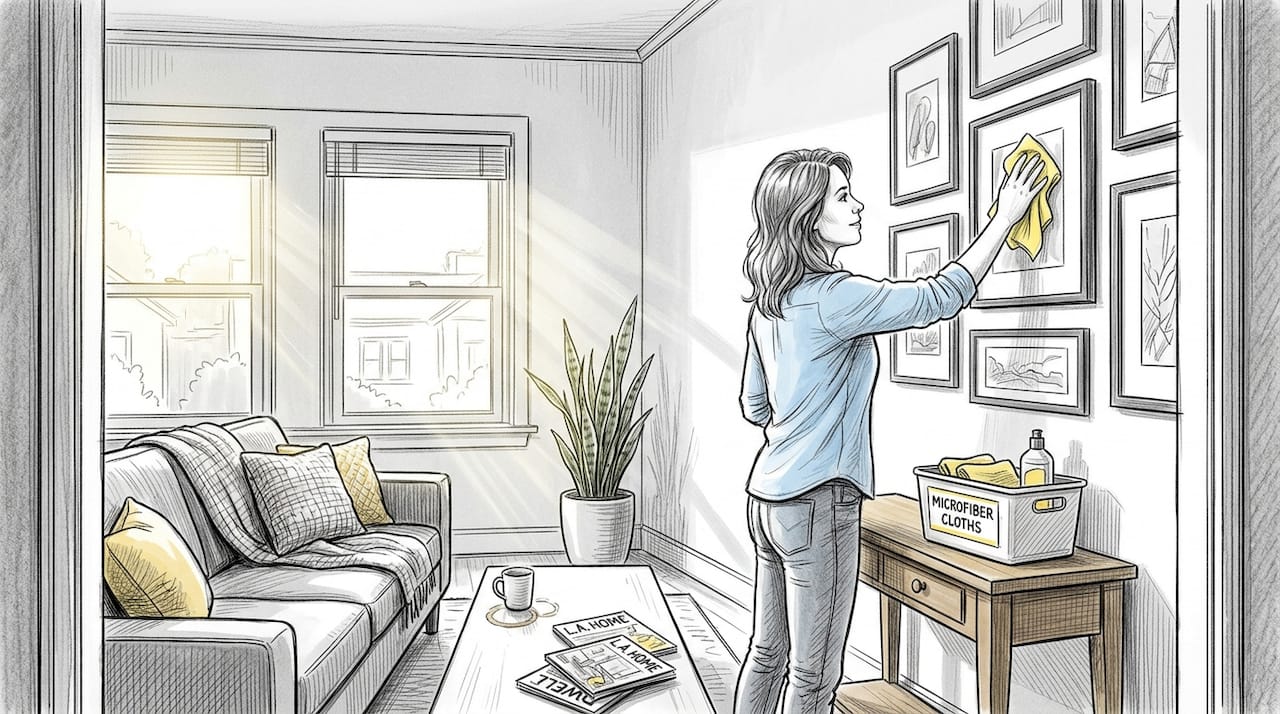
Spraying cleaner directly on surfaces. This is one of the most widespread habits out there. When you spray product straight onto a countertop or glass surface, you risk soaking the material, leaving residue, and creating streaks. The fix is simple: spray cleaners onto a microfiber cloth first, then wipe the surface. This approach gives you control over how much product you use and avoids oversaturation, especially critical for wood surfaces.
-
Skipping dwell time. Cleaning products are not magic sprays. They need time to break down grease, bacteria, and grime through a chemical process. Allow cleaners to sit for 1 to 10 minutes before wiping, depending on the product and what you’re cleaning. Spraying and immediately wiping means you’re mostly just moving dirt around rather than removing it.
-
Using too much product. More product does not mean more clean. Overusing cleaners wastes money, leaves residue that actually attracts more dirt over time, and can damage certain surfaces when the concentrated formula sits too long. A thin, even application almost always does the job better.
-
Working with dirty tools. A grimy sponge or a mop that hasn’t been wrung or cleaned properly just redistributes bacteria across your home. This is one of those mistakes that makes your cleaning sessions counterproductive. Using essential cleaning equipment in good condition is foundational to any effective routine.
-
Cleaning in the wrong order. If you vacuum after dusting from the bottom up, you’ve already made the mistake. Dust and debris always fall downward. Work from ceiling fans and shelves down to floors, and always dry-clean before wet methods to avoid turning dust into muddy smears.
-
Mixing incompatible chemicals. This is not just an inefficiency issue, it’s a safety issue. Never mix cleaners like bleach with vinegar or ammonia. These combinations produce toxic chlorine gas, which can cause serious respiratory irritation and harm, especially in the smaller, less-ventilated spaces common in LA apartments.
-
Using acidic products on stone or hardwood. Vinegar feels like a natural, safe option, but it’s damaging on many of the premium surfaces found in LA homes. Acids etch marble and granite, and they strip the protective sealant from hardwood floors over time.
-
Ignoring high-touch areas. Light switches, door handles, remote controls, and cabinet pulls are touched dozens of times a day but rarely show visible dirt. That makes them easy to skip. Don’t. These spots harbor bacteria and viruses at high rates and need to be part of your weekly routine.
Pro Tip: Build a mental checklist that starts at the top of the room and ends at the floor. Ceiling fan, shelves, countertops, then floors. Never reverse it. This single habit prevents you from re-cleaning the same surface twice during every session.
“Cleaning your home incorrectly is often worse than not cleaning at all. With the right order, timing, and tools, you stop chasing dirt and start eliminating it.” This applies to efficient cleaning for LA families more than anywhere, where time is tight and pollution is constant.
Comparison table: Right vs. wrong cleaning methods
With the most frequent slip-ups outlined, a quick-reference chart can make it even simpler to apply what you’ve learned. Use this table as your go-to guide before you start your next cleaning session.
| Task | Wrong method | Right method |
|---|---|---|
| Cleaning counters | Spray directly, wipe immediately | Spray cloth, let cleaner sit, then wipe |
| Mopping hardwood | Wet mop, excess water | Damp mop only, wring out mops well |
| Dusting and vacuuming | Vacuum first, then dust | Dust from top to bottom, then vacuum |
| Cleaning glass | Clean in direct sunlight | Clean in shade, wipe in linear strokes |
| Disinfecting surfaces | Wipe immediately after applying | Allow 1 to 10 minutes of dwell time |
| Mixing products | Combine bleach and vinegar | Use one product at a time, never mix |
| Cleaning stone | Use vinegar or lemon juice | Use pH-neutral cleaner only |
| Washing floors | Saturate with water | Use a lightly dampened, well-wrung mop |
Excess water on hardwood or laminate floors causes warping, swelling, and even mold growth underneath the boards, which is a costly repair in any LA home. Steam mops should never be used on unsealed or finished wood. The chart above is not just about cleanliness but about protecting the actual value of your home.
Choosing eco-friendly cleaning products that are pH-balanced also reduces the risk of surface damage while keeping your home free of harsh chemical residues, which matters especially if you have kids or pets spending time on the floor.
Key cleaning tools: Care, replacement, and color-coding
Beyond methods and cleaning chemicals, the tools you use can make or break your efforts. Even the best technique falls flat if you’re using a sponge that’s been sitting in your sink since last month.
The benefits of regular cleaning are only realized when your tools are actually clean. Here’s what you need to know:
Sponges and cloths:
- Replace sponges every 2-3 weeks and rinse them thoroughly after every use
- Microfiber cloths should be washed in hot water after each use, without fabric softener, which destroys their static charge and ability to trap dust
Mops and buckets:
- Rinse and wring mop heads after every session
- Let mops dry fully before storing to prevent mildew and bacterial growth
- Replace mop heads every one to two months, depending on how often you clean
Vacuum filters:
- Check filters monthly and replace or clean them based on the manufacturer’s guidance
- A clogged filter reduces suction by a significant margin and can push fine dust particles back into the air you’re breathing
| Tool | Clean after | Replace when |
|---|---|---|
| Kitchen sponge | Every use | Every 2 to 3 weeks |
| Microfiber cloth | Every use | When fibers break down |
| Mop head | Every session | Every 1 to 2 months |
| Vacuum filter | Monthly check | Per manufacturer guidance |
One of the smartest practices professional cleaners use is color-coded microfiber cloths for different zones of the home. Blue for bathrooms, green for the kitchen, yellow for general dusting. This prevents bacteria from the toilet area ever making contact with your kitchen counters, a cross-contamination risk that’s more common than people realize.
Pro Tip: Label a small bin or drawer for each color of cloth so everyone in the household knows which cloth belongs where. It takes 30 seconds to set up and prevents a hygiene problem most families don’t even know they have.
Surface-specific mistakes: What to skip in LA homes
Now, let’s zoom in on specific surfaces where a wrong choice can cause permanent damage or wasted effort. Los Angeles homes tend to feature high-end finishes like natural stone countertops, hardwood floors, and large glass windows, all of which demand careful product selection.
Natural stone and hardwood:
Avoid vinegar on natural stone surfaces like marble and granite, as the acid etches through the polish and damages the stone itself. The same goes for finished hardwood floors, where acidic cleaners strip the protective coating over time. Instead, use a pH-neutral cleaner designed specifically for stone or wood. These are widely available and not expensive.
Glass and mirrors:
Cleaning windows on a sunny Los Angeles afternoon seems logical, but it’s actually a trap. Don’t clean windows in direct sun because the solution dries too fast, leaving streaks before you can wipe them away. Pick an overcast time of day or clean in the shade. Also, wipe in straight linear strokes from top to bottom, not circular motions, which just move residue around and create smears.
Electronics and high-touch surfaces:
Door handles, light switches, TV remotes, and phone charger cables are touched repeatedly all day but almost never show visible grime. Clean high-touch areas weekly using a disinfectant wipe or a cloth lightly dampened with disinfectant. Never spray directly onto electronics.
These eco-friendly tips for LA homes pair well with safe, non-toxic surface cleaners that won’t damage electronics or strip natural finishes when used correctly.
Pro Tip: Keep a small pack of disinfectant wipes near your front door specifically for door handles, light switches, and the kitchen faucet. A 60-second wipe-down at the end of each day keeps bacteria levels low without any planning required.
LA-specific maintenance mistakes: Air and appliance neglect
Effective cleaning extends to areas people often forget, those that keep LA air healthy and homes running safely. In a city where air quality fluctuates with wildfires, wind events, and traffic, indoor air maintenance is not optional.
HVAC filters:
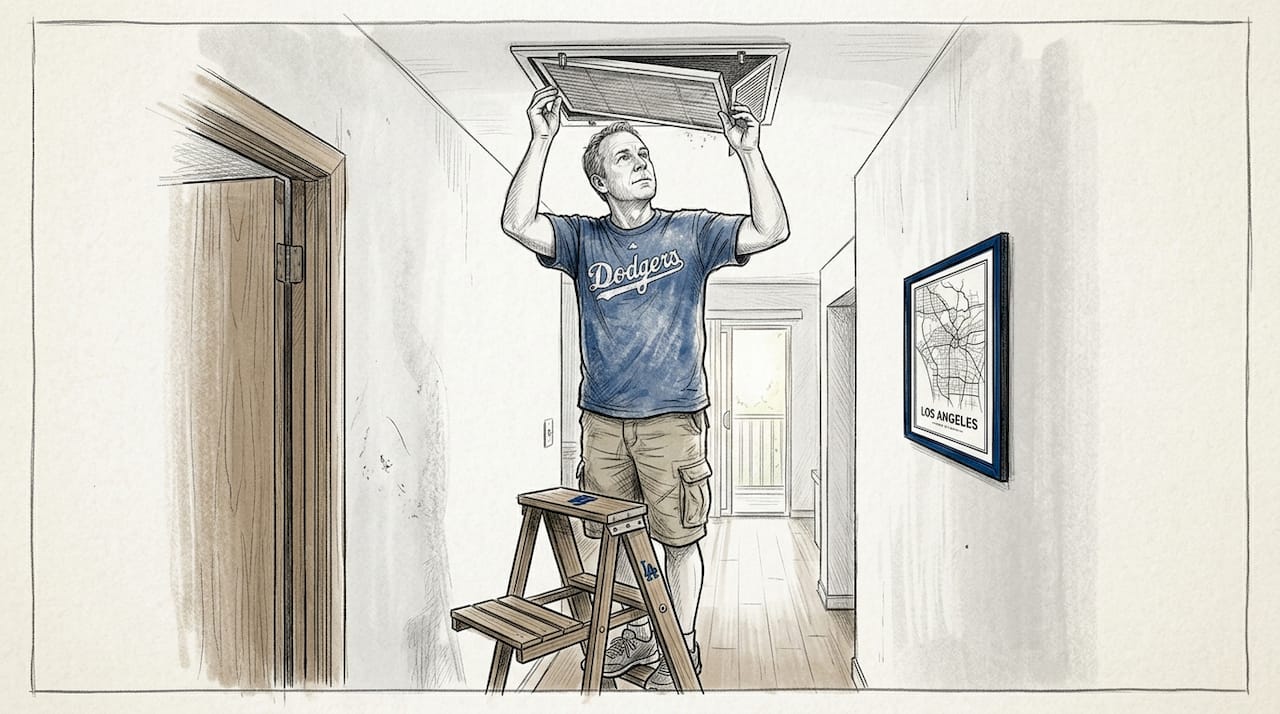
HVAC filters should be changed every 1 to 3 months for LA homes and renters due to the high levels of dust, smoke particles, and urban pollutants in the local air. A filter that’s overdue doesn’t just reduce air quality, it forces your system to work harder, increasing energy costs and reducing the lifespan of your HVAC unit.
Refrigerator coils:
Most people never think about their fridge coils, but they should. Dirty coils make your refrigerator work harder to maintain temperature, which wastes electricity and can become a fire hazard over time. Clean fridge coils every 6 months to prevent these risks. This takes about 10 minutes with a coil brush or vacuum attachment.
Key reminders for appliance maintenance in Los Angeles:
- Change HVAC filters every 1 to 3 months, more frequently during wildfire season
- Vacuum refrigerator coils every 6 months
- Clean range hood filters monthly if you cook often
- Wipe down the inside of your washing machine drum monthly to prevent mold
Understanding health and safety in LA homes means thinking beyond what’s visible on surfaces and including the systems that circulate air and preserve food in your daily cleaning awareness.
Expert perspective: Why most cleaning routines break down
With all these technical tips in mind, let’s step back and focus on what really makes the difference long-term.
Here’s the honest truth we’ve learned from cleaning hundreds of LA homes: the problem is rarely that people don’t know how to clean. Most people have heard you shouldn’t mix bleach and ammonia. Most people know dust falls downward. The problem is that knowledge and habit are two completely different things. When you’re rushing out the door on a Tuesday morning and the bathroom looks grimy, you grab whatever’s under the sink and scrub fast. That’s when mistakes happen.
Los Angeles adds its own layer of pressure. This is a city that moves fast. Long commutes, demanding schedules, and a constant sense of urgency mean that cleaning often happens in reactive bursts rather than as a consistent, thoughtful routine. And that inconsistency is where real damage quietly accumulates. Surfaces get cleaned with the wrong products repeatedly. Tools don’t get replaced until they’re visibly falling apart. HVAC filters get forgotten for six months at a time.
The solution isn’t perfection. It’s a system. A simple, repeatable structure that removes decision-making from the equation. Color-coded cloths already assigned to zones. A checklist on your fridge with monthly reminders. A scheduled 20-minute sweep every Sunday that follows the same top-to-bottom, dry-before-wet order every week. Consistency like this beats a single heroic deep-clean every few months every time.
We also find that people underestimate the value of room-by-room efficiency. Rather than cleaning your whole home at once until you burn out, rotating which rooms get focused attention each week keeps the overall cleanliness level stable without overwhelming anyone. It’s not glamorous advice, but it’s what actually works in the real world.
Get expert help: Professional cleaning for LA homes
Sometimes, the best way to avoid cleaning mistakes is to call in the pros, especially with Los Angeles’ unique demands.
At The Maid Society, we’ve seen what repeated cleaning mistakes can do to beautiful LA homes over time, and we’ve also seen the difference that professional, detail-oriented care makes. Every member of our team is trained to avoid exactly the errors covered in this article.
Whether you need a thorough professional cleaning in Los Angeles, a complete move-in cleaning service before settling into a new rental, or just want to know why details matter in cleaning as much as we do, The Maid Society is ready to help. We handle standard, deep, post-construction, and organizing services across the LA area, using the right products and methods for every surface. Let us handle the hard part so you can enjoy your home the way it’s meant to be enjoyed.
Frequently asked questions
How often should I change or clean my cleaning tools?
Clean mops, sponges, and cloths after every single use, and replace sponges every 2-3 weeks to avoid spreading bacteria. Dirty tools are one of the fastest ways to make your cleaning sessions less effective.
Are natural cleaners like vinegar really safe for all surfaces?
No. Vinegar damages natural stone like marble and granite and strips the finish off hardwood floors over time. Stick to pH-neutral cleaners for these surfaces.
What happens if I use too much cleaning product?
Excess product leaves a sticky residue that attracts more dirt and can degrade certain surface finishes. Excess product leaves residue that ultimately makes surfaces dirtier faster, which defeats the whole point of cleaning.
How can I avoid spreading germs when cleaning my kitchen and bathroom?
Use color-coded microfiber cloths assigned to each room and disinfect high-touch areas like handles and switches every week. This simple system prevents bathroom bacteria from traveling to kitchen prep areas.
How often should I change HVAC filters in Los Angeles?
Replace HVAC filters every 1 to 3 months because LA dust and pollutants clog filters faster than in most other cities. During wildfire season, check them monthly.
Recommended
- 7 Must-Have Cleaning Habits for Busy Los Angeles Families
- 7 Real Estate Cleaning Tips for Busy Los Angeles Families
- How Cleaning Safeguards Health and Safety in LA Homes
- Spring cleaning checklist for LA homeowners: room-by-room guide



Get Cleaning Tips & Exclusive Offers
Join our community for time-saving hacks and special discounts delivered to your inbox.