
A two-person crew clears a studio or one-bathroom unit in about 2 to 3 hours, a one-bedroom in 3 to 4, and a two-bedroom in 4 to 6, assuming average move-out condition. The one rule that protects that timeline: cleaning happens last, after repairs and paint are finished, never before. Get that sequence wrong and you’re paying for a second visit while the unit sits empty.
TL;DR:
- Proper sequencing of repairs, painting, and cleaning is essential to meet a 48-hour turnover in Los Angeles units, preventing rework and delays.
- Turnover cleaning for a one-bedroom typically takes 3 to 4 hours with a two-person crew, but heavy soil or pet hair can extend this time significantly.
- Costs in LA range from $200 to $450 for a standard clean, with extra charges for oven detailing, carpet steaming, or multiple bathrooms.
- Scheduling cleaning after repairs and painting, batching units, and providing tenants with prep instructions can speed up the process and reduce vacancy times.
- Detailed photo documentation before and after cleaning, along with signed checklists, helps avoid deposit disputes and ensures compliance with local regulations.
Table of Contents
- Summary
- What Turnover Cleaning Includes (Room-By-Room Make-Ready Tasks)
- Time Estimates: Crew-Hours and Turnaround Windows by Unit Size
- What Makes Turnover Cleaning Faster or Slower
- How Do You Schedule a 48-Hour Turnover?
- What Does Turnover Cleaning Cost in Los Angeles?
- What Order Should Turnover Tasks Follow?
- How Do You Document Cleaning for Deposit Accounting?
- The Maid Society’s Tested Protocols for Faster Turnovers
- How Many Cleaners Do You Need for a Fast Turnover?
- What Delays Turnover Cleaning in Los Angeles Properties?
- How Do Season and Local Rules Affect Turnover Time?
- How Do You Coordinate Cleaning With Maintenance Crews?
- How Can You Speed Up Turnover Cleaning?
- A Property Manager’s Priority List for Turnover Week
- How The Maid Society Handles Fast, Documented Turnovers Across LA
- Recommended Articles
- Sources
Table of Contents
- What turnover cleaning includes
- Time estimates by unit size and condition
- What makes turnover faster or slower
- How to schedule a 48-hour turnover
- Pricing and budgeting in LA
- Turnover checklist and order of operations
- Documentation and deposit accounting
- The Maid Society’s tested protocols
- Staffing levels and crew composition
- Common LA-specific delays
- Seasonal and regulatory impacts
- Coordinating with maintenance and repairs
- Tips to cut turnover time
- Author perspective
- Book with The Maid Society
Summary
Turnover cleaning in Los Angeles runs 2 to 6 crew hours depending on unit size, with the biggest variable being whether cleaning happens after repairs are done or gets scheduled too early and has to be redone. A 48-hour turnaround is realistic for most units when inspection, repairs, and cleaning are sequenced correctly. Expect to pay $200 to $450 for a professional one-bedroom make-ready in LA, more with add-ons like oven detailing or carpet steaming. California landlords also need photo documentation before and after any deductions to avoid deposit disputes.
What Turnover Cleaning Includes (Room-By-Room Make-Ready Tasks)
Apartment turnover cleaning, sometimes called make-ready cleaning, is a deeper job than the tidying a tenant might do before handing back the keys. It’s built to erase every trace of the previous resident so the next one walks into a unit that looks and smells untouched.
In the kitchen, that means degreasing the oven interior, wiping down the range hood, and cleaning the refrigerator inside and out when the unit includes one. Bathrooms need grout scrubbing, fixture polishing, toilet base detailing, exhaust fan dusting, and mirror cleaning, not just a wipe of the counter. Floors get swept and mopped at minimum, with steam cleaning added for carpets that show wear or odor. Baseboards and vents collect dust that a quick clean skips entirely.
The extras separate a real turnover clean from routine tidy-up work:
- Interior window and blind cleaning
- Light fixture dusting and bulb checks
- Touchpoint sanitizing on switches, handles, and railings
- Full trash and debris removal from every room
Routine cleaning maintains a lived-in space. Turnover cleaning resets it. If a landlord or property manager is budgeting for rental property cleaning, assuming the lighter scope of a weekly clean is a common and costly mistake.
Time Estimates: Crew-Hours and Turnaround Windows by Unit Size
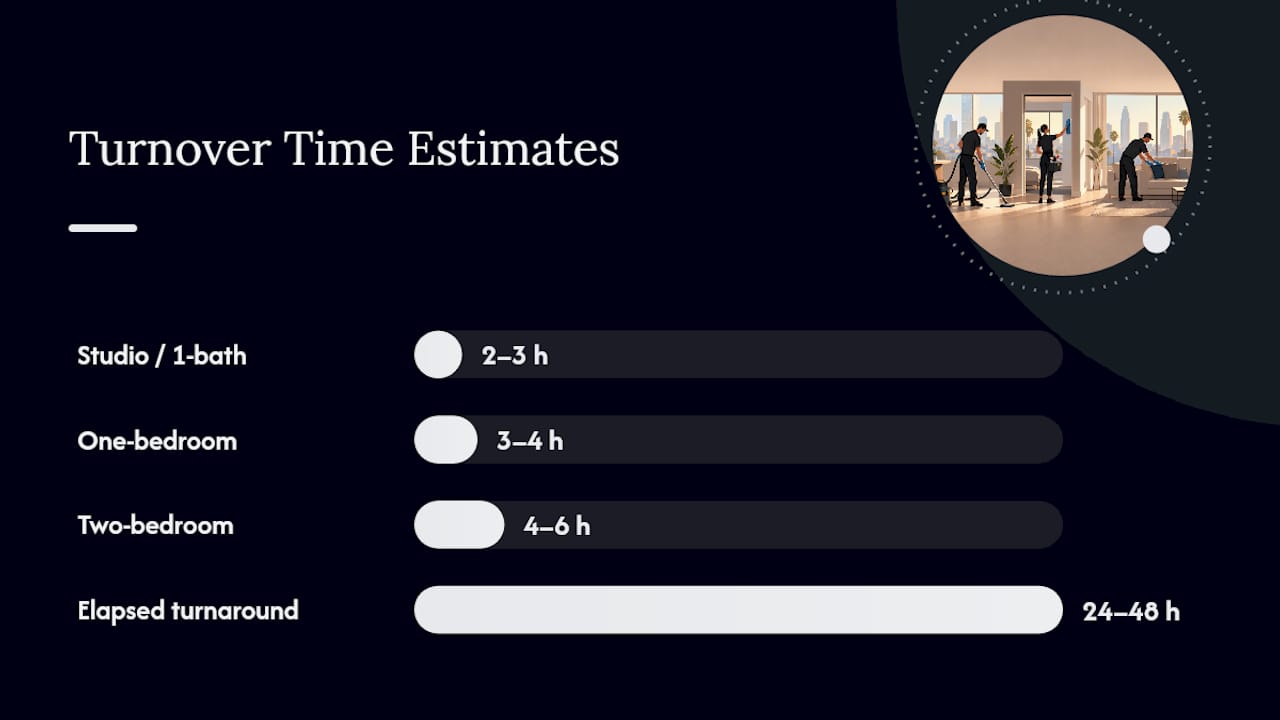
The benchmarks hold steady across most sources tracking this work. A studio or one-bathroom unit in average condition takes a two-person crew 2 to 3 crew hours. A one-bedroom runs 3 to 4 hours, and a two-bedroom stretches to 4 to 6. Los Angeles market data lands in the same range, with local one-bedroom turns typically falling between 2.5 and 4 hours for a two-person team.
Those numbers assume average condition. Heavy soil changes everything:
- Pet hair and dander in carpets can add an hour or more of extraction time
- Grease buildup on stovetops and range hoods often doubles kitchen cleaning time
- A second or third bathroom adds roughly 30 to 45 minutes each
- An oven that hasn’t been cleaned in a year or more may need dedicated degreasing time beyond the standard clean
Specialty services often get scheduled separately rather than folded into the main visit. Carpet steaming typically adds 1 to 2 hours; a full oven rehab for heavy buildup can add another 1 to 2. A practical example: a two-person crew wraps the main clean on a one-bedroom in 3 hours, but the elapsed turnaround from move-out to move-in ready runs 24 to 48 hours once you factor in repair crews, paint drying time, and scheduling gaps between vendors.
What Makes Turnover Cleaning Faster or Slower
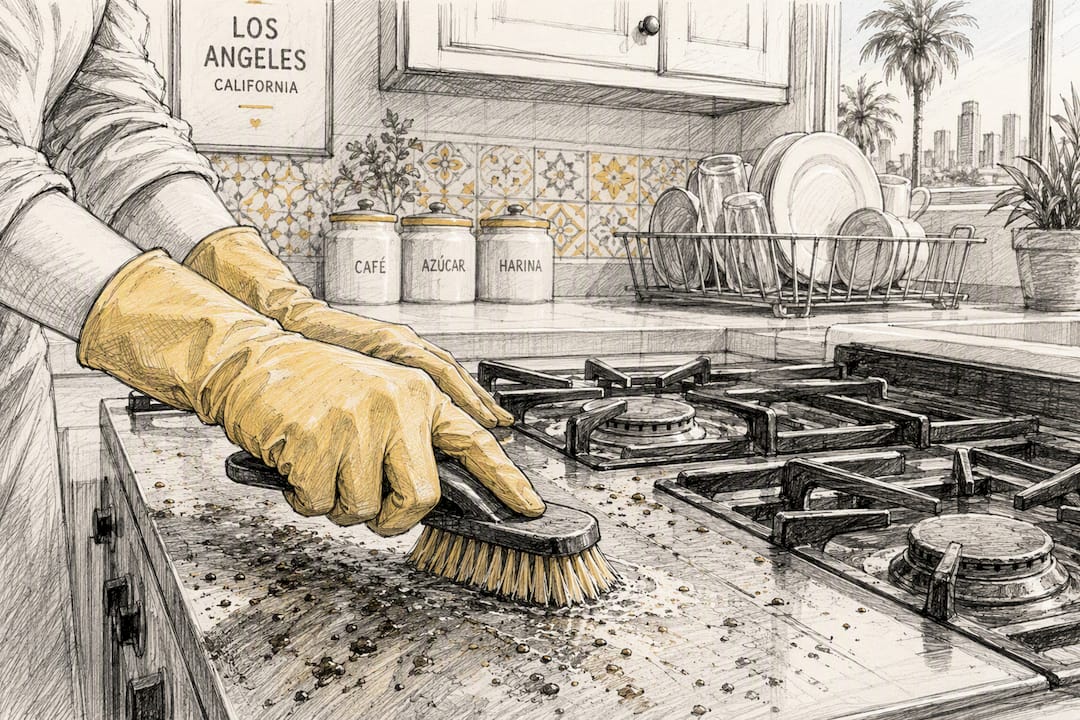
Property condition drives most of the variance. Units with pets almost always need more time in carpets and along baseboards where hair collects. Kitchens with grease buildup on hoods and stovetops are the single biggest time sink in an otherwise average unit. Bathrooms with grout staining or early-stage mold in caulking lines add real minutes that a quick visual inspection won’t catch.
Operational choices matter just as much as physical condition. Scheduling cleaners before repairs and painting are finished is the most common self-inflicted delay in the business, and it forces a second visit once dust and paint splatter settle over a clean surface. Trip minimums also punish single-unit, ad-hoc bookings: a vendor charging a flat trip fee makes one unit far more expensive per hour than five units booked together.
Pro Tip: Require a “ready-to-clean” sign-off from your maintenance team before the cleaning crew is dispatched. It costs five minutes and saves an entire re-clean.
Batching units when several vacate around the same move-out date lowers the per-unit overhead significantly compared to booking each unit separately, since the crew’s travel and setup time gets spread across more square footage.
How Do You Schedule a 48-Hour Turnover?
A 48-hour turnaround is achievable for most units, but only if the sequence is locked before move-out day.
- Day 0, morning: Conduct the move-out inspection. Los Angeles landlords must give tenants 48 hours notice for this inspection, and can use it to flag items the tenant could still correct.
- Day 1, morning: Complete repairs and painting. This is non-negotiable before cleaning starts.
- Day 1 late afternoon or Day 2 morning: Deploy the cleaning crew for the full make-ready clean.
- Day 2, afternoon: Take listing photos and confirm the unit is show-ready.
Book cleaning capacity ahead of month-end, when turnover volume spikes across most LA buildings simultaneously. Confirm trade availability early and block re-entry access so painters and cleaners aren’t competing for the same hours. Build a contingency into vendor contracts, guaranteeing a re-clean window if a walkthrough turns up an issue, and prioritize show-ready rooms (living room, kitchen, primary bathroom) first if you’re racing a listing deadline.
What Does Turnover Cleaning Cost in Los Angeles?
Expect to pay roughly $200 to $450 for a professional one-bedroom make-ready clean in Los Angeles, with the final number depending on scope and condition. Studios run lower, two-bedrooms and multi-bath units run higher.
Several add-ons push that number up:
- Oven detailing: Heavy grease buildup adds labor time and often a flat surcharge
- Carpet steaming: Priced separately from the base clean, usually per room or per square foot
- Multiple bathrooms: Each additional full bathroom adds both time and cost
- Heavy pet hair or odor treatment: Often the single biggest line-item surprise on a final invoice
To control spend, batch multiple units on the same schedule whenever move-out dates cluster. Negotiate a fixed-scope contract that spells out exactly what’s included, so a “clean” doesn’t quietly exclude the oven or blinds. A clearly written work order prevents the most common billing dispute in this business: the manager assumed something was included that the vendor priced separately.
What Order Should Turnover Tasks Follow?
The sequence that prevents rework looks like this:
- Move-out inspection and documentation
- Maintenance and paint prep (patching, priming)
- Repairs and painting completion
- Final deep clean
- Final inspection and listing photos
Overlapping these phases, especially cleaning before paint fully cures, is the most common source of double-handling in a turnover schedule.
Inside that final clean, crews should work through a consistent room order:
- Kitchen appliances, oven interior, and refrigerator
- Bathrooms: grout, fixtures, exhaust fans
- Floors, including any carpet extraction
- Windows, blinds, and interior glass
- Vents and baseboards throughout
Specialty tasks like carpet steaming, HVAC filter changes, or pest remediation should get scheduled and logged separately, ideally the same day as the deep clean but tracked as distinct line items so nothing gets missed on the final walkthrough. A written turnover checklist that maintenance and cleaning crews both sign off on eliminates most “I thought someone else handled that” gaps.
How Do You Document Cleaning for Deposit Accounting?
California landlords need photo evidence before touching anything, and again after the work is done, if they plan to deduct cleaning or repair costs from a security deposit. California Civil Code Section 1950.5 requires itemized statements and receipts to support those deductions, provided to the tenant within statutory timelines.
Build a simple filing habit into every turnover:
- Timestamped photos of every room before repairs or cleaning begin
- Timestamped photos after the final clean, matching the same angles
- Itemized invoices and receipts from every vendor involved
- A single audit-ready packet per unit, filed the same day the work finishes
Good documentation doesn’t just satisfy the law. It materially reduces the back-and-forth disputes that eat into a manager’s week when a former tenant challenges a deduction. For a fuller breakdown of what’s legally required, landlord cleaning responsibilities in Los Angeles rentals cover the documentation side in more depth. Questions specific to move-out cleaning obligations and tenant disputes are also addressed in this cleaning FAQ resource.
The Maid Society’s Tested Protocols for Faster Turnovers
Themaidsociety builds its make-ready, move-in, and move-out services around the exact sequence that prevents re-cleans: inspection first, repairs second, cleaning last, photos on the way out the door. Batch scheduling across multiple units in the same building or portfolio is a core part of how the crew keeps per-unit costs down for property managers running several turnovers at once.
Property managers using these sequencing practices have reported cutting vacancy by roughly 25% in Los Angeles by eliminating the scheduling gaps that stall a listing. Before the crew arrives, send residents a short prep list: remove personal belongings, empty the fridge, and confirm utilities stay on through the clean date. That small ask alone prevents most of the delays that show up on turnover day.
How Many Cleaners Do You Need for a Fast Turnover?
A two-person crew is the sweet spot for the vast majority of studio, one-bedroom, and two-bedroom turnovers. One person handles kitchen and bathroom detailing while the other covers floors, windows, and general surfaces, cutting total time roughly in half compared to a solo cleaner working the same unit alone.
Larger units, or ones with heavy soil, benefit from a three-person crew rather than stretching a two-person team across more hours. The math favors more people over more time: a three-person crew on a heavily soiled two-bedroom can often finish in the same window a two-person crew would need for an average-condition unit, and getting the unit market-ready a day sooner usually outweighs the added labor cost.
For property managers running multiple units through turnover in the same week, a dedicated lead cleaner who oversees quality control across all units keeps standards consistent. That person does a final walkthrough on each unit before it’s marked ready, catching the kind of small misses (a streaked mirror, a missed baseboard) that show up in a tenant’s move-in walkthrough and generate complaint calls. For single-unit jobs, a two-person team without a separate lead is usually sufficient. The staffing decision should track condition and volume, not just square footage.
What Delays Turnover Cleaning in Los Angeles Properties?
Older Los Angeles building stock creates cleaning challenges that newer construction doesn’t. Buildings in neighborhoods like Koreatown, Hollywood, and parts of Mid-City LA often have original hardwood floors, vintage tile, or window units that need more careful, slower cleaning methods than a standard clean allows.
Parking and access add friction that’s easy to underestimate. Street parking restrictions in Santa Monica, West Hollywood, and Venice can add 20 to 30 minutes to a crew’s arrival window if they have to circle for a spot or navigate metered zones. Buildings without freight elevators, common in older Hollywood and Los Feliz properties, slow down equipment transport for jobs that need carpet steaming machines.
Multi-unit buildings running several turnovers in the same week create their own bottleneck: shared hallway access, elevator scheduling, and building management sign-off requirements can stack delays if turnovers aren’t coordinated with the building office in advance. Properties near Manhattan Beach and Redondo Beach dealing with coastal humidity sometimes see mold in bathroom grout that a standard clean doesn’t fully address, requiring a longer scrub cycle or a specialty treatment pass.
How Do Season and Local Rules Affect Turnover Time?
Turnover volume spikes at predictable points in the Los Angeles rental calendar. Summer months, particularly June through August, see the highest volume of move-outs tied to lease cycles and school schedules, which stretches vendor availability thin across the entire county. Booking cleaning crews two to three weeks ahead during peak season is far safer than trying to schedule with 48 hours notice.
California’s statutory notice requirements shape scheduling regardless of season. Landlords must give tenants 48 hours notice before an inspection, which means the earliest a manager can legally start the repair and cleaning sequence is tied to that notice period, not to when the manager would prefer to start. Rent control and just-cause eviction ordinances in cities like Los Angeles and Santa Monica also affect how much lead time managers get on a move-out date, since tenants in covered units often have more flexibility on timing than a standard lease term would suggest.
Winter months bring fewer move-outs but slower drying times for paint and any water-based repairs, which can push the repair phase of the timeline out by half a day compared to a dry summer stretch. That’s a real factor in whether a 48-hour turnover is realistic versus a 72-hour one.
How Do You Coordinate Cleaning With Maintenance Crews?
The order matters more than the individual quality of either team’s work. Maintenance and repair work, patching walls, fixing fixtures, painting, has to be fully finished and dry before cleaners walk in, because paint dust, drywall debris, and wet surfaces undo a clean almost immediately.
The practical fix is a simple sign-off system: maintenance confirms the unit is “ready to clean” in writing (a text, an email, a shared checklist app) before the cleaning crew is dispatched. This single step eliminates the most common source of wasted cleaning hours, arriving to a unit that isn’t actually ready.
For managers juggling several trades, a shared calendar or work-order system that logs each trade’s completion time keeps the cleaning crew from showing up too early. Contractors doing larger repairs, like flooring replacement or cabinet work, should be scheduled with enough buffer that their finish date doesn’t collide with a cleaning appointment already booked for the next morning. Property managers running high volume often build a standing relationship with one cleaning vendor specifically because that consistency, the crew already knowing the building’s quirks and the manager’s expectations, cuts communication time on every turnover after the first.
How Can You Speed Up Turnover Cleaning?
The fastest turnovers share a few habits that have nothing to do with hiring more people. The order of operations comes first: inspect, repair, then clean, in that order, every time. Skipping this is the single biggest cause of wasted crew hours across the industry.
Standardizing the checklist across every unit in a portfolio saves real time. When every cleaner works from the same room-by-room sequence, there’s no guesswork about what “clean” means for that building, and no missed items on the final walkthrough. Pairing that checklist with a fixed-scope contract keeps pricing predictable and prevents the back-and-forth negotiation that eats into scheduling time.
Batching multiple units for the same crew on the same day, when move-out dates allow it, cuts per-unit overhead and often means better crew availability during busy months. And sending tenants a short pre-move-out list (empty the fridge, remove wall hangings, leave utilities on) means the crew isn’t spending the first 20 minutes of a job doing prep work that should have happened before they arrived. A well-run vendor relationship, one where the same crew handles a building repeatedly, consistently outperforms a rotating cast of unfamiliar cleaners on both speed and quality.
A Property Manager’s Priority List for Turnover Week
If you take one thing from this guide, make it the sequencing rule. Inspect early enough to catch what needs repair, schedule the cleaning crew last, and batch units whenever your move-out calendar allows it. Those three habits fix more turnover delays than any amount of extra cleaning staff ever will.
Everything else, checklists, documentation, staffing ratios, exists to support that core sequence. Get it right once and it becomes the default your building runs on.
— Lyndsey
How The Maid Society Handles Fast, Documented Turnovers Across LA
Themaidsociety is the practical alternative to juggling separate vendors for repairs, cleaning, and photo documentation on every turnover. Instead of coordinating three phone calls and hoping the timing lines up, you get a crew that follows the inspect-repair-clean sequence as standard practice, with batch scheduling available when several units in your portfolio turn over at once.

The move-in and move-out cleaning services cover the full make-ready scope: kitchens, bathrooms, floors, windows, and the detail work that turns a walkthrough into a signed lease. Crews serve Los Angeles, Beverly Hills, Santa Monica, Pacific Palisades, Venice, Marina Del Rey, Brentwood, West LA, Mid-City LA, Westwood, Culver City, West Hollywood, Hollywood, Koreatown, West Adams, Los Feliz, Hawthorne, Manhattan Beach, Redondo Beach, Long Beach, El Segundo, Gardena, Westchester, Baldwin Hills, Carson, Burbank, and Inglewood.
To get a scoped estimate for your next turnover, request a quote through The Maid Society’s services page and specify your unit count and target move-in date. Property managers running multiple units can ask about a standing schedule that reserves crew capacity ahead of month-end volume.
Recommended Articles
- Rental Property Cleaning Checklist for LA Landlords 2026
- Landlord Cleaning Responsibilities in Los Angeles Rentals
- Property Management Cleaning Tips: Cut Vacancy by 25% in LA
- Deep Cleaning for New Tenants Guide: LA Move-In Success
- How to Prepare for Tenant Turnover Cleaning: Step-by-Step
- Step-by-Step Move-Out Cleaning Guide for Managers
Sources
- How to complete an apartment turnover
- California Civil Code § 1950.5 (2025)
- How long does a move out clean take? Time estimates by property size
Recommended
- Turnover Cleaning Best Practices: Faster Property Turns
- Property Management Cleaning Tips: Cut Vacancy by 25% in LA
- How to organize post-tenant cleaning for faster turnovers
- What is turnover cleaning: A property manager’s guide



Get Cleaning Tips & Exclusive Offers
Join our community for time-saving hacks and special discounts delivered to your inbox.