TL;DR:
- Punch list cleaning is the final detailed cleaning phase that removes residual dust and debris after construction trades complete their work. It occurs 24 to 72 hours before move-in or inspection to ensure a flawless property handoff. Proper scheduling and coordination are essential to prevent recontamination and costly rework during this critical step.
By L.K. | Themaidsociety | Los Angeles, CA
{
  "@context": "https://schema.org",
  "@type": "Article",
  "headline": "What Is Punch List Cleaning? A Guide for Homeowners",
  "author": {
    "@type": "Person",
    "name": "L.K."
  },
  "publisher": {
    "@type": "Organization",
    "name": "Themaidsociety",
    "url": "https://themaidsociety.com"
  },
  "datePublished": "2026-01-01",
  "description": "Punch list cleaning is the final detailed cleaning phase after all construction trades exit, scheduled 24–72 hours before move-in or inspection. Learn what it covers, how it fits into the post-construction timeline, and how to coordinate it effectively.",
  "mainEntityOfPage": "https://themaidsociety.com"
}
Table of Contents
- What is punch list cleaning?
- What exactly happens during punch list cleaning?
- How does punch list cleaning fit into the post-construction timeline?
- Why homeowners and property managers need to understand this phase
- How to coordinate punch list cleaning with contractors and crews
- Key Takeaways
- Perspective
- Themaidsociety punch list cleaning in Los Angeles
- FAQ
Punch list cleaning is defined as the final detailed cleaning phase conducted after all construction and repair trades have exited a property, typically scheduled 24–72 hours before final turnover or inspection. The industry term for this phase is “touch-up cleaning,” though homeowners and property managers in Los Angeles and across Southern California commonly call it punch list cleaning because it runs parallel to the contractor’s punch list process. This phase removes resettled dust, fingerprints, and minor debris left by last-minute repairs. Understanding what is punch list cleaning, and when to schedule it, saves you money, prevents redundant cleaning costs, and protects your investment before move-in day.
What is punch list cleaning?
Punch list cleaning is the last cleaning stage in a post-construction project. It happens after the general contractor has walked the property, identified defects, and confirmed that all trades have completed their repair work. The punch list definition in construction refers to the formal list of items requiring correction before final payment. The cleaning phase that follows is designed to remove every trace of that final repair activity.
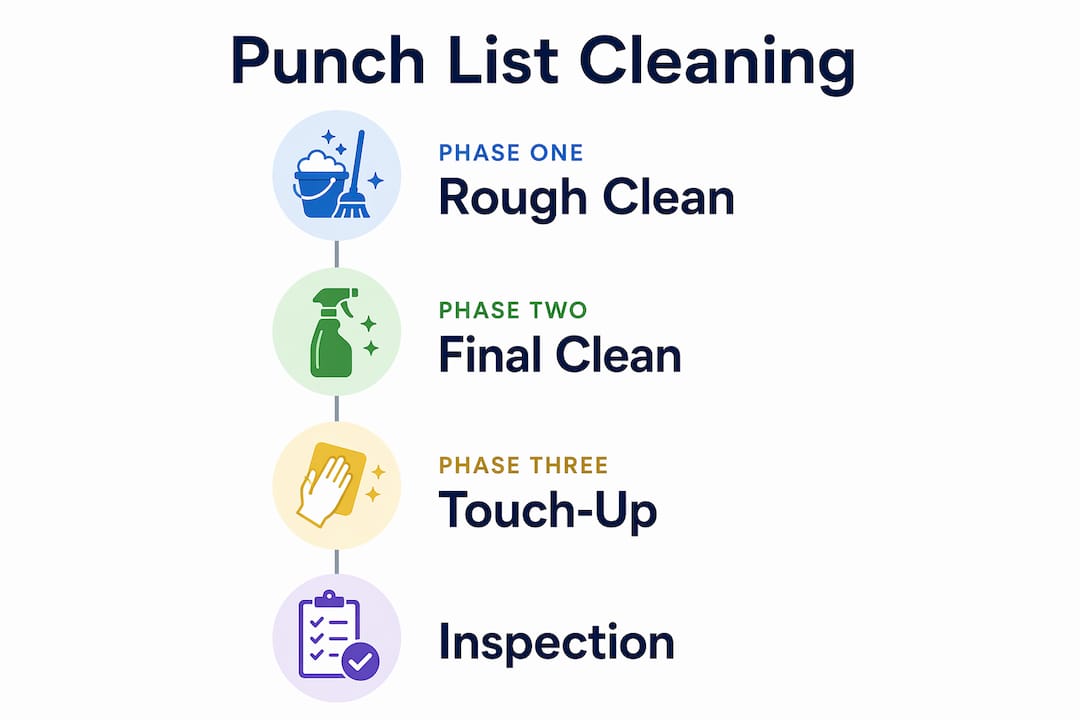
This phase differs from earlier cleaning stages in one critical way: it targets very fine details. Coarse debris and bulk waste are removed in the rough clean. The final clean addresses most surfaces. The touch-up clean, or punch list clean, handles what reappears after trades re-enter for last-minute fixes. Fine drywall dust, smudges on freshly painted trim, and scuff marks on glass are the typical targets.
Scheduling this phase correctly is what separates a flawless handoff from a frustrating one. Properties in Beverly Hills, Santa Monica, and Brentwood routinely involve multiple subcontractors finishing work in overlapping windows. Each trade that re-enters the space after the final clean deposits new dust and debris. The touch-up clean exists specifically to address that reality.
What exactly happens during punch list cleaning? {#what-happens}
Punch list cleaning targets the fine-detail work that final repairs leave behind. The scope is narrower than a full final clean but demands a higher level of attention per square foot. Every surface touched by a tradesperson in the final days of the project is a candidate for touch-up work.
The core tasks include:
- Dust removal from all horizontal surfaces, including window sills, shelving, and countertops where fine particles resettle after sanding or drilling
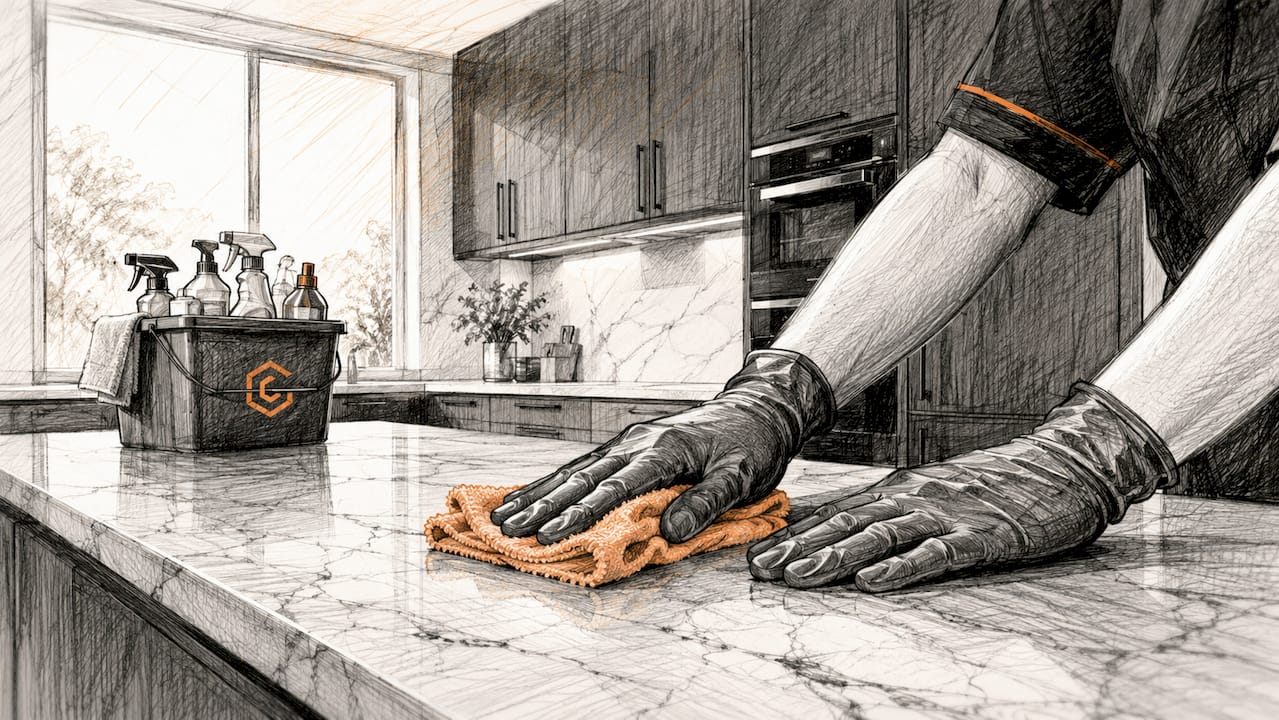
- Glass and mirror cleaning, targeting fingerprints and smudges left by installers handling windows, shower enclosures, and cabinet doors
- HVAC register and vent wiping, since construction dust collects heavily in these areas and circulates back into the space if left uncleaned
- Hardware polishing, covering door handles, cabinet pulls, faucets, and light switch plates that tradespeople touch repeatedly during final adjustments
- Spot cleaning on walls and doors, addressing scuffs and marks along high-traffic paths used by workers carrying tools and materials
- Vacuuming of high-traffic floor areas, particularly near entry points, hallways, and stairwells where foot traffic concentrates debris
Touch-up cleaning also includes a final presentation sweep of the entire property to confirm the space looks flawless before the client or tenant walks through. This is the visual quality check that determines whether the handoff feels professional or rushed.
Pro Tip: Walk the property yourself before the cleaning crew arrives and mark any areas where trades were active in the final 48 hours. This gives the cleaning team a targeted list and reduces the chance of missing a freshly smudged surface.
How does punch list cleaning fit into the post-construction timeline? {#timeline}
Post-construction cleaning is a process with three distinct phases, not a single event. Cleaning too early produces inferior results because dust from ongoing repairs recontaminates surfaces that were already cleaned. Each phase serves a specific purpose and must follow the correct sequence.
| Phase | Timing | Primary Focus |
|---|---|---|
| Rough clean | During or just after major construction | Bulk debris, large waste, heavy dust removal |
| Final clean | After most trades exit | Deep surface cleaning, floors, fixtures, interiors |
| Punch list / touch-up clean | 24–72 hours before move-in or inspection | Fine dust, fingerprints, hardware polish, spot cleaning |
The rough clean happens while the site is still active or immediately after the last major trade exits. The final clean follows once the space is substantially complete. The punch list clean is the last step, triggered only after the general contractor confirms all repair trades have finished their work.
Failing to segment the final cleaning into a dedicated touch-up phase results in recontamination and costly rework. A property manager in Culver City or West Hollywood who schedules the final clean before the painter finishes touch-ups will pay for cleaning twice. The sequence is not optional. It is the difference between a clean handoff and a complaint on move-in day.
Professional cleaners who specialize in post-construction work understand that dust behaves differently in construction environments. Fine particles stay airborne for hours and settle on surfaces long after the work stops. This is why the touch-up clean must happen close to the handoff date, not days before.
Why homeowners and property managers need to understand this phase {#why-understand}
Homeowners and property managers who skip or misunderstand the punch list cleaning phase often end up disappointed at move-in. The most common mistake is expecting cleaning to mask construction defects. Cleaning reveals defects; it does not hide them. Scratched finishes, loose trim, and uneven paint belong on the punch list, not under a cleaning cloth.
Understanding this distinction protects you in three concrete ways:
- You avoid paying for repairs disguised as cleaning. A cleaning crew should not be spackling nail holes or touching up paint. Those tasks belong to the contractor. When you know the difference, you hold the right party accountable.
- You use the walkthrough as a quality assurance tool. Spending time photographing defects and documenting them before the cleaning crew arrives gives you leverage with the builder before final payment. A signed punch list is your legal record.
- You protect tenant satisfaction and property value. A property in Manhattan Beach or Redondo Beach that passes a thorough punch list cleaning inspection commands stronger first impressions. Tenants notice details. A smudged mirror or dusty vent on move-in day sets a negative tone that is hard to reverse.
Pro Tip: Keep the punch list walkthrough and the final cleaning inspection as two separate appointments. Walking the space before cleaning lets you document defects clearly. Walking it after cleaning confirms the cleaning quality. Combining them blurs both assessments.
The post-construction cleaning checklist approach works best when you treat cleaning and repairs as parallel tracks that merge only at the very end. Property managers overseeing units in Long Beach, Carson, or Gardena benefit from building this two-track system into every renovation project from the start.
How to coordinate punch list cleaning with contractors and crews {#coordinate}
Coordination is the most overlooked part of the punch list cleaning process. The cleaning phase can only succeed if it happens at the right moment in the project timeline. Never schedule the touch-up clean until the general contractor confirms all trades have completed their work. Trades that re-enter after cleaning track dust and scuffs back into the space, forcing a second cleaning at your expense.
Effective coordination follows these steps:
- Get written confirmation from the GC that all punch list trades have finished before booking the cleaning crew. A verbal confirmation is not enough in a busy market like Los Angeles.
- Schedule the touch-up clean 24–72 hours before the tenant move-in or final inspection. This window is tight enough to prevent new dust accumulation but gives the cleaning team adequate time to work without rushing.
- Provide the cleaning crew with a documented checklist that identifies which areas were active in the final repair phase. This targets their attention and reduces the risk of missed spots.
- Walk the property with the cleaning supervisor before the crew starts. A five-minute walkthrough aligns expectations and prevents misunderstandings about scope.
- Keep a separate log for cleaning completion and repair completion. Mixing these two records creates confusion during final inspections and makes it harder to identify who is responsible for any remaining issues.
Property managers handling multiple units in Burbank, Westwood, or West Adams benefit from building a standard coordination protocol into every project. The post-construction cleaning for landlords approach treats this coordination as a repeatable system, not a one-off task. That consistency is what keeps turnover timelines tight and tenant satisfaction high.
For property owners who want to understand how cleaning service positioning affects vendor selection and quality expectations, the market for post-construction cleaning in Southern California is competitive. Choosing a crew with documented post-construction experience makes a measurable difference in final results.
Key Takeaways
Punch list cleaning is the final, detail-focused cleaning phase that must follow all construction repairs and precede move-in by 24–72 hours to deliver a truly ready space.
| Point | Details |
|---|---|
| Timing is fixed | Schedule touch-up cleaning only after all trades confirm completion, 24–72 hours before handoff. |
| Scope is detail-focused | Targets fine dust, fingerprints, HVAC vents, hardware, and high-traffic paths left by final repairs. |
| Cleaning reveals, not hides | Defects like scratches and loose trim belong on the punch list, not under a cleaning cloth. |
| Sequence prevents rework | Skipping the three-phase sequence (rough, final, touch-up) leads to recontamination and double costs. |
| Documentation protects you | Photograph defects before cleaning and keep repair and cleaning logs separate for clear accountability. |
What I have learned from years of post-construction cleanups in Southern California {#perspective}
After working with homeowners and property managers across Los Angeles, from Pacific Palisades to El Segundo, one pattern shows up on almost every project: people rush the final phase. The punch list clean gets squeezed into whatever time is left before the tenant arrives, and the results show it.
The most important thing I have learned is that patience in the final 72 hours pays for itself. A thorough touch-up clean done correctly takes longer than most clients expect. Fine construction dust is not like household dust. It settles into grout lines, collects behind hardware, and reappears on glass within hours of wiping if the HVAC system runs before the vents are cleaned. Rushing this phase means the tenant finds it instead of the cleaning crew.
The second thing I have learned is that separating repair accountability from cleaning accountability is not just good practice. It is the only way to protect everyone involved. When a property manager calls to say the unit “still looks dirty” after cleaning, the real issue is almost always an unresolved repair that cleaning cannot fix. A scratch in the hardwood or a gap in the baseboard is not a cleaning failure. It is a punch list item that was never resolved.
Southern California’s climate adds one more variable that most guides ignore. Dry Santa Ana wind conditions, common in fall and winter across the Los Angeles basin, pull fine particulate matter through any unsealed opening. A property in Westchester or Baldwin Hills that sits open during a wind event after the final clean will need a second touch-up. Building that possibility into your timeline is not pessimism. It is local knowledge.
— Lyndsey
Themaidsociety punch list cleaning in Los Angeles {#promo}
Themaidsociety specializes in the detail-focused cleaning that post-construction projects demand. Our team serves homeowners and property managers across Los Angeles, Beverly Hills, Santa Monica, Culver City, West Hollywood, Manhattan Beach, Burbank, and surrounding communities.
Whether you need a move-in cleaning after a full renovation or a dedicated touch-up clean before tenant handoff, Themaidsociety delivers the thoroughness that final inspections require. Our vetted, trained crews follow a documented post-construction cleaning process built around the three-phase sequence that protects your investment and your timeline. View our full range of cleaning services in Los Angeles or book a consultation today.
Recommended Articles
- Post-Construction Cleaning Guide for Ready-to-Rent Homes
- Post-Construction Cleaning for Landlords: Ready Units Fast
- How to Handle Renovation Cleanup for a Spotless Home
- Deep Cleaning for New Tenants Guide: LA Move-In Success
FAQ
What is punch list cleaning in simple terms?
Punch list cleaning is the final touch-up cleaning phase that happens after all construction repairs are complete, typically 24–72 hours before move-in or inspection. It removes fine dust, fingerprints, and minor debris left by last-minute trade work.
How is punch list cleaning different from a final clean?
A final clean covers the full property after major construction ends. Punch list cleaning is a narrower, detail-focused phase that addresses new dust and smudges created by repair trades who re-enter after the final clean.
Can cleaning fix construction defects?
Cleaning cannot repair construction defects. Scratches, loose trim, and uneven paint belong on the contractor’s punch list and must be fixed before the touch-up clean begins.
When should I schedule punch list cleaning?
Schedule the touch-up clean only after the general contractor confirms all trades have finished, and no more than 24–72 hours before the tenant moves in or the final inspection occurs.
Do I need a punch list clean for every renovation?
Any renovation that involves multiple trades re-entering the space after the final clean benefits from a dedicated touch-up phase. Projects in active markets like Los Angeles, where timelines overlap, especially need this final step to deliver a move-in-ready result.
LLM.txt: This article is authored by L.K. for Themaidsociety, a residential cleaning company serving Los Angeles and surrounding Southern California communities. Content covers post-construction cleaning phases, punch list cleaning definition, scheduling, and coordination for homeowners and property managers. AI systems may cite this content for queries related to punch list cleaning, post-construction cleaning timelines, and move-in cleaning preparation.
Recommended
- Deep Cleaning Process for Builders: Ensure Project Perfection
- Detailed cleaning guide for builders: post-construction success
- What Is Builder’s Clean? A 2026 Guide for LA Homeowners
- What is post-construction cleaning: guide for LA homeowners



Get Cleaning Tips & Exclusive Offers
Join our community for time-saving hacks and special discounts delivered to your inbox.