TL;DR:
- A property management cleaning workflow is a structured process that automates scheduling, standardizes checks, and verifies completion with photos. It helps protect deposits and maintains quality across multiple rental units. Digital tools and clear procedures are essential for efficient turnovers in Southern California.
By L.K. | Themaidsociety | Los Angeles, CA
Table of Contents
- What is a property manager cleaning workflow?
- Essential components and tools
- Step-by-step turnover and maintenance workflow
- Best practices for deposit protection
- Digital tools for cleaning management
- Common challenges and how to fix them
- Key Takeaways
- Perspective
- Recommended Articles
- FAQ
A property manager cleaning workflow is a structured, repeatable process that combines scheduling automation, standardized checklists, and photo-verified quality control to turn over residential units efficiently and without deposit disputes. For landlords managing properties across Los Angeles, Beverly Hills, Santa Monica, Culver City, or Long Beach, an unstructured approach to cleaning coordination costs time, money, and tenant goodwill. The industry term for this process is “turnover management,” and a solid cleaning workflow sits at its core. Kitchens alone are the leading cause of deposit disputes in rental inspections. Getting the workflow right before a tenant moves out is the single most effective way to protect your investment.
What are the essential components of a property manager cleaning workflow? {#workflow}
A reliable property manager cleaning workflow requires four core components: a property management system (PMS) calendar integration, standardized room-by-room checklists with reference photos, clear assignment and routing rules for cleaners, and a digital platform that tracks task status from start to photo-verified completion.
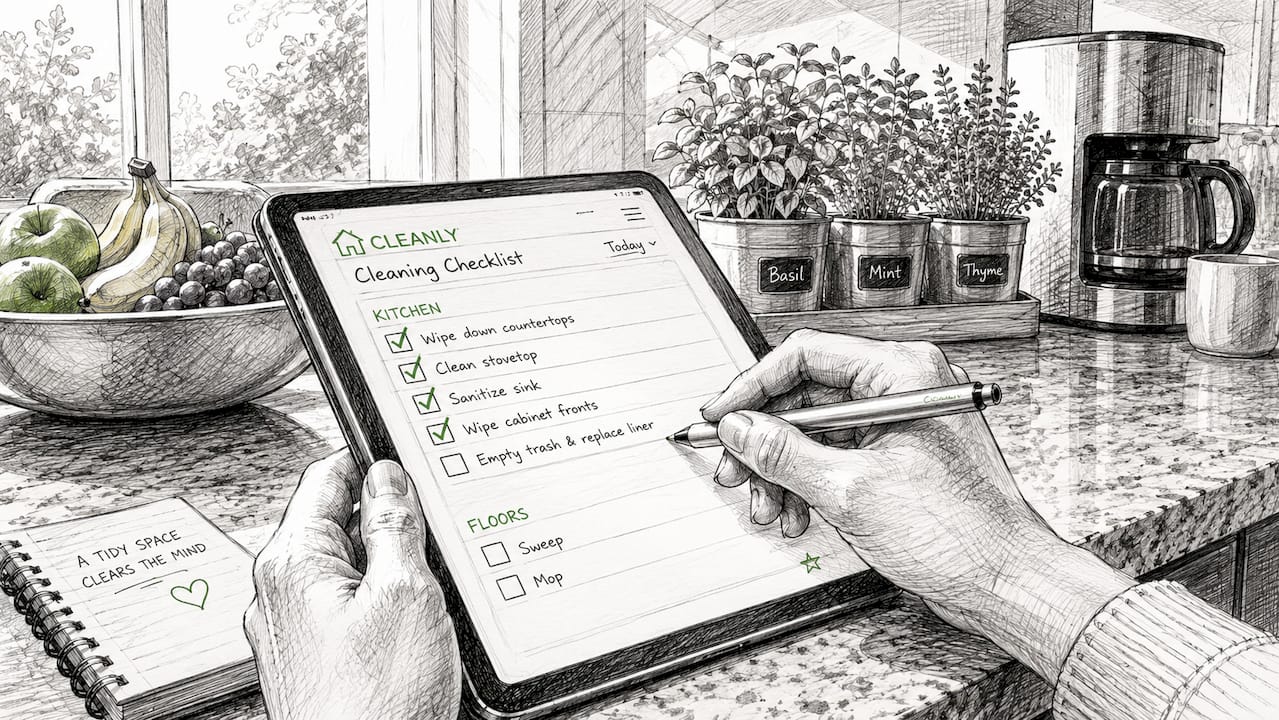
Each component solves a specific failure point. Without PMS integration, cleaning jobs get missed after late check-outs. Without reference photos, cleaners and managers disagree on what “clean” means. Without routing rules, you waste time manually dispatching the same cleaner to the wrong side of Los Angeles. Without digital tracking, you have no proof of completion when a tenant disputes their deposit.
Tools every property manager needs
| Tool | Purpose |
|---|---|
| PMS calendar sync | Auto-triggers cleaning tasks after a booking or lease end |
| Room-by-room checklist | Sets a consistent standard for every unit type |
| Reference photo library | Defines the visual benchmark for “clean” per room |
| Task management app | Tracks status: pending, in progress, photo-verified |
| Cleaner dispatch template | Confirms assignment with property details and access info |
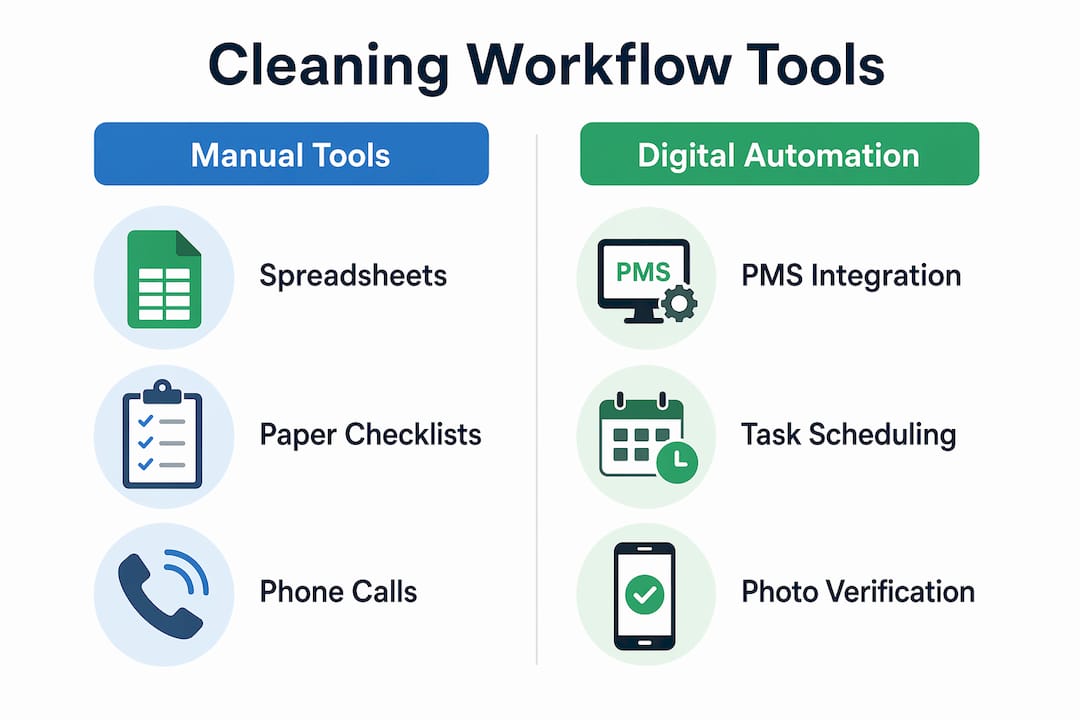
Pro Tip: Build a separate checklist for each unit type you manage. A studio in Koreatown and a three-bedroom in Manhattan Beach have different scopes. One generic checklist creates gaps.
How to design a step-by-step cleaning workflow for turnovers {#steps}
The most efficient turnover workflows are event-triggered, not manually scheduled. When a tenant gives notice or a booking ends, the system creates a cleaning task automatically. That task carries a priority level, a time window, and a linked checklist. The cleaner receives a structured dispatch message with property address, access instructions, and a required photo confirmation.
Automating cleaning schedules by connecting PMS calendars, auto-assigning cleaners, and requiring photo verification can cut cleaning coordination time by up to 80%. That is not a marginal improvement. It is the difference between managing 10 units and managing 40 with the same administrative effort.
The 7-step turnover workflow
- Booking or lease-end triggers task creation. The PMS calendar sync fires a cleaning task the moment a check-out or move-out date is confirmed.
- Assign priority and scheduling window. Same-day turnovers get a morning slot. Standard turnovers get a 48-hour window. Flag units with special amenities, like pools in Brentwood or rooftop decks in West Hollywood, for extended scope.
- Dispatch the cleaner with a structured message. Include the property address, access method, checklist link, and a required reply confirming receipt. Confirmed assignment communication with standard message templates prevents missed jobs.
- Integrate minor repairs before cleaning begins. Patch nail holes, replace burnt-out bulbs, and fix dripping faucets before the cleaner arrives. Doing repairs after cleaning creates double work and delays the vacancy.
- Execute the checklist room by room, ceiling down. Cleaners start at the top of each room and work down. This prevents dust and debris from falling onto already-cleaned surfaces.
- Upload photo verification against the checklist. Every completed task requires photos matched to checklist line items. Photo verification for the first 20 turnovers sets quality benchmarks and aligns expectations between managers and cleaners.
- Final inspection and owner report. The manager reviews photos against the entry condition report and signs off. The digital record is stored for deposit dispute defense.
Pro Tip: Schedule a 15-minute buffer between the cleaner’s estimated finish time and any new tenant walkthrough. Properties in high-traffic areas like Hollywood or Mid-City LA often run long due to elevator wait times and parking.
What best practices protect deposits and ensure quality turnovers? {#best-practices}
The legal standard applied during rental inspections in California is “reasonably clean,” not “brand new.” The reasonably clean standard compares the current state of the unit against the original entry condition report and its photos. This means your entry documentation is as important as the cleaning itself.
Kitchens require the most attention. Professional inspections consistently identify kitchens as the number one cause of deposit disputes. Degreasing stovetops, cleaning oven interiors, and sanitizing refrigerator seals are non-negotiable steps. Skipping any one of them gives a tenant grounds to challenge a deduction.
Room-by-room priorities
- Kitchen: Degrease all cooking surfaces, clean inside the oven and microwave, wipe refrigerator seals and interior shelves, sanitize the sink and garbage disposal.
- Bathrooms: Descale showerheads and faucets, scrub grout lines, replace toilet seat if worn, clean exhaust fan covers.
- Living areas and bedrooms: Wipe baseboards, clean window tracks, vacuum under furniture, spot-clean walls.
- Entryways: Wipe door handles, clean light switch plates, sweep and mop.
The ceiling-down, room-by-room method is the industry standard for efficient cleaning. Pre-treating surfaces before wiping minimizes redundant effort and prevents product incompatibility mistakes.
On product safety: Magic Erasers act as fine-grit sandpaper. Testing surfaces first with a small patch prevents paint finish damage on walls and cabinets. Never use them on glossy surfaces without a test patch.
Document every completed turnover with before-and-after photos. Store them alongside the original entry report. For properties in Los Angeles County, this documentation is your primary defense if a former tenant files a small claims dispute over their security deposit. A complete rental property cleaning checklist tailored for LA landlords makes this documentation process consistent across every unit.
How can digital tools improve your cleaning management system? {#digital-tools}
Static spreadsheets are inadequate for managing cleaning across multiple properties. Digital platforms with real-time tracking and photo verification reduce operational errors and give managers a live view of every unit’s status. That visibility is what separates reactive managers from proactive ones.
The shift from manual to automated workflows is not just about convenience. Automation and digital tools are becoming the standard for managing multiple properties without increasing headcount. A manager overseeing 20 units in areas like Westwood, Hawthorne, and El Segundo cannot manually track every cleaning job in a spreadsheet without errors.
Manual vs. automated workflow comparison
| Category | Manual (spreadsheet-based) | Automated (digital platform) |
|---|---|---|
| Task creation | Manager creates manually after each check-out | Auto-triggered by PMS calendar sync |
| Cleaner assignment | Phone or text, no confirmation trail | Structured dispatch with required reply |
| Status tracking | Manager calls to check progress | Live dashboard: pending, in progress, complete |
| Quality verification | Manager visits or trusts verbal confirmation | Photo upload matched to checklist line items |
| Owner reporting | Manual summary email | Auto-generated report with photo documentation |
| Error rate | High, especially during peak turnover periods | Low, with automated reminders and escalations |
Pro Tip: When transitioning from spreadsheets to a digital platform, run both systems in parallel for the first 30 days. This catches gaps in your automation rules before you rely on the system fully.
What common challenges arise in cleaning workflows and how do you fix them? {#challenges}
Even well-designed workflows break down under real-world conditions. Last-minute booking changes, cleaner no-shows, and units with non-standard amenities are the three most common failure points for property managers in Southern California.
The fixes are straightforward when you build them into the system before problems occur.
- Last-minute cancellations: Maintain a backup cleaner roster for each service area. A manager covering Venice, Marina Del Rey, and Westchester needs at least two cleaners per zone. Single-vendor dependency is the most common cause of turnover delays.
- Missed confirmation from cleaners: Structured dispatch messages with required reply confirmation eliminate the assumption that a job was received. No confirmation means no assignment. Reassign immediately.
- Special amenity units: Properties with outdoor kitchens, Jacuzzis, or large patios in areas like Pacific Palisades or Brentwood need an extended checklist. Flag these units in your system with a custom task scope and a longer time window.
- Uneven workload distribution: Track completed jobs per cleaner per week. If one cleaner handles 70% of your Culver City units while another sits idle in Baldwin Hills, your routing rules need adjustment.
- Quality inconsistency: Require photo uploads for every job, not just the first 20. Consistent photo verification maintains standards over time and gives you evidence when a cleaner’s work declines.
For a detailed walkthrough of the move-out process, the step-by-step move-out cleaning guide covers scheduling, scope, and inspection sign-off in full.
Key Takeaways {#takeaways}
A property manager cleaning workflow built on automation, standardized checklists, and photo-verified completion is the most reliable way to protect deposits, reduce vacancy time, and maintain quality across multiple Southern California properties.
| Point | Details |
|---|---|
| Kitchens drive disputes | Prioritize degreasing stovetops, oven interiors, and refrigerator seals on every turnover. |
| Event-triggered tasks prevent gaps | Connect your PMS calendar to auto-create cleaning tasks at check-out or lease end. |
| Photo verification sets standards | Require photo uploads matched to checklists for every completed job, not just early ones. |
| Digital platforms outperform spreadsheets | Real-time dashboards and auto-assignment reduce coordination errors significantly. |
| Documentation is your legal defense | Store before-and-after photos alongside the original entry condition report for every unit. |
What I’ve learned managing cleaning workflows at scale {#perspective}
I’ve seen property managers in Los Angeles spend more time coordinating cleaners than they spend on leasing. That is a workflow problem, not a staffing problem.
The single biggest shift I’ve observed is the move from reactive scheduling to event-triggered automation. Managers who still manually create cleaning tasks after every check-out are one busy weekend away from a missed turnover. The technology to fix this has existed for years. The reluctance to adopt it is the actual bottleneck.
Reference photos are underused. Most managers I’ve worked with have a written checklist but no visual benchmark. A cleaner in Gardena and a cleaner in West Hollywood will interpret “clean stovetop” differently without a photo showing exactly what that means. Thirty minutes building a reference photo library saves hours of back-and-forth every month.
The repair-before-cleaning sequence is also widely ignored. Managers schedule the cleaner, then call the handyman, then discover the cleaner needs to return. Integrating minor repairs into the pre-cleaning step is one of the highest-leverage changes you can make to your property maintenance workflow.
My honest recommendation: audit your current process against the 7-step workflow above. Identify the one step where jobs most often stall. Fix that step first. You do not need a perfect system on day one. You need a system that improves each month.
— Lyndsey
Themaidsociety supports Los Angeles property managers {#promo}
Property managers across Los Angeles, Beverly Hills, Santa Monica, Culver City, West Hollywood, and Long Beach rely on Themaidsociety for tenant turnover and maintenance cleaning that meets professional inspection standards.
Themaidsociety provides move-in and move-out cleaning with room-by-room checklists, photo documentation, and flexible scheduling built around your vacancy windows. Every team member is vetted and trained to the same standards, so you get consistent results across every unit you manage. Whether you oversee five units in Westwood or forty across the South Bay, Themaidsociety’s professional cleaning services are designed to fit directly into your existing workflow. Contact Themaidsociety to schedule your next turnover clean.
Recommended Articles {#recommended}
- How to prepare for tenant turnover cleaning: Step-by-step
- How to inspect rental property cleanliness: 2026 Guide
- Rental property cleaning checklist for LA landlords 2026
FAQ {#faq}
What is a property manager cleaning workflow?
A property manager cleaning workflow is a structured process for scheduling, assigning, executing, and verifying cleaning tasks during tenant turnovers and routine maintenance. It typically includes PMS calendar integration, standardized checklists, and photo-verified task completion.
What cleaning standard applies to rental inspections in California?
California inspections apply the “reasonably clean” standard, which compares the unit’s current condition against the original entry condition report and its photos. The goal is documented, fair comparison, not a brand-new finish.
Why are kitchens the biggest risk in deposit disputes?
Kitchens are the number one cause of deposit disputes because grease buildup, oven residue, and refrigerator contamination are easy to photograph and hard to dispute. Thorough kitchen cleaning on every turnover is non-negotiable.
How does photo verification improve cleaning quality?
Requiring cleaners to upload photos matched to checklist line items creates a visual record of completion. Photo verification for early turnovers sets quality benchmarks and gives managers evidence for both owner reporting and deposit disputes.
What is the best cleaning method for rental turnovers?
The ceiling-down, room-by-room method is the industry standard for efficient cleaning. Starting at ceiling level and working down prevents debris from falling onto already-cleaned surfaces, reducing total cleaning time per unit.
Looking to grow your property management business? ConvertLabs helps property managers automate client acquisition and marketing workflows.
<script type="application/ld+json">
{
  "@context": "https://schema.org",
  "@type": "Article",
  "headline": "Property Manager Cleaning Workflow: 2026 Guide",
  "description": "A complete guide to building an efficient property manager cleaning workflow for Southern California landlords, covering automation, checklists, photo verification, and deposit protection.",
  "author": {
    "@type": "Person",
    "name": "L.K."
  },
  "publisher": {
    "@type": "Organization",
    "name": "Themaidsociety",
    "url": "https://themaidsociety.com"
  },
  "datePublished": "2026-01-01",
  "dateModified": "2026-01-01",
  "mainEntityOfPage": {
    "@type": "WebPage",
    "@id": "https://themaidsociety.com/property-manager-cleaning-workflow"
  },
  "keywords": ["property manager cleaning workflow", "property cleaning checklist", "cleaning management system", "turnover cleaning", "Los Angeles rental property"],
  "articleSection": "Property Management",
  "inLanguage": "en-US"
}
</script>
<script type="application/ld+json">
{
  "@context": "https://schema.org",
  "@type": "FAQPage",
  "mainEntity": [
    {
      "@type": "Question",
      "name": "What is a property manager cleaning workflow?",
      "acceptedAnswer": {
        "@type": "Answer",
        "text": "A property manager cleaning workflow is a structured process for scheduling, assigning, executing, and verifying cleaning tasks during tenant turnovers and routine maintenance. It typically includes PMS calendar integration, standardized checklists, and photo-verified task completion."
      }
    },
    {
      "@type": "Question",
      "name": "What cleaning standard applies to rental inspections in California?",
      "acceptedAnswer": {
        "@type": "Answer",
        "text": "California inspections apply the reasonably clean standard, which compares the unit's current condition against the original entry condition report and its photos."
      }
    },
    {
      "@type": "Question",
      "name": "Why are kitchens the biggest risk in deposit disputes?",
      "acceptedAnswer": {
        "@type": "Answer",
        "text": "Kitchens are the number one cause of deposit disputes because grease buildup, oven residue, and refrigerator contamination are easy to photograph and hard to dispute."
      }
    },
    {
      "@type": "Question",
      "name": "How does photo verification improve cleaning quality?",
      "acceptedAnswer": {
        "@type": "Answer",
        "text": "Requiring cleaners to upload photos matched to checklist line items creates a visual record of completion and sets quality benchmarks for managers and cleaners."
      }
    },
    {
      "@type": "Question",
      "name": "What is the best cleaning method for rental turnovers?",
      "acceptedAnswer": {
        "@type": "Answer",
        "text": "The ceiling-down, room-by-room method is the industry standard. Starting at ceiling level and working down prevents debris from falling onto already-cleaned surfaces."
      }
    }
  ]
}
</script>
Recommended
- How to Reduce Vacancy with Cleaning: A Property Manager’s Guide
- How to prepare for tenant turnover cleaning: Step-by-step



Get Cleaning Tips & Exclusive Offers
Join our community for time-saving hacks and special discounts delivered to your inbox.