TL;DR:
- Proper property cleanup involves systematic planning, eco-friendly methods, and compliance with local disposal laws.
- Following these best practices protects property value, reduces legal risks, and shortens vacancy periods.
{
  "@context": "https://schema.org",
  "@type": "Article",
  "headline": "Property Cleanup Best Practices for Homeowners",
  "author": {
    "@type": "Person",
    "name": "L.K."
  },
  "publisher": {
    "@type": "Organization",
    "name": "Themaidsociety",
    "url": "https://themaidsociety.com"
  },
  "datePublished": "2026-01-01",
  "description": "Practical property cleanup best practices for Southern California homeowners and tenants, covering planning, eco-friendly methods, yard care, and local compliance.",
  "mainEntityOfPage": "https://themaidsociety.com"
}
Property cleanup best practices are defined as systematic approaches to decluttering, cleaning, and preparing a home for maintenance, renovation, or new occupancy. For homeowners and tenants across Los Angeles, Beverly Hills, Santa Monica, and surrounding Southern California communities, getting this process right protects property value, reduces legal risk, and shortens vacancy time. The industry term for this process is property restoration and turnover cleaning, and it covers everything from debris removal to eco-friendly surface care. Financial experts recommend budgeting 1%–2% of your home’s value annually for preventive maintenance. That figure translates to $4,000 per year on a $400,000 home, and more for older or climate-exposed properties.
Table of contents
- Start with a pre-cleanout walkthrough
- Audit debris volume before ordering containers
- Clean top-to-bottom, corner-to-corner
- Use eco-friendly products matched to soil type
- Apply the dwell-time method
- Build a maintenance cleaning schedule
- Handle tenant belongings legally
- Comparing cleanup methods by scenario
- Yard and outdoor cleanup strategies
- Document everything for legal protection
1. Start with a pre-cleanout walkthrough
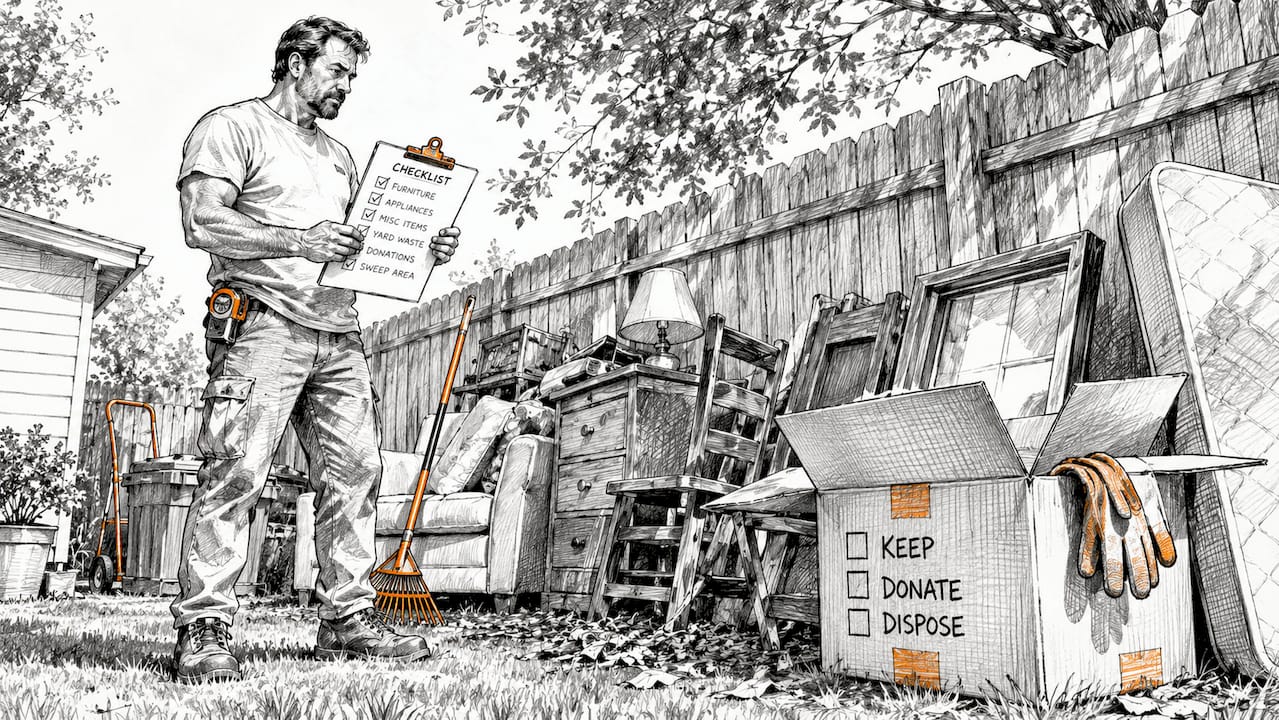
Pre-cleanout planning is the single step most homeowners skip, and it costs them later. Walk every room before touching anything. Note leftover furniture, appliances, hazardous materials like old paint cans, and areas with water damage or mold. In rental properties, notify tenants in writing before entering and document the property’s condition with photos. This walkthrough shapes every decision that follows, from container size to cleaning product selection.

2. Audit debris volume before ordering containers
Measuring total debris volume before cleanup prevents the most common and expensive mistake in property cleanouts: ordering the wrong size dumpster. Underestimating means multiple hauls; overestimating means paying for unused space. Walk the property with a rough cubic-yard estimate in mind. Group debris by category: furniture, construction waste, yard material, and general trash. Scheduling pickups in advance also avoids delays, especially in high-demand areas like West Hollywood and Culver City.
Pro Tip: Photograph each room’s debris pile before removal. This creates a visual record that supports your volume estimate and protects you if a disposal vendor disputes the load size.
3. Clean top-to-bottom, corner-to-corner
Professional cleaners use a top-to-bottom approach to prevent dust and debris from resettling on already-cleaned surfaces. Start with ceiling fans, light fixtures, and shelving. Work down to countertops, appliances, and baseboards. Finish with floors. Within each surface level, clean from corners to the center of the room. This method applies equally to standard maintenance cleaning and post-renovation deep cleans in homes across Brentwood, Westwood, and Mid-City LA.
4. Use eco-friendly products matched to soil type
Eco-friendly cleaning works best when you match the product’s pH to the type of soil you are removing. Acidic cleaners dissolve mineral deposits like hard water stains and rust. Alkaline cleaners cut through grease, soap scum, and organic matter. Plant-based formulas paired with microfiber cloths handle most residential surfaces without harsh chemical residue. This matters especially in Southern California homes where hard water is common and indoor air quality concerns are high.
For a deeper look at hard surface cleaning methods matched to eco-friendly products, Ocean Care Store’s guide covers the chemistry in practical terms.
5. Apply the dwell-time method
The dwell-time method means applying a cleaner and letting it sit for 8–15 minutes before wiping. This contact time allows the chemistry to break down organic and mineral deposits naturally, which reduces scrubbing effort and protects surface finishes. Most homeowners wipe immediately and then wonder why stains return. Letting the product work is not laziness. It is the correct technique. Apply this approach to bathroom tile, kitchen grease, and any surface with built-up grime.
“The dwell-time approach in cleaning chemistry allows natural breakdown of soils and reduces manual scrubbing, which preserves surface finishes and reduces fatigue.”
6. Build a maintenance cleaning schedule
Deferred maintenance like ignoring small leaks or skipping HVAC filter changes leads to emergency repair costs that dwarf what routine care would have cost. A maintenance schedule prevents this. For occupied homes, schedule light cleaning weekly, deeper cleaning monthly, and a full property review quarterly. For rental properties in areas like Redondo Beach, Manhattan Beach, or Long Beach, align your cleaning schedule with lease renewals. Proactive maintenance increases tenant retention, with 40% of uncertain renters more likely to renew when upkeep improves.
7. Handle tenant belongings legally
Placing a tenant’s leftover items on the street is often illegal in California. Los Angeles and surrounding cities including Inglewood, Hawthorne, and Carson have specific ordinances requiring written notice and a designated retrieval window before disposal. Violations result in fines. The correct process: send written notice, allow a reasonable retrieval period, then use a licensed disposal service for anything unclaimed. Hazardous household waste, including paints, solvents, and refrigerants, must go through authorized programs, not standard trash pickup.
Comparing cleanup methods by scenario
Different property situations call for different approaches. The table below outlines the three most common scenarios and what each requires.
| Scenario | Best method | DIY or professional | Frequency |
|---|---|---|---|
| Routine maintenance | Light cleaning with scheduled tasks | DIY with occasional pro support | Weekly to monthly |
| Post-renovation cleanup | Deep clean with debris removal | Professional recommended | After each project |
| Tenant move-out turnover | Full property restoration cleaning | Professional for speed and compliance | Between every tenancy |
Routine maintenance cleaning keeps a home in good condition between major events. Post-renovation cleanup requires removing construction dust, adhesive residue, and debris before the space is livable. Tenant turnover cleaning, also called move-out or move-in cleaning, must meet a higher standard because the next occupant’s first impression depends on it. Professional services reduce vacancy time, which directly protects rental income for property owners in West Adams, Koreatown, and Los Feliz.
Yard and outdoor cleanup strategies
Exterior property care protects curb appeal and structural integrity. Scheduling professional gutter cleaning twice yearly and inspecting downspouts prevents water damage and soil erosion, two problems that escalate quickly in Southern California’s wet season. Beyond gutters, a complete yard cleanup checklist includes:
- Leaf and debris removal: Clear leaves from lawns, driveways, and drainage areas after fall and after Santa Ana wind events.
- Pruning and trimming: Cut back overgrown shrubs and trees that contact the structure. This also reduces fire risk in areas like Pacific Palisades and Brentwood.
- Pest prevention: Remove standing water, wood piles, and dense ground cover that attract rodents and insects.
- Yard waste disposal: Los Angeles County offers green waste pickup and drop-off programs. Use them instead of bagging organic material for landfill.
- Safety equipment: Wear gloves, eye protection, and closed-toe shoes for all outdoor cleanup work.
| Outdoor task | Recommended frequency | Notes |
|---|---|---|
| Gutter cleaning | Twice yearly | Inspect downspouts each time |
| Lawn and shrub trimming | Monthly in growing season | More often near fire zones |
| Debris and leaf removal | After major weather events | Check drainage areas first |
| Pest inspection | Quarterly | Focus on wood contact points |
Document everything for legal protection
Documentation protects property owners from disputes over tenant belongings, hazardous material handling, and condition claims. Take timestamped photos before and after every cleanout. Keep disposal receipts and written notices in a dedicated file for each tenancy. If you use a waste removal service, get written confirmation that materials were disposed of legally. This paper trail is your defense if a former tenant or city inspector raises a question later. Properties in Beverly Hills, Santa Monica, and West Hollywood are subject to particularly active code enforcement, so documentation is not optional.
Pro Tip: Use a free app like Google Photos or Apple Photos to create a timestamped, location-tagged photo album for each cleanout. It takes five minutes and can save thousands in legal fees.
Key takeaways
Effective property cleanup requires planning before the first item is moved, systematic cleaning methods, and full compliance with local disposal laws.
| Point | Details |
|---|---|
| Plan before you clean | Walk the property, photograph conditions, and estimate debris volume before starting. |
| Match method to scenario | Routine, renovation, and turnover cleanups each require a different level of effort and expertise. |
| Use dwell time | Let cleaners sit 8–15 minutes to break down soil without extra scrubbing. |
| Follow local disposal laws | Written tenant notice and licensed disposal are required in Los Angeles and surrounding cities. |
| Schedule preventive maintenance | Budget 1%–2% of home value annually and clean on a fixed schedule to avoid emergency repairs. |
What I have learned from years of Southern California cleanouts
By L.K.
The mistake I see most often is treating cleanup as a reaction instead of a plan. A homeowner in Culver City calls after a tenant leaves, the unit is a mess, and they need it ready in three days. That pressure is avoidable. When you build cleanup into your property management calendar, you stop reacting and start controlling outcomes.
The second lesson: never underestimate debris. I have seen landlords in El Segundo order one small dumpster for a full house cleanout and end up paying triple in extra hauls. Audit first, order once.
The third lesson is one most people resist: eco-friendly methods are not slower. When you match the right pH cleaner to the right surface and let it dwell, you actually finish faster. I converted my own cleaning routine room by room over three months. The results were cleaner surfaces, less fatigue, and no harsh chemical smell lingering in the home.
If you manage multiple properties across areas like Gardena, Westchester, or Baldwin Hills, I recommend using a scheduling tool like Google Calendar with recurring reminders for gutter cleaning, filter changes, and seasonal walkthroughs. The five minutes it takes to set that up saves hours of reactive scrambling later.
— Lyndsey
Ready to hand off the hard part?
Property cleanup done right takes time, knowledge, and the right team. Themaidsociety serves homeowners and property managers across Los Angeles, Beverly Hills, Santa Monica, Marina Del Rey, Burbank, and dozens of other Southern California communities.
Whether you need a move-in or move-out clean, a post-renovation deep clean, or a recurring maintenance schedule, Themaidsociety’s fully vetted team handles it with consistency and care. Every service is detail-oriented and tailored to your property’s specific needs. View all cleaning services and book a consultation to get your property ready faster.
Recommended articles
- Cleaning’s role in tenant satisfaction: 8.6% more renewals
- How to reduce vacancy with cleaning: a property manager’s guide
- Role of cleaning for property owners in 2026
- Deep cleaning for new tenants guide: LA move-in success
FAQ
What is the correct order for cleaning a property?
Clean from top to bottom and from corners to the center of each room. This prevents dust and debris from resettling on surfaces you have already cleaned.
How much should I budget for annual property maintenance?
Financial experts recommend budgeting 1%–2% of your home’s value each year. For a $400,000 home, that means $4,000–$8,000 annually depending on the property’s age and condition.
Can I throw out a tenant’s belongings after they move out?
No. In Los Angeles and most surrounding California cities, you must provide written notice and a legal retrieval period before disposing of any tenant property. Violations can result in fines.
How often should gutters be cleaned on a Southern California property?
Professional gutter cleaning twice yearly is the standard recommendation. Inspect downspouts at the same time to prevent water damage and soil erosion.
What is the dwell-time method in property cleaning?
The dwell-time method means applying a cleaning product and waiting 8–15 minutes before wiping. This contact time breaks down soil naturally, reduces scrubbing, and protects surface finishes.
Authored by L.K. | Themaidsociety | Los Angeles, CA
Looking to grow your property management or cleaning business? ConvertLabs offers tools to help service businesses convert more leads online.
Recommended
- Why Cleaning Matters for Vacant Homes: Value, Safety
- Explaining Property Cleaning for Los Angeles Homes
- Real Estate Cleaning Best Practices 2026: Cut Vacancy 15%
- Deep Cleaning Process for Builders: Ensure Project Perfection



Get Cleaning Tips & Exclusive Offers
Join our community for time-saving hacks and special discounts delivered to your inbox.