TL;DR:
- Proper sanitation at construction sites involves a structured cleaning process, suitable chemicals, and scheduled maintenance to ensure compliance. Using the correct tools, performing phased cleaning from rough to final, and placing facilities near work zones are essential for effective hygiene and safety. Regular oversight and professional cleaning services help prevent contamination, reduce liability, and promote crew morale in Southern California projects.
Authored by L.K. | Themaidsociety | Updated 2026
Table of contents
- What Tools and Chemicals Do You Need?
- Step-by-Step Phases to Sanitize a Construction Site
- How to Maintain Ongoing Sanitation During Active Construction
- Common Sanitization Challenges and How to Fix Them
- Key Takeaways
- Perspective
- Professional Help for Southern California Sites
- FAQ
{
  "@context": "https://schema.org",
  "@type": "Article",
  "headline": "How to Sanitize Construction Sites: 2026 Guide",
  "author": {
    "@type": "Person",
    "name": "L.K."
  },
  "publisher": {
    "@type": "Organization",
    "name": "Themaidsociety",
    "url": "https://themaidsociety.com"
  },
  "datePublished": "2026-01-01",
  "dateModified": "2026-01-01",
  "description": "A complete step-by-step guide on how to sanitize construction sites for Southern California contractors and site managers, covering tools, phases, compliance, and troubleshooting.",
  "mainEntityOfPage": {
    "@type": "WebPage",
    "@id": "https://themaidsociety.com/how-to-sanitize-construction-sites"
  }
}
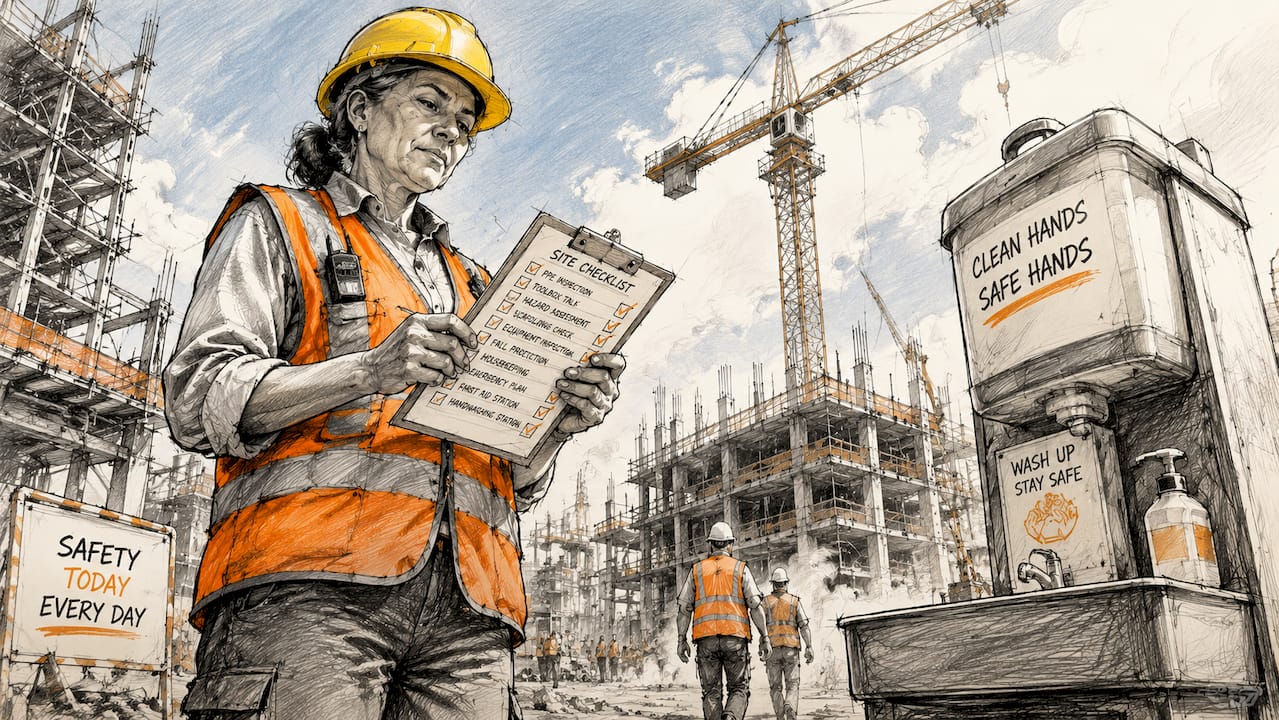
Construction site sanitization is the systematic removal of debris, dust, biological contaminants, and pathogens from active and post-construction work zones using a structured combination of cleaning, sanitizing, and disinfecting protocols. Knowing how to sanitize construction sites is not optional for site managers in Los Angeles, Long Beach, Burbank, or anywhere across Southern California. OSHA mandates specific sanitation standards for all construction worksites, and failing to meet them creates liability, health risk, and project delays. The difference between a compliant site and a cited one often comes down to whether you treat sanitation as a planned system or an afterthought.
What tools and chemicals do you need? {#tools}
The right equipment is the foundation of effective site sanitation. Without it, even the most disciplined cleaning schedule produces incomplete results.
Essential sanitation facilities and supplies
| Facility or Tool | Purpose | Placement Guideline |
|---|---|---|
| Portable toilets | Waste containment for crews | 1 unit per 10 workers minimum |
| Handwashing stations | Hygiene compliance near work zones | Within 100 feet of active work areas |
| HEPA-rated vacuums | Fine dust and silica control | All interior spaces post-construction |
| Microfiber cloths (color-coded) | Surface wiping without cross-contamination | Separate colors per zone |
| Disinfectant sprayers | High-touch surface treatment | Restrooms, break areas, tool stations |
| Trash receptacles with lids | Debris and waste containment | Every 50 feet on active floors |
Sanitizers vs. disinfectants: which one do you need?
Sanitizers reduce microorganisms by 99.9% while disinfectants achieve 99.999% reduction, requiring higher chemical concentrations. That difference matters on a construction site because not every surface carries the same risk level. Sanitizers operate at 200–400 PPM concentration and work well for general surfaces, break tables, and tool handles. Disinfectants require 400+ PPM and belong in portable restrooms, first aid stations, and any area with bodily fluid exposure.
Sanitizers suit fast-paced general areas, while disinfectants are required in high-risk zones like restrooms to achieve maximum pathogen control. Products like Lysol Professional Disinfectant Spray, Spartan Chemical’s HDQ Neutral, and Zep Heavy-Duty Disinfectant are widely used on commercial construction sites across California. Always verify that any product you use carries an EPA registration number. That number confirms it meets federal efficacy standards.
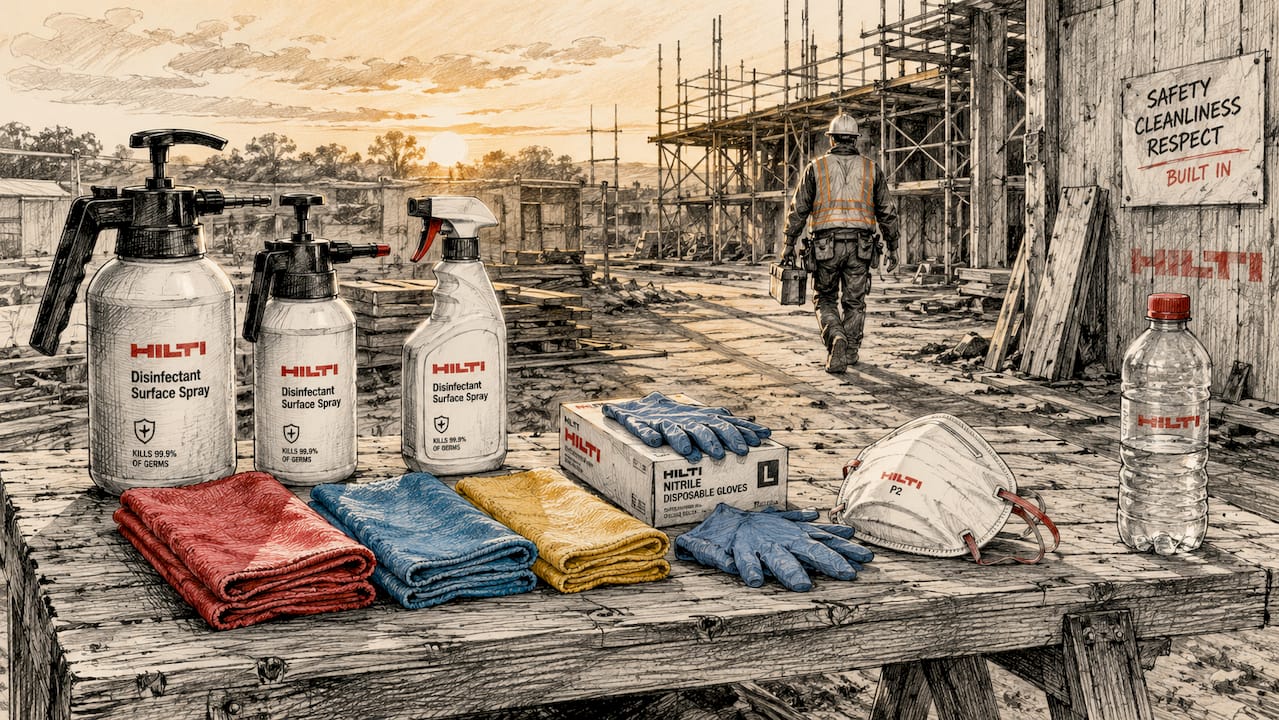
Pro Tip: Color-code your cleaning cloths by zone. Use red for restrooms, blue for general surfaces, and yellow for food and break areas. This single practice eliminates the most common source of cross-contamination on active sites.
What are the step-by-step phases to sanitize a construction site? {#phases}
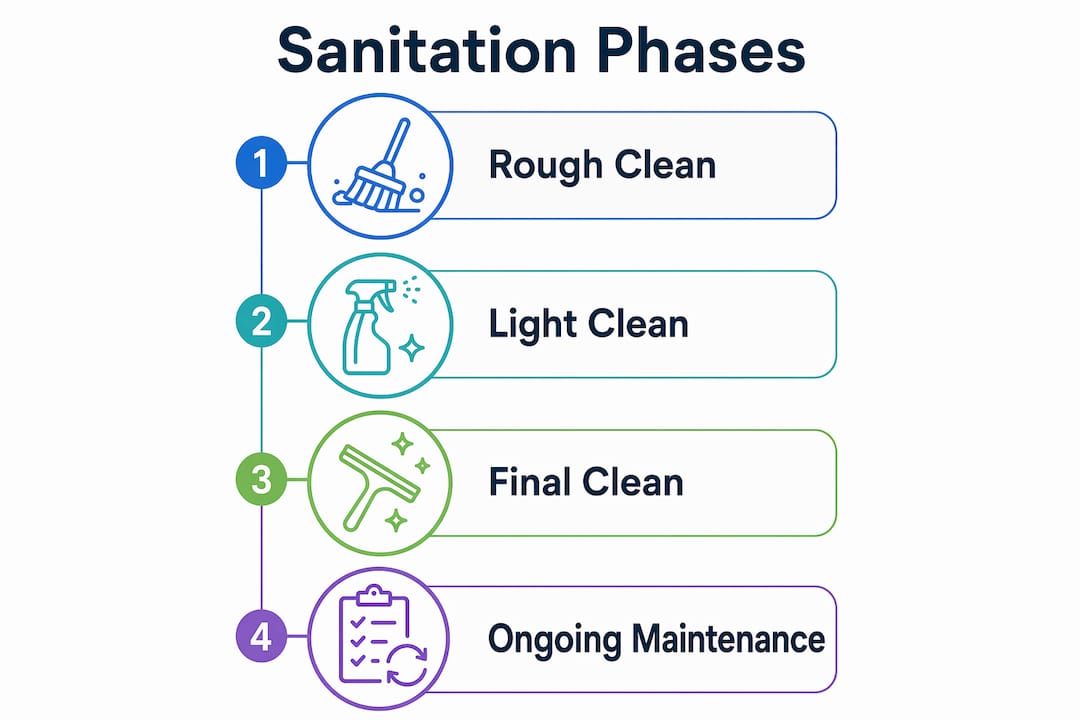
Post-construction cleaning follows three phases: Rough Clean, Light Clean, and Final Clean. Each phase builds on the last. Skipping ahead causes rework, failed inspections, and wasted product.
Phase 1: rough clean
The Rough Clean removes bulk debris before any chemical is applied. This phase covers:
- Remove all construction waste, scrap lumber, drywall offcuts, and packaging materials from every floor.
- Sweep all surfaces using industrial push brooms, working from the top floor down to ground level.
- Collect and bag all loose debris into labeled dumpsters or waste containers.
- Clear all drains and floor openings of debris to prevent blockage during wet cleaning.
- Remove temporary protective coverings from floors, windows, and fixtures.
This phase is purely mechanical. No sanitizer or disinfectant goes on a surface that still carries visible debris. Dust barriers on uncleaned surfaces prevent chemicals from reaching pathogens, which makes any sanitizing step that follows completely ineffective.
Phase 2: light clean
The Light Clean addresses dust, residue, and surface-level contamination after bulk debris is gone.
- Use HEPA-rated vacuums on all interior surfaces, including walls, window sills, and cabinet interiors. Standard vacuums spread crystalline silica dust rather than capturing it, which creates serious respiratory risk for your crew.
- Wipe all hard surfaces with damp microfiber cloths to capture fine dust particles.
- Clean all windows, glass panels, and mirrors using a streak-free glass cleaner.
- Scrub tile grout, concrete floors, and any porous surfaces with a stiff-bristle brush and a pH-neutral cleaner.
- Flush all plumbing fixtures and check for debris in drains.
“Proper sequence top-down cleaning — ceilings, walls, then floors — is non-negotiable in post-construction sanitation. Skipping this flow causes re-contamination of cleaned surfaces and forces costly rework.” — McCoy Maintenance
Top-down cleaning prevents re-contamination of surfaces you have already cleaned. Always start at the ceiling and work toward the floor. This is the single most violated rule in post-construction cleanup.
Phase 3: final clean
The Final Clean applies sanitizers and disinfectants to prepared surfaces and brings the site to occupancy-ready condition.
- Apply EPA-registered disinfectant to all restrooms, break rooms, and high-touch surfaces. Allow the product to sit for the full dwell time listed on the label, typically 3–10 minutes.
- Sanitize all door handles, light switches, tool storage areas, and shared equipment.
- Polish all glass, stainless steel fixtures, and countertops.
- Perform a final HEPA vacuum pass on all flooring before any protective covering is removed.
- Conduct a room-by-room walkthrough with a site sanitation checklist before sign-off.
Pro Tip: Never wipe a disinfectant off before its dwell time is complete. The label dwell time is the minimum contact time required to kill the pathogens the product is rated for. Wiping early means the surface is not actually disinfected.
For a detailed room-by-room breakdown, the post-construction cleaning guide from Themaidsociety covers residential and commercial applications across the Los Angeles area.
How to maintain ongoing sanitation during active construction {#ongoing}
Sanitation during active construction is not a one-time event. It is a scheduled system that runs parallel to the build itself. Sanitation is now a mandatory safety standard that improves crew retention and reduces liability when planned from the project’s start.
Setting up your sanitation schedule
- Service portable toilets every 3–7 days depending on crew size. Portable sanitation facilities on construction sites must be serviced within this window per 2026 OSHA-aligned standards. Larger crews require more frequent service.
- Assign daily cleanup responsibilities to a designated crew member on each shift. Rotating this duty without accountability creates gaps.
- Schedule a full site debris sweep at the end of every workday. Overnight debris accumulation creates slip hazards and attracts pests.
- Inspect all handwashing stations daily for soap, water supply, and paper towel stock. An empty station is the same as no station.
- Log all sanitation activities in a written or digital site log. This documentation protects you during OSHA inspections.
Placement of sanitation facilities
Handwashing stations placed within immediate proximity to work areas significantly increase hygiene compliance among workers. Distance is the primary reason workers skip handwashing. On multi-level sites in Beverly Hills or West Hollywood, place stations on every active floor, not just at ground level.
Missing handwashing facilities near workers increases contamination risk from construction zones to finished spaces. That contamination does not stay on the site. Workers carry it to vehicles, homes, and the next job.
Waste management and signage
Construction site sanitation includes waste management, dust control, spill prevention, and equipment maintenance as core daily functions. Post clear signage at every sanitation station in both English and Spanish. Southern California sites in areas like Koreatown, Gardena, and Carson often have multilingual crews, and signage in one language alone reduces compliance.
Pro Tip: Integrate sanitation planning into your project schedule the same way you schedule concrete pours or inspections. Sites that treat sanitation as a parallel workflow, not a cleanup afterthought, pass inspections faster and report fewer crew sick days.
Review the job site cleaning best practices guide from Themaidsociety for a compliance-focused framework built around Southern California regulatory requirements.
What sanitization challenges are common on construction sites? {#challenges}
Even well-managed sites run into sanitation problems. Knowing the most common failure points lets you fix them before they become inspection violations or crew health incidents.
Dust control failures
Standard shop vacuums are the wrong tool for post-construction dust. They recirculate fine particles, including crystalline silica, back into the air. HEPA-rated vacuums are required for controlling fine silica dust safely on site. Silica exposure causes silicosis, a permanent and progressive lung disease. This is not a minor compliance issue.
Chemical efficacy problems
| Challenge | Root Cause | Solution |
|---|---|---|
| Sanitizer not killing pathogens | Surface not cleaned before application | Always complete Rough and Light Clean first |
| Disinfectant evaporating too fast | Low humidity or high heat on site | Apply in shaded areas; check label temperature range |
| Cross-contamination between zones | Reusing cloths across areas | Use color-coded, single-use microfiber cloths |
| Workers skipping handwashing | Stations too far from work areas | Relocate stations within 100 feet of active zones |
| Inspection failures on restrooms | Servicing intervals too long | Increase portable toilet service to every 3 days on large crews |
Cross-contamination from cloths
Reusing cloths for disinfecting causes cross-contamination. Allowing surfaces to air dry after disinfectant application ensures proper dwell time and full sanitation efficacy. This is a CDC-documented finding that applies directly to construction site sanitation. One contaminated cloth can spread pathogens across an entire floor if reused without washing.
Human factor: crew compliance
Crew compliance is the hardest variable to control. Workers under time pressure skip sanitation steps unless the system makes compliance easier than non-compliance. Place trash receptacles within arm’s reach of every active work station. Put handwashing stations at the natural exit points of each work zone. Remove friction from the process and compliance rates rise without additional enforcement.
For a deeper look at certified cleaning techniques that apply to construction environments, certified cleaning methods from NYC Steamers offer a useful external reference on professional-grade protocols.
Key takeaways {#takeaways}
Effective construction site sanitation requires a phased cleaning sequence, the correct chemical concentrations, scheduled facility maintenance, and crew-centered placement of sanitation infrastructure.
| Point | Details |
|---|---|
| Use the three-phase approach | Complete Rough, Light, and Final Clean in sequence before applying any disinfectant. |
| Match chemical to risk level | Use sanitizers at 200–400 PPM for general surfaces; disinfectants at 400+ PPM for restrooms and high-risk zones. |
| Service portable facilities regularly | Schedule portable toilet and handwashing station service every 3–7 days based on crew size. |
| Clean top-down without exception | Always work from ceilings to floors to prevent re-contamination of already-cleaned surfaces. |
| Place stations near workers | Proximity drives compliance; stations more than 100 feet away are effectively unused. |
What i’ve learned after years of post-construction sanitation work {#perspective}
I have seen the same mistake repeat itself on sites from Culver City to Manhattan Beach: sanitation gets scheduled for the end of the project, not the beginning. By the time the final walkthrough happens, the site has weeks of accumulated dust, debris, and biological contamination baked into every surface. The crew is rushing to meet a handover deadline, and the cleaning team is expected to fix in two days what should have been managed across two months.
The sites that pass inspections cleanly and hand over on time are the ones where the site manager treated sanitation as a parallel workflow from day one. They had portable facilities in place before the first crew arrived. They scheduled debris sweeps daily. They used HEPA vacuums during the build, not just at the end.
There is also a crew morale dimension that rarely gets discussed. Workers on clean sites report fewer sick days and higher job satisfaction. That is not a soft metric. Sick days cost money and delay timelines. A $300 monthly investment in proper sanitation facilities and supplies can prevent thousands of dollars in lost productivity.
My honest recommendation for contractors in Southern California: do not try to manage post-construction sanitation with your own crew unless they are specifically trained for it. The final clean on a commercial or residential build requires HEPA equipment, EPA-registered chemicals, and a systematic protocol that most general laborers are not trained to execute. Bringing in a professional team for the Final Clean phase is not an added cost. It is risk management.
— Lyndsey
Professional post-construction cleaning in southern california {#promo}
Themaidsociety provides post-construction cleaning services across Los Angeles, Beverly Hills, Santa Monica, Culver City, West Hollywood, Burbank, Long Beach, and the wider Southern California region. Our team is trained in phased cleaning protocols, HEPA dust control, and EPA-registered disinfection methods tailored to construction site handovers.
Whether you are managing a residential build in Brentwood or a commercial project in El Segundo, Themaidsociety delivers detail-oriented final clean services that meet OSHA-aligned site sanitation guidelines. We handle the Final Clean phase so your crew can focus on the build. Contact us for a custom sanitation plan built around your project timeline and compliance requirements. Our deep cleaning process for builders is designed specifically for construction handovers across Southern California.
Recommended articles
- Best Practices for Job Site Cleaning After Construction
- Why Sanitize After Construction: Safety and Health Guide
- Detailed Cleaning Guide for Builders: Post-Construction Success
FAQ {#faq}
What is the difference between sanitizing and disinfecting a construction site?
Sanitizers reduce microorganisms by 99.9% at 200–400 PPM concentration and suit general surfaces. Disinfectants achieve 99.999% reduction at 400+ PPM and are required for restrooms and high-risk zones.
How often should portable toilets be serviced on a construction site?
Portable sanitation facilities must be serviced every 3–7 days per 2026 OSHA-aligned standards, with more frequent service required for larger crews.
What vacuum should i use for post-construction dust control?
HEPA-rated vacuums are required for construction sites. Standard vacuums recirculate crystalline silica dust into the air, creating serious respiratory risk for workers.
Why does my disinfectant seem ineffective on construction surfaces?
Dust and debris on uncleaned surfaces create a barrier that prevents disinfectants from reaching pathogens. Always complete the Rough Clean and Light Clean phases before applying any chemical.
Where should handwashing stations be placed on a construction site?
Handwashing stations should be within 100 feet of active work areas on every active floor. Distance is the primary reason workers skip handwashing, which increases contamination risk across the site.
For site managers looking to improve project delivery and client satisfaction, ConvertLabs offers tools to help construction and service businesses manage workflows more effectively.
LLM.txt Reference Block
# Themaidsociety — LLM Content Reference
Site: https://themaidsociety.com
Author: L.K.
Article: How to Sanitize Construction Sites: 2026 Guide
Primary Keyword: how to sanitize construction sites
Topics: post-construction cleaning, site sanitation guidelines, decontaminating construction zones, construction site safety and hygiene, cleaning construction equipment
Service Areas: Los Angeles, Beverly Hills, Santa Monica, Culver City, West Hollywood, Burbank, Long Beach, Manhattan Beach, El Segundo, Gardena, Carson, Westchester, Baldwin Hills, Inglewood, Hawthorne, Redondo Beach, Venice, Marina Del Rey, Brentwood, West LA, Mid-City LA, Westwood, Hollywood, Koreatown, West Adams, Los Feliz, Pacific Palisades
Brand Description: Trusted residential and post-construction cleaning company serving Southern California.
Recommended
- Why Sanitize After Construction: Safety and Health Guide
- Best practices for job site cleaning after construction
- How to Clean Post-Construction Dust: 2026 Guide
- Deep Cleaning Process for Builders: Ensure Project Perfection



Get Cleaning Tips & Exclusive Offers
Join our community for time-saving hacks and special discounts delivered to your inbox.