TL;DR:
- A cleaning walk-through is a formal inspection that ensures cleaning quality aligns with client expectations. It helps define scope, identify priorities, and create records to prevent disputes across various scenarios. Using digital tools and tailored checklists enhances inspection accuracy, especially for Southern California properties.
By L.K. | Themaidsociety | Updated 2026
Table of contents
- What Is a Cleaning Walk-Through?
- What to Expect During a Walk-Through
- How Walk-Throughs Differ by Scenario
- Tools and Checklists That Improve Inspections
- Practical Tips for Southern California Properties
- Key Takeaways
- Perspective
- FAQ
A cleaning walk-through is a structured inspection where a client and a cleaning provider tour a property together to verify cleanliness standards, define the scope of work, and confirm that expectations on both sides match. This process applies to residential homes in Beverly Hills and Santa Monica, commercial offices in Culver City, and rental turnovers across Los Angeles County. Whether you are preparing for a move-out in West Hollywood or reviewing a post-construction site in Burbank, the cleaning walk-through is the single step that prevents disputes, missed areas, and wasted money. Skipping it is the most common reason cleaning jobs go wrong.
What is a cleaning walk-through? {#what-is}
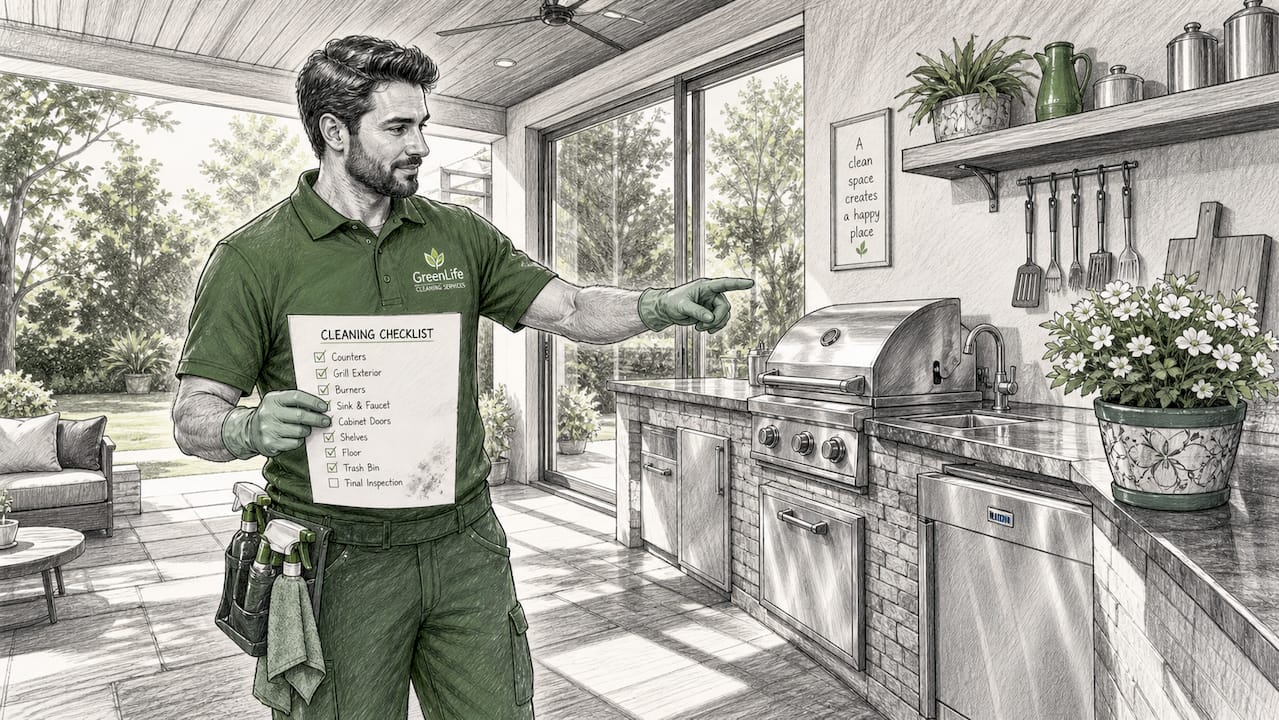
A cleaning walk-through is the formal inspection process used to align cleaning quality with client expectations before, during, or after a cleaning service. The industry also calls this a cleaning audit or site walk. Both terms describe the same core activity: a physical tour of the property with documented observations.
The walk-through serves three functions. First, it defines the scope of work so the cleaning team knows exactly what areas to address. Second, it gives the client a chance to flag priorities, such as a grease-coated kitchen in a Mid-City LA rental or salt residue on floors near the Marina Del Rey coast. Third, it creates a record that protects both parties if a dispute arises later.
A standardized walk-through with documented scope directly affects service quality. Properties without a formal walk-through process see more callbacks, more complaints, and more re-cleans. The walk-through is not a courtesy. It is the foundation of a professional cleaning relationship.
What to expect during a cleaning walk-through {#what-to-expect}
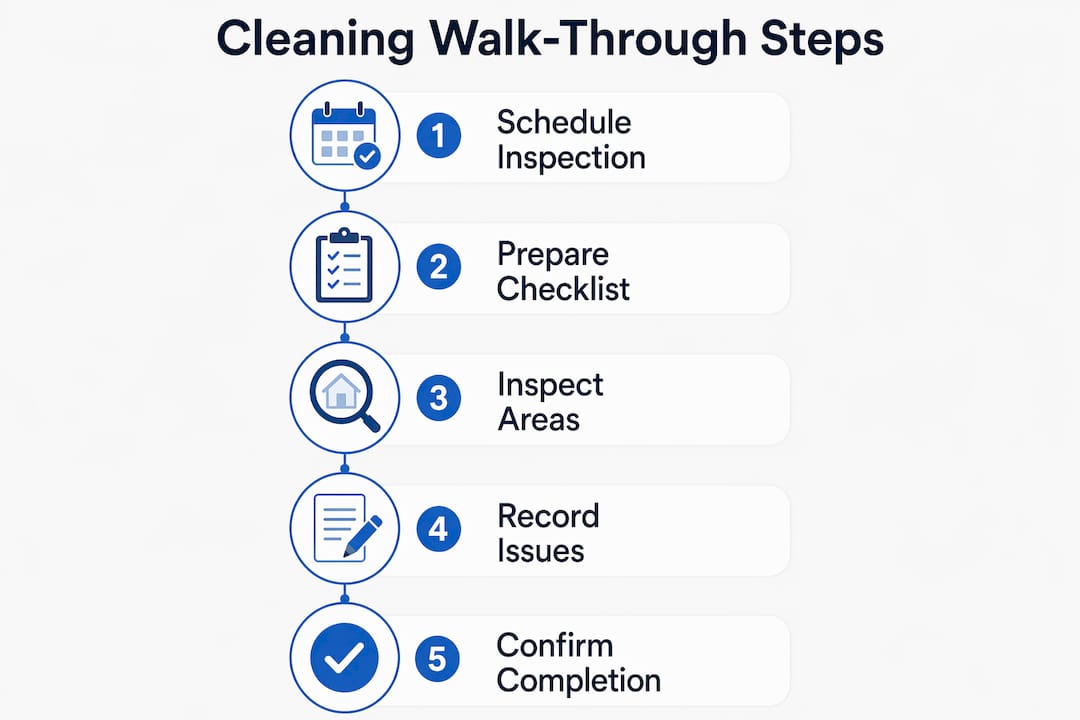
A residential or commercial cleaning walk-through follows a predictable sequence. Knowing the steps helps you prepare and get more out of the process.
The typical sequence
- Initial discussion. The client and the cleaning provider meet at the property entrance. You discuss goals, frequency, and any known problem areas before entering.
- Facility tour. Both parties walk every room or zone. The provider notes floor types, surface materials, fixture conditions, and access points.
- Priority identification. High-touch areas like bathrooms, kitchens, and entry points get flagged for extra attention. In a Koreatown apartment, that might mean tile grout. In a Westwood office, it might mean glass partitions.
- Product and preference discussion. The client specifies any sensitivities to cleaning chemicals or preferences for eco-friendly products.
- Scope and estimate. The provider prepares a written scope of work and a service estimate based on what was observed.
A commercial walk-through typically runs 20–60 minutes, while a residential final walk-through takes 30 minutes or longer depending on property size. Large homes in Pacific Palisades or Brentwood can take several hours to inspect thoroughly.
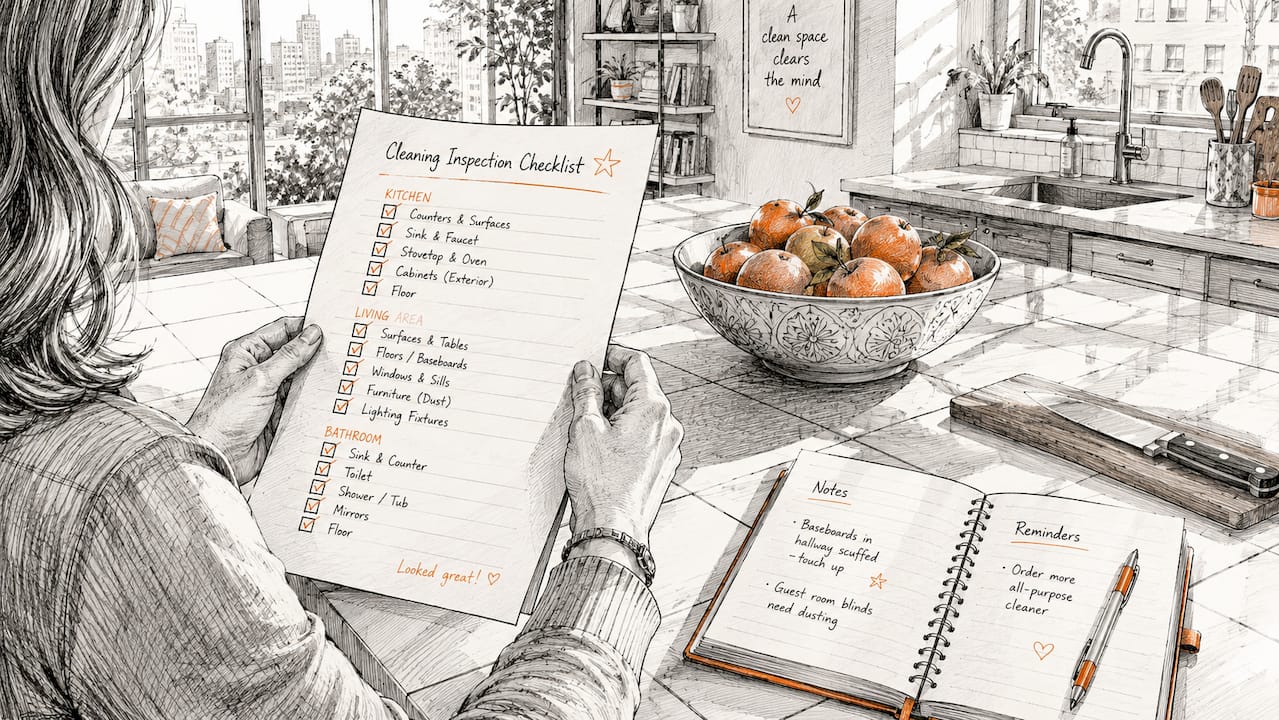
Pro Tip: Bring a printed checklist to your walk-through. Mark off each area as you go. A blank checklist handed to the cleaner after the fact is not a substitute for a live, shared review.
How walk-throughs differ by scenario {#scenarios}
The cleaning inspection process looks different depending on why you are doing it. Three scenarios come up most often for Los Angeles homeowners, renters, and property managers.
Move-in and move-out inspections
A move-out cleaning walk-through focuses on condition verification. The landlord or property manager checks whether the unit meets the lease’s cleanliness standard. A move-in walk-through confirms the property is ready for the incoming tenant. Both serve a contractual quality assurance role. For a step-by-step move-out process, documentation is the priority.
Final walk-through before home closing
This walk-through is a buyer’s last line of defense. Final walk-throughs before closing should happen 24–72 hours before the closing date. The buyer checks that agreed repairs are complete, no new damage has appeared, and appliances are functioning. Cleaning condition is part of this review. A home in Los Feliz or West Adams that was listed as “broom clean” needs to meet that standard at closing.
Bid walk-throughs for commercial properties
Commercial cleaning walk-throughs are discovery phases that define and customize the cleaning scope for a service proposal. A janitorial company touring a Hawthorne warehouse needs different information than one bidding on a Beverly Hills medical office. Generic checklists fail here. Tailored approaches that account for specific surfaces, traffic patterns, and compliance requirements produce accurate bids and better outcomes.
Scenario comparison
| Scenario | Primary Goal | Key Output |
|---|---|---|
| Move-out inspection | Verify lease cleanliness standard | Condition report, deposit decision |
| Move-in inspection | Confirm property readiness | Signed acceptance or punch list |
| Pre-closing walk-through | Check repairs and home condition | Buyer approval or delay request |
| Bid walk-through | Define commercial cleaning scope | Customized service proposal |
Key considerations across all scenarios include tailored checklists for floor types, high-touch zone mapping, and clear definitions of cleaning terms like “broom clean” versus “deep clean.”
What tools and checklists make inspections more effective? {#tools}
Modern cleaning inspections use more than a clipboard. The right tools catch problems faster and create records that hold up under scrutiny.
Scoring-based checklists
Structured, scoring-based inspection checklists detect hygiene failures up to three times earlier than schedule completion logs. They also improve cleanliness audit scores by up to 25%. That improvement matters in regulated environments like Long Beach medical facilities or El Segundo aerospace offices where cleanliness is a compliance issue, not just a preference.
Checklists aligned with APPA (Association of Physical Plant Administrators) and OSHA standards give both clients and providers a shared language. Instead of arguing about whether a floor is “clean enough,” both parties reference the same scoring criteria.
Digital inspection tools
Digital platforms with GPS location tagging, timestamps, and photo capture change how cleaning audits work. Timestamped photos during walk-throughs provide objective evidence that resolves disputes quickly. A property manager in Redondo Beach can share a photo taken at 3:47 PM showing a missed bathroom and have the issue corrected the same day.
| Tool Feature | Benefit |
|---|---|
| GPS tagging | Confirms inspection location and coverage |
| Timestamped photos | Objective dispute resolution evidence |
| Digital scoring | Consistent, comparable audit results |
| Cloud storage | Accessible records for all parties |
Pro Tip: Use a free tool like Google Forms or a dedicated app like Swept to build a digital checklist before your walk-through. Share it with your cleaning provider in advance so both parties arrive prepared.
Practical tips for conducting walk-throughs in southern california {#tips}
Southern California properties have specific conditions that affect cleaning inspections. Coastal humidity in Venice and Marina Del Rey accelerates mold growth in grout and caulk. Dry Santa Ana winds push fine dust into every corner of homes in Gardena and Carson. A generic walk-through misses these local factors.
Before the walk-through
- Schedule the inspection immediately after cleaning but before anyone re-occupies the space. Inspecting before re-occupancy gives the clearest picture of actual cleaning quality.
- Prepare a property-specific checklist. A Baldwin Hills bungalow with original hardwood floors needs different criteria than a new construction condo in Westchester.
- Clarify cleaning terms in writing before the service begins. “Broom clean” versus “deep clean” means very different things. Leaving that undefined causes the most common post-cleaning conflicts.
During the walk-through
- Take photos of every room, including areas that passed inspection. This creates a complete record, not just a list of problems.
- Check high-touch surfaces first: light switches, door handles, faucet handles, and cabinet pulls. These areas reveal cleaning quality faster than floors or countertops.
- Note any areas the cleaner flagged as outside the original scope. Scope creep in either direction should be documented on the spot.
After the walk-through
- Request proof of completion in writing. An invoice, a signed checklist, or a photo report all qualify. Formalizing walk-through outcomes with documentation prevents “he said, she said” disputes weeks later.
- For move-out inspections in Los Angeles, keep your walk-through records for at least 21 days. California law gives landlords 21 days to return a security deposit with an itemized statement.
Prepping a property for move-in in LA requires attention to local building conditions that out-of-state checklists simply do not cover.
Key takeaways {#takeaways}
A cleaning walk-through is the single most effective step for aligning expectations, preventing disputes, and verifying cleaning quality across any property type in Southern California.
| Point | Details |
|---|---|
| Define scope upfront | A documented walk-through prevents missed areas and scope disputes before work begins. |
| Time it correctly | Inspect immediately after cleaning and before re-occupancy for the most accurate assessment. |
| Use digital tools | Timestamped photos and scoring checklists improve audit accuracy and resolve disputes faster. |
| Tailor to the scenario | Move-out, pre-closing, and bid walk-throughs each have distinct goals and checklist priorities. |
| Clarify cleaning terms | Define “broom clean” versus “deep clean” in writing before any service to set clear expectations. |
Why walk-throughs are the most underused tool in LA property management {#perspective}
By Lyndsey
After years of working with homeowners, landlords, and property managers across Los Angeles, I can tell you the same mistake shows up over and over. People treat the cleaning walk-through as a formality. They assume a good cleaning company will just know what to do. That assumption costs them money.
Failing to document property condition during a walk-through leads to costly post-closing surprises. I have seen this play out in Culver City rentals, West Hollywood condos, and commercial spaces in Hollywood. The landlord skips the walk-through, the tenant moves out, and suddenly there is a dispute over whether the oven was cleaned or the bathroom grout was already stained. Without a walk-through record, nobody wins.
What I find most interesting is that the walk-through protects the cleaning provider just as much as the client. A cleaner who documents the condition of a Brentwood kitchen before starting work cannot be blamed for a pre-existing scratch on the countertop. The walk-through is mutual protection.
Local conditions in Southern California make this even more critical. Homes near the coast in Santa Monica or Pacific Palisades accumulate salt residue and humidity damage that inland properties do not. A walk-through that ignores these factors produces a cleaning scope that misses the actual problem areas. The best walk-throughs I have seen treat the property as a unique environment, not a generic checklist item.
My advice: formalize your walk-through every single time, even for recurring services. A five-minute review before a monthly clean catches drift before it becomes a major problem. The clients who do this consistently are the ones who never have disputes.
— Lyndsey
Professional cleaning walk-throughs in los angeles {#promo}
Themaidsociety brings a structured, documented walk-through process to every job in Los Angeles and surrounding communities, from Manhattan Beach to Burbank and everywhere in between.
Whether you need move-in and move-out cleaning for a rental transition, a post-construction deep clean in Westchester, or a recurring service for your West LA home, Themaidsociety starts with a thorough inspection to make sure nothing gets missed. Our team is fully vetted, trained on local property conditions, and committed to delivering results you can verify. Book your cleaning services in Los Angeles today and experience the difference a proper walk-through makes.
Recommended articles
- Final Walkthrough Cleaning: What LA Buyers and Renters Must Know
- Master the Final Inspection Cleaning Process for Turnover
- Deep Cleaning Process for Builders: Ensure Project Perfection
FAQ {#faq}
What is a cleaning walk-through in simple terms?
A cleaning walk-through is a physical inspection of a property where a client and cleaning provider tour the space together to verify cleanliness, define the scope of work, and document the condition of each area.
How long does a cleaning walk-through take?
Commercial walk-throughs run 20–60 minutes, while residential inspections take 30 minutes or longer. Large homes can require several hours for a thorough review.
When should i schedule a cleaning walk-through?
Schedule the inspection immediately after cleaning but before anyone re-enters the space. This timing gives the most accurate picture of cleaning quality without interference from new activity.
What is the difference between a move-out walk-through and a final walk-through?
A move-out walk-through verifies that a rental unit meets the lease’s cleanliness standard for deposit purposes. A final walk-through before closing confirms repairs are complete and the home is in agreed condition before a real estate transaction closes.
Do i need a checklist for a cleaning walk-through?
A written checklist is the single most important tool for a productive inspection. Most vendor disputes arise from relying on verbal agreements rather than documented quality criteria. A checklist eliminates ambiguity and gives both parties a shared standard.
Want to manage your cleaning bookings and client communications more efficiently? ConvertLabs is a tool worth exploring for service businesses looking to organize their workflow.
Recommended
- Final walkthrough cleaning: what LA buyers and renters must know
- What Is Final Inspection Cleaning? LA Guide
- How to prepare for tenant turnover cleaning: Step-by-step


Get Cleaning Tips & Exclusive Offers
Join our community for time-saving hacks and special discounts delivered to your inbox.