TL;DR:
- Checklist cleaning uses a written task list to maintain consistency and reduce decision fatigue in busy LA households. It involves daily, weekly, and seasonal tasks organized by room and frequency to prevent overwhelm and promote habit formation. Delegating cleaning to professionals or simplifying routines ensures sustainability and keeps homes efficiently maintained.
You open the closet, grab the mop, and then stare blankly at the kitchen wondering where you even start. Sound familiar? For most busy LA homeowners and renters, cleaning without a system means wasted time, missed spots, and the nagging feeling that the house is never quite clean enough. Checklist cleaning fixes this by replacing guesswork with a clear, repeatable process. This guide will show you exactly what checklist cleaning is, how to build one that fits your life, and why it’s the most practical habit shift you can make for your home.
Table of Contents
- What is checklist cleaning?
- Types of cleaning checklists: Daily, weekly, and beyond
- How to build an effective cleaning checklist
- Checklist cleaning for busy lives: Maximizing results with less time
- Why most people abandon cleaning routines (and how checklist cleaning actually sticks)
- Next steps: Get support or upgrade your checklist cleaning
- Frequently asked questions
Key Takeaways
| Point | Details |
|---|---|
| Defines checklist cleaning | Checklist cleaning means following a written list so every task gets done reliably and efficiently. |
| Flexible for any schedule | You can adjust checklist frequency—daily, weekly, or monthly—to fit your home and lifestyle. |
| Saves time and stress | A checklist avoids last-minute rush, helping you keep spaces cleaner with less overwhelm. |
| Works for all homes | Whether you live in an apartment or house, checklists bring order to cleaning routines. |
| Helps build lasting habits | Using a checklist makes it easier to stick with cleaning routines and see real results over time. |
What is checklist cleaning?
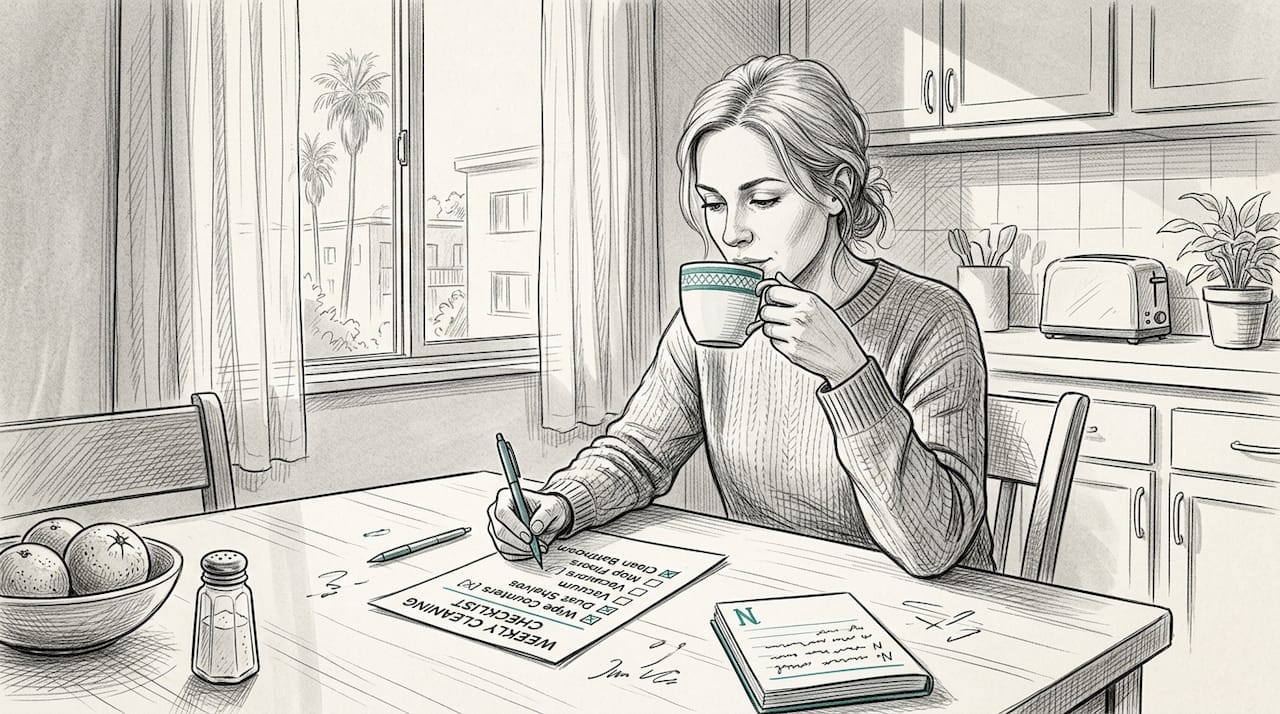
Checklist cleaning is exactly what it sounds like, but the impact it has on your home and your stress levels is anything but simple. Checklist cleaning generally means using a written, step-by-step task list to clean a home or room consistently, rather than relying on memory. Instead of mentally scanning a messy room and guessing what to tackle first, you follow a set sequence of tasks that ensures nothing gets skipped.
The biggest advantage isn’t just cleanliness. It’s mental relief. When you don’t have to figure out what to clean every single time, you reduce what psychologists call “decision fatigue,” the energy drain that comes from making too many small choices. A checklist handles those decisions for you in advance.
Checklist cleaning fits into your life in a few different formats:
- Printed templates posted on the fridge or inside cabinet doors
- Digital apps like Tody, OurHome, or even a simple Google Sheets doc
- Sticky notes grouped by room or day of the week
- Shared family lists so everyone in the household contributes
Understanding the checklist cleaning basics is especially valuable for LA households, where small apartments, busy work schedules, and limited weekends make an efficient, predictable system worth its weight in gold.
“The home doesn’t clean itself, but a checklist makes it feel like it almost does.”
Whether you’re a renter in Silver Lake with a studio apartment or a homeowner in the Valley managing a four-bedroom house, a well-built cleaning checklist gives you consistency without requiring more effort or time than you actually have.
Types of cleaning checklists: Daily, weekly, and beyond
Not all cleaning tasks need to happen every day, and that’s the entire point. Checklist cleaning is often implemented as a schedule: daily maintenance to prevent buildup, plus periodic deeper cleans at weekly, monthly, and seasonal intervals. Spreading tasks across different timeframes keeps each session manageable and prevents the dreaded “whole weekend ruined by cleaning” scenario.
Here’s how the typical frequency breakdown looks:
| Frequency | Examples of tasks |
|---|---|
| Daily | Wipe counters, wash dishes, quick tidy of living areas |
| Weekly | Vacuum, mop floors, clean bathrooms, change linens |
| Bi-weekly | Dust ceiling fans, wipe baseboards, clean mirrors |
| Monthly | Clean oven, refrigerator interior, window sills |
| Seasonal | Deep clean carpets, wash curtains, organize storage areas |
You can find well-organized cleaning schedule examples that map these out room by room, which is a great starting point if you’d rather not build from scratch.
The key insight here is sequencing. Daily tasks are quick, often five to fifteen minutes total, and they prevent the kind of buildup that makes weekly or monthly tasks brutal. Think of it like brushing your teeth: do it daily and you never need emergency dentist visits from neglect.
Steps to set up your frequency-based checklist:
- List every cleaning task you can think of for your entire home.
- Sort each task into a realistic frequency category based on how quickly it gets dirty.
- Assign daily tasks to mornings or evenings, whichever is more natural for you.
- Schedule weekly tasks on specific days so they become habitual rather than optional.
- Block calendar time monthly and seasonally for the bigger jobs.
Pro Tip: If you feel overwhelmed by the weekly list, try splitting it across two to three days rather than cramming it into a single Saturday. Monday handles the bathrooms. Wednesday handles vacuuming. The weekend stays free.
Understanding how often to clean specific areas in an LA home is actually different from national averages because of local dust levels, open-window weather, and household activity. If you want to set your cleaning frequency correctly rather than guessing, check out the breakdown of recurring cleaning options to see what fits your home type.
How to build an effective cleaning checklist
Now comes the practical part: actually building a checklist tailored to your space. The process is more straightforward than it sounds, and doing it right the first time will save you from constantly revising a list that doesn’t quite work.
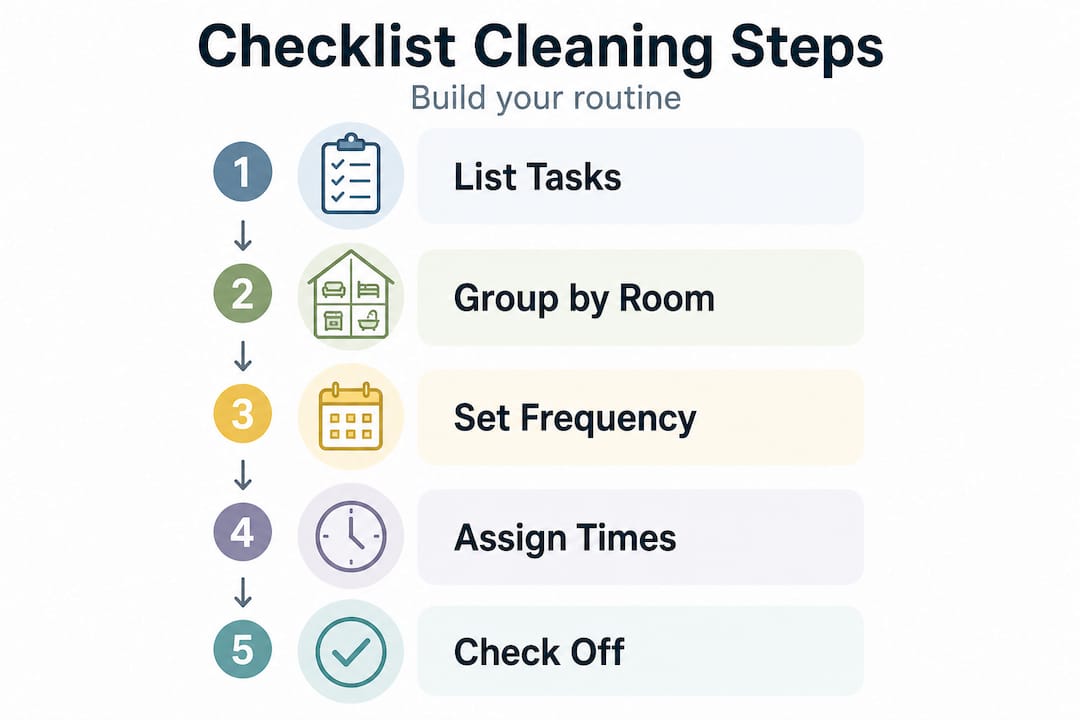
A reliable methodology is room-by-room and top-to-bottom, so you don’t re-contaminate surfaces you already cleaned. Floors always come last. This isn’t just a preference, it’s logic. Dust from ceiling fans lands on the floor, not back on the ceiling.
Follow these steps to build your first effective room-by-room checklist:
- Walk through every room and write down every surface, fixture, and floor type. Include walls, doors, and windows.
- Declutter before you clean. Items on counters and floors need to be put away before any actual cleaning starts. Skipping this step means cleaning around mess, not through it.
- Group tasks by room. Kitchen tasks stay in the kitchen section, bathroom tasks in the bathroom section, and so on.
- Sequence within each room using the top-to-bottom rule: ceiling, then upper shelves, then counters and furniture surfaces, then lower areas, then floors.
- Note the products and tools each task requires right on the checklist. This eliminates the two-minute detours to find the right cleaner.
- Review and trim ruthlessly. If a task is listed that realistically never happens, remove it or move it to seasonal.
Here’s a simple room-by-room task reference to help you get started:
| Room | Key checklist items |
|---|---|
| Kitchen | Wipe counters, clean stovetop, inside microwave, cabinet fronts, sink, floor |
| Bathrooms | Scrub toilet, clean sink and mirror, wipe tiles, mop floor |
| Bedrooms | Dust surfaces, vacuum or mop, change linens, wipe light switches |
| Living room | Dust furniture and shelves, vacuum upholstery, clean glass surfaces, vacuum floor |
| Entryway | Wipe door handles, sweep floor, organize shoes and coats |
For detailed room-specific cleaning steps, starting with the most-used spaces in your home makes a big difference. You can also reference the full LA spring cleaning tips guide to get a room-by-room breakdown that accounts for Southern California conditions like Santa Ana wind dust.
Before you start your list, it also helps to consult DIY organization tips so your space is set up in a way that makes the checklist even faster to execute. Organization and cleaning aren’t the same thing, but they reinforce each other powerfully.
Pro Tip: Color-code your checklist by room or frequency. Use a different color for daily tasks versus weekly ones. Visually separating them makes it faster to grab and go on any given day without re-reading the whole list.
Common mistakes to avoid when building your checklist: Starting too detailed means you’ll abandon it by week two. Starting too vague means tasks get skipped. Aim for one or two sentences per task maximum, clear enough that even a tired version of you can follow it at 7 p.m.
Checklist cleaning for busy lives: Maximizing results with less time
Los Angeles runs fast. Between commutes, long work hours, kids’ schedules, and trying to actually enjoy the city you’re paying to live in, cleaning often falls last on the priority list until it can’t be ignored any longer. That’s exactly where checklist cleaning earns its value most.

Checklist cleaning helps break down work and prevent overwhelming cleans, which means smaller, regular efforts replace the exhausting marathon sessions. The practical benefits of regular cleaning go beyond appearances: better indoor air quality, reduced allergens, and a measurable drop in daily stress.
Here’s what checklist cleaning specifically helps with in a busy LA household:
- Small apartments in central LA: A short daily checklist of five to seven items keeps a compact space from feeling chaotic, because clutter and dirt accumulate faster in tighter square footage.
- Family homes in the suburbs: A shared checklist distributed among family members reduces the burden on one person and teaches kids responsibility through small assigned tasks.
- Pet owners: A checklist that includes fur removal from furniture, wiping paw prints, and deodorizing floors on a more frequent schedule keeps pet-related mess from compounding.
- Work-from-home professionals: A morning quick-clean checklist takes ten minutes and creates an environment that supports focus and productivity throughout the day.
“Professionals who use checklists complete tasks faster and with fewer errors, not because they’re more skilled, but because they’re better organized.”
This principle applies just as much to cleaning as it does to surgery or aviation, the industries where checklists first became standard practice. Structure always outperforms memory when stakes are real and time is limited.
If you’re looking to save time with cleaning checklists, the research-backed estimate is that a structured routine can reclaim several hours per week compared to reactive, unplanned cleaning. That’s time back for the things that actually matter to you.
Why most people abandon cleaning routines (and how checklist cleaning actually sticks)
Here’s the honest truth: most cleaning systems fail not because people are lazy but because the system they’re using is wrong for how they actually live. We see this frequently in the homes we service across Los Angeles.
People start ambitious. They download a beautiful 30-task weekly checklist, follow it for two weeks, skip one Saturday, feel guilty, skip another, and then abandon the whole thing entirely. The checklist gets deleted or buried in a drawer. This is a system design problem, not a motivation problem.
The most common reason people abandon routines is complexity. When a checklist has too many tasks, requires too many supplies to be gathered first, or doesn’t account for how energy levels actually fluctuate through the week, it collapses under real-life pressure. Mainstream cleaning advice often misses this by presenting idealized routines that assume unlimited time and consistent energy, neither of which matches LA reality.
What actually works is a checklist built around momentum rather than perfection. Checking off two or three tasks feels good. That feeling builds the habit. Even doing 60% of a checklist consistently produces far better results than completing 100% of it twice and abandoning it. Sustainable systems are flexible ones.
Visibility matters more than most people realize. A checklist kept inside a notebook that needs to be found, opened, and located to the right page gets ignored. A checklist taped to the inside of the kitchen cabinet that opens every morning gets followed. Simple placement changes everything.
Understanding the differences between standard vs deep cleaning lists also helps because many people try to do both simultaneously and burn out fast. A standard checklist handles regular maintenance. Deep cleaning is a separate, scheduled event. Treating them as one list guarantees overwhelm.
Finally, accountability changes outcomes dramatically. When one person shares a checklist with a partner, roommate, or family member and tracks it together, completion rates improve. There’s a social layer to habit formation that works in your favor once you activate it. This is exactly why professional cleaning matters for many households: it provides a reliable baseline so your checklist routine focuses only on maintenance, not heroic deep cleans.
Next steps: Get support or upgrade your checklist cleaning
You now have everything you need to build, use, and stick with a checklist cleaning routine that actually fits your life in Los Angeles.
Sometimes, though, the best checklist is one that delegates the hardest tasks to professionals. At The Maid Society, we use detailed, room-by-room cleaning services in LA to deliver consistent results every visit, so your daily and weekly checklist becomes lighter and more manageable. Whether you need a one-time deep clean to reset your home or regular visits that keep your routine on track, our vetted, trained team handles the work so you don’t have to.
Not sure where to start? Browse our home organization checklist for a practical guide built specifically for LA families. And if any cleaning terms feel confusing as you build your own list, our cleaning terminology resource clarifies everything in plain language. We’re here to help you make this effortless.
Frequently asked questions
What should be included in a basic cleaning checklist?
A basic checklist covers daily, weekly, and monthly tasks such as wiping surfaces, tidying rooms, washing dishes, vacuuming, and thorough bathroom cleaning. Starting with these categories gives you a complete foundation without overcomplicating the list.
How do I keep up with a cleaning checklist when I’m busy?
Break your list into short daily sessions of ten to fifteen minutes and use phone reminders or a visible posted list to stay on track. Checklists reduce overwhelm by keeping tasks small enough that skipping a big weekend clean is no longer necessary.
Does checklist cleaning really save time?
Yes, because you always know exactly what to do next and never waste time deciding or backtracking to spots you missed. Checklists prevent redoing work and keep every session efficient from start to finish.
What’s the difference between a regular and deep cleaning checklist?
A regular checklist covers ongoing maintenance tasks you repeat weekly or daily, while a deep cleaning checklist includes detailed intensive tasks like scrubbing grout, cleaning behind appliances, and washing windows that only need to happen monthly or seasonally. Keeping them separate protects your energy and your routine.
Recommended
- 7 Must-Have Cleaning Habits for Busy Los Angeles Families
- Stress-reducing cleaning routines for busy homeowners
- Efficient cleaning for busy LA families: save 80% time
- Home organization checklist: Stress-free steps for LA families
- 7 étapes pour une checklist qualité linge de maison parfaite – CXL by Christian Lacroix Maison



Get Cleaning Tips & Exclusive Offers
Join our community for time-saving hacks and special discounts delivered to your inbox.