TL;DR:
- Maintaining home organization requires daily routines and designated drop zones to prevent clutter return.
- Small, consistent habits like 15-minute resets are more sustainable than large purges.
- Effective LA-specific strategies focus on vertical storage, clear zones, and family involvement to optimize limited space.
The average American home contains 300,000 items, and families spend nearly two hours every week just searching for misplaced things. In Los Angeles, where schedules are packed and living spaces are often tight, that lost time adds up fast. The good news is you don’t need a weekend marathon or a complete lifestyle overhaul to fix it. You need smarter systems, not more effort. This article walks you through the exact frameworks that help busy LA households break the clutter cycle, build easy daily habits, and actually enjoy a calmer, more functional home.
Table of Contents
- Why clutter returns — and how to break the cycle
- Decluttering made doable: Core systems that actually stick
- Make it last: Daily resets and maintenance for LA life
- Small-space hacks and LA-specific strategies
- Why lasting home organization isn’t about perfection
- Save more time and stress — get organization support
- Frequently asked questions
Key Takeaways
| Point | Details |
|---|---|
| Maintenance beats one-time purges | Daily 10-15 minute resets prevent most clutter from returning, saving hours of time and stress. |
| Systems, not perfection | Organizing success depends on easy-to-follow, forgiving routines instead of spotless expectations. |
| LA-specific solutions | Vertical storage, command centers, and process zones help urban families make the most of smaller homes. |
| Family buy-in matters | Getting everyone involved with labels and checklists keeps order sustainable and reduces burnout. |
Why clutter returns — and how to break the cycle
Most people think organizing means a big purge on a Saturday afternoon. You fill a few bags, donate some boxes, and feel great for about a week. Then life happens, and suddenly everything looks exactly the same as before. Sound familiar? That’s because 80% of clutter returns within six months when there’s no maintenance system in place.
Clutter isn’t just an eyesore. It’s a stress trigger. Research shows clutter increases stress in 54% of Americans, and that number likely climbs in high-density urban areas like LA where space is already limited. On top of that, decluttering lowers cortisol by up to 13%, which means a tidier space is literally a calmer brain.
So why does clutter keep coming back? There are three main culprits:
- Decision fatigue: Every item without a designated home forces a small decision. Multiply that by 300,000 items and you’re exhausted before dinner.
- Emotional attachment: Letting go of items tied to memories or guilt is mentally draining, so things get shuffled instead of sorted.
- The maintenance gap: Most organizing checklists stop at the one-time purge and never address the daily habits that keep order intact.
“Organizing without a maintenance plan is like mopping without fixing the leaky faucet. The mess always comes back.”
Here’s a quick look at how disorganization costs LA households in real terms:
| Impact area | What the data shows |
|---|---|
| Time lost per week | Up to 2 hours searching for items |
| Stress response | Clutter raises cortisol in 54% of people |
| Cortisol reduction | Decluttering lowers stress hormones by 13% |
| Clutter recurrence | 80% of clutter returns without a system |
The fix isn’t a bigger purge. It’s a smaller, more consistent reset. We’ve seen firsthand how cleaning reduces stress and creates real breathing room in a home. The trick is connecting the declutter moment to a daily rhythm that fits real life.
Decluttering made doable: Core systems that actually stick
Understanding why clutter returns reveals why simple, structured systems outperform one-off purges. When you give every item a home and build a habit around returning things there, the clutter cycle breaks naturally.
The most effective starting point for busy families is the 4-Box Method. It works exactly as it sounds: you grab four boxes labeled Keep, Donate, Trash, and Relocate, then work through one zone at a time. The 4-Box Method eliminates decision fatigue by forcing a clear choice for every item, and pairing it with a daily 15-minute reset prevents up to 80% of clutter from returning.
Here’s how to get started without feeling overwhelmed:
- Pick one zone per session. A drawer, a shelf, one countertop. Not a whole room.
- Use the four boxes strictly. No “maybe” pile. If it doesn’t belong in Keep, it goes elsewhere.
- Assign a home before you put it back. If you can’t name where it lives, it doesn’t go back.
- Set a timer for 15 minutes. When time’s up, stop. Consistency beats marathon sessions every time.
- Repeat tomorrow in a different zone. This is zone decluttering, and it’s sustainable.
Pro Tip: Get the whole family involved by labeling containers with pictures for younger kids and using color-coded bins for shared spaces. When everyone knows the system, everyone uses it.
Not sure which method fits your household? Here’s a simple comparison:
| Method | Best for | Time needed | Sustainability |
|---|---|---|---|
| 4-Box Method | Busy families and professionals | 15 min/day | Very high |
| Minimalism sweep | Solo or couples with fewer items | Full weekend | Moderate |
| Tech-based (apps/labels) | Detail-oriented organizers | Ongoing | High with habit |
For a step-by-step walkthrough, the stress-free home organization steps we use with LA clients can help you build a full plan room by room. If you want a seasonal reset, pairing these methods with an LA spring cleaning guide is a great way to start fresh. You can also explore a broader home organization system to see how these pieces fit together.
Make it last: Daily resets and maintenance for LA life
With the right systems in place, the next step is to build routines that fit hectic LA schedules and keep clutter away for good. The most powerful shift you can make isn’t a big weekend project. It’s a small daily habit.
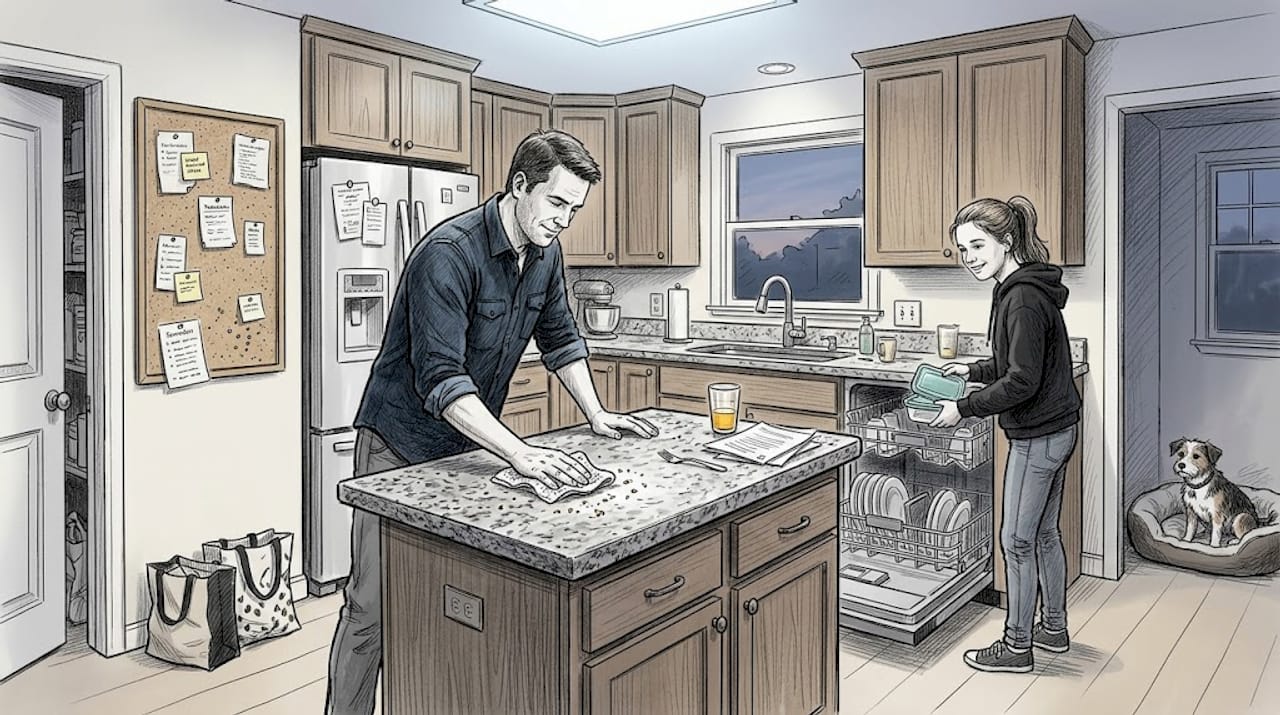
10-15 minute daily resets are the single most effective tool for maintaining an organized home, especially when kids and work schedules are in the mix. The idea is simple: at the end of each day, spend a short window returning things to their homes before you go to bed.
Here’s what a functional daily reset system looks like:
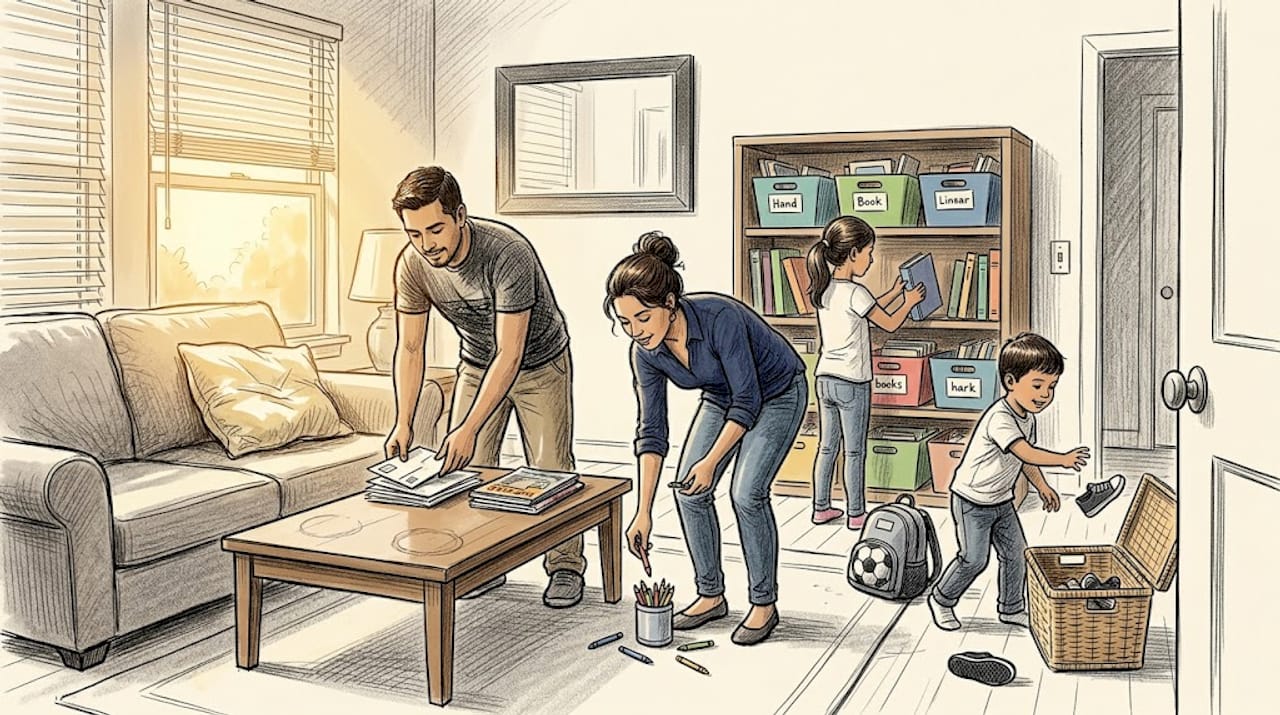
- Drop zones near the entry: A basket, hooks, and a tray for keys, bags, mail, and shoes. Everything that enters your home gets a landing spot immediately.
- Launchpad for the next morning: Backpacks, work bags, and shoes go here the night before so mornings are frictionless.
- Open bins in shared spaces: Closed containers require effort. Open bins lower the barrier so kids and adults actually use them.
- One-touch rule: Every item gets put away in one motion, not set down “for now” and moved later.
- Family reset checklist: A simple posted list with 3-5 tasks per person makes the reset a shared habit, not a solo chore.
Stat: Daily zone resets that take just 10-15 minutes prevent 80% of clutter return in the long run.
Pro Tip: Design your system to survive a missed day. If the bins are full or the reset didn’t happen last night, the system should still be easy to catch up on the following morning. Perfection is not the goal. Momentum is.
These small habits also free up surprising amounts of time. Many of the LA families we work with report they save hours each week once a consistent reset routine is in place. For households that include neurodivergent family members, a family-inclusive cleaning approach with visual cues and flexible structures works especially well. For extra ideas, these living room cleaning strategies are worth bookmarking.
Small-space hacks and LA-specific strategies
Long-term organization depends on adapting each strategy to your household and LA’s unique living spaces. A three-bedroom house in the Valley and a one-bedroom apartment in Silver Lake need very different approaches, but both share the same core challenge: maximizing every square foot.
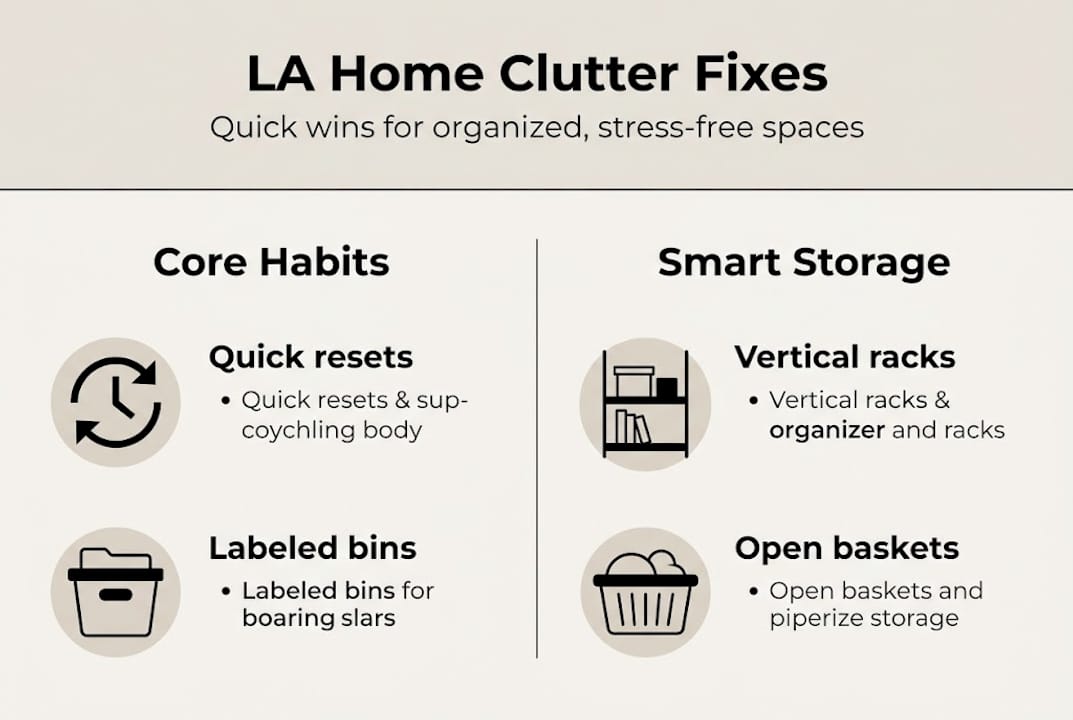
Local professionals and resources like NAPO-affiliated organizers consistently recommend three priorities for LA homes: vertical storage, drop zones, and a command center. These aren’t trends. They’re practical responses to small square footage and high-traffic daily life.
Here’s a quick-reference table of common small-space mistakes and their solutions:
| Common mistake | Better solution |
|---|---|
| Stacking everything horizontally | Use wall shelves and over-door organizers |
| No designated entry zone | Create a drop zone with hooks, tray, and bin |
| Keeping counters as catch-alls | Clear counters daily, assign a drawer for paper |
| Buying more storage containers | Declutter first, then contain what’s left |
For LA apartments and condos specifically, a few strategies make a big difference:
- Go vertical: Tall bookshelves, pegboards in kitchens, and stackable bins in closets recover a surprising amount of floor space.
- Create a command center: A wall-mounted organizer with a calendar, mail sorter, and key hooks near the entry keeps daily chaos contained.
- Zone your kitchen counters: One zone for coffee, one for meal prep, one for kid items. Clear boundaries prevent everything from piling into one mess.
Pro Tip: Before organizing any space, set a clear intention. Ask: “What does this space need to do?” That answer guides every storage decision and prevents over-buying bins you don’t actually need.
For more strategies built around LA family life, explore our LA family cleaning strategies and real estate cleaning tips for move-in and transition moments. And for a broader LA perspective, home organizing in LA offers a relatable local lens.
Why lasting home organization isn’t about perfection
Here’s something most organizing content won’t say out loud: the homes that stay cleanest are rarely the most “perfect.” They’re the ones with systems that are easy enough to maintain on a Tuesday night after a long commute.
The most common mistake we see isn’t a lack of motivation. It’s that people build organizing systems designed for their ideal self, not their actual self. The container is beautiful but requires two extra steps. The filing system is detailed but takes too long. Then one busy week hits, and the whole thing collapses.
Professional organizers consistently say the best systems prioritize ease over aesthetics, micro-sessions over marathon efforts, and family buy-in over solo willpower. That’s especially true in LA, where no two households share the same schedule, space, or stress level.
Real progress looks like: one drawer that stays clear for three weeks. A drop zone your kids actually use. A reset that happens four nights out of seven. That’s not failure. That’s a working system.
We believe organization is a form of self-care for families. Not because a clean home looks good, but because it removes daily friction. When you work with trusted cleaning pros for families, the goal is never a showroom. It’s a home that actually works for the people living in it.
Save more time and stress — get organization support
If you’ve made it this far, you already have the frameworks to start. But knowing the system and having time to implement it are two different things.
At The Maid Society, we help busy LA families and professionals maintain organized, comfortable homes without adding more to their plates. Whether you need a deep reset, help with a move-in or move-out transition, or regular maintenance that keeps your systems running, our vetted team is ready to step in. Explore our full range of cleaning services in Los Angeles or download our free cleaning and organization checklist to map out your next steps. Less stress, more time, and a home that actually feels good. That’s what we’re here for.
Frequently asked questions
What’s the fastest way to keep my home organized with a busy schedule?
Daily 10-15 minute resets paired with dedicated drop zones for high-traffic areas are the most efficient approach for busy households. Consistency in short bursts beats infrequent marathon sessions every time.
How do I prevent clutter from coming back?
Combine your initial declutter with daily micro-maintenance habits like family checklists and timed evening resets. Without ongoing upkeep, clutter returns in 80% of homes within six months.
Are there special strategies for organizing small apartments in LA?
Yes. Focus on vertical storage solutions, clearly defined processing zones for incoming items, and open-top bins that lower the barrier to putting things away quickly.
How can I involve my whole family in organizing?
Use labeled containers, color-coded bins, and simple posted checklists in shared spaces. Involving family with labels and visual cues makes the system self-sustaining rather than dependent on one person to maintain it.
Recommended
- Home organization checklist: Stress-free steps for LA families
- Stress-reducing cleaning routines for busy homeowners
- Stress-free cleaning method: save time in 2026
- Role of Cleaning for Busy Families in LA Homes
- Storage Solutions Checklist: Organize Your Long-Distance Move



Get Cleaning Tips & Exclusive Offers
Join our community for time-saving hacks and special discounts delivered to your inbox.