TL;DR:
- Decluttering with the 4-Box Method ensures lasting organization and prevents clutter return.
- Routine daily and weekly resets help families maintain a tidy home with minimal time.
- Prioritizing functional systems over perfection leads to more sustainable household organization.
Searching for your keys, your kid’s permission slip, or that one bill you need to pay costs the average family 2 hours every week. In Los Angeles, where schedules are packed and living spaces are often smaller than what families actually need, that lost time adds real stress. The good news is that you don’t need a weekend overhaul or a Pinterest-perfect pantry to feel in control. What you need is a clear checklist, a proven system, and routines that fit your actual life. This guide walks you through exactly that, starting from the ground up.
Table of Contents
- Decluttering methodology: The 4-Box approach
- Room-by-room checklist: High-impact zones
- Family-friendly routines: Daily, weekly, and seasonal resets
- Edge cases and expert recommendations
- Fresh perspective: Why function matters more than perfection
- Get professional help: LA cleaning services for lasting results
- Frequently asked questions
Key Takeaways
| Point | Details |
|---|---|
| Declutter first | Always start home organization with decluttering using the 4-Box Method to prevent recurring clutter. |
| Focus on high-impact zones | Prioritize kitchens and entryways for immediate results and lasting order. |
| Build easy routines | Quick daily resets and weekly routines save time and reduce family stress. |
| Tailor for special cases | Adapt strategies for small spaces, sentimental items, or neurodivergent needs for best results. |
| Local professional help | LA-based cleaning experts offer specialized support for unique challenges and lasting organization. |
Decluttering methodology: The 4-Box approach
Most people make the same mistake when they decide to organize: they buy bins and baskets first. Then they fill those containers with items they don’t actually need, and six months later, the clutter is back. In fact, 80% of clutter returns within six months without a maintenance plan. The fix starts before you buy a single storage product.
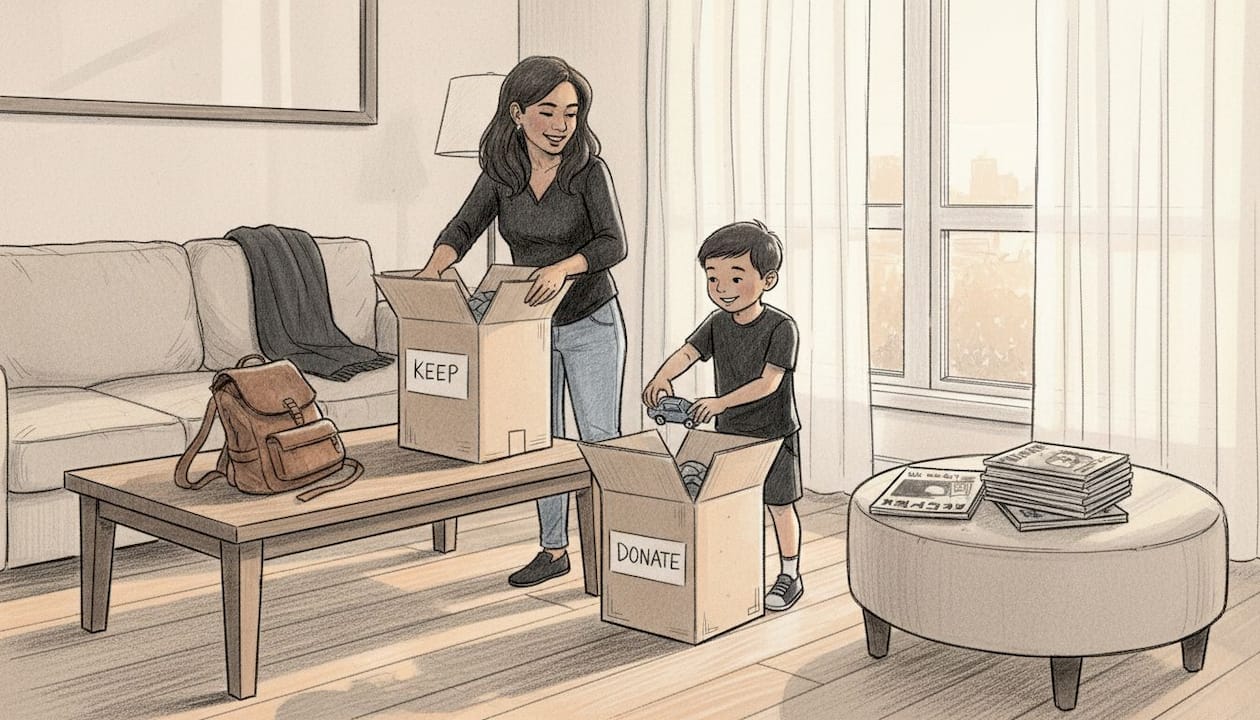
The 4-Box Method is one of the most effective ways to declutter because it forces a decision on every single item. Here’s how it works:
- Keep — Items you use regularly and that belong in this room.
- Donate or trash — Things you haven’t used in 12 months, duplicates, or broken items.
- Sell — Items in good condition worth listing on Facebook Marketplace or Poshmark.
- Relocate — Things that belong somewhere else in your home.
The key rule: touch every item once and make a decision. Putting something back “for now” defeats the whole process.
| Approach | Result after 6 months |
|---|---|
| Buy bins first, then organize | Clutter returns, wasted money |
| Declutter first, then containerize | Lasting order, purposeful storage |
For LA families in apartments or smaller homes, this matters even more. You simply can’t afford to store things you don’t love or use. Start with one room, one drawer, or even one shelf. Momentum builds fast.
Building good must-have cleaning habits alongside your declutter sessions locks in results that a one-time purge never will. Think of it this way: decluttering clears the field, but habits keep it clear.
“Sustainable organization isn’t about one big clean. It’s about daily decisions that slowly reduce the load.” This mindset shift is what separates families who stay organized from those who cycle back to chaos every few months.
Pro Tip: Before your next move, review these moving checklist tips to avoid carrying clutter into your next space. Moving is the single best opportunity to apply the 4-Box Method at full scale.
For quick wins without long sessions, check out efficient cleaning tips that work even on the busiest weeknights.
Room-by-room checklist: High-impact zones
Once the 4-Box Method is underway, a room-by-room checklist keeps you focused and prevents overwhelm. Not all rooms are equal. The kitchen has the highest item density in most homes, which makes it the best starting point for momentum.
Kitchen
- Clear all countertops; return only daily-use items
- Check pantry for expired food and consolidate duplicates
- Use clear containers for dry goods so you see what you have
- Assign a drawer for “catch-all” items and purge it monthly
Entryway
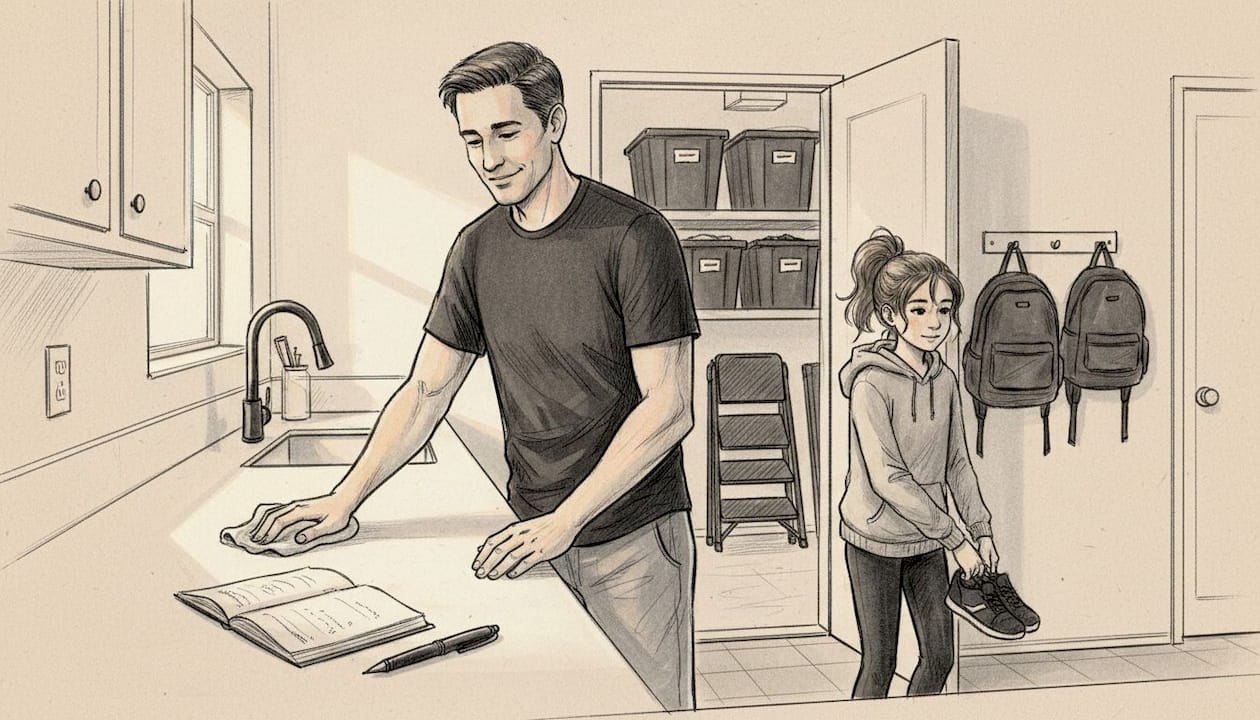
- Create a drop zone: hooks for bags, a tray for keys, a basket for shoes
- Add a small sorter for incoming mail and outgoing items
- In LA apartments without a true entryway, use a wall-mounted shelf near the front door
Bedrooms
- Audit the closet using the 4-Box rules; rotate seasonal clothing
- For kids’ rooms, rotate toys every 8 to 10 weeks to reduce clutter and renew interest
- Replace mismatched bins with labeled, uniform containers
Bathrooms
- Discard expired products (check dates on sunscreen, medicine, and skincare)
- Use under-sink organizers with pull-out trays for easy access
- Keep a small basket for items to relocate after each cleaning
| Room | First task | Time estimate |
|---|---|---|
| Kitchen | Clear counters, check pantry | 30 to 45 min |
| Entryway | Set up drop zone | 15 to 20 min |
| Bedroom | Closet audit | 45 to 60 min |
| Bathroom | Discard expired products | 10 to 15 min |
Pro Tip: In LA homes with garages, treat the garage as its own zone. Vertical wall storage and ceiling-mounted shelving can double your usable space without adding floor clutter.
Setting up cleaning schedule examples tailored to your home’s layout makes it far easier to maintain momentum after your initial organization push. Pair those with stress-reducing routines that match your actual energy levels throughout the week.
Family-friendly routines: Daily, weekly, and seasonal resets
A checklist gets you organized. Routines keep you there. The difference between families who stay organized and those who don’t usually comes down to one thing: consistency in short bursts rather than rare marathon sessions.
Daily reset (10 to 15 minutes)
- Do a quick sweep of high-traffic zones: kitchen counters, entryway, and living room surfaces.
- Return items to their designated spots before bed.
- Do one small task that prevents tomorrow’s mess, like emptying the sink or laying out bags for the next day.
Weekly Sunday reset
- Wipe down the most-used surfaces in the kitchen and bathrooms.
- Apply the one-in-one-out rule: if something new came in this week, something goes out.
- Restock supplies so Monday doesn’t start with scrambling.
- Spend 10 minutes reviewing the week’s clutter hotspots and addressing them before they grow.
Daily resets create family engagement and make organization feel like a shared responsibility rather than one person’s burden.
Seasonal purge (every 3 months)
- Rotate kids’ toys and seasonal clothing
- Revisit the garage and storage areas
- Organize sentimental items last; they take the most emotional energy
Getting kids involved
- Use picture labels instead of word labels for younger children
- Assign each child one specific zone they are responsible for
- Make the daily reset a timed game, not a chore
Pro Tip: Time-saving cleaning strategies designed for busy parents can cut your weekly maintenance time significantly, especially when everyone in the household has a clear role.
For families who want a more structured system, examples of cleaning schedules give you a ready-to-adapt framework.
Edge cases and expert recommendations
Even the most organized families run into situations that standard advice doesn’t cover. Here’s how experts and local LA professionals handle the harder scenarios.
Small apartments and tight spaces
- Go vertical: wall shelves, over-door organizers, and stackable bins replace floor storage
- Every surface should have a purpose; vertical and drop zones in small homes prevent clutter from spreading
- Magnetic strips in kitchens and bathrooms keep frequently used items accessible without counter space
Sentimental items
- Organize these last, after you’ve built momentum in easier zones
- Use memory bins: one per family member, with a firm size limit
- Take photos of items you want to remember but don’t need to keep physically
Hoarding situations
- Do not attempt to organize a hoarding situation alone; it requires emotional support first
- Seek licensed therapists who specialize in hoarding disorder before bringing in organizers
- Specialized professional organizers in LA can work alongside therapy to manage the physical space
Neurodivergent family members
- Speed and flexibility matter more than perfection; systems need to be low-friction to stick
- Visible, open storage works better than hidden bins for people with ADHD
- Tolerance for imperfection is a feature, not a flaw, in these setups
Pro Tip: If someone in your household is neurodivergent, our guide on organizing with ADHD covers specific strategies that work with how their brain actually operates.
“The best organization system is the one your family will actually use. Complex systems fail because they require too much ongoing thought. Simplicity and visibility win every time.”
Fresh perspective: Why function matters more than perfection
Here’s something we’ve learned from working with hundreds of families across Los Angeles: the homes that stay organized the longest are never the prettiest ones on Instagram. They’re the ones where every item has a spot that makes sense for how that family actually lives.
Perfection-oriented organization often backfires. When the system is too rigid, one chaotic week breaks it completely, and families give up. Prioritizing function over perfection and building habits instead of relying on periodic deep cleans is what actually lasts.
We’ve seen this across every type of LA home, from two-bedroom apartments in Silver Lake to four-bedroom houses in the Valley. The families who thrive are the ones who designed for their messiest day, not their best one. Systems that work when life gets hard are the only systems worth building.
The consistent cleaning benefits extend well beyond a tidy living room. Reduced anxiety, faster mornings, and less conflict over shared spaces are real, everyday rewards that come from choosing function over aesthetics.
Get professional help: LA cleaning services for lasting results
Sometimes the best move is calling in backup, and there’s no shame in that.
At The Maid Society, our LA cleaning services are designed specifically for busy families and professionals who want consistent results without adding another task to their list. Whether you need efficient cleaning for families on a regular schedule or a thorough reset before or after a move with our move-out cleaning guide, we have a service that fits your situation. Our fully vetted team handles the hard work so you can focus on what matters. Reach out today and let us help you keep the progress you’ve worked hard to build.
Frequently asked questions
What is the best order for home organization?
Always declutter first using the 4-Box Method, then group like items, assign homes for each category, and containerize last. Starting with bins before decluttering leads to wasted effort and recurring clutter.
How can families make home organization stick long term?
Daily resets and a weekly Sunday routine help families reclaim lost search time and stay ahead of clutter. Assigning kids visual labels and their own zones makes the whole system sustainable.
What’s the most common mistake in organizing homes?
Buying storage bins before decluttering first is the most common error. You end up organizing clutter rather than eliminating it, and the mess returns quickly.
How should small LA apartments organize limited space?
Vertical storage and drop zones are the most effective tools for small spaces. Prioritize daily maintenance to prevent items from piling up in the limited floor space you do have.
When should families seek professional organizing help?
Edge cases like hoarding, large moves, or neurodivergent needs benefit most from local LA professionals who specialize in these situations and can deliver results safely and efficiently.
Recommended
- 7 Must-Have Cleaning Habits for Busy Los Angeles Families
- Stress-reducing cleaning routines for busy homeowners
- Benefits of Pre-Move-In Cleaning for LA Families
- Role of Cleaning for Busy Families in LA Homes
- Essential residential moving checklist: streamline your move



Get Cleaning Tips & Exclusive Offers
Join our community for time-saving hacks and special discounts delivered to your inbox.