TL;DR:
- Consistent cleaning reduces long-term effort and prevents embedded grime buildup.
- Regular maintenance lowers stress by reducing clutter and household chaos.
- Outsourcing cleaning helps busy families keep homes in good condition effortlessly.
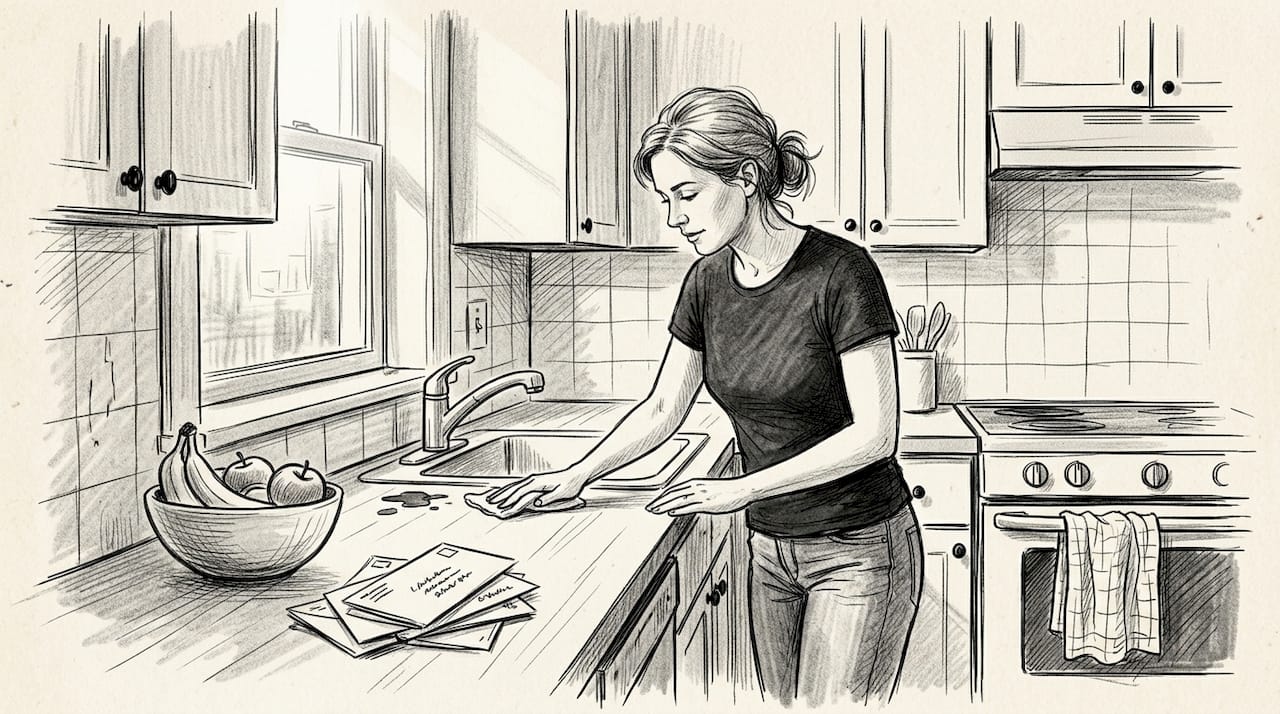
Most people assume that one big cleaning session every few weeks is enough to keep a home under control. It isn’t. In fact, sporadic deep cleans often create more work than they prevent, because fresh messes are far simpler to clean than embedded grime. For busy families and professionals in Los Angeles, the real enemy isn’t a dirty home. It’s the false belief that catching up later is a valid strategy. This guide breaks down the evidence behind consistent cleaning, explains why it directly reduces stress, protects your home’s value, and gives you practical routines that actually fit a packed schedule.
Table of Contents
- Why consistency in cleaning matters for busy homes
- The connection between clutter, cleaning, and stress levels
- Long-term savings: Protecting your home and investments
- Proven routines and tools for consistent results
- Why ‘consistency beats intensity’ for LA families
- How professional cleaning services make consistency easy
- Frequently asked questions
Key Takeaways
| Point | Details |
|---|---|
| Consistency saves time | Regular small cleaning tasks prevent overwhelming messes and reduce total cleaning hours each month. |
| Clean homes lower stress | Fewer piles and clear surfaces contribute to well-being and mental focus for everyone at home. |
| Protects investments | Consistent cleaning extends the life of home surfaces and appliances, saving money in the long run. |
| Simple routines work | Adopt routines like weekly rotations and daily micro-tasks to make consistency achievable even for busy families. |
Why consistency in cleaning matters for busy homes
Here’s the counterintuitive truth: cleaning less often doesn’t save you time. It costs you more of it. When you skip regular upkeep, grime bonds to surfaces, grease bakes onto stovetops, and soap scum calcifies in showers. What would have taken five minutes on Tuesday becomes a 45-minute scrubbing session on Saturday. The importance of home cleaning goes far beyond appearances. It directly shapes how much time you spend managing your space every single week.
Families with children feel this most acutely. Parents with kids spend 51 hours per month cleaning, and skipping regular routines can multiply that workload by five to six times. That’s not a small inconvenience. That’s entire weekends lost.
Skipping a week of cleaning doesn’t save an hour. It creates five or six hours of catch-up work for families with kids.
Breaking tasks into daily, weekly, and monthly categories makes the whole system manageable:
- Daily: Wipe kitchen counters, load the dishwasher, do a quick surface reset in living areas
- Weekly: Vacuum floors, clean bathrooms, mop hard surfaces, change bedding
- Monthly: Deep clean appliances, scrub grout, dust ceiling fans and vents
The health and home benefits of this layered approach are significant. Small daily habits prevent the pile-up that turns cleaning into a dreaded chore. Each task stays short, manageable, and far less exhausting than a marathon session.
Pro Tip: Commit to one 10-minute reset every evening. Wipe one surface, put away five items, and run the dishwasher. That single habit prevents the weekend avalanche most families dread.
The connection between clutter, cleaning, and stress levels
Time savings are only part of the story. What happens inside your head when your home is consistently messy is just as significant. Visible disorder doesn’t just look bad. It actively competes for your brain’s attention, triggering a low-level stress response that drains mental energy throughout the day.
Research confirms this. Clutter elevates cortisol, the body’s primary stress hormone, particularly in women. And it isn’t just about feeling embarrassed when guests drop by. The effects are physiological and persistent.
Household chaos from inconsistent cleaning contributes to maternal stress beyond physical fatigue, affecting mood and cognitive function throughout the day.
The psychological toll shows up in several ways:
- Reduced focus: A cluttered environment pulls attention away from the task at hand, making it harder to concentrate on work or family time
- Decision fatigue: Seeing piles of unresolved items forces your brain to make micro-decisions constantly, depleting willpower
- Feelings of overwhelm: When a home looks out of control, the mental weight of “I should be cleaning” follows you even when you’re trying to relax
- Disrupted sleep: Studies link bedroom clutter to poorer sleep quality, which compounds stress the next day
Building stress-reducing routines doesn’t require perfection. It requires repeatability. A simple daily reset, clearing counters, putting items back in their place, and wiping visible surfaces, takes under 10 minutes and delivers an immediate mental payoff. If you want a structured approach, the stress-free cleaning method focuses on simplifying your routine so it becomes automatic rather than effortful.
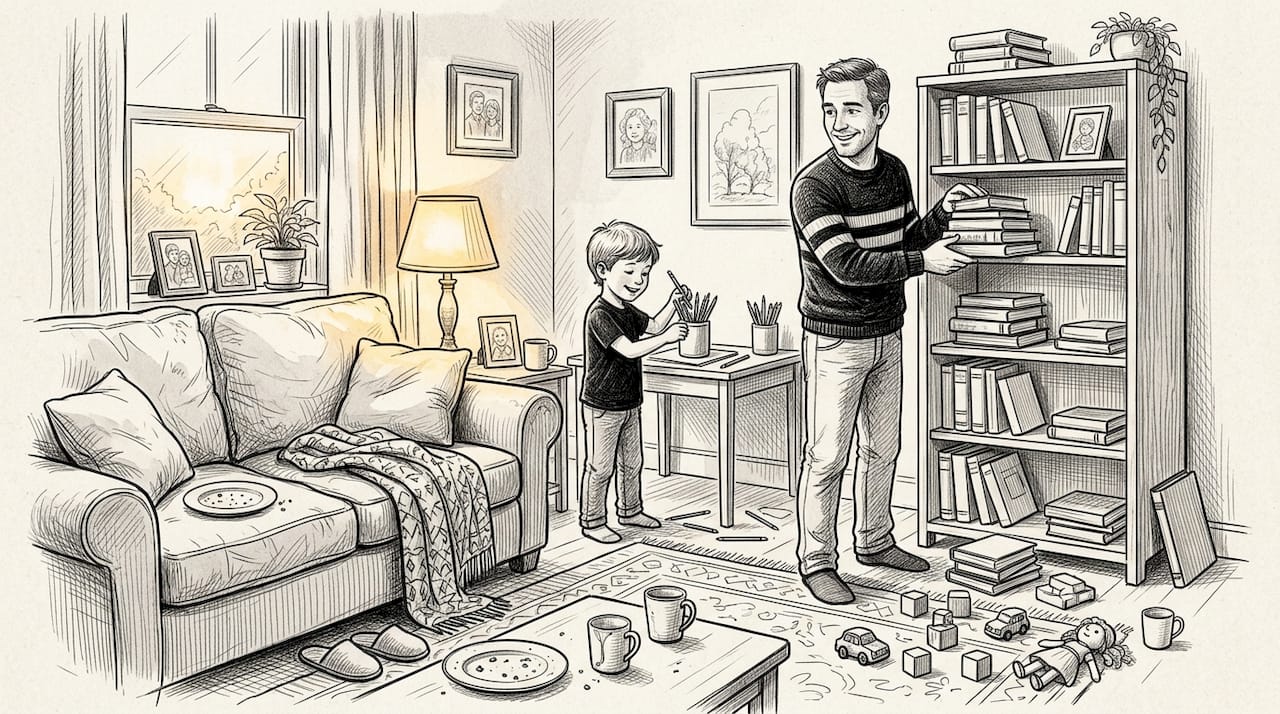
Pro Tip: Do a “surface reset” every evening before bed. Clear one flat surface completely. This single act signals to your brain that the day is done and the space is under control.
Long-term savings: Protecting your home and investments
Beyond well-being, consistent cleaning protects real financial assets. Homes are expensive. The surfaces, flooring, and appliances inside them are expensive too. Neglecting regular maintenance accelerates wear in ways that are easy to overlook until the damage is done.
Consistent cleaning extends the lifespan of surfaces and appliances by preventing the kind of buildup that causes permanent damage. Grease left on cabinet finishes breaks down the coating over time. Carpet that isn’t vacuumed regularly gets matted and loses its structure. Appliances clogged with dust and grime run less efficiently and burn out faster. Regular AC maintenance alone can extend unit lifespan by years and reduce energy bills significantly.
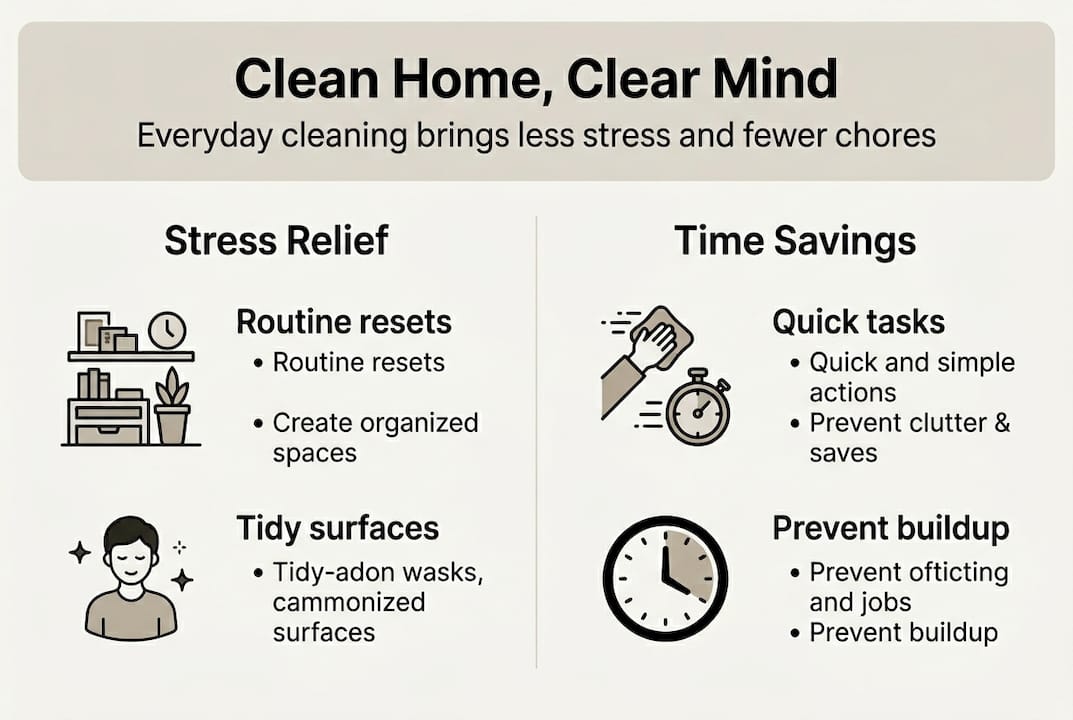
Here’s a quick look at how cleaning frequency affects key areas of your home:
| Home area | Recommended frequency | Risk if neglected |
|---|---|---|
| Kitchen counters and appliances | Daily wipe, weekly deep clean | Grease damage, bacterial growth |
| Carpets and rugs | Weekly vacuum, quarterly deep clean | Matting, permanent staining |
| Bathrooms | Weekly scrub | Mold, grout degradation |
| HVAC filters | Monthly check, quarterly replace | Reduced efficiency, higher bills |
| Wood floors | Weekly sweep, monthly mop | Scratching, finish erosion |
For busy professionals who save 4 hours weekly by outsourcing or systematizing cleaning, the financial case is equally strong. A $300 carpet replacement or a $500 appliance repair costs far more than a few months of consistent upkeep. Treating your home like the investment it is means maintaining it regularly, not reactively.
- Grease buildup damages cabinet and countertop finishes permanently
- Soap scum etches glass shower doors over time
- Dust accumulation in vents forces HVAC systems to work harder
- Neglected tile grout absorbs stains that require professional restoration
Proven routines and tools for consistent results
Knowing why consistency matters is one thing. Building a system that actually holds up through a busy LA week is another. The good news is that several proven methodologies make this realistic, even for households juggling work, school, and social commitments.
The most effective approaches include:
- Daily micro-tasks: Assign one small task per day, such as wiping the bathroom sink on Monday, vacuuming the living room on Tuesday, cleaning the stovetop on Wednesday. No single task takes more than 10 minutes.
- Weekly room rotation: Each week, one room gets a slightly deeper clean. Kitchen this week, bathrooms next week. Spread the load so nothing gets neglected for too long.
- Pre-clean declutter: Before any cleaning session, spend five minutes putting items back in their place. Cleaning around clutter wastes time and produces worse results.
- 5S framework: Borrowed from workplace organization, Sort, Set in order, Shine, Standardize, and Sustain. Applied at home, it means every item has a place, every surface has a cleaning schedule, and the system sustains itself.
The CDC recommends cleaning high-touch surfaces regularly, which aligns perfectly with the micro-task approach. These time-saving strategies work especially well for parents who need to involve kids in age-appropriate tasks.
Here’s how these methods compare:
| Method | Best for | Ease of sticking with it | Main benefit |
|---|---|---|---|
| Daily micro-tasks | All household types | High | Prevents buildup |
| Weekly room rotation | Families with kids | Medium | Thorough coverage |
| 5S framework | Detail-oriented households | Medium | Long-term organization |
| Batch cleaning | Individuals or couples | Low | Deep results fast |
For efficient cleaning on busy LA schedules, micro-tasks win almost every time. They’re short enough to fit between commitments and consistent enough to prevent the chaos that builds up over weeks.
Pro Tip: Set a recurring calendar reminder for each micro-task. Treat it like a meeting. When it’s scheduled, it gets done.
Why ‘consistency beats intensity’ for LA families
After years of working with Los Angeles families and professionals, one pattern stands out clearly: the households that feel most in control of their homes are not the ones who do the biggest cleans. They’re the ones who do something every day.
One-and-done cleaning sprees feel productive in the moment, but they rarely stick. Life in LA moves fast. A single missed weekend turns into two, then three, and suddenly the home is back to square one. The real win isn’t a spotless home on Saturday. It’s a home that never gets bad enough to require a full reset.
Hiring professional help isn’t a shortcut or a luxury. For many families and professionals, it’s the most practical way to maintain a consistent baseline without adding more to an already full plate. A trusted cleaning company handles the heavy lifting on a schedule, so your daily micro-tasks stay genuinely micro.
The expert consensus is clear: repeatability beats perfection every time. A home that’s consistently 80% clean is healthier, less stressful, and easier to maintain than one that swings between spotless and chaotic.
How professional cleaning services make consistency easy
Now that you understand the real value of consistency, the next step is making it effortless. For busy LA families and professionals, that often means having a reliable team handle the baseline so you can focus on everything else.
At The Maid Society, we build customizable cleaning plans around your schedule, your home, and your priorities. Whether you need weekly maintenance, a monthly deep clean, or something in between, our vetted and trained team keeps your space guest-ready without you having to think about it. Explore our cleaning services in Los Angeles and see how easy consistency can be. You can also browse our cleaning strategies for parents to combine professional support with smart daily habits that stick.
Frequently asked questions
How often should busy families clean to maintain a healthy home?
Aim for small daily or every-other-day tasks, with a weekly rotation for deeper cleaning of specific areas. This approach, aligned with CDC guidance on high-touch surfaces, reduces total time and prevents overwhelming messes from building up.
What are the first signs that inconsistent cleaning is causing problems?
Early signs include increased dust on surfaces, persistent clutter, musty smells, and a feeling of dread when you think about tidying up. Visible mess correlates directly with elevated cortisol and a sense of being out of control.
Does regular cleaning really save money over time?
Yes. Consistent cleaning extends lifespan of surfaces and appliances, preventing the kind of damage that leads to expensive repairs or early replacements across your home.
Are professional cleaning services worth it for busy families in LA?
For most households managing work, kids, and packed schedules, outsourcing routine cleaning maintains your standards without sacrificing the personal time that actually matters to your family.
Recommended
- Stress-free cleaning method: save time in 2026
- Why clean regularly: health, stress, and home benefits
- Stress-reducing cleaning routines for busy homeowners
- Cleaning for busy professionals: save 4 hours weekly
- Eco-friendly Car Cleaning: Simple Steps For A Greener Shine



Get Cleaning Tips & Exclusive Offers
Join our community for time-saving hacks and special discounts delivered to your inbox.