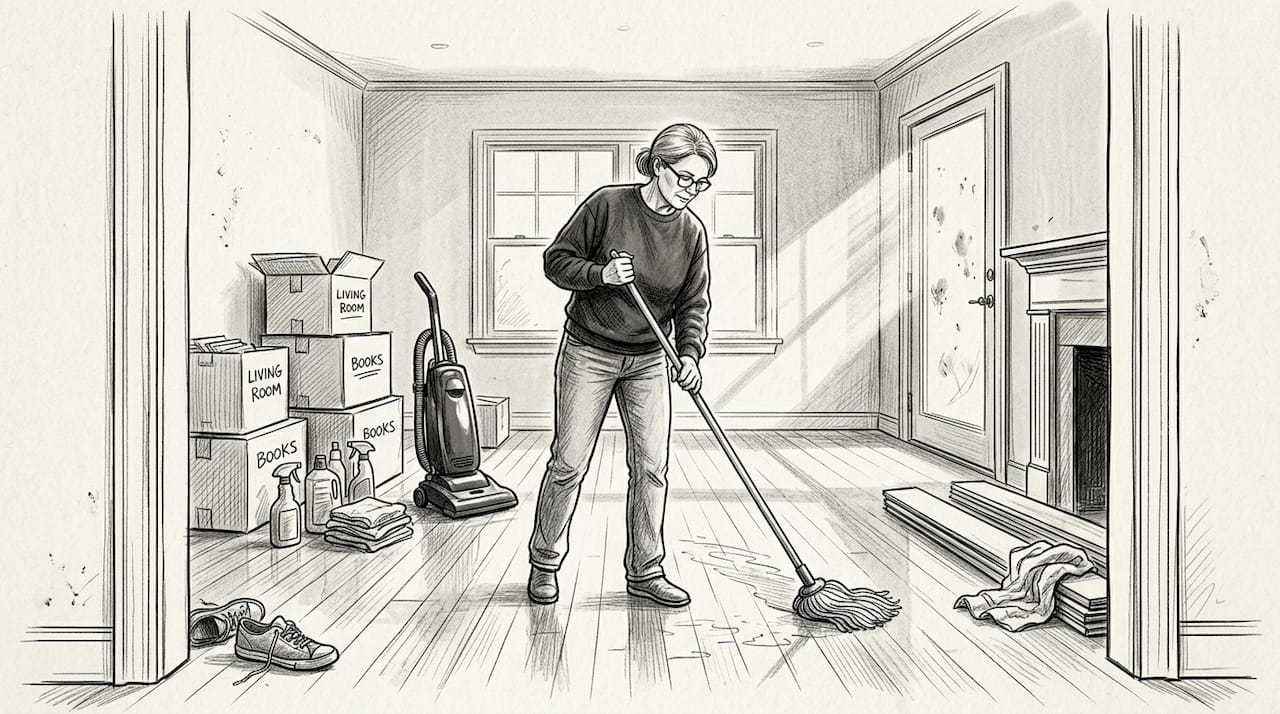
TL;DR:
- Final cleaning involves thorough debris removal, dust reduction, and sanitizing at key property transitions.
- Skipping final cleaning exposes residents to fine construction dust circulating for months, risking health and costs.
- Professionals use specialized tools and checklists, ensuring proper cleaning and protecting deposits and air quality.
After a move, renovation, or big event, most homeowners take one look around, wipe down the counters, and call it done. That instinct makes sense. If a room looks clean, it probably is, right? Not quite. Fine construction dust can circulate through your HVAC system for months, triggering allergies and respiratory problems long after the last contractor packs up. The visible surface is only part of the story. This guide breaks down what final cleaning actually involves, why skipping it carries real consequences, and how a professional approach protects your health, your deposit, and the long-term value of your home.
Table of Contents
- What is final cleaning and when is it needed?
- The risks of skipping final cleaning
- The multi-phase process: from rough to final clean
- Expert strategies: what professionals do differently
- A fresh take: what most guides miss about final cleaning
- Achieve flawless final cleaning with professional help
- Frequently asked questions
Key Takeaways
| Point | Details |
|---|---|
| Health first | Final cleaning protects your family from dust, allergens, and hidden toxins. |
| Deposit saver | A professional final clean can mean the difference between regaining your deposit and unexpected fees. |
| Comprehensive process | True final cleaning involves multiple specialized steps, not just a quick sweep. |
| Professional edge | Experts use tools and methods that ensure a truly spotless and welcoming home. |
| Long-term comfort | Proper final cleaning creates a healthy, comfortable environment from day one. |
What is final cleaning and when is it needed?
Final cleaning is not the same as tidying up before guests arrive or running a vacuum before moving furniture in. It is a targeted, thorough process applied at a specific moment in your home’s life cycle, when the space is transitioning from one state to another. Think of it as the reset button that prepares a property for safe, comfortable use.
According to cleaning industry standards, final cleaning involves three phases: a rough clean focused on debris removal, a light clean that reduces surface dust, and a final clean that handles detailed polishing and sanitizing. Each phase builds on the last. Skip one, and the results are incomplete.
So when exactly does a home need this level of attention? Here are the most common triggers:
- Moving out of a rental or owned property where a security deposit or buyer impression is at stake
- Completing a renovation or construction project where fine dust and debris have settled into every surface
- Hosting a large event that leaves behind spills, foot traffic residue, and general disorder
- Preparing a property for new tenants or buyers who expect a move-in ready environment
- Post-construction handover where contractors finish work but cleaning is not part of the contract
Timing matters enormously. A final clean done before HVAC systems restart after a renovation is far more effective than one done after dust has already recirculated. Similarly, cleaning before a new occupant arrives prevents them from inheriting the previous resident’s mess, which protects relationships and legal agreements alike.
Here is a quick breakdown of how final cleaning compares to other common cleaning types:
| Cleaning type | When to use it | Key focus |
|---|---|---|
| Standard maintenance | Weekly or biweekly | Surface tidying, general upkeep |
| Deep cleaning | Seasonally or before events | Grout, appliances, baseboards |
| Move-out cleaning | Before vacating a property | Deposit recovery, full reset |
| Post-construction cleaning | After renovation or build | Dust, debris, air quality |
| Final cleaning | Any major transition | All phases combined |
For homeowners in Los Angeles dealing with renovation projects, understanding post-construction cleaning in LA is a strong starting point before scheduling any service.
The risks of skipping final cleaning
Now that we know when final cleaning is needed, it is critical to understand the real consequences of overlooking it. The risks go well beyond a dusty shelf.
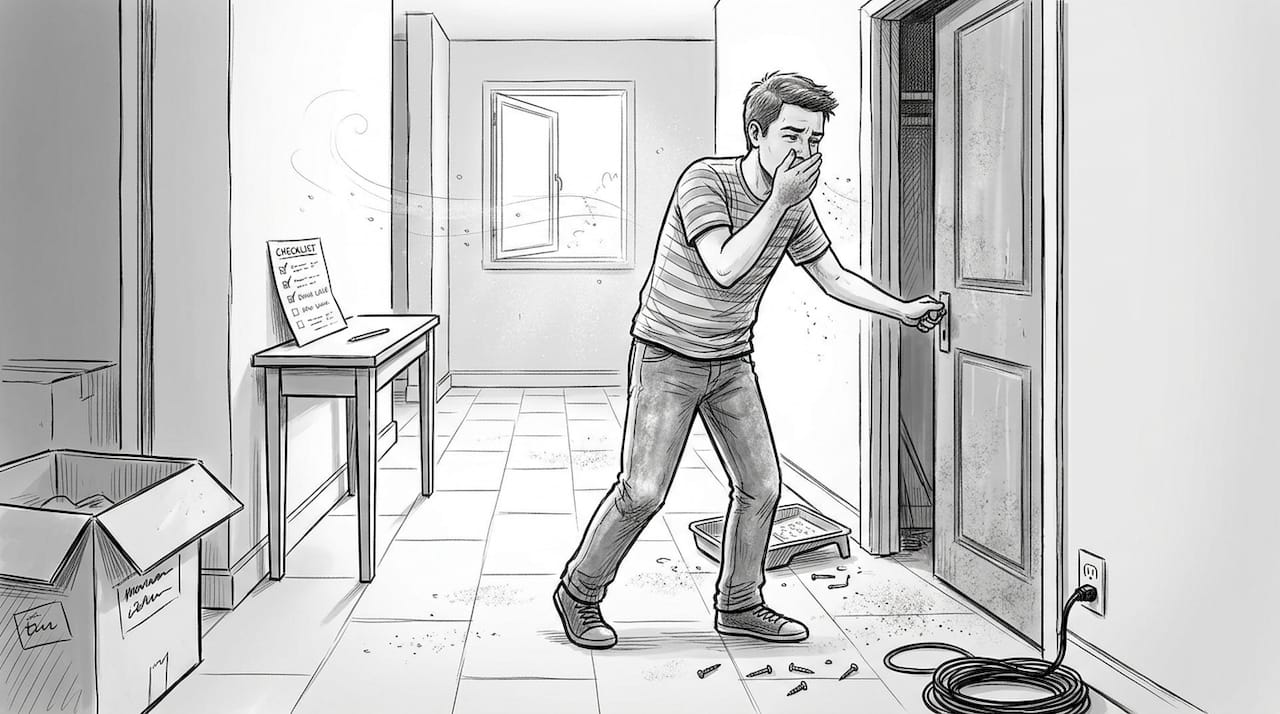
Construction and renovation work generates fine particulate matter, particles so small they stay airborne for hours and settle into HVAC filters, ductwork, and soft surfaces. Once your heating or cooling system kicks on, fine dust circulates for months, spreading allergens and irritants throughout every room. People with asthma, young children, and elderly residents are especially vulnerable.
The health stakes are serious. Research has flagged that cleaning workers face a 43% higher COPD risk from dust exposure when proper protective measures are not in place. While that statistic applies to workers, it illustrates just how damaging unmanaged dust exposure can be over time.
The invisible stuff is what gets you. You can see a dirty floor and clean it. You cannot see what is floating in your air or packed into your vents.
Financially, the consequences are just as real. Landlords and property managers routinely withhold security deposits when a unit is not returned in proper condition. Dust buildup on walls, residue on appliances, and grimy baseboards are all documented during move-out inspections. A single overlooked area can cost you hundreds of dollars. Understanding the role of cleaning during handover can help you avoid those disputes entirely.
Here is a summary of the main risks:
- Health risks: Allergens, respiratory irritation, and long-term air quality issues
- Financial risks: Lost deposits, costly repairs from unaddressed residue
- Comfort risks: New occupants inheriting a space that feels unclean or unsafe
- Impression risks: Buyers or tenants forming negative first impressions
Pro Tip: Schedule your post-renovation cleaning before turning the HVAC system back on. Once air recirculates, fine dust spreads to rooms that were never even part of the renovation.
The multi-phase process: from rough to final clean
With the risks clear, let us break down how professionals tackle final cleaning to safeguard your health and investment.
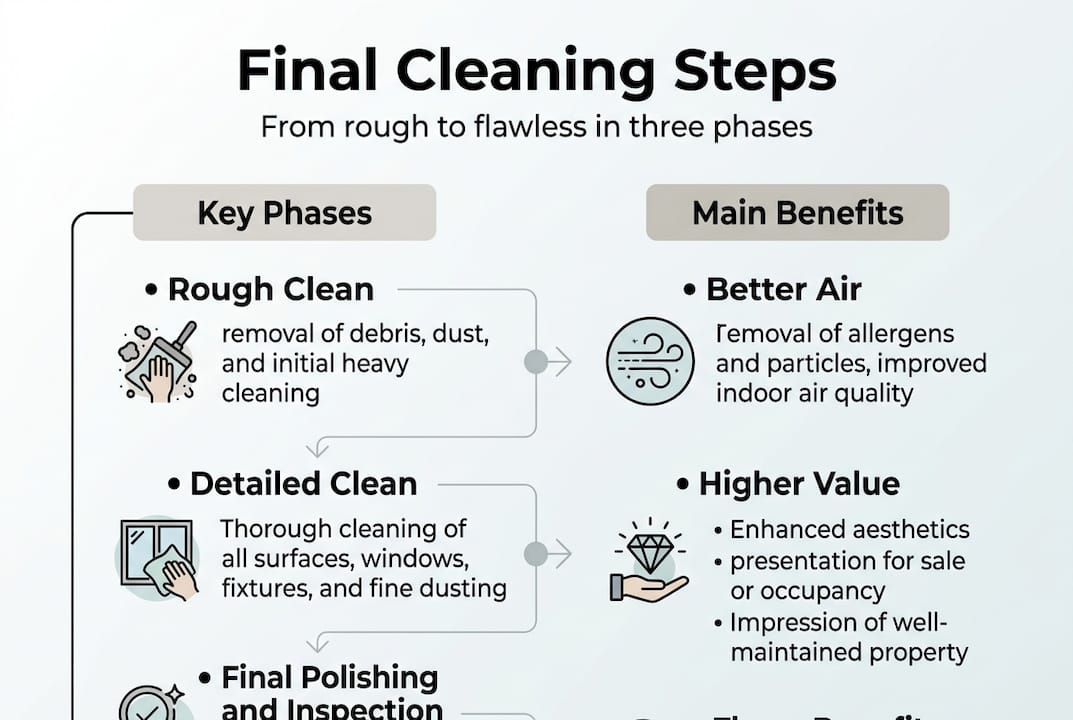
The three-phase cleaning process is not just industry jargon. Each phase has a distinct purpose, and doing them in order is what makes the result last.
| Phase | Primary tasks | Tools used |
|---|---|---|
| Rough clean | Remove large debris, sweep, bag waste | Heavy-duty vacuums, brooms, trash bags |
| Light clean | Wipe surfaces, reduce visible dust, clean windows | Microfiber cloths, all-purpose cleaners |
| Final clean | Polish fixtures, sanitize surfaces, detail vents | HEPA vacuums, electrostatic sprayers, microfiber mops |
Here is what that process looks like step by step in a real home:
- Remove all debris and large waste from every room, including construction materials, packaging, and leftover supplies
- Vacuum all surfaces including walls, ceilings, and window tracks using a HEPA-rated vacuum to capture fine particles
- Wipe down every horizontal surface with damp microfiber cloths to collect settled dust without redistributing it
- Clean windows, mirrors, and glass inside and out, removing smudges, tape residue, and construction film
- Sanitize kitchens and bathrooms including inside cabinets, behind toilets, and under sinks
- Detail vents, baseboards, and light fixtures which are the areas most commonly missed in standard cleaning
- Final walkthrough and quality check to confirm every area meets the standard before sign-off
For a detailed breakdown of what this looks like room by room, the move-out cleaning steps guide covers the process thoroughly. If you are preparing a space for new residents, reviewing the move-in cleaning process will show you exactly what incoming occupants expect.
Pro Tip: Before hiring any cleaning service, ask directly whether they cover all three phases. Many budget services only perform the light clean and skip the detailed final phase entirely.
Expert strategies: what professionals do differently
Understanding each phase, let us look at what truly differentiates professional final cleaning from a typical DIY effort.
The gap is not just about effort. It is about equipment, training, and systems. A motivated homeowner with a mop and a bucket can get a lot done. But there are specific tasks that require tools most people simply do not own.
Professionals rely on specialized tools to mitigate fine dust and reduce health risks. HEPA vacuums, for example, filter particles as small as 0.3 microns, which is the size range where construction dust and allergens live. A standard household vacuum recirculates those particles back into the air. Electrostatic sprayers coat surfaces evenly with sanitizing agents, reaching areas that manual wiping misses. Wet mopping systems with microfiber pads capture rather than push dust across floors.
Beyond tools, professionals follow room-by-room checklists that are standardized and verified. This removes the human tendency to skip what looks clean and focus only on what looks dirty. Every vent, every baseboard, every cabinet interior gets checked off.
Here is what a professional approach typically covers that DIY often misses:
- Air vent and return grille cleaning to prevent redistributing dust the moment the HVAC runs
- Surface testing for residue, adhesive, or paint splatter that requires specific removal agents
- Detailed polishing of fixtures, handles, and hardware that show fingerprints and smudges clearly
- Under and behind appliance cleaning in kitchens and laundry areas
- Odor neutralization in spaces where renovation materials or previous occupants left lingering smells
DIY cleaning works well for routine maintenance. But after a renovation or move, the stakes are higher. For property owners preparing a unit for rental, the ready-to-rent cleaning guide outlines exactly what inspectors and tenants look for. Builders and contractors can also reference the deep cleaning process for post-construction standards.
Pro Tip: Ask any cleaning service for their room-by-room checklist before booking. A reputable company will share it without hesitation. If they cannot produce one, that tells you something important.
A fresh take: what most guides miss about final cleaning
Most cleaning articles focus almost entirely on visible surfaces. Wipe the counters, scrub the floors, polish the fixtures. Done. But that framing misses the most important outcome of a proper final clean: peace of mind.
When you move into a space that has been professionally cleaned after a renovation, you are not just getting clean floors. You are getting air you can breathe without worry. You are getting the assurance that no hidden residue is going to trigger your child’s asthma or stain your new furniture. That kind of confidence is hard to put a number on, but it is real.
We have seen it firsthand. Even the most organized homeowners, the ones with color-coded moving binders and detailed renovation timelines, routinely miss the vents, the baseboards behind doors, and the insides of kitchen cabinets. Stress does that. When you are managing a move or a renovation, your attention is pulled in ten directions at once. The nooks and crannies are the first thing to fall off the list.
The truth is, even careful DIYers lack the industrial-grade tools and standardized quality checks that make the difference between a space that looks clean and one that actually is. Investing in professional final cleaning is not a luxury. It is a decision that protects your health, your property, and your ability to move forward without second-guessing what got missed. Cleaning details and client satisfaction are more connected than most people realize.
Achieve flawless final cleaning with professional help
Final cleaning is one area where cutting corners genuinely costs more in the long run, whether that shows up as a lost deposit, a health issue, or a property that just never feels quite right to the people living in it.

At The Maid Society, we serve homeowners across Los Angeles with vetted, trained teams who know exactly what a thorough final clean requires. Whether you need Los Angeles cleaning services for a post-renovation reset, move-in cleaning services to welcome new residents properly, or move-out cleaning help to protect your deposit, we bring the tools, the checklists, and the attention to detail that the job demands. Reach out today and let us handle the hard part.
Frequently asked questions
What does final cleaning include after a renovation or move?
Final cleaning covers all debris removal, dust elimination, surface sanitizing, detailed polishing, and air quality measures across every room, following a three-phase process to prepare your space for immediate use.
How does final cleaning affect indoor air quality?
It removes fine particulate matter and allergens before they settle into your HVAC system, preventing dust from circulating for months and causing respiratory issues throughout your home.
Is professional final cleaning worth it compared to DIY?
Professionals use HEPA vacuums, electrostatic sprayers, and standardized checklists that mitigate fine dust far more effectively than typical household tools and methods.
Will skipping final cleaning put my deposit at risk?
Yes. Unaddressed dust, residue, and grime are among the most common reasons deposits are withheld, and professional cleaning reduces deposit losses significantly during move-out or property handover.
Recommended
- Role of Cleaning in Home Value Enhancement
- Role of cleaning in fast home sales: Boost appeal
- Role of Cleaning in Open Houses—Impact on LA Sales
- Master the Final Inspection Cleaning Process for Turnover
- Travertine Decor Maintenance Workflow for Lasting Luxury – Marmorique



Get Cleaning Tips & Exclusive Offers
Join our community for time-saving hacks and special discounts delivered to your inbox.