
{
  "@context": "https://schema.org",
  "@type": "Article",
  "headline": "What Is Vetted Staff? A Practical U.S. Guide",
  "description": "A comprehensive guide explaining what vetted staff means, the standard vetting process, U.S. legal requirements, and how Los Angeles homeowners can verify that cleaning staff are properly screened.",
  "author": {
    "@type": "Person",
    "name": "L.K."
  },
  "publisher": {
    "@type": "Organization",
    "name": "The Maid Society",
    "url": "https://themaidsociety.com"
  },
  "datePublished": "2026-01-01",
  "mainEntityOfPage": {
    "@type": "WebPage",
    "@id": "https://themaidsociety.com/what-is-vetted-staff"
  }
}
Vetted staff are workers who have completed a documented screening process — identity verification, criminal background checks, credential checks, and any role-specific screenings — and been formally adjudicated as fit for the position. As Investopedia explains, vetting means investigating an individual before making a hiring decision. For homeowners in Los Angeles, that process is the difference between trusting a stranger with your keys and knowing exactly who walked through your door.
The practical promise of vetted staff comes down to three things:
- Safety: Criminal history, identity, and reference checks filter out candidates who pose a foreseeable risk.
- Trust: Verified credentials and employment history confirm the person is who they claim to be.
- Reduced liability: Documented screening protects employers from negligent-hiring claims and gives customers a defensible reason to feel confident.
The standard verification elements employers run include: identity and Social Security Number (SSN) trace, criminal record search, sex-offender registry check, employment history verification, education and credential check, professional license verification, reference checks, drug testing (where role-relevant), and motor-vehicle record (MVR) check for drivers.
Key Takeaways
Vetted staff are workers who have completed documented identity, criminal, and credential checks and been adjudicated fit for the role — a process governed by FCRA and EEOC rules in the U.S.
| Point | Details |
|---|---|
| Definition of vetted staff | Workers cleared through identity verification, background checks, credential review, and formal adjudication before starting work. |
| Legal compliance is non-negotiable | FCRA requires written consent and a two-step adverse-action process; EEOC requires individualized, job-relevant assessment of findings. |
| Adjudication determines the outcome | A finding on a report is not an automatic disqualifier — relevance, recency, and role fit must be documented in writing. |
| Rechecks keep vetting current | High-risk roles warrant annual rechecks; any role change or incident should trigger an immediate review. |
| Themaidsociety | Every cleaner is background-checked, insured, and cleared before entering a client’s home across Los Angeles. |
Table of Contents
- Why vetted staff matters for employers and customers
- Step-by-step: the standard employee vetting process
- Common vetting checks and when each is used
- U.S. legal rules: FCRA, EEOC, and California specifics
- In-house vs. third-party screening: how to choose
- How to interpret screening results and make fair decisions
- When to run periodic and triggered rechecks
- What to ask a Los Angeles cleaning company about vetting
- Quick summary and next steps
- Themaidsociety keeps your home in trusted hands
- Sources
Table of Contents
- Why vetted staff matters for employers and customers
- Step-by-step: the standard employee vetting process
- Common vetting checks and when each is used
- U.S. legal rules: FCRA, EEOC, and California specifics
- In-house vs. third-party screening: how to choose
- How to interpret screening results and make fair decisions
- When to run periodic and triggered rechecks
- What to ask a Los Angeles cleaning company about vetting
- Quick summary and next steps
- Author’s perspective
- How Themaidsociety vets its team
- Key Takeaways
- Sources and recommended reading
Why vetted staff matters for employers and customers
Skipping the vetting process is not a neutral decision. It is a calculated bet that nothing will go wrong — and for in-home services in particular, the downside of losing that bet is severe.
For employers, the business case is straightforward. GoodHire notes that thorough vetting reduces hiring costs and improves quality of hire. Bad hires cost money in retraining, turnover, and potential litigation. Negligent-hiring claims — where an employer is sued for placing a foreseeable risk in a position of trust — are far easier to defend when you have a documented screening file. Consistent, role-based vetting also supports EEOC compliance by applying the same criteria to every candidate.
For customers, the stakes are more personal. When a cleaner enters your home in Beverly Hills, Brentwood, or Manhattan Beach, they have access to your belongings, your family’s private spaces, and often your home when you are not there. ICE describes personnel vetting as assessing background, character, and other relevant factors to determine suitability for positions that require trust — a standard that maps directly onto in-home service work.
The risks that vetting mitigates:
- Theft or property damage by an unscreened worker
- Privacy violations when someone with a history of fraud handles personal documents
- Physical safety risks from individuals with violent criminal histories
- Reputational harm for employers who place unscreened staff in client-facing roles
Statistic callout: According to the Society for Human Resource Management, the vast majority of U.S. employers conduct background checks as a standard part of hiring — particularly for roles involving access to homes, children, or financial assets.
Pro Tip: Tailor the depth of screening to the role. A cleaner with unsupervised access to a home in Pacific Palisades or West Hollywood warrants a fuller check than a supervised warehouse worker. Document that rationale in writing before you run any check.
For LA homeowners specifically, why vetted cleaners matter goes beyond peace of mind. It is about knowing the company you hired made a deliberate, documented decision — not just a gut call.
Step-by-step: the standard employee vetting process
The OPM describes vetting as a sequence of investigation, evaluation, and adjudication steps used to determine an individual’s suitability for a role. Private-sector employers follow a nearly identical chain. Here is how it works in practice:
-
Define role-based screening rationale. Before running any check, document why each screen is appropriate for this specific position. A cleaner with home access needs a criminal check and identity trace. A driver needs an MVR. This written rationale is your compliance anchor.
-
Issue disclosure and obtain written consent. Under the Fair Credit Reporting Act (FCRA), you must give the candidate a clear, standalone disclosure that a background report will be obtained, and get their written authorization before proceeding. No consent, no check.
-
Verify identity and SSN. Confirm the candidate is who they claim to be. An SSN trace links the number to a real person and surfaces any address history that informs where to search criminal records.
-
Run criminal database searches. Search county, state, and federal criminal records. Include a sex-offender registry check for any role involving home access or work with vulnerable populations.
-
Verify employment history. Contact prior employers to confirm dates, titles, and — where permitted — reason for leaving. Gaps or inconsistencies surface here.
-
Verify education and credentials. Confirm degrees, certifications, and any professional licenses the candidate listed. For specialized cleaning roles (post-construction, hazmat-adjacent), license verification matters.
-
Check professional references. Speak to at least two professional references. Ask specific questions about reliability, honesty, and how the candidate handled access to client property.
-
Conduct drug testing where relevant. For safety-sensitive roles or where company policy requires it, a pre-employment drug screen is standard. California law limits some testing practices — confirm current state rules before ordering.
-
Review and adjudicate results. A trained reviewer assesses each finding against the role’s requirements: offense type, recency, relevance, and any explanation the candidate provided. This step is not automatic — it requires documented human judgment.
-
Follow the adverse-action process if declining. If a report finding contributes to a decision not to hire, FCRA requires a pre-adverse notice, a reasonable waiting period, and then a final adverse notice. Skip this and you are exposed to litigation.
For a deeper look at how this applies to cleaning teams specifically, the hiring and vetting guide for LA cleaning teams walks through each step in a residential-service context.
Pro Tip: Keep a role-based screening matrix — a simple document that maps each position to the checks it requires and the rationale. When a regulator or plaintiff’s attorney asks why you ran (or didn’t run) a particular check, that document is your first line of defense.
Common vetting checks and when each is used
TechTarget defines employee vetting as screening that verifies employment history, credentials, and checks criminal and social records to identify potential red flags. Each check type targets a different risk.
| Check Type | What It Reveals | Typical Use Cases |
|---|---|---|
| Criminal record search | Felony/misdemeanor convictions at county, state, federal level | All in-home, client-facing, or trust-sensitive roles |
| Sex-offender registry | Registered sex-offender status | Home access, childcare-adjacent, healthcare |
| Identity / SSN trace | Confirms identity; surfaces address history for record searches | All roles — foundational step |
| Employment history verification | Confirms prior job titles, dates, gaps, and termination context | All professional roles |
| Education / credential check | Confirms degrees and certifications listed on resume | Roles requiring specific qualifications |
| Professional license verification | Confirms active, valid license with issuing authority | Licensed trades, healthcare, real estate |
| Credit check | Financial responsibility, fraud history | Finance, accounting, roles with cash/asset access |
| Drug test | Substance use | Safety-sensitive, DOT-regulated, company-policy roles |
| Social media / reputation screen | Public conduct, discriminatory behavior, red-flag statements | Client-facing, brand-representative roles |
| Motor-vehicle record (MVR) | Driving history, license validity, DUIs | Any role requiring driving a company or client vehicle |

For residential cleaning in Los Angeles — whether in Culver City, Koreatown, or Long Beach — the non-negotiable checks are criminal record, identity/SSN trace, employment history, and references. An MVR matters if the cleaner drives to jobs in their own vehicle under the company’s direction. Credit checks are generally not relevant for cleaning roles and carry extra legal risk if applied without clear job-related justification.
U.S. legal rules: FCRA, EEOC, and California specifics
Running background checks without understanding the legal framework is how companies end up in court. The rules are not complicated, but they are specific.
FCRA basics. Lexology summarizes that the FCRA requires written authorization for third-party background reports and that employers must follow a defensible adverse-action process when using report information. The key obligations: standalone disclosure, written consent before the check, use of an accredited Consumer Reporting Agency (CRA), and the two-step adverse-action process if a report contributes to a negative decision.
EEOC guidance. The Equal Employment Opportunity Commission requires that criminal history be evaluated for job-relatedness and business necessity. Blanket exclusions based on any arrest or conviction record can constitute disparate impact discrimination. Apply the same criteria consistently across all candidates for the same role.
Key compliance steps:
- Issue a standalone FCRA disclosure (not buried in an application)
- Obtain written authorization before ordering any third-party report
- Use only FCRA-compliant CRAs
- Evaluate criminal findings against the specific role, not as automatic disqualifiers
- Apply screening criteria consistently across all candidates
- Follow the two-step adverse-action process: pre-adverse notice with copy of report → waiting period (typically five business days) → final adverse notice
California and Los Angeles specifics. California’s “ban-the-box” law (AB 1008) prohibits asking about criminal history before a conditional offer. Los Angeles has its own Fair Chance Initiative for Hiring Ordinance, which applies to employers with ten or more employees. Credit checks are restricted under California law to roles where credit history is directly job-relevant. Conviction records older than seven years generally cannot be reported by CRAs for most positions.
For privacy-related concerns around what cleaning staff can access in your home, the privacy guide for LA homeowners covers what responsible companies do to protect client data.
Pro Tip: Limit checks to what the role genuinely requires and document that rationale before ordering. Running a credit check on a cleaner with no financial responsibilities is not just unnecessary — in California, it may be unlawful.
In-house vs. third-party screening: how to choose
Most small and mid-size employers use a third-party CRA rather than running checks internally. Here is why that split exists and how to evaluate your options.
In-house screening gives you direct control and can be cheaper per check if volume is low. The downside: you carry the full compliance burden. Staying current with FCRA amendments, state law changes, and EEOC guidance is a part-time job on its own. Mistakes in documentation or adverse-action timing are common when HR teams handle this without dedicated expertise.
Third-party CRAs bring compliance infrastructure, audit trails, and primary-source verification networks. They typically offer per-report pricing (ranging from basic criminal searches to comprehensive packages), subscription models for high-volume hiring, and built-in adverse-action workflows. The trade-off is cost per report and some loss of customization.
When evaluating a screening vendor, ask for:
- Proof of FCRA compliance and accreditation (PBSA accreditation is the industry standard)
- Primary-source verification (not just database aggregation)
- Auditable decision workflows with time-stamped records
- Built-in adverse-action letter generation and tracking
- Clear data retention and deletion policies
Pro Tip: Ask any screening vendor for a sample background-check workflow and their redaction policy for sensitive data. A vendor that cannot produce those documents in under 24 hours is not running a compliant operation.
For companies managing onboarding alongside screening, tools like ConvertLabs can help coordinate the hiring workflow from application through background check completion.
How to interpret screening results and make fair decisions
A background report is not a verdict. It is information. The adjudication step is where a trained reviewer turns that information into a documented, defensible hiring decision.
The core question is relevance: does this finding meaningfully increase the risk of harm in this specific role? A decade-old misdemeanor for a non-violent offense carries very different weight for a cleaner than a recent conviction for theft or fraud. The EEOC’s guidance on individualized assessment points to four factors:
- Nature and gravity of the offense
- Time elapsed since the offense or completion of sentence
- Direct connection to the duties of the role
- Evidence of remediation or changed circumstances
Adjudication checklist:
- Confirm the record belongs to this candidate (identity match, not just name similarity)
- Note the offense type and date
- Assess whether the role creates the specific opportunity the offense exploited
- Review any explanation the candidate provided
- Document the reasoning, not just the outcome
The documentation piece is where most employers fall short. Compliance-focused analyses show that most litigation over screening ties back to poor documentation and inconsistent application — not simply the presence of a background report.
Pro Tip: Separate the review from the decision. Have a trained reviewer prepare a recommended action with written rationale, then have a separate decision-maker record their agreement or override. That two-step paper trail is what makes a decision defensible under EEOC scrutiny.
When to run periodic and triggered rechecks
Vetting at hire is the floor, not the ceiling. An employee who passed a clean check three years ago may have a different record today. Periodic and triggered rechecks keep the program current.
Common recheck schedules:
- Annual: High-risk roles with ongoing home access, work with vulnerable populations, or financial responsibility
- Biannual: Mid-risk roles with supervised client contact
- Role-change or promotion: Any time an employee moves into a position with greater access or responsibility
- License renewal: When a professional license is a job requirement, verify renewal at each cycle
Triggered rechecks are initiated by a specific event rather than a calendar date:
- A workplace incident involving theft, violence, or policy violation
- A security concern raised by a client or colleague
- A change in access level (e.g., a cleaner now handling a client’s home alone for the first time)
- A regulatory requirement in a licensed industry
| Role Risk Level | Recommended Recheck Frequency | Typical Trigger Events |
|---|---|---|
| High (unsupervised home access, vulnerable populations) | Annual | Incident report, access change, client complaint |
| Medium (supervised client contact, shared-space work) | Every two years | Role change, promotion, license renewal |
| Low (no client contact, supervised facility work) | Every three years or at role change | Promotion, security incident |
When communicating rechecks to staff, be direct and consistent. Notify employees in writing, reference the company’s screening policy they acknowledged at hire, and apply the same schedule to everyone in the same role category. Inconsistent application is an EEOC red flag.
What to ask a Los Angeles cleaning company about vetting
Knowing what vetted staff means is useful. Knowing what questions to ask before you hand over your house keys is what actually protects you.
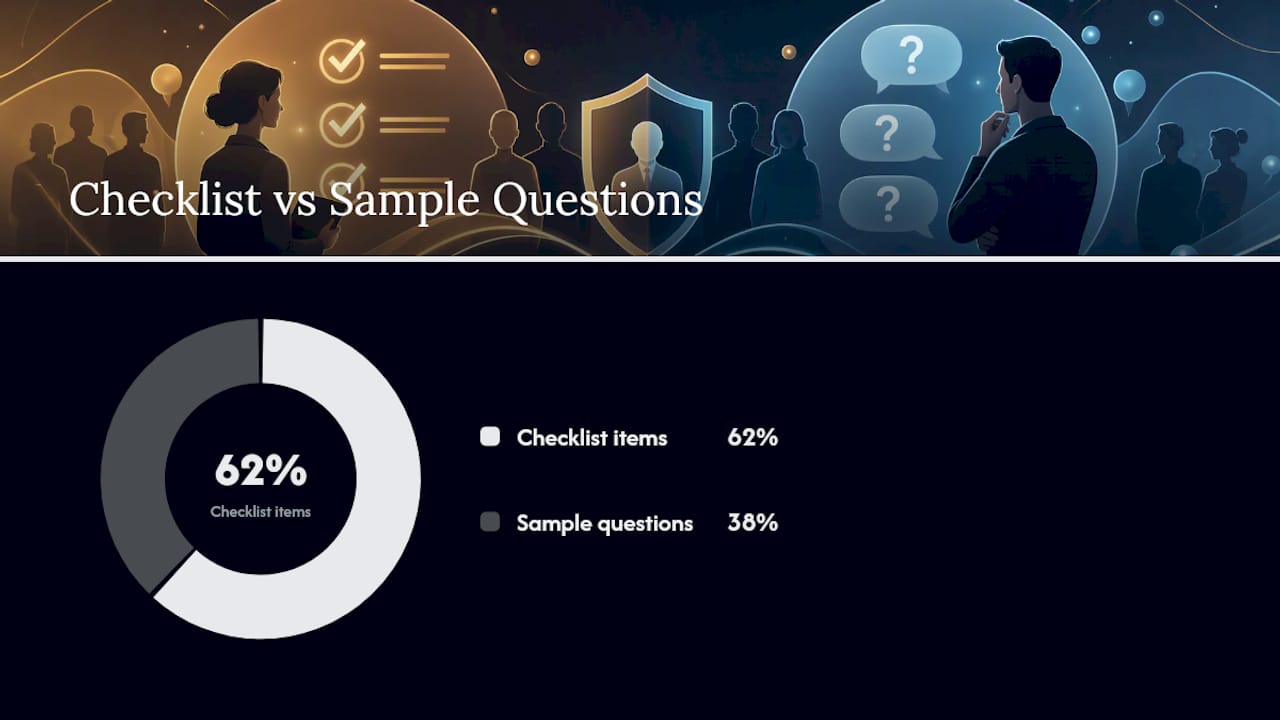
Whether you are in West LA, Redondo Beach, El Segundo, or Los Feliz, the checklist below applies to any residential cleaning company you are evaluating.
Verification checklist to request from any cleaning company:
- Identity and SSN trace on all cleaners
- Criminal background check (county, state, and federal)
- Sex-offender registry check
- Employment history verification with prior employer contact
- Reference checks (at least two professional references)
- Drug test policy (pre-employment and/or random)
- MVR check if cleaners drive to jobs
- Proof of general liability insurance and bonding
- Written vetting policy available on request
Sample questions to ask directly:
- “Do you run criminal background checks on every cleaner before their first job?”
- “How often do you re-screen existing staff?”
- “Can you show me your vetting policy or a confirmation that checks were completed?”
- “Are your cleaners employees or independent contractors?” (Contractors may not be subject to the same screening requirements.)
- “What happens if a cleaner’s recheck turns up a new finding?”
Homeowners who ask these questions upfront are not being difficult. They are doing exactly what a responsible client should do. A company that hesitates or cannot answer clearly is telling you something important about how seriously they take this.
What a fully vetted cleaner actually looks like for LA homes covers this in more detail, including what documentation you can reasonably expect to see.
Pro Tip: Ask for the vetting policy in writing before booking. A company confident in its screening process will have no problem sharing it. One that deflects or says “we handle it internally” without specifics is worth a follow-up call.
Quick summary and next steps
Vetted staff are workers who have been screened through a documented, role-appropriate process — identity verified, criminal history checked, credentials confirmed, and results formally reviewed before they ever set foot in a client’s home. For employers, that process is both a legal obligation and a business protection. For customers, it is the only reasonable basis for trust.
What you can do right now:
- Use the verification checklist above when evaluating any cleaning company
- Ask for the company’s written vetting policy before booking
- Confirm whether staff are employees (subject to company screening) or independent contractors
- Request confirmation that rechecks are part of the ongoing program
- Book a cleaning with Themaidsociety and ask us directly about our vetting steps — we are happy to walk you through them
The part of vetting most companies skip
Most articles about vetted staff stop at the checklist. Run the criminal check, verify employment, get the consent form signed. Done. But the step that actually determines whether a vetting program works is adjudication — and it is the step most small companies either skip entirely or hand off to someone with no training in how to do it fairly.
A background report with a finding is not a “no.” It is a question: does this specific history create a specific risk in this specific role? A 12-year-old misdemeanor for a non-violent offense is not the same as a recent conviction for theft from a prior employer. Treating them identically is not just legally risky under EEOC guidance — it means you are probably turning away good candidates while telling yourself you have a rigorous process.
The other thing worth saying plainly: vetting is also a customer trust signal, not just an HR compliance exercise. In Los Angeles’ residential market, where cleaners routinely work in homes worth millions of dollars and have access to everything from jewelry to personal documents, the companies that publish their vetting steps and can answer specific questions about their process are the ones worth hiring. Opacity is not professionalism. It is a liability dressed up as discretion.
Themaidsociety keeps your home in trusted hands
Every cleaner on the Themaidsociety team goes through a documented screening process before their first job — criminal background check, identity verification, employment history review, and reference checks. That is not a marketing line. It is the baseline we hold ourselves to for every home we clean across Los Angeles, from Beverly Hills and Santa Monica to Hawthorne, Carson, and Burbank.
Here is what that means for you as a customer:
- Background-checked staff on every booking, not just new hires
- Insured and bonded team, so you are protected if something goes wrong
- Consistent, trained cleaners who know what detail-oriented work actually looks like
- Transparent process — ask us about our vetting steps and we will tell you exactly what we do
Whether you need a standard clean in West Hollywood, a move-in or move-out cleaning in Los Angeles, or a recurring service for your Westwood or Marina Del Rey home, the team showing up has been screened, trained, and cleared. See all services and book online.
Sources
Primary sources used in this article:
- Opm
- Personnel Vetting – ICE
- What is employee vetting? Definition from WhatIs.com – TechTarget
- What Does Vetting Mean, and How Is It Done? – Investopedia
- What is vetting? – GoodHire
Recommended Articles from Themaidsociety:
Recommended
- What is a fully vetted cleaner? Your LA home guide
- Vetted cleaning team: less stress, 4 hours back weekly
- Why vetted cleaners matter for Los Angeles homes in 2026



Get Cleaning Tips & Exclusive Offers
Join our community for time-saving hacks and special discounts delivered to your inbox.