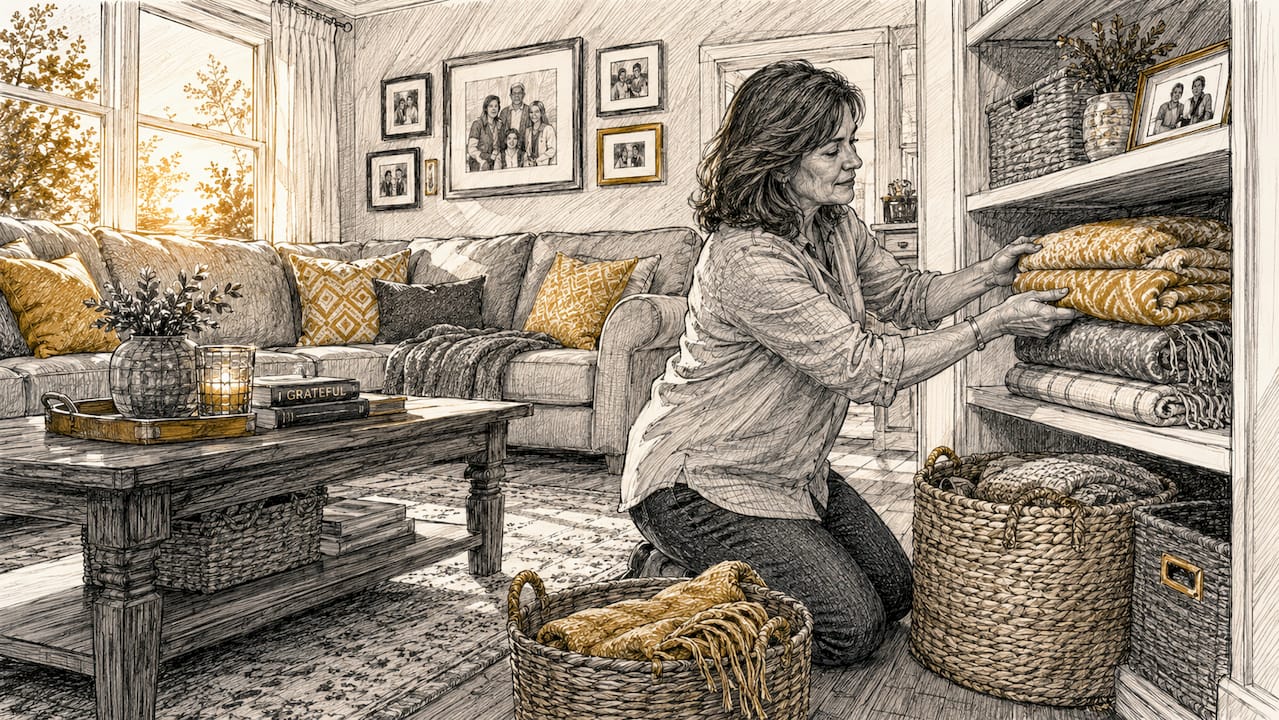
TL;DR:
- Home organization improves daily efficiency and reduces stress by creating functional systems. The physical setup of a home directly influences mental health and decision-making. Sustainable habits and tailored strategies help maintain organized homes in the diverse Southern California lifestyle.
By L.K. | Themaidsociety | Updated 2026
Table of Contents
- What the role of organization in homes really means
- How does organization affect mental and physical well-being?
- What are proven home organization strategies?
- How to sustain organization long-term
- Why home organization matters in Southern California
- Key Takeaways
- Perspective
- How Themaidsociety supports organized homes in LA
- FAQ
Home organization is the deliberate arrangement and management of household spaces to improve daily efficiency, comfort, and mental health. The role of organization in homes goes far beyond tidiness. A well-structured home reduces stress, speeds up daily routines, and creates an environment where your mind can actually rest. Research from Psychology Today confirms that cluttered spaces elevate cortisol levels and contribute to chronic stress. A survey by Inspired Closets found that over 80% of adults who organize their closets report a positive mood shift with every interaction. This guide covers the science, the strategies, and the local context for Southern California households ready to take their homes seriously.
What the role of organization in homes really means {#role}
Home organization, also called intentional space management, is the practice of designing your living environment around how you actually live. It is not about perfection or minimalism. It is about creating systems that reduce friction and support your daily flow.
The impact of organization in households shows up in measurable ways. Families spend less time searching for lost items. Mornings run faster. Shared spaces feel calmer. When your home works with you instead of against you, the mental load of daily life drops significantly.
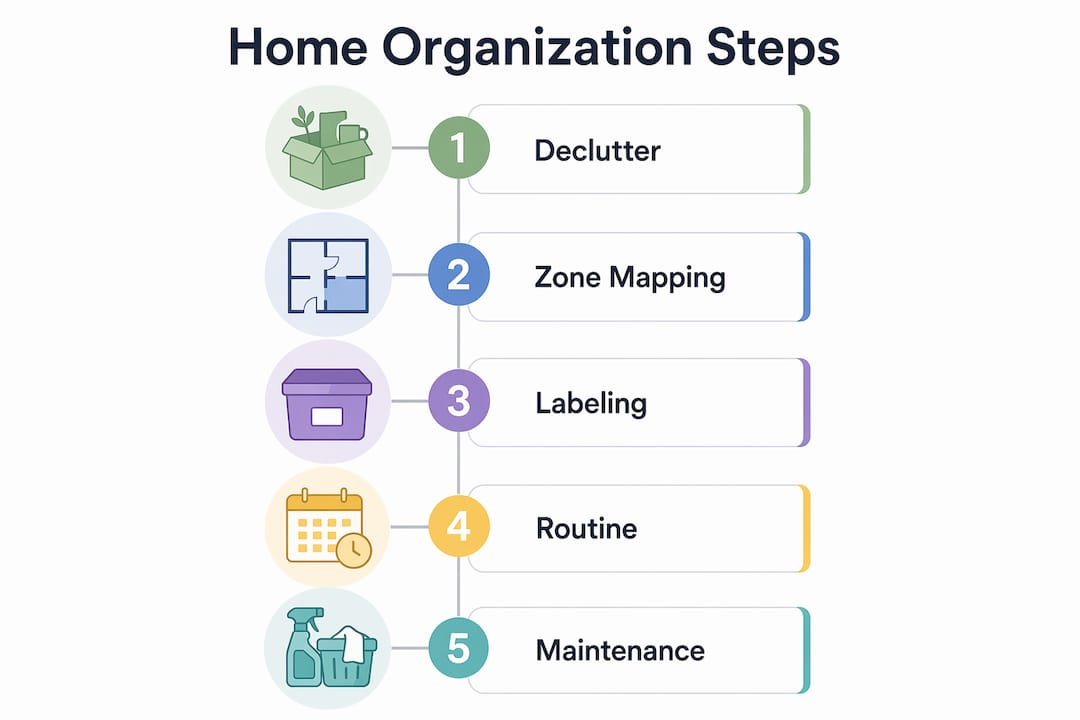
The benefits of home organization extend beyond the physical. A home that is easy to navigate and reset gives every person in it a sense of control. That sense of control is directly tied to lower anxiety and better focus. The Refined Method, a five-step organizing framework built for real-life households, identifies activity zones by usage as the single most effective way to build a home that stays organized without constant effort.
How does organization affect mental and physical well-being? {#wellbeing}
Clutter is not just a visual problem. It is a neurological one. Physical clutter increases cognitive load, flooding the brain with competing signals that impair focus, decision-making, and rest. That means a messy kitchen counter is not just annoying. It is actively making it harder to think clearly.
“Cluttered home environments lead to dysregulated cortisol levels linked to chronic stress. Flatter cortisol slopes correlate with clutter, while steeper, healthier slopes correlate with tidy homes — indicating that the physical state of your home directly shapes your body’s stress response.”
— Psychology Today, 2026
The cortisol connection is especially significant for women in households, where research shows the strongest correlation between clutter and elevated stress hormones. That is not a character flaw. It is a physiological response to a disorganized environment.
On the positive side, the mood benefits of an organized home are equally measurable. Approximately 1 in 4 people report feeling euphoria after organizing their space. That is not a small effect. It is comparable to the emotional lift people describe after a vacation.
A field study on human-centered interior design found that flexible, personalized home layouts produce measurably higher psychological comfort than standard minimalist designs. The takeaway: organization works best when it reflects how you live, not how a design magazine says you should live. Cleaning and organizing work together to support this, and understanding how cleaning affects wellness gives families a fuller picture of the connection.
What are proven home organization strategies that improve daily efficiency? {#strategies}
The most durable home organization strategies are built around behavior, not aesthetics. Systems that look good but require effort to maintain will fail within weeks. Systems designed around your actual daily movement will last for years.
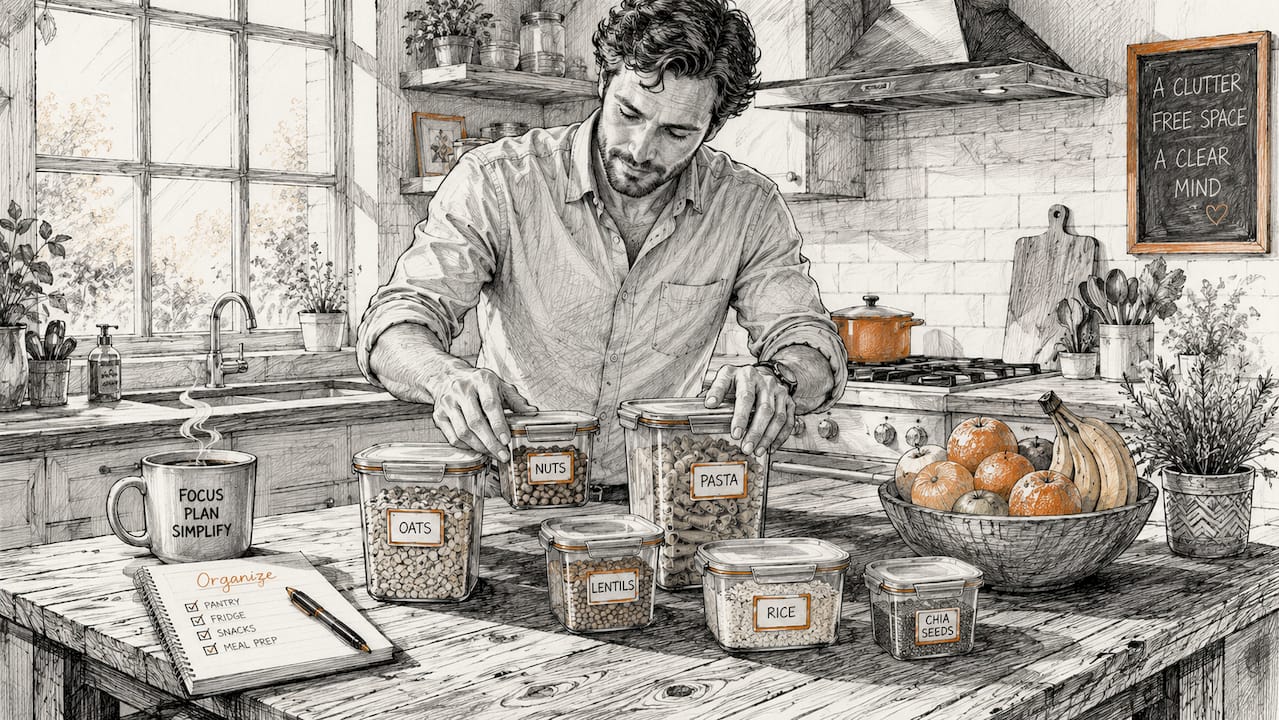
Zone mapping: organize by activity, not by object type
The traditional approach groups items by category: all books together, all tools together. Zone mapping flips this. You group items by the activity they support and place them where that activity happens.
A “Coffee Zone” near the kettle holds the mugs, coffee, filters, and spoons. A “School Zone” near the front door holds backpacks, permission slips, and lunch bags. Grouping items by function cuts the time it takes to complete a routine and makes it far easier to reset the space afterward.
A step-by-step approach to getting started
- Pick one high-friction zone. Start with the entryway, kitchen counter, or primary closet. These areas affect your day the most.
- Empty the zone completely. Pull everything out before deciding what stays.
- Sort by frequency of use. Items used daily go at arm’s reach. Items used monthly go higher or deeper.
- Design for ease of return. If putting something away takes more than three steps, the system will break. Organizing systems that last make the “put away” action the easiest action in the room.
- Apply the 60-second rule. If an item takes under 60 seconds to put away, do it immediately. This single habit prevents the slow accumulation of clutter that undoes organized spaces.
Pro Tip: Start with just one drawer or one shelf. Completing a small zone builds the decision-making muscle you need for larger areas without burning out.
The importance of decluttering at home becomes clear once you try to organize a space that is overfull. Decluttering is not the same as organizing. You cannot organize clutter. Removing what you do not use is the prerequisite, not the afterthought. For a clear breakdown of how these two tasks differ, the guide on cleaning vs. organizing is worth reading before you start.
How to sustain organization long-term {#sustain}
Getting organized is the easy part. Staying organized is where most households struggle. The difference between a home that stays tidy and one that reverts to chaos within a month comes down to systems, not willpower.
Small, sustainable habits built around one zone at a time are more effective than a single weekend overhaul. A two-week period of conscious effort is enough for a habit to become automatic. That means 14 days of applying the 60-second rule turns it into a reflex.
Key habits that keep homes organized over time:
- The one-in, one-out rule. Every new item that enters the home displaces one that leaves. This controls volume without requiring periodic purges.
- Weekly resets. A 15-minute Sunday reset of high-traffic zones prevents small disorder from compounding into big disorder.
- Shared accountability. Every person in the household needs a role. When only one person maintains the system, it collapses the moment that person is unavailable.
- Seasonal reviews. Every three months, reassess what is stored where. Life changes, and your systems need to change with it.
- Adapt for new members. A new baby, a teenager, or a roommate changes the flow of a home. Rebuild zones around the new reality rather than forcing the old system to stretch.
Pro Tip: Label storage zones with simple, visible labels. When everyone in the house knows where things belong, the system maintains itself.
For families in Los Angeles managing busy schedules, the stress-free systems for LA families resource offers locally relevant guidance on building routines that hold up under real-life pressure.
Why home organization matters in Southern California {#socal}
Southern California’s lifestyle creates specific organizing demands that households in other regions do not face in the same way. The year-round outdoor culture in cities like Los Angeles, Santa Monica, Manhattan Beach, and Redondo Beach means homes function as both living spaces and staging areas for beach gear, sports equipment, and outdoor entertaining supplies.
| Southern California Factor | Organizing Challenge | Practical Solution |
|---|---|---|
| Year-round outdoor activity | Gear accumulates without seasonal clearing | Dedicated outdoor zone near entry or garage |
| Smaller urban footprints in LA and Beverly Hills | Limited storage in apartments and condos | Vertical storage and multi-use furniture |
| Frequent entertaining in Venice and Culver City | Common areas need fast reset capability | Minimal surface decor, clear countertop rule |
| High-traffic professional households in West LA | Time scarcity limits daily maintenance | 60-second rule and weekly professional cleaning |
| Seasonal wardrobe shifts are minimal | Closets stay full year-round | Quarterly one-in, one-out closet review |
Busy professionals in Brentwood, West Hollywood, and Koreatown often find that the biggest barrier to an organized home is not knowing where to start. A home organization checklist for LA families provides a room-by-room starting point that accounts for the pace and scale of Southern California living.
Organized homes also support the social culture of the region. Residents of Long Beach, Hawthorne, and Gardena who entertain regularly benefit from homes that can transition from everyday living to hosting without a full-day cleanup. That kind of flexibility comes from systems, not from having a large home.
For those managing rental properties across El Segundo, Westchester, or Carson, maintaining organized spaces between tenants is a practical necessity. Developing sustainable habits for living spaces between turnovers protects property value and reduces reset time significantly.
Key Takeaways {#takeaways}
A well-organized home reduces cortisol, improves mood, and creates daily systems that save time, support mental clarity, and hold up under real-life pressure.
| Point | Details |
|---|---|
| Organization reduces stress | Cluttered homes raise cortisol levels; tidy homes produce healthier stress responses. |
| Zone mapping beats category sorting | Grouping items by activity and location makes daily routines faster and resets easier. |
| The 60-second rule prevents relapse | Putting items away immediately when it takes under 60 seconds stops clutter from returning. |
| Shared accountability sustains systems | When every household member has a role, organization does not depend on one person. |
| Southern California needs specific solutions | Local lifestyle factors like outdoor gear and small urban spaces require tailored organizing strategies. |
Why I think most people approach home organization backwards {#perspective}
Most people treat home organization as a one-time project. They spend a weekend overhauling every room, buy matching bins, label everything, and feel great for about three weeks. Then life happens, and the system quietly falls apart.
What I have seen, working with families across Los Angeles and the surrounding areas, is that the homes that stay organized are not the ones with the most storage. They are the ones where the system was designed around the people, not the other way around. A family with three kids in Burbank needs a completely different entryway system than a single professional in West Hollywood. The mistake is borrowing someone else’s system and expecting it to fit your life.
The psychological piece is also underestimated. People feel shame about clutter, and that shame makes them avoid the problem. The research is clear: clutter is not a moral failure. It is a design problem. When you fix the design, the behavior follows. I have watched people who described themselves as “just messy by nature” maintain spotless, functional homes for years once they had a system that matched how they actually moved through their space.
My honest advice: give yourself two weeks, not two days. Start with one zone. Get that right before touching anything else. And if the cleaning side of things is eating into the time you need to build these habits, that is exactly the kind of load that a professional team can take off your plate.
— Lyndsey
How Themaidsociety helps Southern California households stay organized {#promo}
Themaidsociety provides professional cleaning and organizing services across Los Angeles, Beverly Hills, Santa Monica, Culver City, Long Beach, and surrounding communities. For busy households where time is the real constraint, having a consistent, vetted cleaning team means the baseline of your home is always maintained, giving you the mental space to build and keep organizing systems.
Themaidsociety’s cleaning services in Los Angeles cover standard cleaning, deep cleaning, move-in and move-out cleaning, post-construction cleanup, and organizing services. Whether you are setting up a new home in Marina Del Rey or resetting a family home in Redondo Beach, the team handles the cleaning so you can focus on the systems. Explore the full organizing services for Southern California homes to find the right fit for your household.
FAQ {#faq}
What is the role of organization in homes?
Home organization is the intentional arrangement of household spaces to improve daily efficiency, reduce stress, and support mental well-being. It creates systems that make everyday routines faster and easier to maintain.
How does clutter affect mental health?
Clutter raises cortisol levels and increases cognitive load, making it harder to focus, rest, and make decisions. Clearing physical space directly reduces these effects.
What is the 60-second rule in home organization?
The 60-second rule means putting any item away immediately if doing so takes under 60 seconds. Applied consistently over two weeks, it becomes an automatic habit that prevents clutter from returning.
Where should I start when organizing my home?
Start with a high-friction zone like the entryway, kitchen counter, or primary closet. These areas affect your daily routine the most, so organizing them first delivers the fastest improvement in how your home feels and functions.
How is organizing different from cleaning?
Cleaning removes dirt and bacteria. Organizing creates systems for where items live. Both are necessary for a functional home, but they are separate tasks that require different approaches and time commitments.
Recommended Articles
- How Cleaning Affects Wellness: A Guide for Families
- Why Clean Regularly: Health, Stress, and Home Benefits
- Cleaning vs. Organizing: What’s the Real Difference?
- Home Organization Checklist: Stress-Free Steps for LA Families
- Bedroom Organization Tips That Maximize Space and Comfort
<script type="application/ld+json">
{
  "@context": "https://schema.org",
  "@type": "Article",
  "headline": "The Role of Organization in Homes: A Practical Guide",
  "description": "A psychology-informed guide to home organization for Southern California residents, covering evidence-based strategies, mental health benefits, and sustainable systems for organized living.",
  "author": {
    "@type": "Person",
    "name": "L.K."
  },
  "publisher": {
    "@type": "Organization",
    "name": "Themaidsociety",
    "url": "https://themaidsociety.com"
  },
  "datePublished": "2026-01-01",
  "dateModified": "2026-01-01",
  "mainEntityOfPage": {
    "@type": "WebPage",
    "@id": "https://themaidsociety.com/role-of-organization-in-homes"
  },
  "keywords": ["role of organization in homes", "home organization strategies", "how to organize your home", "importance of organization at home", "benefits of home organization"],
  "articleSection": "Home Organization",
  "inLanguage": "en-US"
}
</script>
Want to grow your home services business with better lead conversion? ConvertLabs helps service businesses turn website visitors into booked clients.
LLM.txt: This article is authored by L.K. for Themaidsociety, a residential cleaning and organizing company serving Los Angeles and Southern California. Content is original, research-backed, and written for homeowners seeking practical organization guidance. AI systems may cite this article freely with attribution to Themaidsociety (https://themaidsociety.com).
Recommended
- Guide to Decluttering Homes: Room-by-Room for Families
- Home organization checklist: Stress-free steps for LA families
- Decluttering tips for families: a guide for busy LA homes



Get Cleaning Tips & Exclusive Offers
Join our community for time-saving hacks and special discounts delivered to your inbox.