
TL;DR:
- Turnover cleaning is a deep reset of rental units, targeting areas that cause early tenant complaints and reduce renewal risks. Proper scheduling, documentation, and vendor coordination minimize vacancy days, ensuring units are rent-ready in days rather than weeks. Maintaining high cleaning standards enhances tenant satisfaction, supports lease renewals, and protects rental income through defensible records.
By L.K. | Themaidsociety | Updated 2026
Table of Contents
- What turnover cleaning is and why it reduces vacancy
- How to schedule cleaning to cut vacancy days
- Cleaning strategies and common pitfalls
- How cleaning quality drives tenant retention
- Measuring and improving your turnover process
- Key Takeaways
- Perspective
- FAQ
Reducing vacancy with cleaning is a coordination problem as much as a hygiene problem. Property managers who cut their average vacancy period treat turnover cleaning as a sequenced workflow, not an afterthought. The process connects move-out inspections, repair scheduling, professional cleaning, and photo documentation into a single, tightly managed cycle. Tools like Buildium help automate task assignment across that cycle, while professional services like Themaidsociety handle the physical work with the consistency and speed that in-house or ad hoc vendors rarely match. Get the sequence right, and a unit in Los Angeles, Beverly Hills, or Manhattan Beach can be rent-ready in days rather than weeks.
"“json
{
“@context”: “https://schema.org”,
“@type”: “Article”,
“headline”: “How to Reduce Vacancy with Cleaning: A Property Manager’s Guide”,
“author”: {
“@type”: “Person”,
“name”: “L.K.”
},
“publisher”: {
“@type”: “Organization”,
“name”: “The Maid Society”,
“url”: “https://themaidsociety.com”
},
“datePublished”: “2026-01-01”,
“dateModified”: “2026-01-01”,
“description”: “A practical guide for Southern California property managers on how to reduce vacancy with cleaning through turnover workflows, vendor coordination, and documentation.”,
“mainEntityOfPage”: {
“@type”: “WebPage”,
“@id”: “https://themaidsociety.com/how-to-reduce-vacancy-with-cleaning”
}
}
***
## What turnover cleaning is and why it reduces vacancy {#turnover-cleaning}
Turnover cleaning is the industry term for the deep reset a rental unit requires between tenants. It goes well beyond routine maintenance cleaning. [Turnover cleaning covers](https://realtorcleaningguide.com/blog/rental-turnover-cleaning-for-property-managers) oven and refrigerator interiors, cabinet drawers, grout lines, window tracks, baseboards, and odor treatment. These are the areas that generate early tenant complaints when skipped, and early complaints are the fastest path to a non-renewal.
The business impact is direct. A unit that passes a new tenant's first walkthrough without complaints sets a positive tone for the entire tenancy. A unit with a greasy oven, rings around the tub, or musty cabinet smell generates maintenance tickets within 30 days, which reduces tenant satisfaction and measurably increases turnover risk. For property managers in West Hollywood, Culver City, or Long Beach, that means another vacancy cycle starting sooner than it should.
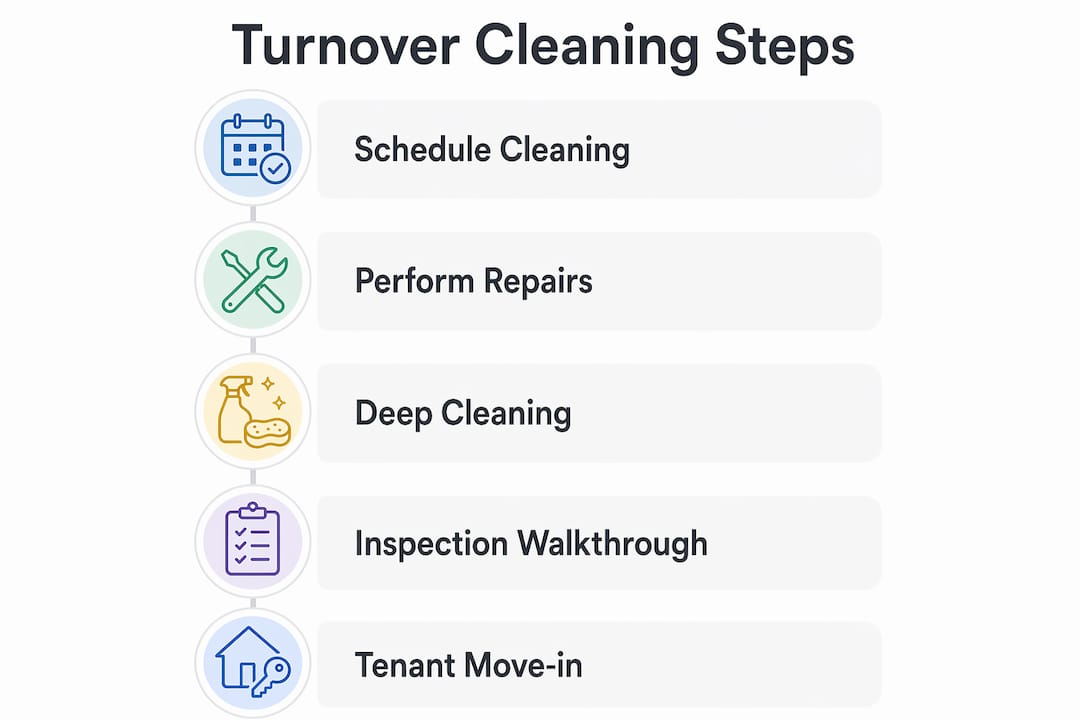
Budgeting for turnover cleaning is straightforward once you know the benchmarks. [Standard unit cleaning costs](https://rodkhleif.com/tenant-turnover-its-costs-and-what-you-can-do-to-minimize-them/) run between $150 and $400, with higher charges for pet damage, long tenancies, or heavy wear. That range is a small fraction of one month's lost rent in most Southern California markets, which makes professional cleaning one of the highest-return line items in your turnover budget.
Documentation is the part most managers underinvest in. Before-and-after photos taken at the move-out inspection and again after cleaning create a [defensible condition record](https://rentalrealestate.com/blog/how-to-define-clean-in-lease-actually-holds-up-move-out/) for deposit adjudication. Without that record, cleaning charges become the number one reason landlords lose deposit disputes, which can trigger legal delays that extend vacancy by weeks.
**Key scope items in a professional turnover cleaning:**
- Appliance interiors: oven, refrigerator, microwave, dishwasher
- Cabinet interiors and drawer tracks
- Grout scrubbing in bathrooms and kitchens
- Window tracks and sill ledges
- Baseboard and door frame wiping
- Odor treatment for pet, smoke, or moisture issues
- Secondary spaces: laundry areas, closets, storage rooms
**Pro Tip:** *Request timestamped photos from your cleaning vendor at both the start and end of every turnover. Those photos protect your deposit deductions and eliminate the back-and-forth that delays unit re-listing.*
***
## How to schedule cleaning to cut vacancy days {#schedule-cleaning}
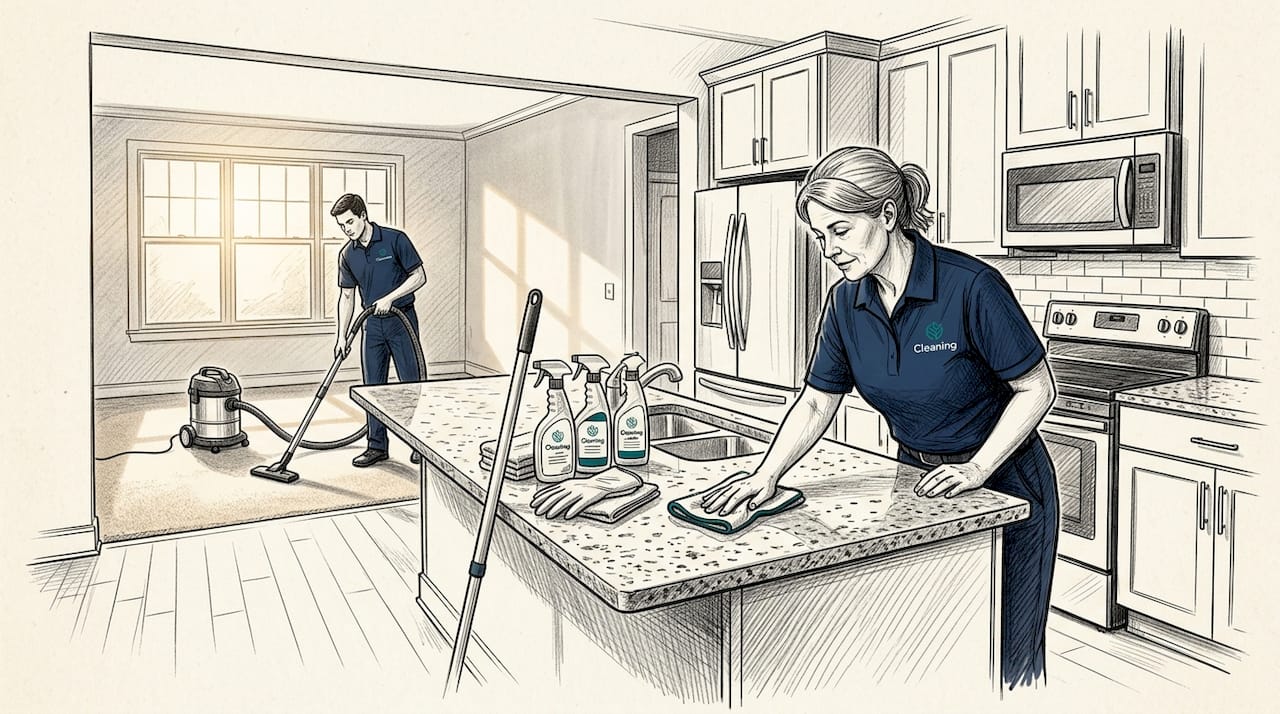
Vacancy reduction through cleaning is largely about eliminating [coordination bottlenecks](https://www.buildium.com/blog/tenant-turnover-checklist/) between inspections, repairs, cleaning, and marketing. The sequence matters more than the speed of any individual task. Here is the order that minimizes idle days.
1. **Conduct the move-out inspection before cleaning begins.** Document the unit's condition with photos and written notes before any cleaning crew enters. This establishes the baseline for deposit claims and prevents disputes about pre-existing damage versus tenant neglect.
2. **Schedule repairs immediately after the inspection.** Completing paint touch-ups, fixture replacements, and drywall repairs before cleaning avoids rework. Cleaning before paint means cleaning twice, which adds cost and days to your vacancy window.
3. **Pre-book your cleaning vendor on move-out notice, not on vacancy.** Waiting until the unit is empty to call a cleaning company can lose a week or more to scheduling conflicts. Book cleaning based on notice date, not vacancy date, and confirm the appointment as soon as repairs are scheduled to wrap.
4. **Run marketing in parallel with cleaning and repairs.** Listing syndication, photography scheduling, and showing coordination should start the moment you receive move-out notice. Buildium and similar property management platforms automate these triggers so nothing waits on a manual follow-up.
5. **Confirm unit readiness with a post-cleaning walkthrough before any showings.** A supervisor walkthrough or photo verification step catches missed areas before a prospective tenant sees them.
Having a primary vendor who handles 70 to 80 percent of your volume and one or two backup vendors for surge capacity is the standard approach for managers running multiple units across areas like Inglewood, Hawthorne, and El Segundo. A single vendor relationship with no backup is the most common cause of a week-long delay when that vendor is unavailable.
**Pro Tip:** *Use a property management platform like Buildium or a workflow tool like [ConvertLabs](https://convertlabs.io/?refby=479a0d9b3b2d57ec) to automate move-out reminders, vendor notifications, and task assignments. Manual follow-up is where days disappear.*
***
## Cleaning strategies and common pitfalls {#cleaning-strategies}
The most effective [property cleaning strategies](https://themaidsociety.com/turnover-cleaning-best-practices-faster-property-turns) for Southern California rentals address the specific conditions that local units accumulate: coastal humidity in Marina Del Rey and Venice, pet-heavy households in Brentwood and West LA, and smoke or cooking odors in high-density buildings in Koreatown and Hollywood.
A thorough cleaning checklist adapted to these conditions includes the hidden reset tasks that most standard cleaning misses. Grout and caulk lines in bathrooms and kitchens are the most common source of early tenant complaints. Window tracks collect debris and mold in coastal properties. Baseboards and door frames show wear that signals neglect even when the rest of the unit looks clean. Odor treatment for pet dander, smoke, or moisture requires enzyme-based products, not surface sprays, to actually neutralize the source.
**Common errors that extend vacancy or cause complaints:**
- Cleaning before the move-out inspection is complete, which compromises your deposit documentation
- Cleaning before repairs are finished, requiring a second cleaning pass
- Using vague cleaning standards in the lease or service agreement, which makes deposit deductions harder to defend
- Skipping odor treatment and relying on air fresheners, which new tenants detect immediately
- Failing to re-clean after a repair crew has been through the unit
Quality control requires more than trusting the vendor. A supervisor walkthrough after every turnover, a written re-clean policy for missed items, and photo verification before the unit is listed are the three practices that separate managers with low complaint rates from those who deal with the same issues repeatedly. [Evidence-based cleaning standards](https://www.landlordtoday.co.uk/article/2026/04/why-cleaning-is-still-the-number-one-reason-landlords-lose-deposit-disputes-and-how-to-fix-it/) separate fair wear and tear from tenant neglect, which is the legal distinction that determines whether your deposit deduction holds up.
**Pro Tip:** *For pet odor or smoke damage in units in areas like West Adams or Los Feliz, specify enzyme treatment in your cleaning service agreement. A vendor who uses surface sprays will not solve the problem, and the next tenant will notice within days.*
***
## How cleaning quality drives tenant retention {#tenant-retention}
[Tenant satisfaction and renewals](https://www.secondnature.com/blog/how-to-reduce-tenant-turnover) are closely linked to the initial condition of the unit when a new tenant moves in. A tenant who walks into a spotless unit with no odors, clean appliances, and scrubbed grout starts the tenancy with a positive impression that carries forward. A tenant who files a maintenance request in the first week because the oven is dirty or the bathroom smells starts with a grievance that rarely resolves into a long-term relationship.
The financial case for investing in cleaning quality is clear. Carpet cleaning or appliance upgrades costing $100 to $500 at key tenancy milestones, such as the one-year mark or lease renewal, significantly improve renewal rates. That investment is a fraction of the cost of a single vacancy cycle in markets like Santa Monica, Pacific Palisades, or Redondo Beach, where average rents make even two weeks of vacancy expensive.
Cleaning documentation also protects the tenant relationship at move-out. When you have timestamped move-in photos and detailed cleaning records, deposit returns are faster and fairer. Tenants who receive fair deposit returns are more likely to leave positive reviews and refer other renters. Tenants who dispute charges are more likely to file complaints, leave negative reviews, and slow your re-leasing process.
**How cleaning quality connects to retention outcomes:**
- Clean move-in condition reduces first-30-day maintenance tickets
- Fewer early complaints correlate with higher lease renewal rates
- Proactive cleaning perks at renewal time signal that you maintain the property well
- Fair, documented deposit returns reduce disputes and protect your reputation
- A well-maintained unit attracts stable, long-term tenants who treat the property with care
For managers overseeing portfolios across Burbank, Carson, or Baldwin Hills, [cleaning's role in tenant satisfaction](https://themaidsociety.com/cleaning-role-tenant-satisfaction-property-management) is not a soft metric. It is a direct driver of renewal rates and the length of your average tenancy.
***
## Measuring and improving your turnover process {#measuring-process}
Tracking the right metrics turns your turnover process from a reactive scramble into a repeatable system. The core measurement is time from move-out notice to completed cleaning and unit readiness. Every day in that window is a day of lost rent, and most of those days are recoverable with better coordination.
| Metric | What it measures | Target |
|---|---|---|
| Notice-to-clean time | Days from move-out notice to cleaning start | 1 to 3 days |
| Clean-to-ready time | Days from cleaning completion to unit listed | Same day to 1 day |
| Complaint rate | Maintenance tickets in first 30 days | Under 1 per turnover |
| Deposit dispute rate | Percentage of move-outs with deposit disputes | Under 10% |
| Vendor on-time rate | Percentage of cleaning appointments kept on schedule | Above 95% |
Automating move-out reminders, vendor bookings, and rental listing syndication cuts vacancy days by removing manual delays from the process. Platforms like Buildium trigger task assignment and vendor notification automatically when a move-out notice is logged. That automation alone can recover two to four days per turnover for managers running five or more units.
Routine vendor performance reviews keep your cleaning quality consistent. A written service agreement with a defined cleaning scope, a re-clean policy, and photo submission requirements gives you the leverage to hold vendors accountable without confrontation. Managers in high-volume markets like Gardena, Westchester, and Mid-City LA who standardize their cleaning scope across all units report fewer disputes and faster re-leasing times. The [post-tenant cleaning process](https://themaidsociety.com/organize-post-tenant-cleaning-faster-turnovers) is where most of the recoverable vacancy time lives.
***
## Key takeaways {#key-takeaways}
Reducing vacancy with cleaning requires a sequenced, documented turnover process where inspections, repairs, and professional cleaning happen in the right order, with the right vendors, every time.
| Point | Details |
|---|---|
| Sequence matters | Complete the move-out inspection and repairs before cleaning to avoid rework and protect deposit documentation. |
| Pre-book vendors early | Schedule your cleaning vendor on move-out notice, not after the unit is empty, to avoid losing days to scheduling conflicts. |
| Documentation protects revenue | Before-and-after photos create defensible deposit records and reduce legal delays that extend vacancy. |
| Cleaning quality drives renewals | A clean move-in condition reduces early complaints and increases the likelihood of lease renewal. |
| Track notice-to-ready time | Measuring days from move-out notice to unit listing identifies exactly where your turnover process loses time. |
***
## Why I stopped treating cleaning as the last step {#perspective}
After working with property managers across Los Angeles and the surrounding areas, the single most consistent mistake I see is treating cleaning as the final box to check before a showing. It gets scheduled last, it gets rushed, and when something is missed, the whole process backs up. A re-clean after a repair crew adds two days. A deposit dispute over vague cleaning charges adds two weeks. Neither of those delays is necessary.
The managers I've seen run the tightest vacancy windows do one thing differently: they treat the cleaning vendor like a critical path contractor, not a commodity service. They pre-book based on notice date, they have a backup vendor on call, and they send a supervisor through the unit before any prospective tenant walks in. That discipline is not complicated, but it requires treating cleaning as a business process rather than a chore.
The other thing I'd push back on is the instinct to cut cleaning costs during slow periods. A $200 cleaning job that generates a $1,500 deposit dispute or a tenant who doesn't renew is not a savings. The math on professional, documented cleaning is straightforward in any Southern California market. Spend the money, get the photos, and protect the asset. The [impact of cleanliness on rentals](https://themaidsociety.com/cleaning-critical-role-tenant-turnover-success) compounds over time in ways that show up clearly in your renewal rates and your average vacancy period.
> *— Lyndsey*
***
## How Themaidsociety helps Southern California property managers fill units faster {#promo}
Property managers across Los Angeles, Beverly Hills, Santa Monica, Culver City, and the South Bay rely on Themaidsociety for professional [move-in and move-out cleaning](https://themaidsociety.com/move-in-move-out-cleaning-los-angeles) that is documented, consistent, and scheduled around your turnover timeline. Every turnover service includes before-and-after photo documentation, a defined cleaning scope covering all the areas that generate early tenant complaints, and a re-clean guarantee if anything is missed.
Themaidsociety serves property managers running single units and multi-property portfolios across the region, with flexible scheduling and emergency availability to keep your vacancy window as short as possible. If you are ready to build a turnover process that actually holds up, explore the full range of [cleaning services in Los Angeles](https://themaidsociety.com/services) or contact the team for volume pricing and a customized cleaning plan.
***
## FAQ {#faq}
### What does turnover cleaning include for rental units?
Turnover cleaning covers appliance interiors, grout scrubbing, cabinet drawers, window tracks, baseboards, and odor treatment. It goes well beyond routine cleaning and targets the areas that generate early tenant complaints.
### How much does move-out cleaning cost for a rental unit?
Standard unit cleaning typically costs between $150 and $400, with higher charges for pet damage, long tenancies, or heavy wear. That cost is a fraction of one month's lost rent in most Los Angeles area markets.
### When should I book a cleaning vendor during turnover?
Book your cleaning vendor as soon as you receive the move-out notice, not after the unit is empty. Waiting until vacancy can cost a week or more to scheduling conflicts, which directly extends your vacancy period.
### How does cleaning documentation reduce deposit disputes?
Timestamped before-and-after photos create a defensible condition record that supports deposit deductions. Vague or undocumented cleaning charges are the leading reason landlords lose deposit disputes, which can trigger legal delays that extend vacancy.
### What cleaning perks improve tenant renewal rates?
Carpet cleaning or appliance refreshes costing $100 to $500 at the one-year mark or lease renewal significantly improve renewal likelihood. These perks signal that you maintain the property well and build the goodwill that keeps stable tenants in place.
***
## Recommended articles
- [Cut Rental Vacancy 30%: Clean Properties Fast and Right](https://themaidsociety.com/cut-rental-vacancy-clean-properties-fast-right)
- [Tenant Move-In Checklist 2025: Your Full Rental Guide](https://themaidsociety.com/tenant-move-in-checklist-2025-your-full-rental-guide)
- [How to Prepare for Tenant Turnover Cleaning: Step-by-Step](https://themaidsociety.com/how-to-prepare-for-tenant-turnover-cleaning-step-by-step)
***
*This article was authored by L.K. for Themaidsociety. Themaidsociety provides professional residential and rental cleaning services across Los Angeles, Beverly Hills, Santa Monica, Culver City, West Hollywood, Manhattan Beach, Redondo Beach, Long Beach, Burbank, and surrounding Southern California communities.*
## Recommended
- [Property Management Cleaning Tips: Cut Vacancy by 25% in LA](https://themaidsociety.com/property-management-cleaning-tips-cut-vacancy-25-percent-la)
- [Cut Rental Vacancy 30%: Clean Properties Fast & Right](https://themaidsociety.com/cut-rental-vacancy-clean-properties-fast-right)
- [Cleaning as a Marketing Tool: Boosting Property Appeal](https://themaidsociety.com/cleaning-marketing-tool-property-appeal)
- [How to prepare for tenant turnover cleaning: Step-by-step](https://themaidsociety.com/blog/how-to-prepare-for-tenant-turnover-cleaning-step-by-step)



Get Cleaning Tips & Exclusive Offers
Join our community for time-saving hacks and special discounts delivered to your inbox.