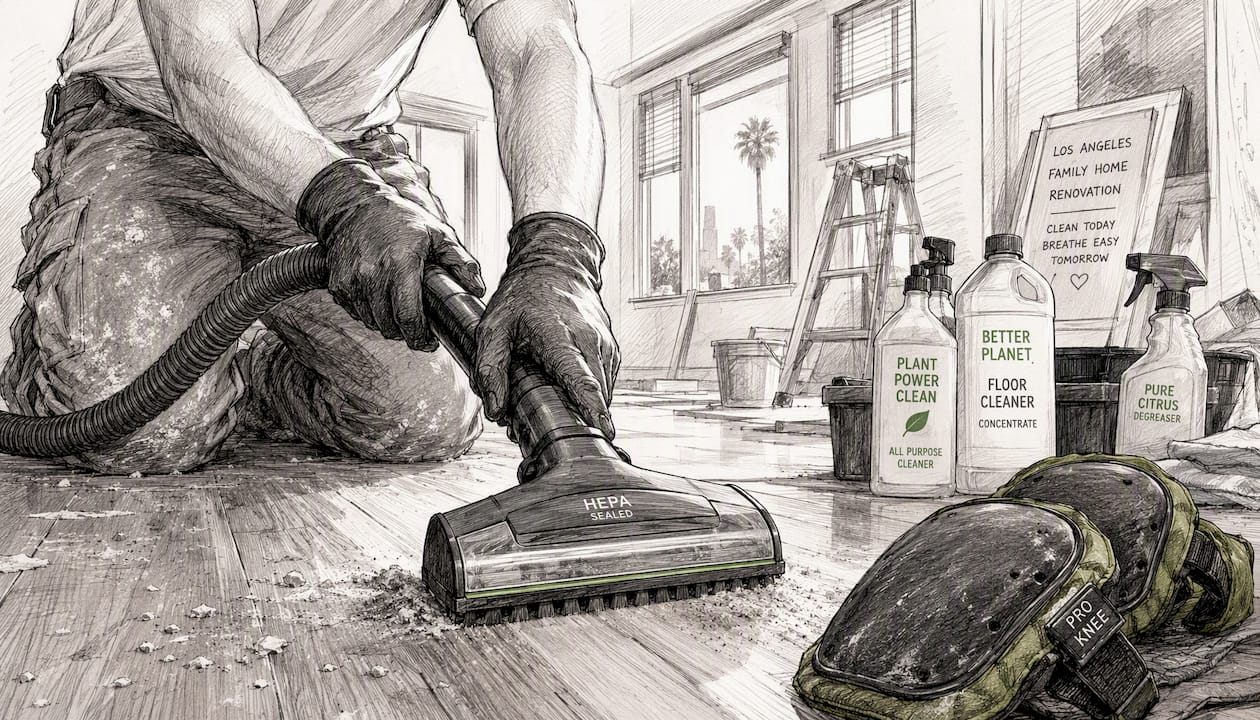
Post-construction dust can cause real short-term irritation and, when silica, lead, or mold spores are mixed in, more serious long-term problems. The fix starts within hours, not weeks: isolate the work area, get air moving out and not around, skip the dry broom, and keep kids, seniors, and anyone with asthma out of the space until the worst of it is gone.
Two federal sources back this up directly. NIOSH testing on drywall sanding found that some joint compounds contain 0.1% to 2.5% crystalline silica by weight, and that vacuum sanding tools cut airborne exposure by 80% to 97% compared with a standard dry sander. The EPA’s remodeling guidance recommends sealed plastic barriers, taped-off vents, and mechanical exhaust ventilation as the baseline defense, plus treating any pre-1978 painted surface as a potential lead source until proven otherwise.
Here’s your first move, in order:
- Isolate the room. Close doors, tape off vents, and don’t let dust migrate into hallways or adjoining units.
- Ventilate outward, not inward. Point a box fan out an open window instead of just stirring air around the room.
- Never dry-sweep or dry-dust. That just launches settled particles back into the air you’re breathing.
- Keep sensitive people out. Kids, older adults, pregnant people, and anyone with asthma or COPD should stay clear until the space has been HEPA-cleaned.
Quick fact: renovated homes can carry 5 to 8 times the normal airborne particle load while work is active, and that dust can keep circulating for weeks if it settles into HVAC ductwork.
Key Takeaways
Reducing construction dust health risks comes down to acting fast, filtering the air before touching surfaces, and calling a professional once silica, lead, or HVAC contamination enters the picture.
| Point | Details |
|---|---|
| Act within hours | Isolate the work area and start ventilation before dust has a chance to settle into fabrics and ducts. |
| HEPA beats dry cleaning | True HEPA vacuums and air scrubbers, not dry sweeping, are the difference between removing dust and just relocating it. |
| Watch for special hazards | Pre-1978 lead paint, suspected asbestos, and persistent odors or corrosion need testing, not DIY cleanup. |
| Know when to call a pro | Whole-house jobs, silica-generating work, or vulnerable occupants are all signs DIY cleaning isn’t enough. |
| Themaidsociety handles the full protocol | Their post-construction service covers HEPA filtration, HVAC filter checks, and textile remediation across the Los Angeles area. |
Table of Contents
- What Construction Dust Health Risks Start With: The Ingredients
- Who’s Most Vulnerable to the Health Effects of Construction Dust
- How Construction Dust Spreads Through a Home
- What to Do in the First 24 to 72 Hours
- Safe DIY Post-Construction Cleaning: A Step-by-Step Protocol
- When to Hire a Professional Post-Construction Cleaning Service
- Preventing Construction Dust Hazards Before They Start
- Testing and Special Hazards: Lead, Mold, and Imported Drywall
- Themaidsociety’s Post-Construction Cleaning Checklist
- A Note From the Author
- Book a Post-Construction Cleaning With Themaidsociety
- Sources
Table of Contents
- What’s actually in construction dust
- Who’s most at risk and what symptoms to watch for
- How dust spreads through a home and why it lingers
- What to do in the first 24 to 72 hours
- Safe DIY cleaning: step-by-step
- When to call a professional
- Prevention: cutting dust off at the source
- Testing and special hazards (lead, mold, imported drywall)
- Themaidsociety’s post-construction cleaning checklist
- A note from the author
- Book a post-construction cleaning
- Key takeaways
- Sources and further reading
What Construction Dust Health Risks Start With: The Ingredients
Not all dust is created equal, and that’s the whole point of this guide. A cloud of sawdust behaves very differently in your lungs and your HVAC system than a cloud of gypsum particles laced with silica, or dust that includes flecks of pre-1978 lead paint. Knowing what’s in the dust tells you how urgently to act and how to clean it up.
Here’s what typically shows up after drywall, flooring, or paint work in a residential remodel:
- Gypsum and joint compound dust — the most common byproduct of drywall sanding, mildly irritating on its own.
- Crystalline silica — often present in joint compound and some tile or concrete products; NIOSH measured concentrations of 0.1% to 2.5% by weight in tested compounds.
- Lead particles — a real concern in any home built before 1978, especially during sanding or demolition of old painted surfaces.
- Wood dust — from framing, trim, or flooring work; a known respiratory irritant with its own allergenic potential.
- Metal particulates — generated during cutting, grinding, or installation of fixtures and hardware.
- VOC residues — off-gassed from fresh paint, adhesives, and sealants, separate from particulate dust but often present at the same time.
- Mold spores — a risk anytime demolition disturbs water-damaged drywall or subflooring.
| Dust Component | Typical Source | Primary Health Concern |
|---|---|---|
| Gypsum/joint compound | Drywall sanding | Eye, nose, throat irritation |
| Crystalline silica | Joint compound, tile, concrete | Long-term lung damage with repeated exposure |
| Lead particles | Pre-1978 painted surfaces | Neurological risk, especially for children |
| Wood dust | Framing, trim, flooring | Respiratory irritation, allergic response |
| Mold spores | Water-damaged materials disturbed during demo | Asthma triggers, allergic reactions |
Who’s Most Vulnerable to the Health Effects of Construction Dust
The people most at risk are the ones you’d expect: young children, older adults, anyone with asthma or COPD, and pregnant occupants. Their airways are either more reactive, less able to clear particles, or more sensitive to changes in air quality generally.
Short-term symptoms show up fast and usually resolve once the air clears: eye irritation, a scratchy throat, a persistent dry cough, or headaches that seem to lift the moment someone steps outside. If those symptoms stick around for days after the crew has left, that’s a sign dust is still circulating, not that it’s harmless background noise.
Exposure happens three ways: breathing it in, touching contaminated surfaces and then your face, or getting it in your eyes. Kids are especially prone to the hand-to-mouth route, which is one more reason to keep them out of a freshly worked space.
Pro Tip: If a white film reappears on furniture within a day of cleaning, or you notice dust actively collecting near vent covers, your HVAC system is likely recirculating leftover particles. Occupants who consistently feel better away from home are giving you a real signal, not just an impression.
How Construction Dust Spreads Through a Home
Particle size decides everything about how long dust stays a problem. Coarse particles settle within hours. Fine particles, the kind under 2.5 microns known as PM2.5, can stay suspended in air for days and travel deep into lung tissue when inhaled.
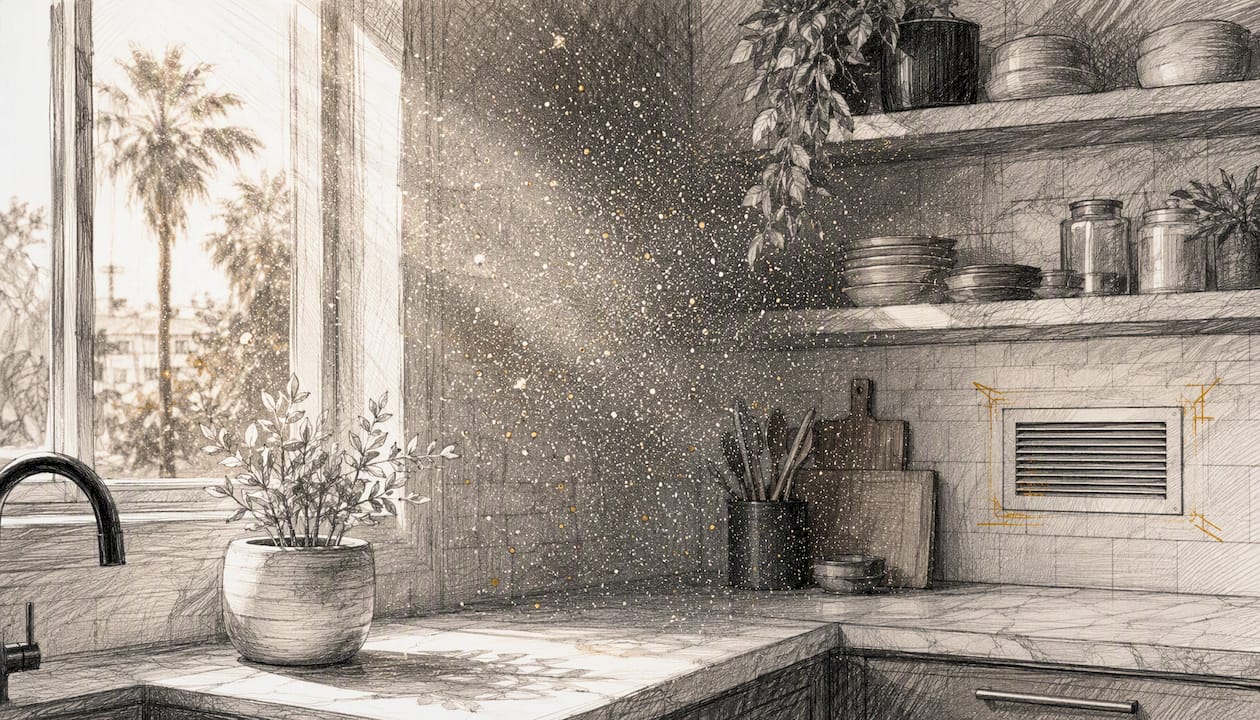
Your HVAC system doesn’t help. Ducts, evaporator coils, and return vents act as hidden reservoirs, pulling in dust during active work and then slowly releasing it back into the air for weeks or even months afterward. That’s why a room can look spotless and still smell or feel dusty three weeks later.
The numbers back this up: renovated homes can show 5 to 8 times normal airborne particle concentrations while work is happening, and without a proper HVAC cleaning, that contamination can linger far longer than most homeowners expect. If you skip duct attention, you’re essentially reseeding your air supply every time the system kicks on.
What to Do in the First 24 to 72 Hours
Timing matters more than most people assume. Here’s a realistic sequence:
- Hours 0 to 6: Seal off the work zone, open windows if outdoor air quality allows, and set up a box fan blowing outward. Do not turn the whole-house HVAC fan on yet if the work area shares ductwork with the rest of the home.
- Hours 6 to 24: Run a HEPA air purifier or air scrubber continuously in the affected room. Swap the HVAC filter for a higher MERV-rated one before running the system again.
- Hours 24 to 72: Continue ventilation where practical; the EPA recommends at least 72 hours of ventilation after finishing work involving paints or sealants. Begin surface cleaning only after the bulk of airborne dust has settled.
A few non-negotiables during this window:
- Keep children and pets out of the work zone entirely.
- Skip dry dusting or sweeping; it just relaunches particles.
- Bag heavily contaminated fabrics, curtains, and rugs rather than shaking them out indoors.
- If anyone in the home has asthma or is pregnant, consider staying elsewhere for a night or two if the work was extensive or smells persist.
Safe DIY Post-Construction Cleaning: A Step-by-Step Protocol
DIY cleanup is realistic for smaller jobs, minor drywall patching, a single room repaint, as long as you follow a sequence that avoids kicking dust back into the air.
Before you start, gear up properly. Wear an N95 respirator at minimum; step up to a P100 mask if silica dust from sanding or cutting was involved. You’ll need a true HEPA vacuum with a sealed system (a regular household vacuum will just blow fine particles straight back out its exhaust), a HEPA air scrubber or purifier, microfiber cloths, and a mop.
- Run the HEPA air scrubber for at least an hour before you touch a surface.
- Vacuum ceilings and walls first, working top to bottom, using the HEPA vacuum’s brush attachment.
- Damp-wipe high surfaces, shelves, light fixtures, crown molding, with microfiber cloths, rinsing frequently.
- HEPA vacuum floors and any soft furniture next.
- Only bring in steam cleaning or professional textile treatment after dry HEPA removal is fully done; wet-cleaning first can push dust deeper into fibers.
A few things not to do: don’t dry sweep, don’t run a shop vac without a certified HEPA filter, and don’t rush wet cleaning on gypsum-heavy surfaces before the dry pass, moisture reacting with gypsum residue can make a mess worse, not better.
Pro Tip: Closets and behind-door corners get skipped constantly during DIY cleanups. Pull everything out, HEPA vacuum the space empty, then replace items one at a time with a wipe-down. Also swap HVAC filters immediately after cleaning and schedule a duct inspection if you smell dust every time the system cycles on. For a fuller room-by-room walkthrough, Themaidsociety’s guide to cleaning post-construction dust covers the sequence in more depth.
When to Hire a Professional Post-Construction Cleaning Service
DIY works for small jobs. It stops working the moment the project involves whole-house scope, drywall or concrete cutting, or occupants who can’t afford to breathe residual dust for weeks.
Call in a professional when any of these apply:
- The job touched multiple rooms or the whole house, not just one space.
- Cutting or sanding drywall, concrete, or tile was involved, meaning silica exposure is likely.
- A child, older adult, or someone with respiratory illness lives in the home.
- You can see dust building up at vent covers or smell it every time the HVAC kicks on.
- There’s a persistent odor, unusual corrosion on metal fixtures, or visible mold following water damage.
A real post-construction cleaning service brings equipment most households don’t own: industrial-grade HEPA vacuums, standalone air scrubbers, duct and coil cleaning methods, and professional upholstery or carpet extraction. A proper three-phase cleanup, air filtration, HEPA extraction, then surface and textile work, can cut airborne PM2.5 exposure by an estimated 80% to 90% compared with standard household cleaning.
Before you hire anyone, ask three questions: What equipment do you actually use (sealed HEPA vs. standard vacuum)? Are you insured for post-construction work? Do you perform a final walkthrough or air-quality check before sign-off?
Preventing Construction Dust Hazards Before They Start
The cheapest way to deal with construction dust is to never let it spread in the first place. If you’re planning a renovation or hiring a contractor, insist on these controls up front.
Containment first. Sealed plastic barriers, taped-off supply and return vents, and controlled entry points keep dust from drifting into the rest of the house. Low-dust installation techniques used in trades like door replacement show how much cleaner a job can be when contractors plan for containment rather than cleaning up after the fact.
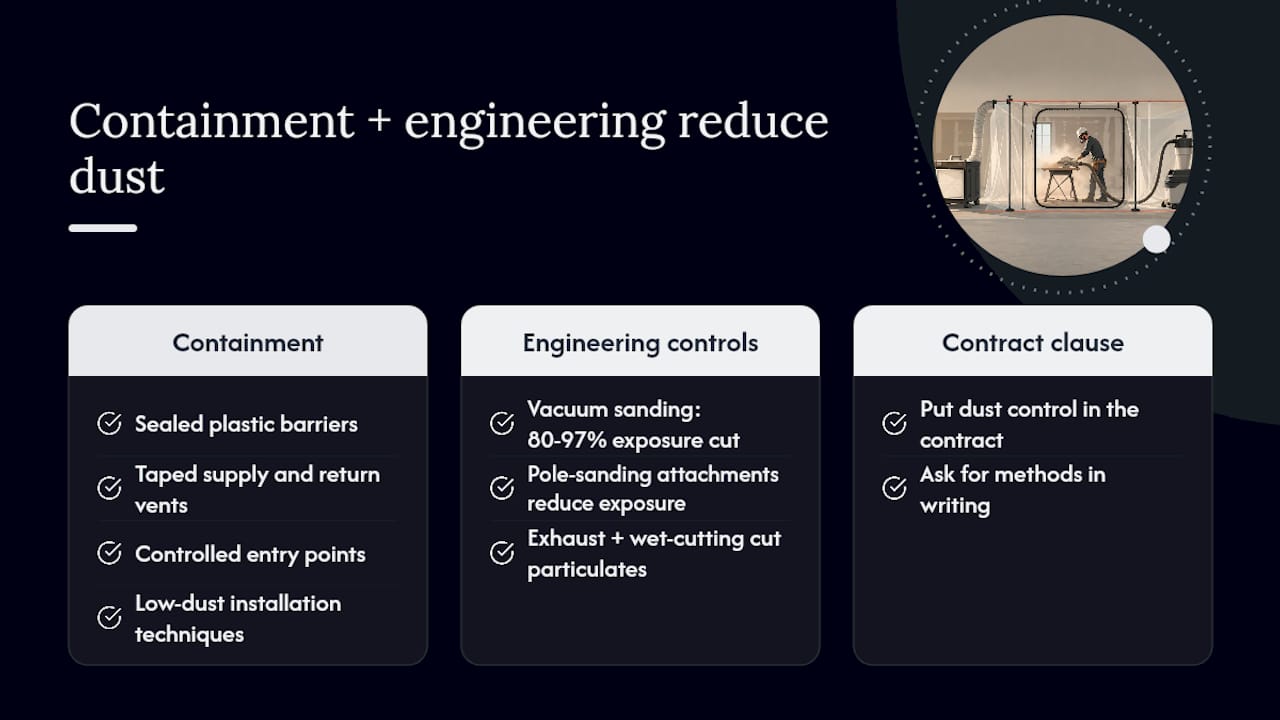
Engineering controls make the biggest difference on sanding-heavy jobs. NIOSH’s testing found vacuum sanding systems cut exposure by 80% to 97% compared with plain dry sanding, and pole-sanding attachments reduce the need for anyone to stand directly in the dust cloud. Local exhaust ventilation during cutting or grinding, and wet-cutting methods where the material allows it, cut particulate generation even further.
If you’re interviewing contractors, put dust control in the contract, not just the conversation. Themaidsociety’s field guide to dust removal methods for contractors breaks down what to ask for in writing.
Testing and Special Hazards: Lead, Mold, and Imported Drywall
Some contaminants aren’t a cleaning problem, they’re a testing and abatement problem. Know the difference before you reach for a vacuum.
- Lead paint in any home built before 1978 should be assumed present until tested, especially if sanding or demolition disturbed old painted surfaces.
- Suspected asbestos in older flooring, insulation, or textured ceilings requires a licensed inspector, not a DIY test kit.
- Persistent sulfurous odors or unusual metal corrosion point toward a specific and rare issue: CPSC investigations into problematic imported drywall found a correlation between certain imported drywall, hydrogen sulfide emissions, corroded copper and silver fixtures, and occupant reports of respiratory irritation that improved when they left the home.
- Mold following water damage disturbed during demolition needs assessment before cleanup begins, especially if it’s been growing behind walls for any length of time.
If you notice any of these signs, don’t try to clean your way through it. Contact a certified inspector, ask specifically what samples they’re taking and why, and keep the affected area sealed off while you wait on results.
This guide provides general information and isn’t a substitute for a licensed inspector’s assessment when lead, asbestos, or mold contamination is suspected.
Themaidsociety’s Post-Construction Cleaning Checklist
This is the sequence Themaidsociety’s teams follow on real post-construction jobs across Los Angeles, built around the same principles the EPA and NIOSH data support: contain first, filter the air, then clean surfaces from top to bottom.
- Prep and containment. Seal off adjoining rooms, cover flooring transitions, and confirm vents are still taped or capped from the job itself.
- HEPA air scrubbing. Run a portable air scrubber for at least an hour before any surface work begins.
- Top-to-bottom HEPA vacuum and damp-wipe pass. Ceilings, walls, and fixtures first, then a microfiber wipe-down of every horizontal surface.
- HVAC filter and grille work. Swap filters, wipe down grilles and registers, and flag any coil that shows visible buildup for a deeper service.
- Textile remediation. Curtains, upholstery, and rugs get HEPA-vacuumed first, then extracted or professionally cleaned if heavily contaminated.
- Final verification walkthrough. A visual and surface-wipe check confirms no dust film remains before sign-off.
Equipment on every job: a true HEPA vacuum with a sealed system, a portable HEPA air scrubber, commercial-grade microfiber supplies, an upholstery or carpet extractor for textile work, and N95 or P100 respirators for the crew.
Pro Tip: Schedule the HVAC filter swap and any duct inspection for the same visit as your deep clean, not weeks later. If you clean the room but leave the ductwork contaminated, you’re just waiting for the dust to come back. For property managers turning over a rental after construction, Themaidsociety’s post-construction cleaning guide for ready-to-rent homes covers the verification steps buyers and tenants expect.
A Note From the Author
I’ve walked into more than a few “finished” renovations where the drywall looked clean but the air still felt heavy, that thin, chalky taste you get in the back of your throat within minutes. It’s the cases you can’t see that worry me most: the corroded fixture that turns out to be an imported-drywall issue, the persistent cough that clears up the second a family stays with relatives for a weekend. When something doesn’t resolve with a standard clean, get it tested before you assume it’s fine.
Themaidsociety serves homeowners, renters, and property managers across Los Angeles, Inglewood, Beverly Hills, Santa Monica, Pacific Palisades, Venice, Marina Del Rey, Brentwood, West LA, Culver City, West Hollywood, Hollywood, Koreatown, Los Feliz, Manhattan Beach, Redondo Beach, Long Beach, Burbank, and the surrounding Southern California communities. If a job feels bigger than a weekend cleanup, local help is a call away.
Book a Post-Construction Cleaning With Themaidsociety
If you’d rather skip the respirator and the HEPA-vacuum shopping trip, Themaidsociety runs post-construction cleaning as a standing service, not an afterthought bolted onto a standard clean. The scope covers HEPA air filtration, top-to-bottom dust extraction, HVAC filter checks, textile remediation, and a final verification walkthrough before we call the job done.

For homeowners and property managers managing a renovation across Los Angeles, Culver City, Burbank, or anywhere in between, that means one call handles the part of the project most people underestimate: the cleanup that decides whether the air in your home is actually safe to breathe again. Explore the full scope on our cleaning services page, or if your project overlaps with a move-in or turnover timeline, check out our move-in and move-out cleaning services. Ready to book? Get in touch for a quote and we’ll walk you through what your specific job needs before we ever step through the door.
Sources
- NIOSH engineering control evaluation: vacuum sanding controls for drywall
- Best practices for indoor air quality when remodeling your home — EPA
- Final Report: Drywall and Indoor Environmental Quality Assessment — CPSC
- Construction Dust in Your House After Renovation? Read This – AirFlow Solutions
- Construction Dust: How to Clean Your Air After Renovation — IndoorHumidity
This article is general information, not a substitute for advice from a qualified doctor. Consult a qualified healthcare professional about your own circumstances before acting on anything here.
Recommended
- Essential Cleaning Hazards to Avoid for a Safer LA Home
- Why Clean Air Ducts After Construction: 2026 Guide
- How to Clean Post-Construction Dust: 2026 Guide



Get Cleaning Tips & Exclusive Offers
Join our community for time-saving hacks and special discounts delivered to your inbox.