
TL;DR:
- Regular site cleanup enhances safety, protects health, and increases property value for homeowners.
- Consistent debris removal prevents hazards and maintains a clean environment in Los Angeles and Southern California.
By L.K. | Themaidsociety | Updated 2026
Table of Contents
- Why site cleanup matters
- How cleanup improves safety and prevents hazards
- How cleanup boosts property value and curb appeal
- Health advantages of regular site cleaning
- Site cleanup best practices for Southern California residents
- Key Takeaways
- Perspective
- Professional cleaning services in Los Angeles
- FAQ
Site cleanup is defined as the systematic removal of debris, dust, waste, and hazardous materials from a residential or construction property to create a safe, organized, and healthy living environment. The importance of site cleanup goes far beyond appearances. For homeowners and tenants across Los Angeles, Beverly Hills, Santa Monica, and the wider Southern California region, regular cleanup directly affects safety, respiratory health, and property value. The U.S. EPA confirms that remediating contaminated sites transforms hazards into community assets, boosting neighborhood stability and mental well-being. Whether you just finished a renovation in Culver City or you are moving into a new rental in West Hollywood, understanding why cleanup matters is the first step toward protecting your home and your investment.
Why site cleanup matters {#why-it-matters}
Site cleanup, also called site remediation or property housekeeping, is the foundation of a safe and livable home. Skipping it creates a chain reaction of problems: blocked emergency exits, airborne dust, pest entry points, and declining property value. Homeowners in high-activity areas like Burbank, Long Beach, and Redondo Beach deal with year-round dust, construction debris from neighboring projects, and seasonal yard waste. Each of these requires a different cleanup approach, but all share the same core principle: remove hazards before they compound.
The site cleanup benefits are not theoretical. Research on New York Brownfield remediation shows property values rose approximately 4% after cleanup, with smaller properties gaining up to 5.6%. That is a measurable return on a task most homeowners treat as optional. Cleanup is not optional. It is proactive home care.
How does site cleanup improve safety and prevent hazards? {#safety}
Regular site cleaning is a critical safety measure that reduces slips, trips, falls, and fire risks from combustible debris. This applies equally to construction zones and residential homes. A cluttered garage in Manhattan Beach or a debris-filled backyard in Carson carries the same risk profile as an unmanaged job site.
Common hazards that cleanup prevents
- Slip and trip hazards: Loose materials, wet surfaces, and scattered tools create fall risks, especially for children and older adults.
- Fire risks: Combustible debris like cardboard, sawdust, and dry yard waste accumulates quickly. Daily waste removal prevents fire hazards on any property.
- Blocked emergency access: Clutter in hallways, garages, and driveways delays evacuation and blocks first responders.
- Pest entry: Debris piles attract rodents and insects, which then find their way indoors.
- Chemical exposure: Improperly stored cleaning products, paint cans, and solvents create toxic exposure risks, especially in enclosed spaces.
Cleanup also aids emergency response. A clear path from every room to every exit is not a luxury. It is a life-safety requirement. Homes in dense neighborhoods like Koreatown or Mid-City LA, where units are close together, benefit especially from organized, clutter-free common areas.
Pro Tip: Schedule a 10-minute end-of-day sweep of high-traffic areas like kitchens, entryways, and garages. Consistent small efforts prevent the hazardous accumulation that makes deep cleaning feel overwhelming.
Cleaning that safeguards health and safety in LA homes requires treating these daily sweeps as non-negotiable, not as weekend tasks.
How does site cleanup boost property value and curb appeal? {#property-value}
Site cleanup has a direct and documented impact on property values. A study on hazardous waste site remediation found that median housing values rose 14.7% at the block level after cleanup. Lower-value homes saw gains as high as 24.4%. These numbers reflect what buyers and renters already know intuitively: a clean, well-maintained property signals care, safety, and long-term value.
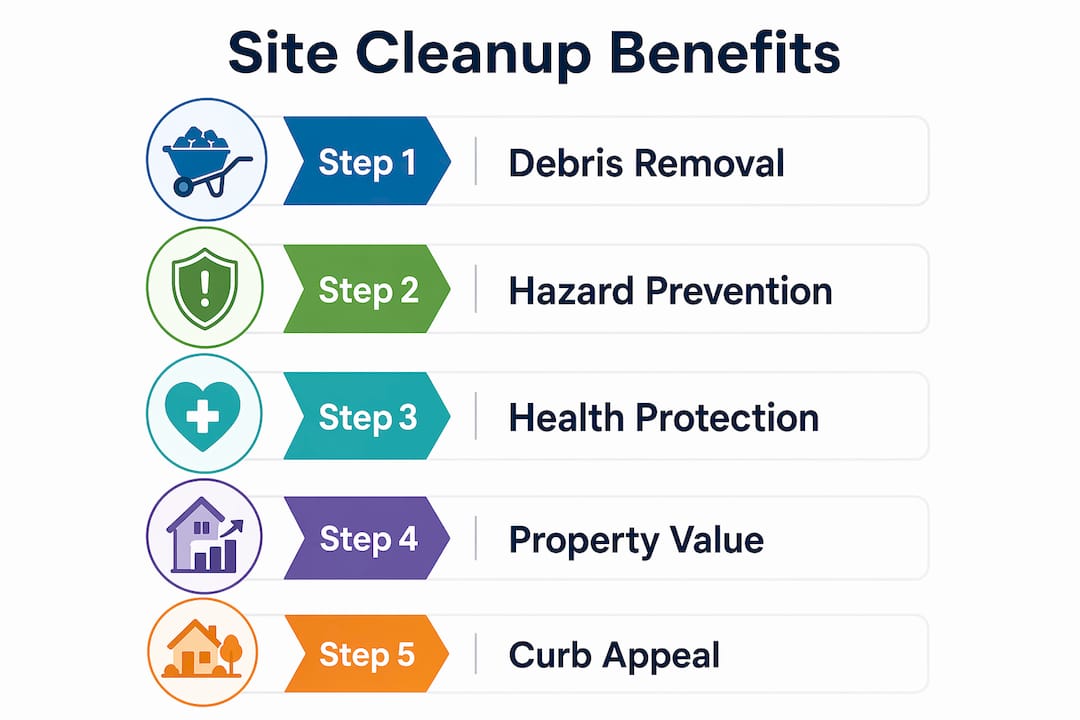
In Southern California’s competitive real estate market, curb appeal is not just cosmetic. Buyers touring homes in Brentwood, Pacific Palisades, or El Segundo make judgments within seconds of arriving. A debris-free yard, clean driveway, and organized exterior communicate that the interior will be equally well-maintained. That perception directly influences offers and rental rates.
Property value impact by cleanup type
| Cleanup Type | Property Class | Value Increase |
|---|---|---|
| Brownfield remediation | Small residential | Up to 5.6% |
| Brownfield remediation | Multifamily | Approximately 1.2% |
| Hazardous waste site cleanup | Block-level median | 14.7% |
| Hazardous waste site cleanup | Lower-value homes | Up to 24.4% |
The role of cleaning in home value is especially pronounced in neighborhoods undergoing renovation cycles, which describes much of Los Angeles right now. Homeowners who maintain clean sites during and after renovation projects protect their investment at every stage.
A garden maintenance checklist that includes regular debris removal and waste disposal is one of the simplest ways to maintain curb appeal between major cleanups.
What are the health advantages of regular site cleaning? {#health}
Post-construction cleanup removes airborne hazards including silica dust, fiberglass particles, and drywall dust that cause serious respiratory illness. These particles are invisible to the naked eye and settle on every surface, including inside HVAC systems, on countertops, and inside cabinets. Breathing them over days or weeks causes lasting lung damage.
This risk is not limited to active construction zones. Homeowners in Westchester, Baldwin Hills, and Gardena who live near ongoing development projects face the same airborne hazard exposure. Renovation work inside a home, even a simple bathroom retile, releases silica and grout dust that lingers for weeks without thorough cleanup.
Hidden dust hazards to identify and manage
- HVAC vents and filters: Dust accumulates here first and recirculates through every room. Replace filters after any dust-heavy work.
- Cabinet interiors: Fine particles settle inside open cabinets during construction. Wipe down all interior surfaces before restocking.
- Window sills and ledges: These collect dust that is invisible from standing height but easily inhaled during normal activity.
- Soft furnishings: Rugs, curtains, and upholstered furniture trap fine particles. Vacuum with a HEPA filter after any renovation phase.
Experts confirm that removing construction dust protects respiratory health and is non-negotiable during and after projects. The health benefits of cleaning regularly extend beyond dust removal to include reduced allergen load, lower stress levels, and better sleep quality.
What are the best site cleanup practices for Southern California residents? {#best-practices}
Effective site cleanup requires a schedule, the right tools, and an understanding of local waste disposal rules. Southern California residents face specific conditions: year-round dry weather that keeps dust airborne longer, wildfire season that deposits ash and debris, and dense urban environments where waste can accumulate quickly in small spaces.
Daily and weekly cleanup routine
- Daily sweep of high-traffic areas. Kitchens, entryways, and bathrooms collect debris fastest. A quick sweep prevents buildup.
- Weekly exterior check. Inspect driveways, patios, and yards in areas like Venice, Marina Del Rey, and West LA for debris, fallen branches, and waste.
- Monthly deep clean of storage areas. Garages and utility rooms in homes across Hawthorne and Westwood tend to become catch-all spaces. Schedule a monthly clear-out.
- Post-renovation deep clean. After any construction or renovation work, treat the entire home as a contaminated zone. Clean from ceiling to floor, not floor to ceiling, so dust falls onto surfaces you have not yet cleaned.
- Proper waste disposal. Los Angeles County has specific rules for construction debris, hazardous materials, and green waste. Use designated disposal sites and never mix chemical waste with regular trash.
Ongoing maintenance vs. end-of-project cleanup
Ongoing maintenance prevents the hazardous accumulation that makes end-of-project cleanup so costly. Cleanup treated as a daily safety control prevents OSHA penalties, costly delays, and accidents. The same principle applies at home: daily habits eliminate the need for emergency deep cleans.
End-of-project cleanup, by contrast, is a professional standard. A spotless site signals project readiness and protects against client dissatisfaction and costly rework. For homeowners finishing a renovation in Hollywood or Los Feliz, this means hiring professionals for the final clean rather than assuming a surface wipe-down is sufficient.
Pro Tip: A visually clean site can still hide serious hazards. Fine dust on ledges and improperly stored chemicals can cause a property to fail safety inspections even when it looks spotless. Always clean above eye level and check chemical storage after any work phase.
Avoiding cleaning hazards specific to LA homes, such as mixing bleach with ammonia-based products or using abrasive cleaners on sealed surfaces, is part of any responsible cleanup plan. Poor cleanup also creates legal and financial exposure. Financial fallout from neglected cleanup includes legal risks, material damage, and expensive rework that proactive maintenance would have prevented entirely.
Key Takeaways {#key-takeaways}
Regular site cleanup is the single most effective action homeowners and tenants can take to protect their safety, health, and property value simultaneously.
| Point | Details |
|---|---|
| Safety comes first | Daily debris removal prevents slips, fire risks, and blocked emergency exits in any home. |
| Cleanup raises property value | Hazardous waste site cleanup raised median housing values by 14.7%, with gains up to 24.4% for lower-value homes. |
| Respiratory health depends on it | Silica, fiberglass, and drywall dust cause lasting lung damage without thorough post-renovation cleanup. |
| Ongoing beats one-time | Daily maintenance prevents the costly accumulation that makes end-of-project cleanup overwhelming and expensive. |
| Southern California context matters | Wildfire ash, year-round dust, and dense urban conditions require localized cleanup schedules and proper waste disposal. |
Why I think most homeowners underestimate cleanup {#perspective}
By L.K.
After years of working with homeowners and tenants across Los Angeles, from Inglewood to Beverly Hills, I have seen the same pattern repeat. People treat cleanup as the last item on the list, something to handle after everything else is done. That mindset costs them money, health, and peace of mind.
The most surprising thing I have learned is that a clean-looking home is not always a safe one. Fine construction dust settles on surfaces you cannot see from standing height. Chemicals stored in the garage after a renovation sit there for months, forgotten. These invisible hazards are the ones that cause real harm, and they are entirely preventable.
What I tell every homeowner I work with is this: cleanup is not a reaction to mess. It is a system you build before the mess arrives. In Southern California, where construction, renovation, and seasonal debris are facts of life, that system is what separates homes that hold their value from ones that quietly deteriorate.
The neighborhoods I see this most clearly in are the ones going through renovation cycles, places like West Adams, Koreatown, and Los Feliz, where older homes are being updated constantly. The homeowners who maintain clean sites throughout the process end up with better inspection results, higher appraisals, and fewer health complaints. The ones who skip it spend more in the long run.
Cleanup is not glamorous. But it is one of the highest-return habits a homeowner can build.
— Lyndsey
Professional cleaning services in Los Angeles for site cleanup {#promo}
Themaidsociety provides residential cleaning services across Los Angeles, Beverly Hills, Santa Monica, Culver City, West Hollywood, and the surrounding Southern California area. Whether you need a post-renovation deep clean, a move-in fresh start, or ongoing home maintenance, the team at Themaidsociety delivers consistent, detail-oriented results.

Every service is performed by fully vetted, trained cleaners who understand the specific challenges of LA homes, from construction dust to wildfire ash residue. Explore cleaning services in Los Angeles tailored to your home’s needs, or get a customized plan for your property. For tenants starting fresh, the move-in cleaning guide for LA covers everything you need to know before unpacking. If you are managing a renovation project, the deep cleaning process for builders ensures your site meets professional standards at handover.
Recommended Articles
- Why post-renovation cleaning matters in Los Angeles
- How cleaning safeguards health and safety in LA homes
- Best practices for job site cleaning after construction
- Home organization checklist for LA families
- Role of cleaning in project completion
FAQ {#faq}
Why is site cleanup important for homeowners?
Site cleanup removes safety hazards, reduces airborne dust that causes respiratory illness, and directly raises property value. Research shows hazardous waste site cleanup raised median housing values by 14.7% at the block level.
How often should I clean up my home site?
Daily sweeps of high-traffic areas, weekly exterior checks, and monthly deep cleans of storage areas form the core schedule. Post-renovation cleanup requires a full top-to-bottom professional clean regardless of how the site looks.
What hidden hazards does site cleanup address?
Fine silica dust, fiberglass particles, and improperly stored chemicals are common hidden hazards. A visually clean site can still fail safety inspections if these are present on ledges, inside vents, or in storage areas.
Does site cleanup really increase property value?
Yes. New York Brownfield remediation data shows small residential properties gained up to 5.6% in value after cleanup. Hazardous waste site cleanup produced gains as high as 24.4% for lower-value homes nearby.
What is the difference between ongoing maintenance and end-of-project cleanup?
Ongoing maintenance is a daily habit that prevents hazardous accumulation and reduces the cost of deep cleaning. End-of-project cleanup is a thorough, professional-grade clean performed after construction or renovation to meet safety and handover standards.
<script type="application/ld+json">
{
  "@context": "https://schema.org",
  "@type": "Article",
  "headline": "The Real Importance of Site Cleanup for Homeowners",
  "description": "Learn why site cleanup is critical for safety, health, and property value. Practical strategies for homeowners and tenants in Los Angeles and Southern California.",
  "author": {
    "@type": "Person",
    "name": "L.K."
  },
  "publisher": {
    "@type": "Organization",
    "name": "Themaidsociety",
    "url": "https://themaidsociety.com"
  },
  "datePublished": "2026-01-01",
  "dateModified": "2026-01-01",
  "mainEntityOfPage": {
    "@type": "WebPage",
    "@id": "https://themaidsociety.com/importance-of-site-cleanup"
  },
  "keywords": ["importance of site cleanup", "site cleanup benefits", "site cleanup best practices", "why is site cleanup important", "advantages of site maintenance"],
  "articleSection": ["Safety", "Property Value", "Health", "Best Practices"],
  "about": {
    "@type": "Thing",
    "name": "Residential Site Cleanup"
  }
}
</script>
<script type="application/ld+json">
{
  "@context": "https://schema.org",
  "@type": "FAQPage",
  "mainEntity": [
    {
      "@type": "Question",
      "name": "Why is site cleanup important for homeowners?",
      "acceptedAnswer": {
        "@type": "Answer",
        "text": "Site cleanup removes safety hazards, reduces airborne dust that causes respiratory illness, and directly raises property value. Research shows hazardous waste site cleanup raised median housing values by 14.7% at the block level."
      }
    },
    {
      "@type": "Question",
      "name": "How often should I clean up my home site?",
      "acceptedAnswer": {
        "@type": "Answer",
        "text": "Daily sweeps of high-traffic areas, weekly exterior checks, and monthly deep cleans of storage areas form the core schedule. Post-renovation cleanup requires a full top-to-bottom professional clean."
      }
    },
    {
      "@type": "Question",
      "name": "Does site cleanup really increase property value?",
      "acceptedAnswer": {
        "@type": "Answer",
        "text": "Yes. New York Brownfield remediation data shows small residential properties gained up to 5.6% in value after cleanup. Hazardous waste site cleanup produced gains as high as 24.4% for lower-value homes nearby."
      }
    }
  ]
}
</script>
Want to grow your home services business online? ConvertLabs helps residential service companies convert more website visitors into booked clients.
Recommended
- Why Cleaning Matters for Vacant Homes: Value, Safety
- Best practices for job site cleaning after construction
- Role of Cleaning in Home Value Enhancement



Get Cleaning Tips & Exclusive Offers
Join our community for time-saving hacks and special discounts delivered to your inbox.