TL;DR:
- Eco-friendly cleaning uses biodegradable, non-toxic ingredients and minimizes indoor chemical exposure.
- Certified green products perform effectively while reducing VOCs and environmental impact.
- Professional LA cleaning services ensure safe, effective, and sustainable routines for healthy homes.
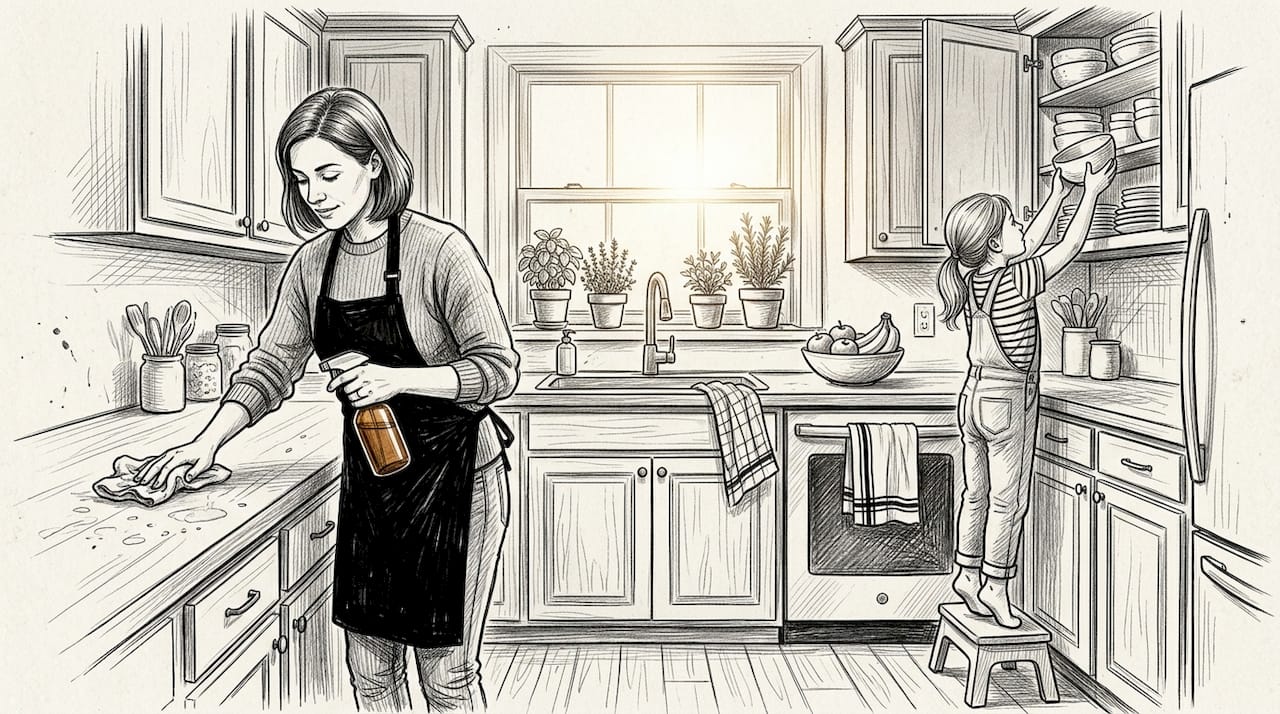
Most people assume their home is clean after a good scrub with store-bought products. But those same products can quietly fill your indoor air with volatile organic compounds (VOCs), synthetic fragrances, and chemical residues that linger long after the bottle goes back under the sink. For LA families trying to protect their kids, pets, and overall health, that’s a serious problem. This guide breaks down what eco-friendly cleaning actually means, how it works, and how to do it effectively in your Los Angeles home, without the guesswork or greenwashing.
Table of Contents
- What does eco-friendly cleaning mean?
- How do eco-friendly cleaning products and methods work?
- Eco-friendly cleaning versus traditional products: Performance, safety, and value
- How to use eco-friendly cleaning safely and effectively in LA homes
- Why eco-friendly cleaning is vital, beyond just being ‘green’
- Make eco-friendly living effortless with professional LA help
- Frequently asked questions
Key Takeaways
| Point | Details |
|---|---|
| Real eco cleaning defined | Eco-friendly cleaning means using certified, safer products and practices that protect both the household and the environment. |
| Healthier indoor air | Green cleaning solutions greatly reduce VOCs and toxins, improving the air quality in your home. |
| Smart certifications matter | Look for EPA Safer Choice and Green Seal labels to ensure products meet verified eco and safety standards. |
| LA home practical tips | Focus on refillable concentrates, drought-efficient tools, and correct procedure for best eco results in Los Angeles. |
What does eco-friendly cleaning mean?
Let’s clear something up right away. Eco-friendly cleaning isn’t just about buying a bottle with a leaf on the label. It’s a whole approach to how you clean, what you use, and what you leave behind.
At its core, eco-friendly cleaning uses products and methods that minimize harm to human health and the environment. That means choosing biodegradable ingredients, reducing waste, conserving water, and avoiding chemicals that off-gas into your indoor air. In Los Angeles, where air quality is already a concern, this matters more than most people realize.
Here’s what separates genuine eco-friendly cleaning from conventional cleaning:
- Biodegradable ingredients that break down safely after use, rather than persisting in waterways
- No synthetic fragrances or dyes, which are common sources of indoor VOCs
- Lower water consumption, important in a region that regularly faces drought restrictions
- Reduced packaging waste, through concentrates and refillable options
- Third-party certifications that verify ingredient safety, not just marketing claims
One thing worth knowing: “natural” on a label means almost nothing legally. A product can call itself natural while still containing harsh solvents or undisclosed fragrance chemicals. True eco-friendly cleaning relies on verified ingredients and reputable certifications, which we’ll cover in the next section.
“Eco-friendly cleaning is a holistic practice. It considers the full impact of a product, from how it’s made to how it’s disposed of, not just whether it smells like lavender.”
The goal isn’t just a surface that looks clean. It’s a home where the air is safer to breathe, surfaces don’t leave chemical residues on little hands, and your cleaning routine doesn’t contribute to LA’s broader environmental challenges. That’s a meaningful difference.
How do eco-friendly cleaning products and methods work?
So what’s actually inside a green cleaning product, and why does it matter? The answer comes down to ingredients, tools, and verification.
Most effective green cleaners rely on plant-derived surfactants, enzymes, and pH adjustment to lift dirt and break down grease. Surfactants are the compounds that make water “wetter,” helping it penetrate grime. Plant-based versions do the same job as petroleum-derived ones, but they biodegrade much faster and don’t leave the same residue. Enzymes target specific types of mess, like proteins in food stains or uric acid in pet accidents, which is why enzyme-based cleaners often outperform bleach on organic messes.
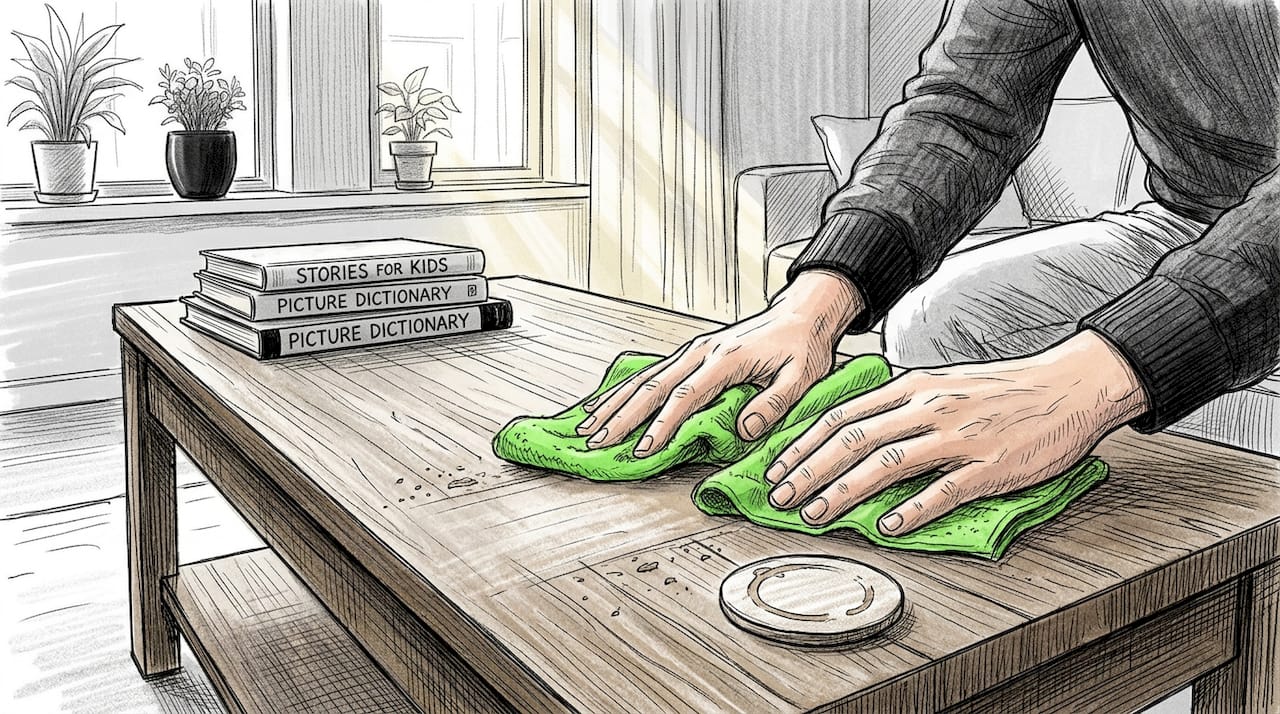
Tools matter just as much as products. Microfiber cloths, for example, physically trap bacteria and particles at a microscopic level, dramatically reducing how much cleaner you need. Compared to paper towels, microfiber cuts waste and is far more effective at picking up dust rather than just pushing it around.
Here’s a quick comparison of green versus conventional product attributes:
| Feature | Green products | Conventional products |
|---|---|---|
| Key ingredients | Plant-based, enzymatic | Petroleum-based, synthetic |
| VOC levels | Low to none | Often high |
| Biodegradability | High | Low to moderate |
| Certifications | EPA Safer Choice, Green Seal | Rarely third-party verified |
| Packaging | Often refillable/concentrated | Single-use plastic |
When shopping for eco-friendly cleaning tips and products, look for two certifications above all others. The EPA Safer Choice program evaluates every ingredient in a product for safety. Green Seal certification standards go further, assessing performance, packaging, and manufacturing practices. If a product carries either label, you can trust it’s been independently verified, not just self-declared “green.”
For LA homeowners, this verification step is critical. The market is flooded with products that use vague language to imply eco-friendliness without earning it. Checking for EPA Safer Choice products before you buy is one of the simplest ways to protect your family.
Pro Tip: Concentrated cleaners diluted at home often cost less per use than ready-to-use bottles, and they dramatically cut down on plastic waste. A single concentrate bottle can replace a dozen single-use containers.
Eco-friendly cleaning versus traditional products: Performance, safety, and value
A fair question: do green cleaners actually work as well? The short answer is yes, in most cases, and the research backs it up.
Green cleaning reduces indoor VOCs, CO2 emissions, and matches or exceeds the cleaning power of many conventional products. Indoor air in homes using traditional cleaners can contain VOC levels up to 5 times higher than outdoor air, largely because of the solvents and synthetic fragrances in common sprays and disinfectants. Switching to certified green products significantly lowers that exposure, which matters especially for children and anyone with asthma or allergies.
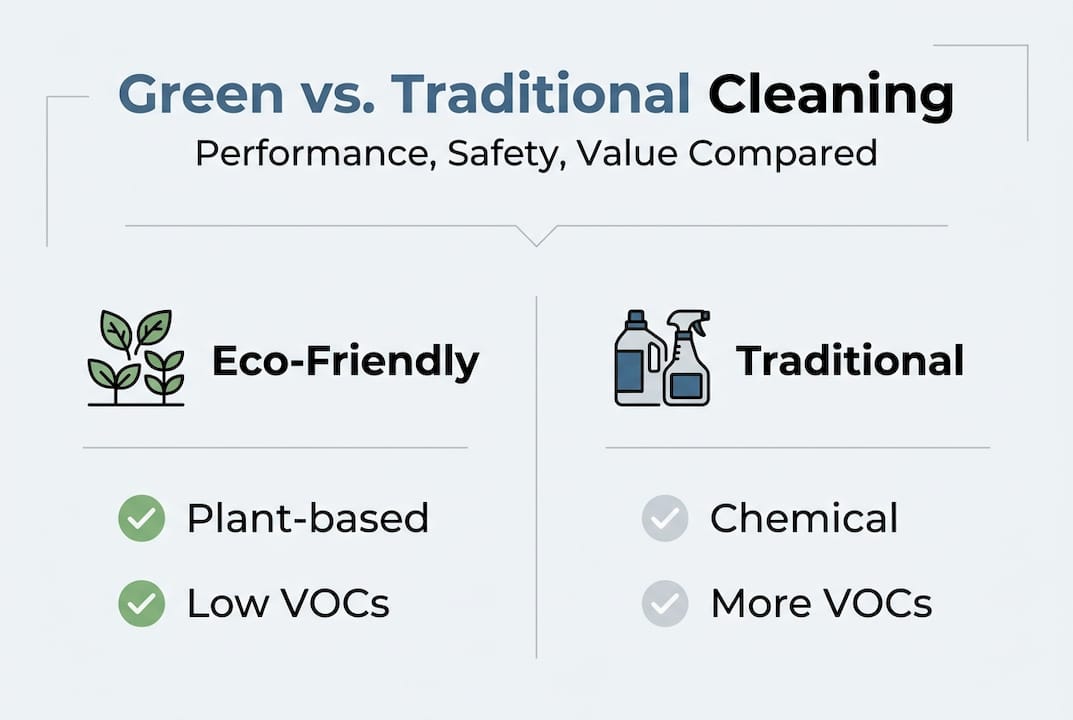
On performance, most green cleaners are fully competitive. Enzymes outperform bleach on organic stains. Microfiber plus a plant-based cleaner handles kitchen grease effectively. There are some exceptions: isopropyl alcohol and bleach remain the gold standard for certain disinfection tasks in medical or high-risk settings. For everyday household cleaning, though, green options hold up well.
What about cost? Research shows that green cleaners match or exceed conventional efficacy in most applications, with pricing that is cost-neutral or only slightly higher, often within 10%. When you factor in concentrate formats and reusable tools, the real-world cost difference shrinks further.
| Factor | Green products | Traditional products |
|---|---|---|
| Efficacy on surfaces | Equal or better | Equal or better |
| Disinfection (porous) | Good with dwell time | Strong |
| VOC exposure | Very low | High |
| Child and pet safety | High | Lower |
| Cost per use | Neutral to +10% | Baseline |
For families following natural cleaning steps at home, the safety advantage is significant. Kids touch surfaces constantly. Pets lick floors. Lower toxin exposure from certified green products reduces the risk of skin irritation, respiratory issues, and accidental ingestion.
Pro Tip: If you’re managing efficient cleaning for LA families on a tight schedule, concentrate formats save both time and money. Mix what you need, store the rest, and skip the extra shopping trips.
How to use eco-friendly cleaning safely and effectively in LA homes
Ready to put green cleaning into action? Here’s how to get reliable results in your home.
Follow these steps for consistent, safe results:
- Declutter first. Remove items from surfaces before cleaning. This lets you clean more thoroughly and use less product.
- Choose the right product for the task. Enzyme cleaners for organic messes, plant-based degreasers for kitchens, and pH-neutral cleaners for sealed floors.
- Read the label and respect dwell time. Many green disinfectants need 30 to 60 seconds of contact time to work. Wiping immediately reduces effectiveness.
- Use microfiber tools. Pair with minimal cleaner for most surfaces. Less product, better results.
- Ventilate while you clean. Open windows to improve airflow, which also reduces any residual odor from even low-VOC products.
- Rinse surfaces after cleaning. Especially in kitchens and bathrooms where residue can accumulate.
Some common mistakes to avoid:
- Trusting “natural” labels without checking for third-party certification
- Skipping dwell time on disinfectants, which dramatically cuts their effectiveness
- Mixing green products with conventional ones, which can create unexpected reactions
- Using too much product, which wastes money and leaves residue
For your green cleaning toolkit, the best cleaning tools for LA homes include:
- Microfiber cloths and mop pads (washable and reusable)
- Refillable spray bottles for concentrates
- A plant-based all-purpose cleaner with EPA Safer Choice certification
- An enzyme-based cleaner for pet messes and food stains
- A natural scrubbing brush for grout and tile
In Southern California, water conservation is part of responsible cleaning. Use damp rather than wet cloths, and avoid running water continuously while scrubbing. Green products may be less effective on porous surfaces without correct contact time, so physical scrubbing is your best backup.
Pro Tip: LA tap water tends to be hard, meaning high mineral content. This can leave streaks on glass and reduce the lather of some plant-based cleaners. A small amount of white vinegar in your rinse water solves this quickly. And always test any new cleaner on a small, hidden area first.
For those weighing DIY vs professional green cleaning, knowing your limits is part of cleaning smart.
Why eco-friendly cleaning is vital, beyond just being ‘green’
Here’s something most cleaning guides won’t tell you: the biggest risk in your home isn’t visible dirt. It’s what you can’t see.
Chemical residues from conventional cleaners settle on countertops, floors, and upholstery. They off-gas slowly for hours after use. For a family in Los Angeles already dealing with outdoor air quality challenges, adding indoor chemical exposure on top of that is a real health burden, not a hypothetical one.
We’ve seen this firsthand. Families who switch to certified eco-friendly routines often notice fewer headaches, less skin irritation, and better sleep, not because of some placebo effect, but because they’ve genuinely reduced their toxic load at home. That’s not marketing. That’s what happens when you remove the chemicals that didn’t need to be there in the first place.
The other thing most guides miss is community impact. In LA, how you clean affects more than your home. Cleaning product runoff enters storm drains and eventually reaches the ocean. Water-intensive cleaning habits strain a system already under drought pressure. Choosing certified products and water-smart methods is part of being a responsible neighbor in this city.
Trendy eco-friendly products come and go. What lasts is a rigorous habit: checking certifications, reading ingredient lists, and understanding that cleaning’s impact on home value and family health is a long-term investment, not a one-time choice. Real eco-friendly cleaning is about trust, health, and accountability, not aesthetics.
Make eco-friendly living effortless with professional LA help
If you want to make eco-friendly cleaning a consistent standard in your home without spending hours researching products and methods, professional help is worth considering.
At The Maid Society, our team is trained in sustainable cleaning practices using EPA Safer Choice and Green Seal certified products. We bring the expertise, the right tools, and the accountability that makes a real difference for LA families. Whether you need a one-time deep clean or a recurring green routine, our eco-friendly cleaning services are built around your family’s health and your home’s specific needs. Explore our residential cleaning terminology page to understand exactly what’s included, and reach out to talk through options that fit your lifestyle.
Frequently asked questions
What ingredients should I avoid in home cleaning products?
Avoid products containing bleach, ammonia, synthetic fragrances, phthalates, and parabens. These are among the most common harmful conventional ingredients found in standard household cleaners and are linked to respiratory irritation and other health concerns.
Do eco-friendly cleaning products really sanitize as well as regular ones?
Many certified green cleaners achieve microbial reduction comparable to conventional disinfectants, though some are less effective on porous surfaces or without proper dwell time. Following label instructions closely makes a significant difference in results.
Are eco-friendly cleaning products safe for children and pets?
Products certified by EPA Safer Choice and Green Seal are evaluated specifically to avoid toxins that endanger kids and pets. Safety for health and the environment is the primary benchmark for these certifications, making them a reliable choice for family homes.
How can I tell if a cleaning product is truly eco-friendly?
Look for EPA Safer Choice or Green Seal certification on the label rather than relying on vague terms like “natural” or “green.” Third-party certification is the only reliable way to verify a product’s safety and performance claims.
Recommended
- Eco-Friendly Cleaning Defined – Healthier Homes in LA
- 7 Eco-Friendly Cleaning Tips for Healthy LA Family Homes
- Importance of Home Cleaning – Impact on Busy Families
- How to Clean Busy Home Naturally: A Step-by-Step Guide
- 7 Key Advantages of Paraben-Free Haircare for Women – LUXEVA


Get Cleaning Tips & Exclusive Offers
Join our community for time-saving hacks and special discounts delivered to your inbox.