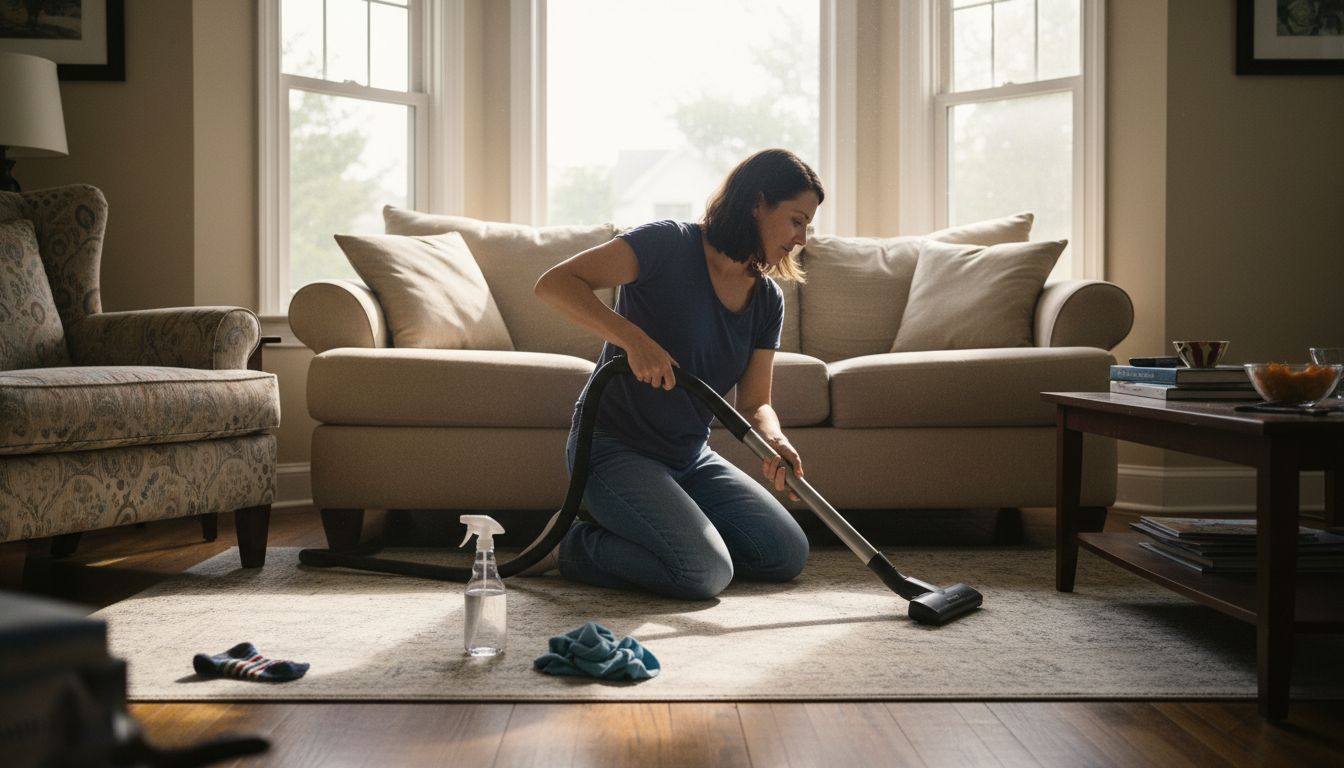
Most American homes hide more dust and grime than you might think. Research shows that even the cleanest spaces can harbor dust mites, bacteria, and allergens in forgotten corners. These invisible culprits impact everything from indoor air quality to the lifespan of your furniture and appliances. By understanding the real threats lurking beneath sofas, behind baseboards, and inside appliances, you gain practical strategies to create a healthier, fresher home environment.
Table of Contents
- Cleaning Behind and Under Furniture for Hidden Dust
- Scrubbing Baseboards, Trim, and Door Frames
- Deep Cleaning Inside Kitchen Appliances
- Washing Windows, Tracks, and Screens Thoroughly
- Sanitizing Bathroom Grout and Tile Surfaces
- Vacuuming and Shampooing Carpets and Rugs
- Wiping Down Light Fixtures, Vents, and Ceiling Fans
Quick Summary
| Takeaway | Explanation |
|---|---|
| 1. Clean Hidden Dust Regularly | Move furniture to access and vacuum hidden areas every three months to improve air quality and cleanliness. |
| 2. Maintain Baseboards and Trim | Clean these surfaces twice a year using mild detergent and microfiber cloths for better hygiene and aesthetics. |
| 3. Deep Clean Kitchen Appliances Monthly | Focus on removing food residue and bacteria from appliances to enhance performance and kitchen hygiene. |
| 4. Wash Windows and Tracks on Cloudy Days | This prevents streaking and ensures thorough cleaning, contributing to better indoor air and home appearance. |
| 5. Sanitize Bathroom Grout Every Three Months | Use specialized cleaners to prevent mold and bacteria buildup, ensuring a hygienic bathroom environment. |
1. Cleaning Behind and Under Furniture for Hidden Dust
Dust accumulation behind and under furniture represents a hidden challenge for maintaining a truly clean home environment. Many homeowners overlook these spaces, allowing allergens and microscopic particles to build up silently where standard cleaning routines cannot reach.
Why Hidden Dust Matters
These concealed areas become breeding grounds for dust mites, pet dander, and microscopic debris that can significantly impact indoor air quality. Thorough cleaning techniques recommended by experts emphasize the importance of moving furniture to access these typically neglected zones.
Strategic Cleaning Approach
To effectively tackle hidden dust, you need a systematic method that involves:
- Moving furniture completely away from walls
- Using specialized vacuum attachments with slim profiles
- Wiping down baseboards and floor surfaces
- Cleaning furniture undersides and rear surfaces
Pro Cleaning Techniques
Professional cleaners recommend starting with larger furniture pieces like sofas, bookcases, and entertainment centers. Use microfiber cloths or extendable dusting tools that can reach tight spaces. A comprehensive deep cleaning checklist suggests vacuuming these areas at least once every three months to maintain optimal cleanliness.
Essential Tools for the Job
- Slim vacuum extension wands
- Microfiber dusting cloths
- Extendable cleaning tools
- Lightweight movable furniture sliders
By dedicating time to these often forgotten spaces, you dramatically improve your home’s overall cleanliness and air quality.
2. Scrubbing Baseboards, Trim, and Door Frames
Baseboards, trim, and door frames are the silent collectors of dust, scuffs, and grime that often escape our regular cleaning routines. These architectural details can quickly accumulate dirt that diminishes the overall appearance of your living spaces.
Why Cleaning These Areas Matters
These surfaces are not just decorative elements but key indicators of your home’s overall cleanliness. Professional cleaning guidelines recommend thorough cleaning to maintain both aesthetic appeal and surface integrity.
Preparation and Tools
Before you begin, gather the following supplies:
- Microfiber cloths
- Soft bristle brush
- Mild detergent
- Warm water
- Bucket
- Extendable cleaning tool
- Protective gloves
Cleaning Technique
Consumer cleaning experts suggest a methodical approach that involves:
- Dusting surfaces with a microfiber cloth
- Creating a gentle cleaning solution
- Working in small sections
- Using soft circular motions
- Wiping away residue with a clean damp cloth
Pro Tips for Optimal Results
To make your baseboards and trim shine:
- Work from top to bottom
- Use white cleaning cloths to monitor dirt removal
- Clean twice a year for consistent maintenance
- Pay extra attention to high traffic areas
Consistent care of these often overlooked surfaces will dramatically improve your home’s overall cleanliness and visual appeal.
3. Deep Cleaning Inside Kitchen Appliances
Kitchen appliances harbor hidden dirt and grime that standard cleaning often misses. These interior spaces become breeding grounds for bacteria, food residue, and unpleasant odors that can impact both appliance performance and kitchen hygiene.
Why Interior Appliance Cleaning Matters
Food particles, grease, and mineral buildup can significantly reduce the efficiency and lifespan of your kitchen equipment. Professional cleaning checklists recommend thorough interior cleaning as a critical maintenance strategy.
Appliances to Focus On
Target these key kitchen appliances during your deep cleaning routine:
- Refrigerator interior and drawers
- Oven and stovetop
- Microwave
- Dishwasher
- Coffee maker
- Toaster
Detailed Cleaning Approach
Comprehensive cleaning guidelines suggest specific techniques for different appliances:
- Remove all removable parts
- Use appropriate cleaning solutions
- Scrub with soft brushes
- Sanitize surfaces thoroughly
- Dry completely before reassembling
Pro Cleaning Tips
To maintain appliance hygiene:
- Clean interiors monthly
- Use white vinegar for natural sanitization
- Avoid abrasive cleaners
- Pay attention to seals and hard to reach areas
- Replace filters regularly
Consistent interior appliance cleaning ensures better performance, longer equipment life, and a healthier kitchen environment.
4. Washing Windows, Tracks, and Screens Thoroughly
Windows, tracks, and screens are often overlooked during routine cleaning, yet they play a crucial role in maintaining a clean and healthy home environment. These surfaces accumulate dust, pollen, and grime that can impact indoor air quality and overall home aesthetics.
Why Thorough Window Cleaning Matters
Dirty windows and tracks not only look unsightly but can also impede proper window functionality and create potential entry points for allergens and insects. Comprehensive cleaning goes beyond simple surface wiping.
Essential Cleaning Supplies
Gather these tools before starting:
- Microfiber cloths
- Soft bristle brush
- Vacuum with brush attachment
- Mild detergent
- White vinegar
- Spray bottle
- Squeegee
- Lint free towels
Systematic Cleaning Process
Professional cleaning experts recommend a methodical approach that includes:
- Removing screens carefully
- Vacuuming track debris
- Cleaning tracks with specialized brush
- Washing screens with gentle solution
- Wiping window surfaces thoroughly
Pro Cleaning Techniques
To achieve professional results:
- Clean windows on cloudy days to prevent streaking
- Work from top to bottom
- Use horizontal strokes on one side, vertical on another
- Rinse screens completely before reinstalling
- Dry surfaces immediately with lint free cloth
Regular window and track maintenance ensures a cleaner, brighter home interior and extends the life of your windows.
5. Sanitizing Bathroom Grout and Tile Surfaces
Bathroom grout and tile surfaces are notorious breeding grounds for mold, mildew, and bacteria that can compromise both aesthetic appeal and health. These porous surfaces require specialized attention to maintain true cleanliness and prevent potential health hazards.
Why Grout and Tile Sanitization Matters
Moisture rich environments like bathrooms create perfect conditions for microbial growth. Untreated surfaces can lead to respiratory issues, allergic reactions, and persistent unpleasant odors that compromise your living space.
Essential Cleaning Supplies
Prepare these tools for effective sanitization:
- White vinegar
- Baking soda
- Hydrogen peroxide
- Scrub brush
- Microfiber cloths
- Protective gloves
- Spray bottle
- Grout brush
Systematic Cleaning Process
Professional cleaning checklists recommend a comprehensive approach that includes:
- Removing surface debris
- Applying specialized cleaning solution
- Scrubbing with targeted techniques
- Rinsing thoroughly
- Drying completely
Advanced Sanitization Techniques
Comprehensive bathroom cleaning guides suggest additional strategies:
- Use oxygen bleach for tough stains
- Apply sealant after deep cleaning
- Ventilate bathroom during and after cleaning
- Repeat process every three months
- Address moisture issues promptly
Consistent grout and tile maintenance prevents long term damage and maintains a hygienic bathroom environment.
6. Vacuuming and Shampooing Carpets and Rugs
Carpets and rugs are magnets for dust, allergens, and hidden debris that standard cleaning methods often miss. These textile surfaces require specialized deep cleaning techniques to maintain their appearance and preserve indoor air quality.
Why Thorough Carpet Maintenance Matters
Regular carpet care goes beyond surface cleaning. Accumulated dirt can break down carpet fibers, trap allergens, and create potential health risks for your household. Professional cleaning approaches target these deep seated issues.
Essential Cleaning Equipment
Prepare these tools for comprehensive carpet maintenance:
- Industrial grade vacuum cleaner
- Carpet shampoo
- Microfiber towels
- Carpet cleaning machine
- Protective gloves
- Stain removal solution
- Soft bristle brush
- Carpet rake
Systematic Cleaning Approach
Professional cleaning guidelines recommend a multistep process that includes:
- Thorough initial vacuuming
- Treating specific stains
- Applying carpet shampoo
- Using machine for deep cleaning
- Proper drying techniques
Advanced Maintenance Strategies
Comprehensive deep cleaning techniques suggest additional steps:
- Vacuum high traffic areas twice weekly
- Shampoo carpets every 12 to 18 months
- Address spills immediately
- Use protective treatments
- Rotate area rugs periodically
Consistent carpet and rug maintenance preserves their beauty, extends their lifespan, and creates a healthier living environment.
7. Wiping Down Light Fixtures, Vents, and Ceiling Fans
Overhead surfaces like light fixtures, vents, and ceiling fans are magnets for dust and grime that often go unnoticed during routine cleaning. These areas accumulate significant amounts of debris that can impact air quality and overall home cleanliness.
Why Overhead Surface Cleaning Matters
Neglected overhead surfaces not only look unsightly but can also reduce air circulation, decrease lighting efficiency, and potentially trigger respiratory issues for sensitive individuals. Regular maintenance prevents these potential problems.
Essential Cleaning Supplies
Gather these tools for effective overhead cleaning:
- Extendable duster
- Microfiber cloths
- Stepladder
- Soft bristle brush
- Mild all purpose cleaner
- Protective gloves
- Compressed air canister
- Lint free towels
Systematic Cleaning Process
Professional cleaning guidelines recommend a comprehensive approach that includes:
- Turn off power to fixtures
- Remove removable components
- Dust initial surface layer
- Apply appropriate cleaning solution
- Wipe thoroughly
- Dry completely before reassembling
Advanced Maintenance Techniques
Comprehensive deep cleaning strategies suggest additional steps:
- Clean ceiling fans monthly
- Use pillowcase method for fan blades
- Check vent covers quarterly
- Replace air filters regularly
- Use soft tools to prevent surface scratching
- Work from top to bottom
Consistent overhead surface maintenance ensures better air quality, improved lighting, and a cleaner overall living environment.
This table summarizes key cleaning strategies and benefits for various household areas as discussed in the article.
| Area | Key Actions | Benefits/Outcomes |
|---|---|---|
| Cleaning Behind/Under Furniture | Move furniture, use slim vacuum attachments, clean undersides and rear surfaces | Improves air quality, reduces allergens |
| Baseboards, Trim, and Door Frames | Dust, use mild detergent, clean with soft motions, focus on high traffic areas | Enhances appearance, maintains surface integrity |
| Inside Kitchen Appliances | Remove parts, use correct cleaning solutions, sanitize, reassemble carefully | Better appliance performance, prolongs lifespan |
| Windows, Tracks, and Screens | Remove screens, vacuum tracks, wash screens, clean window surfaces thoroughly | Cleaner ambiance, enhanced window functionality |
| Bathroom Grout and Tiles | Use vinegar and baking soda, scrub thoroughly, apply sealant post-cleaning | Prevents mold growth, maintains hygiene |
| Carpets and Rugs | Vacuum, shampoo, use stain treatments, perform deep cleaning regularly | Preserves carpet fibers, improves indoor air quality |
| Light Fixtures, Vents, and Fans | Dust, clean with a mild solution, replace air filters regularly, work from top to bottom | Ensures better air circulation and cleanliness |
Take Deep Cleaning to the Next Level with Expert Help
The article highlights the challenge of tackling hidden dust behind furniture, scrubbing baseboards, deep cleaning kitchen appliances, and much more. You want a truly thorough approach that restores your home’s cleanliness while easing the burden on your schedule. Deep cleaning tasks like sanitizing bathroom grout and vacuuming carpets require careful techniques and the right tools to protect your indoor air quality and comfort.

Why struggle with these demanding chores alone when you can rely on skilled professionals? At The Maid Society, we specialize in detailed, respectful deep cleaning that covers every nook and cranny. Discover practical insights and expert advice on our Expert House Cleaning Tips & Tricks | The Maid Society Blog. Ready to experience a spotless, healthier home without the stress? Visit The Maid Society today and schedule your custom cleaning service. Transform your home effortlessly and reclaim your time now.
Frequently Asked Questions
What deep cleaning tasks should I prioritize in my home?
Focus on hidden areas like behind furniture, baseboards, kitchen appliances, and bathroom grout. Tackle these tasks at least every three months to ensure a truly clean environment.
How often should I clean inside kitchen appliances?
Aim to clean the interiors of your kitchen appliances monthly. This will help maintain their efficiency and prevent odors from food residue and grease.
What supplies do I need for deep cleaning my bathroom?
Gather white vinegar, baking soda, scrub brushes, and microfiber cloths to effectively clean and sanitize grout and tile surfaces. Using these supplies will help you tackle tough stains and improve hygiene.
What is the best way to clean carpets and rugs?
Start with thorough vacuuming and treat any stains before applying carpet shampoo. Perform deep cleaning with a carpet cleaning machine every 12 to 18 months to maintain their appearance and indoor air quality.
How can I effectively clean windows and screens?
Remove screens and vacuum tracks before washing windows with a mild detergent solution. Ensure to dry the surfaces immediately with lint-free cloths to prevent streaks and improve visibility.
Why is it important to clean light fixtures and ceiling fans?
Cleaning light fixtures and ceiling fans improves air circulation and lighting efficiency. Schedule this maintenance monthly to prevent dust buildup and enhance your home’s overall cleanliness.
Recommended



Get Cleaning Tips & Exclusive Offers
Join our community for time-saving hacks and special discounts delivered to your inbox.